A running belt rides up for four main reasons: it is too big, it sits in the wrong place, it is packed unevenly, or the fabric is sliding on slippery layers. Most of these take a few minutes to fix, and you rarely need a new belt to do it. Below we go through each cause, a quick test to find yours, and what to look for if the belt itself is the problem.
TL;DR
- Fit is the biggest factor. The belt should be snug enough not to move, with weight spread evenly around your body (Outdoor Fit Lab).
- Wear it low on the hips or just above them, not at the natural waist, where it creeps upwards as you swing your arms.
- Pack heavy items (phone) flat against your back or side, and stop anything loose from shifting.
- Snug is not tight. Too much pressure causes chafing, so sort out fit before you simply pull the strap harder.
- If the belt still climbs after a proper fit, the design or size is wrong for your body, and it is time to change.
Table of Contents
- Why a running belt rides up
- A two-minute test to find the cause
- Fix 1: get the size and tension right
- Fix 2: move it to the right place
- Fix 3: pack it properly
- Fix 4: deal with sweat, friction and chafing
- Quick fixes by symptom
- Does the belt itself matter?
- Our view: why most belt problems are fit problems
- A belt built to stay in place
- Before your next run
- FAQ
- Sources
Why a running belt rides up
A belt moves because your body moves. Your hips rotate with every stride, your torso flexes, and your arms swing past your waist. Any slack gives that motion something to push against. Over a few kilometres, the belt shuffles up towards your ribs or twists round to the front.
The problem is annoying enough that Rise Endurance describes runners adjusting a belt every few seconds, which spoils the whole run. In our experience, four causes account for nearly every complaint:
- Too much slack. The belt is a size too large, or the strap has stretched or been left loose.
- Wrong position. It sits at the narrowest part of the waist, so there is nothing to stop it travelling up.
- Uneven or loose loading. A heavy phone on one side drags the belt round, and loose items slosh about.
- Slippery contact. A smooth technical top or a layer of sweat or sun cream lets the belt glide.
Fix them in that order. Fit and position solve most cases before you touch anything else.
A two-minute test to find the cause
Before a run, put the belt on loaded as you would normally carry it, then do this:
- Jump test. Jump on the spot ten times. If it moves, fit is the issue.
- Twist test. Rotate your torso left and right as if running. If the belt travels with your top rather than staying on your hips, it is too high or too slippery.
- Reach test. Pull the belt gently away from your body at the front. You should only be able to lift it a little. A large gap means slack.
- Breathing test. Take a deep breath. If you feel it digging in, it is too tight and you are heading for chafing.
If you pass the jump and twist test but the belt creeps after 20 minutes, look at sweat, layers and packing rather than size.
Fix 1: get the size and tension right
The single biggest fix for a bouncing belt is fit: snug enough that it does not move, with the weight balanced evenly around your body. Get those two things right and the belt largely disappears while you run.
Practical steps:
- Measure where you will wear it, not where your trousers sit. Hips and waist often differ by several centimetres, and the belt will sit on whichever is narrower.
- Check the stated size range against your measurement. A belt at the very top of its range will feel loose once you have emptied your pockets into it.
- Adjust the strap with the belt loaded, not empty. A full belt behaves differently from an empty one.
- Re-tighten after a few minutes of running. Fabric and clothing settle, and a belt that felt fine on the doorstep can loosen by the first mile.
If you are unsure about sizing, our running belt size guide walks through how to measure. For a wider look at what makes a belt stay in place, see how to choose a running belt that stays put.
Elastic belts versus buckle belts
Elastic belts should stretch just enough to stay secure. If you can stretch yours a long way to get it on, it will not hold tension when you run. Buckle and strap belts let you set the tension precisely, which helps runners whose measurements fall between sizes. Neither type is automatically better. What matters is that the tension is adjustable enough, or the size accurate enough, to hold without squeezing.

Fix 2: move it to the right place
Position is the second most common cause. Many runners wear the belt at the natural waist because that is where they would wear a normal belt. It is also where your body narrows, so the belt slides up into the gap.
Try this instead:
- Wear it low across the hips, resting on or just above the bony points at the front of the pelvis. The hips give the belt a shelf to sit on.
- Keep it away from the ribs. Once a belt reaches your lower ribs, it presses on your breathing and rides up further.
- Make sure it sits flat. A twisted strap or folded fabric creates a ridge that rubs and pivots.
- Put it over a close-fitting base layer or directly against shorts or tights that grip, rather than over a loose, billowing top.
A reasonable guide is a position slightly above your hips, snug with minimal movement. Test a couple of heights on a short loop and keep the one that does not move.
What you wear underneath matters
A smooth, slippery shell top or a loose T-shirt lets the belt slide against it. Tucking the belt under the top, against a fitted layer or your shorts’ waistband, usually helps. If you wear a jacket in winter, fit the belt under it so the jacket does not drag the belt upwards when you swing your arms.
Fix 3: pack it properly
It is easy to blame the belt when the load is the culprit. A heavy phone in the front pocket pulls one side down and rotates the belt. A handful of loose keys, gels and cards shifts with every footfall, and the belt follows.
- Centre the weight. Put the heaviest item against your lower back or evenly at the sides, not at the front, where your thighs knock it.
- Balance both sides. If you carry a phone on the left, put a gel or keys on the right.
- Stop things moving. Keep items flat and snug in their pockets. Compress or fold loose gel wrappers. Leave out anything you do not need.
- Pack for the run. A short parkrun needs a phone and a key. A long run might add fuel and a card. Every extra item adds bounce.
A belt carrying a modest, flat load behaves better than an overstuffed one at any size. If you regularly need to carry more than a belt can hold comfortably, a hydration vest spreads the weight across your torso instead of your waist.
Fix 4: deal with sweat, friction and chafing
Tightening the belt harder is the instinctive reaction when it rides up. It is often the wrong one. Experts point out that while a secure fit is essential, it has to be balanced against friction injuries: a belt that is too tight can cause chafing, especially with heat and sweat on long efforts. They also recommend a moisture-wicking layer between belt and skin to prevent hotspots.
More general chafing advice from Runner’s Blueprint includes avoiding cotton, wearing moisture-wicking clothing, using anti-chafe balm on known hotspots, securing straps and belts, and testing all gear before long runs and races.
In practice:
- Choose a fitted, moisture-wicking base layer under the belt.
- Apply a balm on the skin along the belt line if you know you chafe there, but keep it off the belt’s contact surface if it makes the fabric slippery. If the belt slides after you use balm, apply a thinner layer or test another product.
- Rinse and wash the belt regularly. Salt crystals from dried sweat are abrasive.
- Do a long test run before race day, not on it.
If you already have sore skin, our guides on how to prevent belt chafing when running, whether running belts chafe and stopping it coming back go into more detail. If the skin is broken, bleeding or does not settle within a few days, see a pharmacist or your GP rather than carrying on running in the same kit.
Quick fixes by symptom
| What you notice | Likely cause | Try this |
|---|---|---|
| Belt climbs up towards the ribs | Worn at the waist, or too loose | Move it to the hips and tighten with the belt loaded |
| Belt spins round to the front | Uneven load, heavy phone on one side | Balance the weight and move the phone to the back |
| Belt bounces with each step | Slack, or loose items | Check the size, reduce contents, keep items flat |
| Belt slides after 20 to 30 minutes | Sweat, slippery top | Wear a fitted base layer and re-tighten mid-run |
| Red marks or sore skin | Too tight, or rubbing from wet fabric | Loosen slightly, add a wicking layer, clean the belt |
| Rides up only in cold weather | Loose jacket dragging it | Wear the belt under the jacket |
Does the belt itself matter?
Yes. You can do everything above and still fight a belt that is wrong for you. Warning signs:
- The shortest setting is still loose, or the longest is tight. The size does not suit you.
- The fabric is stiff, so it does not move with your body.
- The pockets are too deep or too shallow, so your items bounce.
- The material has lost its stretch or grip after months of washing.
Research on wearing a belt device during treadmill running found that wearing a belt can subtly alter sagittal plane kinematics, including knee flexion and the vertical movement of the body’s centre of mass. The practical lesson for runners is that a belt should move with your natural motion rather than fight it. A belt that works with you is simple, stretches in the right places, and holds position without clamping down.
When you shop, judge belts on fit range, how the fabric grips, how the pockets hold a phone flat, and whether it is comfortable against skin for the duration you run. Our guides to finding a running belt that doesn’t bounce and which belts offer the most secure fit for marathons cover what to check.
Our view: why most belt problems are fit problems
We design our gear around everyday runners, and every product is developed from real runner feedback through several sample revisions, extensive testing and strict quality control before it goes on sale. Belt complaints came up again and again in that feedback, and they were nearly always about the same few things: size, position and loading.

So our view is simple. A good belt should not need clever tricks. It should be comfortable, fit securely and carry what you need without fuss. We prefer practical features over marketing claims, which is why we steer people towards the basics first: measure properly, wear it low, pack it flat and keep it comfortable against the skin. If the basics fail, the belt is wrong, and we would rather you changed it than spent every run tugging at your waist.
We are a small independent business, and we would rather you came back for socks next season because the belt worked than sold you extra gear you did not need.
— martin
A belt built to stay in place
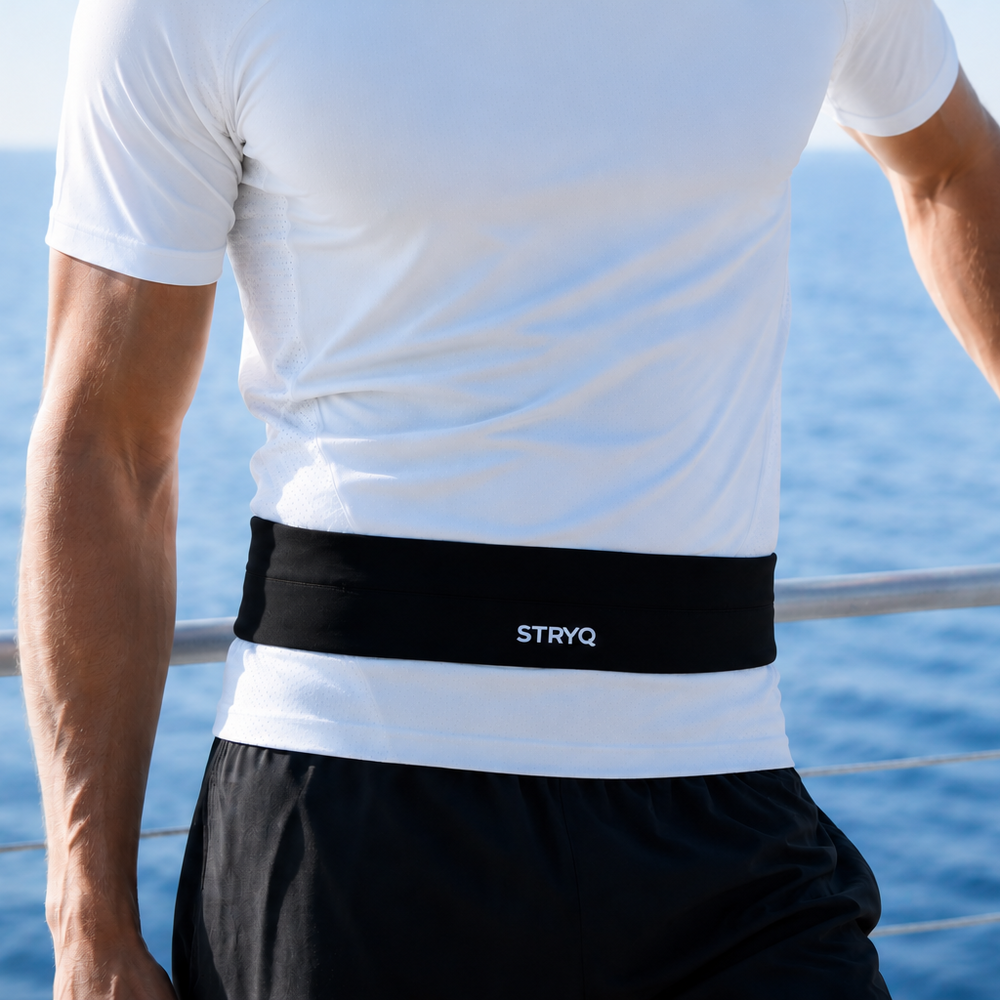
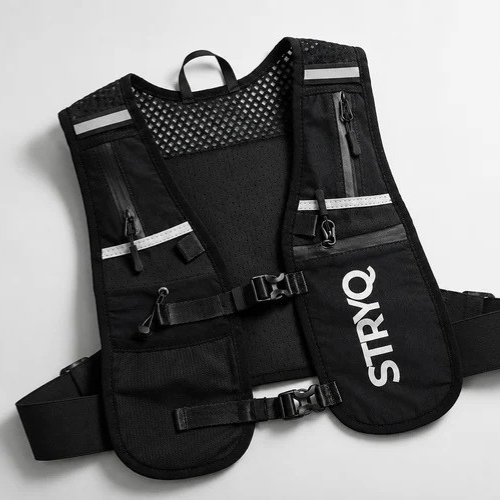
If your current belt keeps climbing and the fixes above have not cured it, our STRYQ Running Belt is designed with 360° storage, a secure fit and breathable comfort, and was tested by UK runners. For longer runs where you need more fluid and storage, take a look at the STRYQ Hydration Running Vest, and pair it with a 500ml soft flask. You can see current prices on each product page.

Before your next run
A short checklist you can run through at the door:
- Check the size against your measurement, and the strap tension with the belt loaded.
- Position the belt low on the hips, lying flat.
- Put the heaviest item at the back and balance the sides.
- Wear a fitted, moisture-wicking layer underneath.
- Jump ten times, twist, and breathe deeply. Adjust once.
- After five minutes of running, check again and re-tighten if it has loosened.
If you are training for a long event, repeat this on a long run with the exact kit you will wear. Anything that rubs or shifts after 90 minutes will be worse after three hours. Our race belt comfort review and running belt review guide can help you decide what to carry. If you feel rubbing from a vest rather than a belt, see our guide to stopping running vest chafing.
FAQ
How do I make a running belt stay in place?
Choose the right size, wear it low on your hips, and tighten it with the belt loaded. Keep the weight balanced and flat, with the heaviest item at your back. Add a fitted base layer so the belt does not slide on a slippery top.
Should a running belt be tight?
Snug, not tight. It should not move when you jump or twist, but you should still be able to breathe deeply without it digging in. Too much pressure combined with heat and sweat leads to chafing on longer runs.
Why does my running belt bounce even when it is tight?
Usually the load is the cause. Loose items, a heavy phone at the front or an overfilled pocket all create bounce that tightening cannot cure. Remove what you do not need, keep items flat and balance both sides. If it still bounces, the belt may be the wrong size or design for you.
My treadmill belt is slipping to the right. How can I fix this?
This is a different problem from a wearable belt, and the fix depends on your machine. For one manufacturer, Horizon Fitness instructs turning the right-side adjustment bolt clockwise in quarter-turn steps and checking the effect before adjusting again. Check your own treadmill’s manual, and do not over-tighten, as that can damage the rollers and motor.
Sources
- How to Wear a Running Belt (Without the Bounce), Outdoor Fit Lab
- How to Wear a Running Belt for Comfort and Performance, Rise Endurance
- How To Prevent Chafing When Running, Runner’s Blueprint
- Acute changes in sagittal plane kinematics while wearing a novel belt device during treadmill running
- Tensioning and Centering the Running Belt, Horizon Fitness