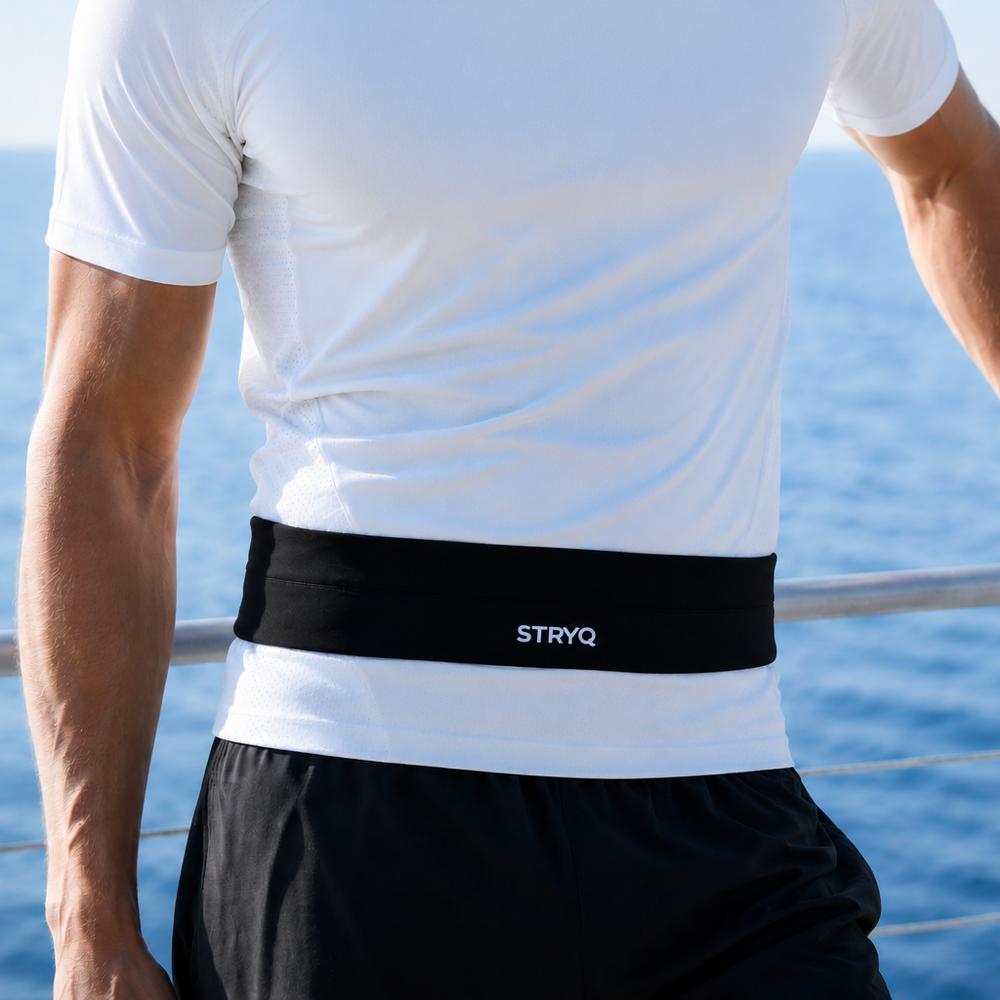
The moment a belt starts thumping against your waist, the run changes. Your rhythm goes, your focus narrows to whatever is bouncing, and something that should feel simple becomes irritating fast. If you are looking for a running belt that doesn't bounce, the answer is not clever marketing or extra features. It comes down to fit, fabric, capacity and how the belt behaves once you actually start moving.
A lot of runners assume bounce is just part of carrying a phone, keys or fuel. It is not. A well-designed running belt should stay close to the body, spread weight evenly and feel stable from the first mile to the last. That matters whether you are heading out for a steady 5K, marathon training before work or racing with gels and your phone in tow.
What causes bounce in the first place?
Bounce usually comes from movement inside the belt, movement of the belt itself, or both. If your phone is sliding around in a loose pocket, it will shift with every step. If the belt sits away from the body or relies on a basic clip strap that loosens as you run, that movement gets worse.
The problem is often not how much you are carrying, but how the load is held. A slim belt with secure compression can carry more comfortably than a larger belt with poor structure. When essentials are kept tight to the body and the material has enough stretch to hold them without sagging, bounce drops dramatically.
Placement matters too. A belt worn too high on the waist can move more than one worn around the hips, especially for runners who prefer a lower, more stable fit. There is no universal rule here because body shape, stride and personal preference all play a part. But in general, the closer the belt sits to a stable part of the body, the better it performs.
What a running belt that doesn't bounce should have
The best belts are simple, light and secure. They do not need loads of zips, oversized compartments or stiff extras that add bulk. What they do need is a close fit and a design that keeps the contents from shifting.
Stretch fabric is a big part of that. Good stretch allows the belt to mould to the body while still compressing whatever you put inside. That is different from loose elastic, which can feel snug standing still but starts to give once there is a phone and a set of keys pulling at it.
A continuous pocket design often works better than one large central pouch because it gives you more flexibility in how you distribute weight. You can place your phone in one area, gels in another and keys somewhere they will not jab into your side. That balance helps stop one heavy spot from dragging the belt down.
A low-profile shape matters as well. Less bulk means less movement. If a belt sticks out from the body, it has more opportunity to shift with every stride. A flatter design stays tucked in and feels far less noticeable over distance.
Fit matters more than most runners think
If you buy the wrong size, even a well-made belt can feel disappointing. Too loose, and it will bounce. Too tight, and it will feel restrictive, ride up or become uncomfortable after a few miles.
The sweet spot is a fit that feels snug without needing constant adjustment. You should be able to load it with your essentials and still have it sit flat. If the belt only feels secure when it is pulled excessively tight, that is usually a sign the size or design is not right.
This is where many generic running belts fall short. They rely on adjustable straps to cover a wide range of body shapes, but that flexibility can come at the cost of stability. Belts designed in fixed sizes or with more body-hugging stretch construction often feel better because they do not depend on buckles and dangling strap ends to stay in place.
For runners in the UK dealing with layers through autumn and winter, this gets even more relevant. A belt that fits over a thin tee may behave differently over a jacket or base layer. If your running changes across the seasons, look for a belt that keeps its hold without becoming fiddly.
Why your phone is often the real test
A set of keys and one gel will not tell you much about how stable a belt really is. A large smartphone will. Phones are heavy enough to expose weak design quickly, especially on longer runs or at faster paces.
If a belt can carry a phone securely without swinging, it is usually doing the important things right. The pocket has enough compression, the belt has enough structure and the fit is close enough to stop movement. If it struggles with a phone, the rest does not matter much.
That is why runners looking for a running belt that doesn't bounce should think beyond storage capacity. Bigger is not always better. You need enough room for your essentials, but not so much unused space that everything inside can move around.
Not every run needs the same setup
What works for a 30-minute easy run may not be ideal for a long Sunday session. If you only carry a key and one card, almost any compact belt will feel manageable. Add a phone, gels and perhaps a soft flask, and the demands change.
For shorter runs, a minimal belt with a close fit is often the best option because it keeps the experience light and distraction-free. For longer runs, you may need more storage, but the same rule still applies - keep the load stable and close to the body.
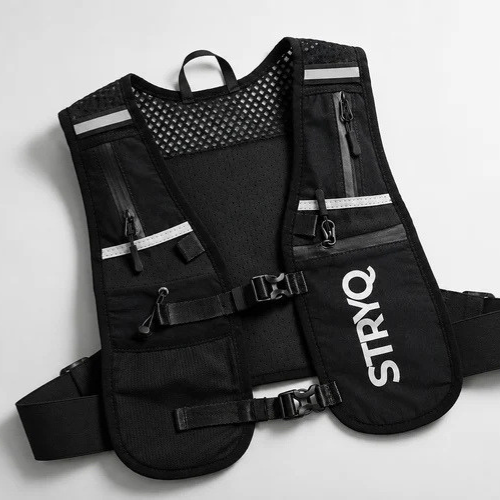
This is also where some runners decide to switch between a belt and a vest. A belt is excellent for essentials and shorter to medium distances when you want no bulk and easy access. A vest comes into its own when hydration and higher carrying capacity matter more. Neither is automatically better. It depends on distance, weather and what you need to take with you.
Common mistakes that make a good belt feel bad
One of the biggest mistakes is overloading it. Even the best belt has a practical limit. Stuffing in more than it was designed to carry can create pressure points and pull the belt out of position.
Another is poor weight distribution. If everything heavy is crammed into one section, the belt may twist or dip on one side. Spreading items more evenly usually improves comfort straight away.
Then there is positioning. Some runners fasten a belt at the narrowest part of the waist because it feels natural when standing still, only to find it starts moving as soon as they run. Rotating it slightly lower on the hips can make a noticeable difference.
Finally, do not ignore clothing interaction. Slippery fabrics can sometimes let a belt move more than a standard running top would. If a belt behaves differently depending on what you wear, that is not your imagination.
How to choose the right belt for your running
Start with what you actually carry most often. If your usual setup is phone, keys and one or two gels, choose a belt built for that kind of load rather than a larger do-it-all option. You will usually get a neater fit and less movement.
Next, pay attention to construction. Soft, stretchy, body-hugging materials tend to outperform stiff or heavily structured belts for comfort and bounce control. The goal is secure compression, not bulky support.
Then think about access. A belt can be very stable but still annoying if you have to wrestle with it mid-run. You should be able to reach fuel or your phone without breaking stride or fighting a zip that feels awkward on the move.
If you race, simplicity becomes even more valuable. You want something that disappears once it is on. No bouncing, no rubbing, no faffing at the start line.
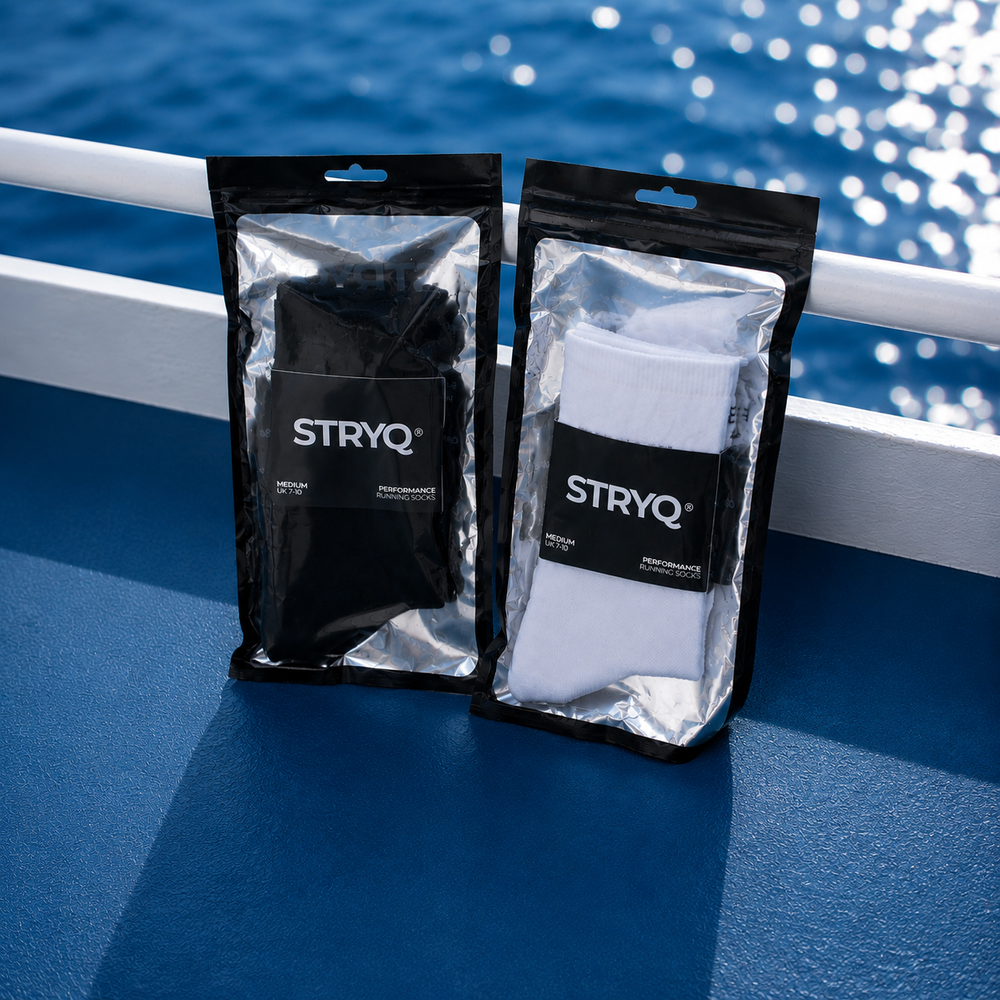
That is the thinking behind specialist products in this category. Brands focused on the basics of fit, comfort and zero-distraction carrying tend to get the details right because they are solving a specific problem rather than chasing gimmicks. STRYQ sits firmly in that camp - lightweight, secure and built around what runners actually need.
A running belt that doesn't bounce is really about trust
When your gear works, you stop thinking about it. That is the standard. A running belt should not become part of the challenge. It should carry what you need, stay put and let the run feel like the run.
If you have been putting up with bounce because you assumed every belt does it, it is worth expecting more. The right fit and design can change the whole experience, especially over longer miles when small annoyances become big ones. Choose the belt that feels stable before you set off, and you will spend far less time adjusting it once you are moving.