Your first few runs should feel hard because your body is learning a new habit, not because your mobile phone is bouncing around your waist or your socks are rubbing holes in your heels. A good beginner running gear guide is not about buying a full athlete’s wardrobe. It is about choosing a few pieces that remove the small annoyances which make it easier to skip tomorrow’s run.
For Couch to 5K, parkrun training or simply getting out for 20 minutes after work, start with comfort. You can add specialist kit as your distance, confidence and routine grow.
Start with running shoes that suit your feet
Running shoes are the one purchase worth taking seriously from day one. You do not need the most expensive pair on the wall, carbon plates or a shoe designed for race day. You need a pair that feels comfortable as soon as you run in it.
Try shoes on later in the day when your feet are slightly larger. Wear the socks you intend to run in and leave roughly a thumb’s width between your longest toe and the end of the shoe. Your feet move forward on downhills and can swell on longer runs, so a tight fit can quickly lead to black toenails or sore toes.
A specialist running shop can be useful, particularly if you have recurring discomfort or are unsure of size. But do not get too caught up in labels such as neutral, stability or cushioned. These can guide your choice, but comfort is the better starting point. Walk, jog and turn in the shoes if the shop allows it. If they pinch, slip at the heel or feel awkward straight away, leave them there.
New runners often ask whether they need trail shoes. For pavement, paths and a typical UK parkrun, road shoes are usually the sensible choice. Choose trail shoes when you regularly run on muddy, loose or uneven ground. Their extra grip is useful there, but can feel firm and unnecessary on tarmac.
Socks are small kit with a big job
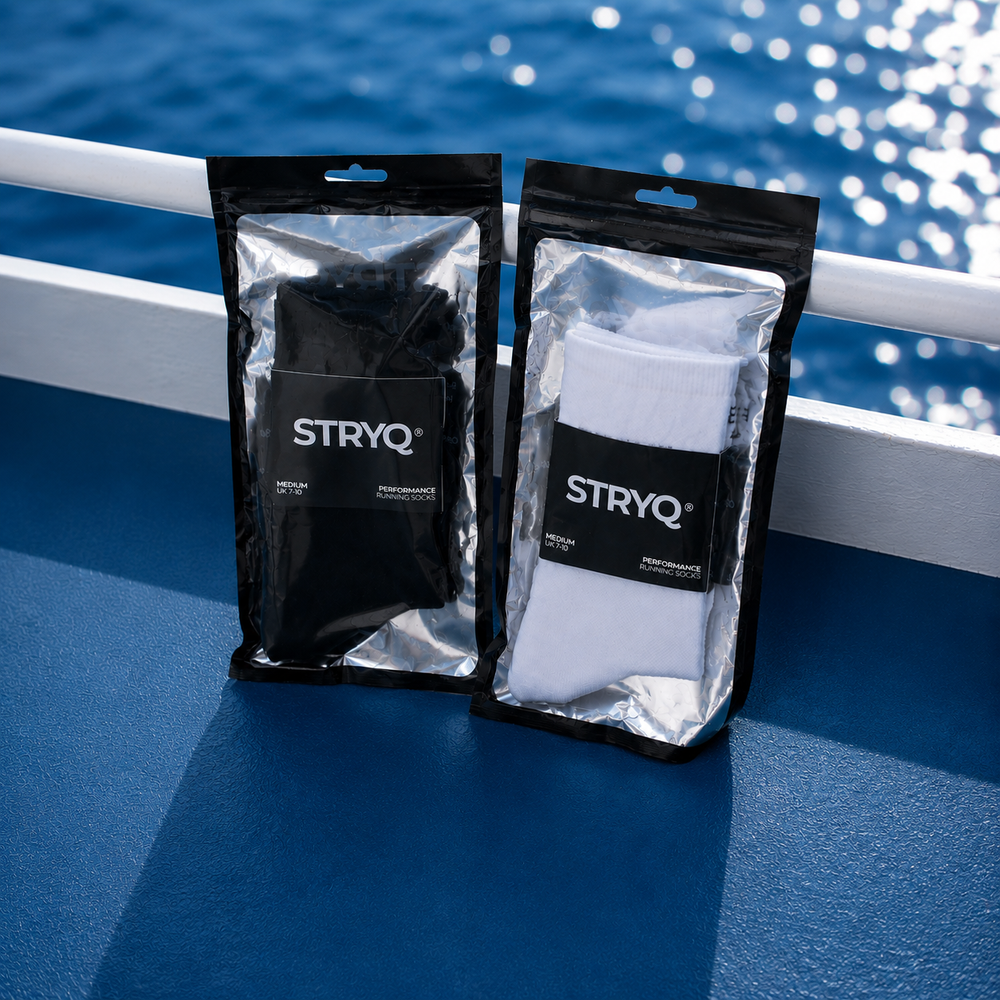
Ordinary cotton socks hold moisture against the skin. That is a common route to blisters, especially once your sessions get longer or warmer. Running socks use fabrics that move sweat away from the foot and tend to fit more closely around the heel and arch.
You do not need a drawer full of them. Two or three good pairs are enough to start. Look for a smooth toe seam, a secure fit and cushioning that suits your preference. Thin socks can feel cooler and more direct, while lightly cushioned styles may feel more comfortable for runners who are building mileage.
If you are getting blisters, do not just cover them and carry on. Check shoe size, sock fit and where the rubbing starts. A simple gear adjustment is often more helpful than tougher skin.
Dress for the weather you are running in
The aim is to start slightly cool, then warm up after the first ten minutes. Beginners often overdress because the walk to the door feels chilly. Once you are moving, a thick hoodie can become heavy, sweaty and uncomfortable.
For most runs, a breathable T-shirt or long-sleeve top and shorts or leggings will do the job. Choose fabrics that dry quickly rather than cotton, particularly in wet or cold weather. A lightweight running jacket earns its place when it is windy or raining, but it should be breathable enough that you do not feel clammy underneath.
In winter, gloves and a light hat can make a bigger difference than another thick layer. Your hands often feel the cold first. In summer, a cap can keep glare and sweat out of your eyes. Bright or reflective details are sensible for darker mornings and evenings, but they are not a substitute for choosing well-lit routes and staying aware of traffic.
Supportive underwear matters too. For women, a properly fitted sports bra is essential. For everyone, avoid loose seams and fabrics that stay wet. Chafing tends to appear where clothing moves repeatedly: between thighs, under arms, around waistbands and beneath bra straps. If an area begins to rub, address it before your next run rather than hoping it will disappear.
This beginner running gear guide covers carrying essentials
A short run close to home may only require a key and your mobile phone. The problem is that pockets in everyday clothes are rarely designed for running. A phone bounces, keys jab and loose items can pull a waistband down with every stride.
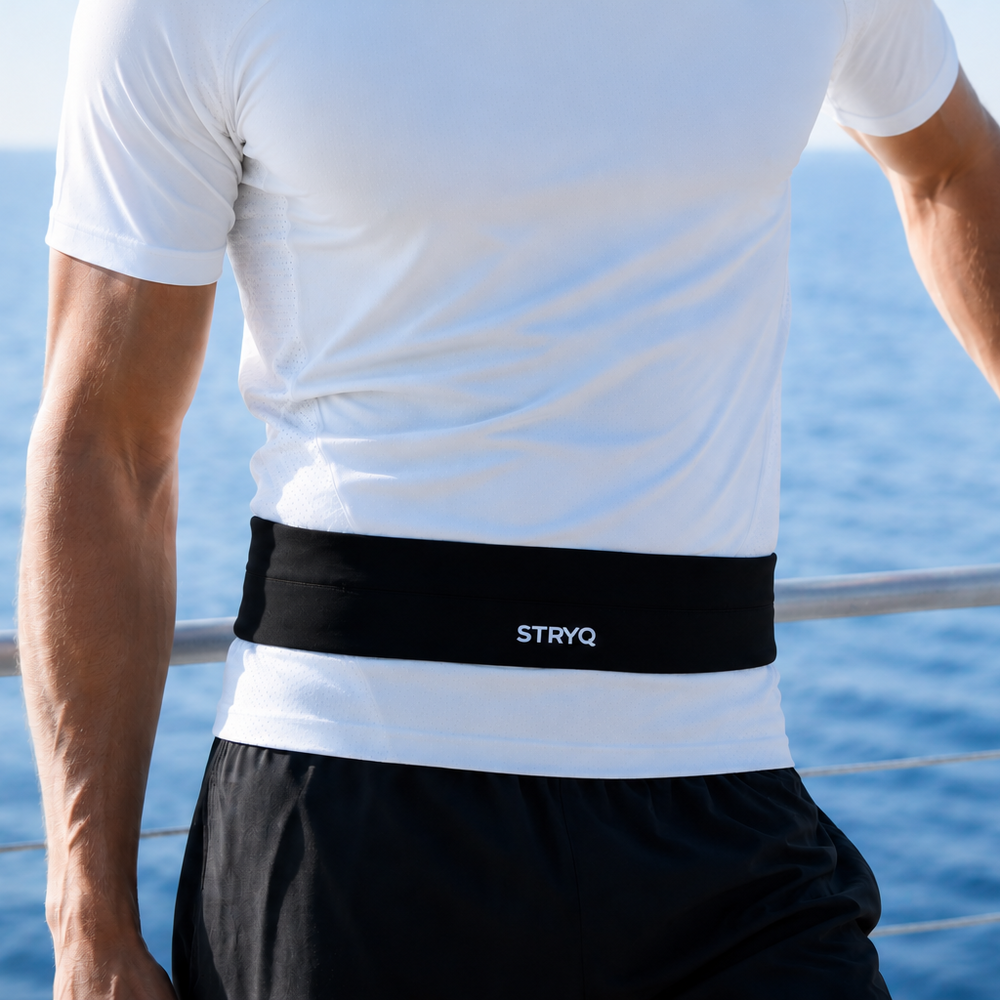
A running belt is a practical first accessory for many new runners. The right one sits snugly around your waist and holds essentials close to your body, without needing to be tightened so much that it digs in. Use it for your mobile phone, key, card, inhaler or a small gel when your runs become longer.
Fit matters more than capacity. A belt that is too loose will move. A belt packed with unnecessary items will also move. Take what you genuinely need and place heavier items flat against your body. No bounce. No bulk.
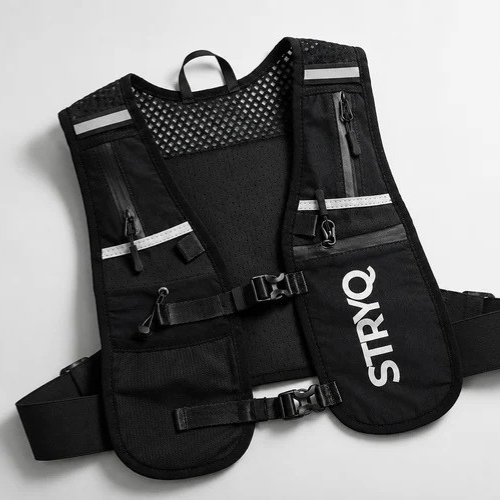
For longer training sessions, a hydration vest can be more comfortable than trying to carry bottles by hand. It spreads weight across your torso and keeps water, fuel and a light layer within easy reach. That said, it is not essential for every runner. If you are following a beginner plan with sessions under 45 minutes, you can usually drink before and after instead.
STRYQ designs running accessories around these real-world problems: secure storage, comfortable hydration and kit that stays put when your pace changes.
When do you need water, fuel and a vest?
For most easy runs under an hour in mild conditions, you probably do not need to take water or food with you. Drink normally through the day, have a glass of water before heading out if you are thirsty, and rehydrate afterwards. Carrying too much too early can make a simple run feel complicated.
The answer changes in warm weather, on routes with no water stops, or when your sessions push beyond an hour. At that point, a soft flask or hydration vest gives you control over your intake. Soft flasks are easy to hold or carry in a vest, and they shrink as you drink so there is less sloshing.
Fuel usually becomes useful once you are running for more than 75 to 90 minutes. Before then, your normal meals will cover most training sessions. For a first 5K, focus on eating a familiar meal or snack beforehand, not on gels. Save experimentation for training, never race morning.
Useful extras, and gear that can wait
A running watch can be motivating, but it is optional. Your mobile phone or a simple timer is enough to follow run-walk intervals. In fact, learning to run by effort can be useful. You should be able to speak in short sentences during most beginner runs. If you cannot, slow down.
Headphones are another personal choice. Music or a podcast can help some runners settle into a routine, while others prefer hearing their breathing and surroundings. If you use them outside, keep the volume low enough to notice bikes, traffic and other people.
There is no need to buy a foam roller, massage gun, recovery boots or every supplement promoted to runners. Consistency, gradual progression, sleep and sensible rest days will do more for your first months of running than expensive extras.
Build your kit as your running grows
Buy for the run you are doing now, not for an imaginary future marathon. Start with comfortable shoes, technical socks, weather-appropriate clothing and a secure way to carry essentials. Then notice what gets in the way. Is your mobile phone bouncing? Are your hands cold? Do you finish thirsty on a longer route? Let those problems guide your next purchase.
Good running gear should fade into the background. When your shoes feel right, your layers suit the weather and your essentials stay secure, you are free to focus on the next lamp post, the next interval and the quiet satisfaction of getting out again.