At mile 18, an awkward belt, rubbing sock or leaking flask stops being a minor annoyance. It becomes the only thing you can think about. The best marathon accessories are not the ones with the longest feature list. They are the ones you forget you are wearing, carrying or using.
A marathon asks a lot of your body and your attention. Your kit should reduce decisions, not create them. That means choosing accessories around genuine needs: where your phone and keys sit, how you carry fuel, whether you need water between aid stations, and what will still feel comfortable after three or four hours on your feet.
Start with the problems you need to solve
There is no universal marathon kit list. A runner aiming for four hours on a cool day will have different needs from someone expecting to be out for six hours in warm weather. The race route, support stations, weather and your personal routine all matter.
Before buying anything, think through your race day from leaving home to crossing the finish line. Will you need your phone for travel or meeting family afterwards? Do you rely on specific gels because the on-course options do not agree with you? Are you confident with water stations, or do you prefer to sip little and often? Have you had chafing, bouncing or numb toes on long runs?
That approach prevents a common mistake: carrying every possible extra just because it might be useful. More kit means more weight, more movement and more things to manage. Carry what supports your plan. Leave the rest behind.
Marathon accessories for storage without bounce
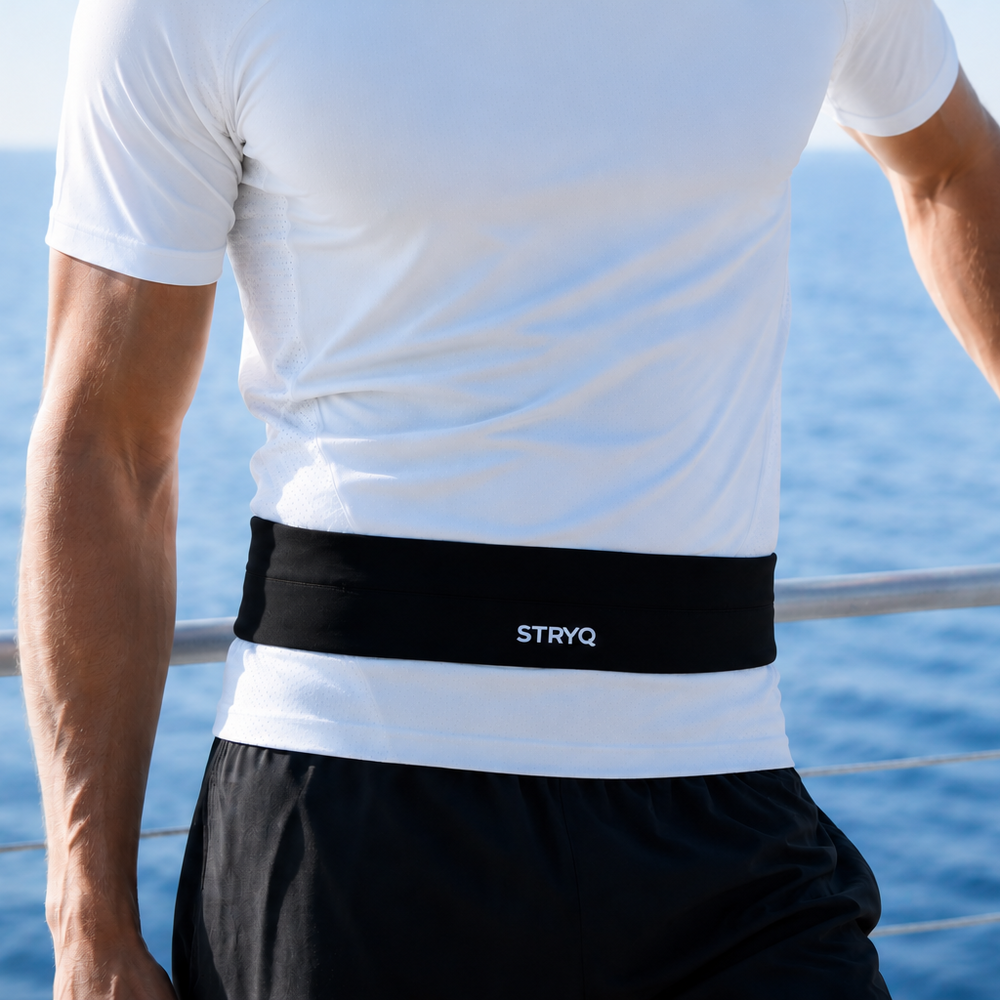
A running belt is one of the simplest ways to carry essentials, but only if it fits properly. On a marathon, a belt that rides up or moves from side to side can irritate your lower back and make reaching for fuel frustrating.
Look for a close, secure fit that sits comfortably around your waist without needing to be overtightened. Stretchy fabric can help the belt hold its shape as you add gels, keys and a phone. Pockets should be easy to access while running, but secure enough that nothing works loose over time.
For most road marathons, a belt is ideal for a phone, keys, a bank card, tissues, a few gels and perhaps an emergency layer before the start. It keeps the load low and compact. No bounce. No bulk.
The trade-off is capacity. If you need to carry significant hydration, several hours of nutrition, medication or compulsory kit, a belt may not be enough on its own. That is where a hydration vest makes more sense.
What to carry in your belt
Keep the contents purposeful. Your essentials may include your phone, identification, a payment card, keys and nutrition you know you can tolerate. A small amount of anti-chafe balm, plasters or a salt tablet can be sensible if you have used them before.
Avoid stuffing a belt with items you are unlikely to touch. A spare top, large power bank or heavy wallet can turn comfortable storage into a distraction. If an item is only needed after the finish, consider handing it to a supporter or leaving it in your bag drop.
Hydration: belt, soft flask or vest?
Hydration is personal, and marathon organisers often provide regular water stations. For some runners, especially in cooler conditions, carrying no water is entirely reasonable. It keeps the race simple and light.
But aid stations can be crowded, cups can be difficult to drink from at pace, and hot conditions change the equation. If you prefer a predictable drinking routine, carrying water can help you stay on top of hydration rather than trying to catch up later.
A soft flask works well when you only want a modest amount of fluid. It becomes smaller as you drink, so it is less awkward than a rigid bottle. Paired with a compatible running belt or vest, it gives you control without adding much bulk.
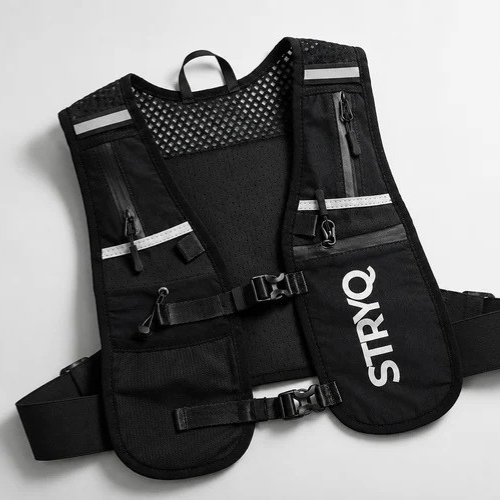
A hydration vest is the better choice when you need more capacity or want the weight spread across your torso. This can be useful for warmer marathons, self-supported training runs and races with wider gaps between support points. A good vest should sit close to the body, with adjustable fit around the chest and sides. It should not swing, rub under the arms or force you to alter your natural arm movement.
Do not assume a vest is automatically more comfortable than a belt. A lightly loaded belt is often less noticeable for a road marathon. Equally, forcing bottles into a belt when you need a litre of fluid can lead to bounce. Match the carrying system to the load.
Practise drinking at marathon pace
The first time you use a soft flask should not be on the start line. Fill it during long runs and practise drinking while moving. Learn whether you prefer water, an electrolyte drink or a mix of both. If you are using sports drink, check how it sits in the flask and how easy it is to clean afterwards.
Also check the race rules and course information. Some events have restrictions on bag size, bottle type or what can be taken into start areas. Planning this early avoids last-minute changes to a routine that was working well.
Make fuelling easy to reach
A fuelling plan only works if you can follow it when tired. Gels buried at the bottom of a pocket tend to be missed. Choose storage that lets you take fuel out without breaking stride or wrestling with zips.
Many runners take a gel every 30 to 45 minutes, but the right timing and amount depends on your body, pace and product. The key point is consistency. Start fuelling early, before you feel depleted, and use your long runs to test the exact products and schedule.
Some gels have tabs that are easier to open with cold or sweaty hands. Some are thicker and need water. Others contain caffeine, which can be useful but should be planned carefully. Carrying your preferred fuel is often worth it even when a race provides nutrition, because a new flavour or formula is not something to experiment with at mile 20.
Front pockets on a vest make fuelling particularly simple. A belt with secure, accessible pockets can do the same job for a smaller number of gels. Whichever option you choose, count what you need before race day and pack a little contingency if space allows.
Socks are not a small detail
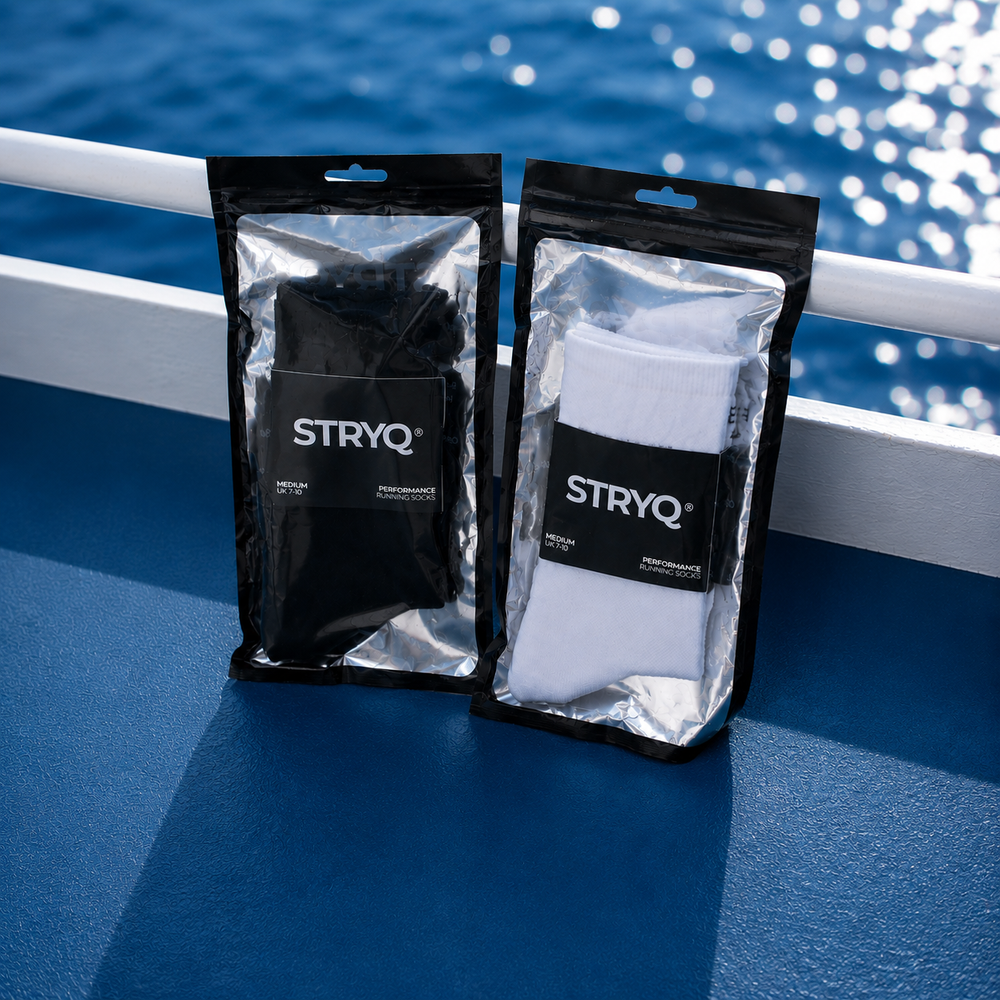
Your feet will take tens of thousands of steps. Socks can make a real difference to comfort, moisture management and blister risk, especially if your marathon is wet or warm.
Running socks should fit close to the foot, without excess fabric bunching around the toes or heel. Look for a design that stays put and avoids thick seams in high-friction areas. Cushioning can feel good, but more padding is not always better. If it changes the fit of your shoes, it may create pressure where you do not want it.
Wear the same socks and shoes together on your longest training runs. Race day is not the time to switch to a fresh pair simply because they look smarter. New socks can fit or behave differently, even when they are the same model.
If blisters are a recurring issue, do not rely on plasters as the only answer. Check shoe fit, lacing, sock material and whether your feet are getting overly wet. A small adjustment made in training is far more useful than an emergency fix during the race.
Weather accessories need a clear job
British marathon weather can change quickly. A cold start can become a mild afternoon, while rain can arrive just as you settle into pace. The answer is not to carry a full wardrobe. It is to use light items that solve a specific problem.
Disposable layers for the start pen can keep you warm without adding to your race load. Gloves can be useful on a cold morning, and a cap may help with rain or bright sun. In warmer weather, a cap can also make it easier to cool your head with water at a station.
If you carry a lightweight jacket, make sure it packs down small enough to store securely. More importantly, run with it beforehand. A jacket that is fine for walking can feel restrictive or clammy at marathon effort.
Test your setup before race week
The most useful rule for marathon accessories is simple: nothing new on race day. That includes a new belt position, a different flask, unfamiliar socks or a revised fuelling system.
Use your long runs as rehearsals. Start with a shorter test run, then use the full setup on at least one key session. Pack the same number of gels, fill the same flasks and wear the same socks you plan to use in the race. Notice where anything rubs, shifts or becomes hard to reach after an hour.
A good setup should feel boring. Your belt stays put. Your vest does not distract you. Your fuel is where you expect it to be. STRYQ designs running accessories around those practical details, because small irritations become big problems over marathon distance.
The goal is not to carry more gear. It is to arrive on the start line knowing every item has earned its place - then spend the race thinking about your pace, your breathing and the next mile ahead.