A belt or vest marathon choice looks simple until you start laying out gels, a mobile phone, keys, tissues, layers and hydration. The best option is not the one with the most pockets. It is the one that carries exactly what you need without bouncing, rubbing or making you change your stride after mile 18.
For many runners, a belt is enough for marathon day. For others, particularly those carrying their own fluids or running a warm event, a hydration vest makes more sense. Your decision should come down to the race support, your fuelling plan and what you have proved works in training.
Belt or vest for a marathon: start with what you must carry
Before choosing a piece of kit, write down what will actually be on your person from the start line to the finish. Be honest. There is a difference between useful preparation and carrying half your kit drawer.
Most marathon runners need a mobile phone, keys or travel card, several gels, and possibly tissues, anti-chafe balm or pain relief they normally use. You may also want a light layer for the start area, although this is often better handled with an old throwaway top. If the event provides regular water and you are comfortable using it, this is usually a belt-sized load.
A vest becomes more useful when you need to carry fluids between aid stations, prefer a specific electrolyte drink, have a longer gap between water points, or need extra nutrition because you do not tolerate what is available on course. It can also suit runners who want to carry a light waterproof at a changeable-weather event.
The rule is simple: do not choose a vest because it feels more serious. Choose it because your race plan requires more capacity than a belt can comfortably provide.
When a running belt is the better marathon choice
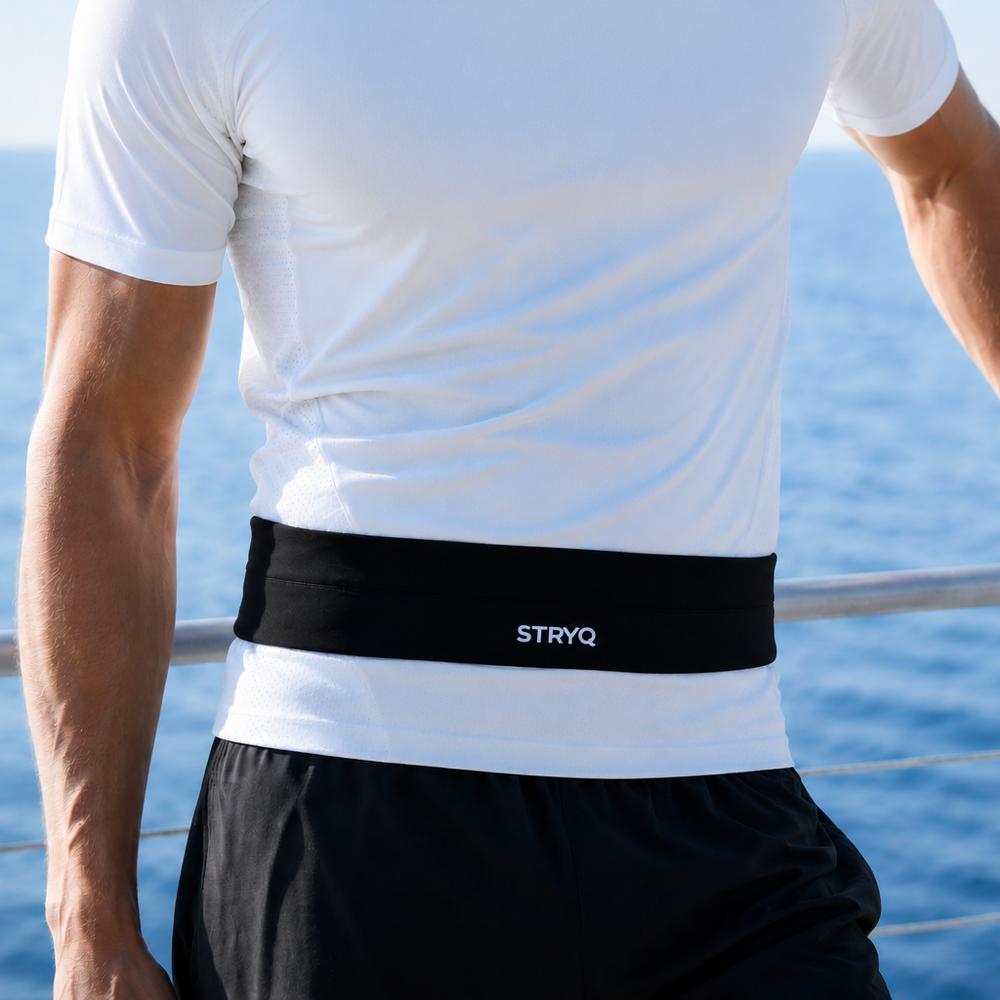
A good running belt is compact, close-fitting and easy to forget about. That is its main advantage. It keeps the load low around your waist, leaves your chest and shoulders free, and adds very little bulk once it is fitted properly.
For a city marathon with frequent water stations, a belt is often the practical choice. You can carry your own gels and essentials, collect water on course, then get back to running without managing bottles, straps or a pack that may feel warmer as the day goes on.
Belts work particularly well if you dislike anything around your upper body. Some runners find vest straps restrictive when they are breathing hard, especially late in a race. Others simply run more comfortably with their shoulders free.
Fit matters more than pocket size. A belt should sit securely around the hips or natural waist, depending on its design, without needing to be pulled painfully tight. If it rides up, twists or bounces when loaded, it will become annoying very quickly. Test it with the full number of gels you plan to take, not just your mobile phone on an easy 5K.
A belt has limits. It will not carry multiple large soft flasks as comfortably as a vest, and overfilling it can make access awkward. If you are forcing every pocket closed before you leave the house, you probably need less kit or more capacity.
A belt is likely right for you if...
You are running a well-supported marathon, happy to drink at official water stations and only need space for essentials and your preferred fuel. It is also a strong option if you want the lightest, least noticeable set-up.
For many first-time marathon runners, this is the sweet spot. It keeps the practical items close without creating another thing to think about on race morning.
When a hydration vest earns its place
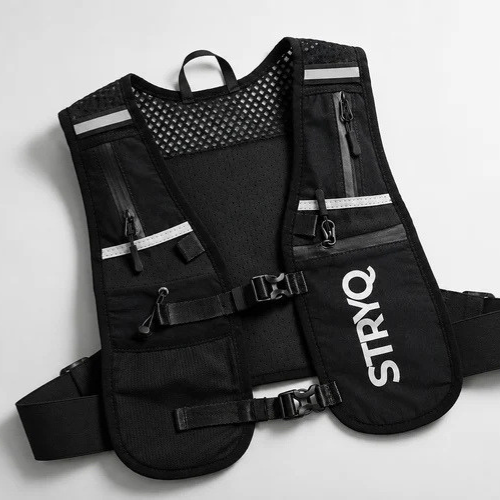
A hydration vest gives you capacity and access. Soft flasks sit close to the body, nutrition can be separated into pockets, and you can sip little and often rather than relying entirely on busy water stations. That control can make a genuine difference when conditions are warm or when your stomach prefers small, regular drinks.
A vest is often the better call for trail marathons, events with sparse support, races in the heat, or runners with a very specific hydration strategy. It can also be useful if you are travelling to a race and want to carry a light layer or extra supplies before the start, though it is worth checking the event rules first.
The trade-off is that more capacity makes it easier to overpack. Full bottles add weight, and that weight can affect your comfort over 26.2 miles. A vest that feels fine for the first hour may rub at the neck, underarms or sternum later on if the fit is wrong.
Look for a close, adjustable fit that holds bottles still as they empty. The vest should not bounce when you run downhill or change pace. It should also allow you to reach gels and flasks without breaking rhythm. If you have to stop or twist around to find a pocket, the set-up needs work.
A vest is likely right for you if...
You need to carry your own hydration, your marathon has limited aid stations, or you have already trained successfully with a vest on long runs. It is not automatically better for a marathon. It is better when its extra capacity solves a real problem.
Do not let race-day water stations make the decision for you
Many large UK marathons have regular water stations, but their spacing, cup size and available drinks vary. Check the event information well before race day. Find out where water is offered, whether sports drink is available, and whether you can carry and refill soft flasks if that is your plan.
If you rely on on-course water, practise taking drinks while moving. A crowded station can be chaotic, with runners cutting across, cups underfoot and volunteers handing out water at different points. Slow slightly, take the cup from the far end where possible, pinch the rim and drink in controlled sips. Losing a few seconds is better than wearing the water or upsetting your stomach.
If you carry fluid, calculate what you actually drink in similar conditions. Do not fill bottles simply because the vest has room. Starting with two full 500 ml flasks when you only need one can mean carrying an unnecessary kilogram for much of the race.
Fuel access matters as much as storage
Your nutrition needs to be easy to reach when you are tired. The best pocket layout is the one that lets you take a gel at your planned interval without fumbling or stopping.
Keep gels in the same place for every long run. Some runners prefer a belt pocket because it is easy to access with either hand. Others like vest front pockets, where gels are visible and can be organised in order. Neither is universally better. Consistency is what stops you missing a feed at mile 20 because you cannot remember where you put it.
If you carry caffeine gels, separate them from standard gels. If you use electrolyte tablets or chews, make sure they cannot get crushed or soaked. Small details become bigger problems when your concentration is fading.
At STRYQ, the focus is on carrying essentials without bounce or bulk. That principle applies whether you choose a belt or a vest: kit should make your plan easier to follow, not give you another distraction.
Test your full set-up before the marathon
Never save a new belt, vest, flask or pocket arrangement for race day. Even familiar kit can behave differently once it is loaded with fluids and used for several hours.
Use at least two long runs to test the exact arrangement you intend to race with. Wear the same top, use the same gels, fill flasks to the same level and run at a similar effort where possible. Pay attention to any movement early, because minor bounce rarely improves as you get tired.
Check these four things after each test run:
- Whether the belt or vest stayed in place without repeated adjustment.
- Whether you could take fuel and fluids while running.
- Whether there was rubbing at the waist, neck, shoulders or underarms.
- Whether the load changed your breathing, posture or arm swing.
The simple decision for marathon day
Choose a belt if your event provides reliable water, you are carrying only essentials and you want minimal kit. Choose a vest if your hydration plan depends on carrying fluids, you need greater capacity or the course support does not match your needs.
Whichever you choose, keep it familiar. A marathon asks enough of you already. Your belt or vest should sit quietly in the background while you focus on pace, fuel and the next mile.