A lightweight running vest with bladder can be the difference between settling into your pace and spending every mile adjusting straps, fighting bounce or rationing water. If you run long, train in warm weather or simply want your hands free, the right vest makes hydration easier without adding bulk.
Not every runner needs one. For a short 5K or an easy parkrun, a belt or handheld often does the job. But once your runs start stretching beyond the point where one small bottle is enough, a vest starts to make more sense. You carry more fluid, spread the weight better and usually get space for nutrition, keys, a phone and an extra layer.
When a lightweight running vest with bladder makes sense
The main reason runners switch to a hydration vest is comfort over distance. A bottle in your hand can become annoying after an hour. A waist belt can work well, but capacity is limited and some runners still notice movement when it is fully loaded. A vest shifts the load across your chest and upper back, which tends to feel more stable when fitted properly.
That matters most on long runs, marathon training, trail routes and any session where refill points are uncertain. It also helps if you prefer to sip little and often rather than stop and take a proper drink. A bladder and hose make that much easier than reaching for a bottle every few minutes.
There is a trade-off, though. A vest is more gear on your body. In hot conditions that can mean extra warmth. If the fit is poor, you may get rubbing around the neck, chest or under the arms. That is why lightweight matters. You want enough structure to stay secure, but not so much material that it feels like wearing an extra layer.
What actually makes a vest feel lightweight
A lightweight vest is not only about the number on a product page. It is about how it feels once you fill it. Some vests are light when empty but become awkward when loaded because the storage layout is poor or the adjustment system does not hold the weight close enough.
The best lightweight options use soft, breathable fabrics and a close fit that wraps the torso without squeezing it. They sit high and stable. The weight feels distributed rather than hanging off your shoulders. Minimal bulk around the chest also matters, especially if you are wearing it over a T-shirt in summer or under a jacket in winter.
You should also look at the details that reduce fuss while running. Easy-adjust chest straps, a hose that stays in place, pockets you can actually reach and a bladder that is simple to fill all make a difference. A vest can be technically light and still feel like hard work if every drink or gel becomes a mini wrestling match.
Bladder or soft flasks?
This is where runner preference really comes in. A bladder gives you more fluid capacity and easy access through a drinking hose. For long steady runs, that convenience is hard to beat. You can sip frequently without breaking rhythm, which often helps you stay on top of hydration.
The downside is that bladders are less convenient to refill mid-run. It is also harder to judge exactly how much you have left without taking the vest off or getting a feel for the weight. Cleaning takes a bit more effort too, especially if you have used anything other than water.
Soft flasks are easier to refill, easier to clean and often better for races with aid stations. They also shrink as you drink, which reduces sloshing. But they usually hold less, and some runners do not like having bottles on the chest. If you mostly run road marathons or shorter distances with regular water stops, flasks may be enough. If you are out for longer, running trails or want the simplest way to carry more water, a bladder is often the better choice.
Many runners end up preferring a vest that can do both. That flexibility covers a lot of training without needing separate setups.
Fit matters more than capacity
A badly fitted vest will feel heavy even when it is not full. A good one almost disappears after the first mile. That is why fit should come before storage numbers and clever extras.
Your vest should feel snug around the torso, with no obvious bouncing when you jog on the spot. It should not restrict breathing. If you need to loosen it so much that it starts moving, the size or shape is probably wrong. The shoulder area should sit flat without digging in, and the chest straps should hold the vest close without creating pressure points.
Body shape matters here. Some runners need more adjustment across the chest. Others need a cut that avoids rubbing under the arms. If you often wear extra layers in winter, allow for that too. The best test is always movement. A vest that feels fine standing still can become irritating very quickly once the pace picks up.
The features worth paying attention to
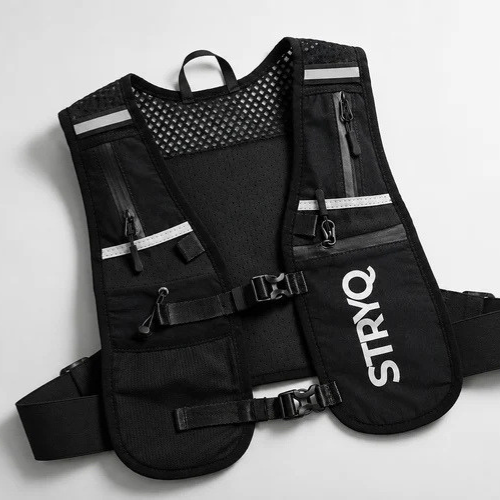
Storage is not just about how much a vest carries. It is about where that storage sits and how easily you can use it while moving. Front pockets for gels, a phone and soft flasks are genuinely useful because you can reach them on the go. Rear storage is better for items you do not need often, like a lightweight waterproof or spare gloves.
The bladder compartment should hold the reservoir securely so it does not sag as it empties. A good hose routing system also helps more than people expect. If the hose flaps around or pulls across your chest, it becomes annoying very quickly.
Breathability is another big one. Mesh panels and quick-drying fabrics help manage sweat, especially in warmer months or during hard sessions. This will not stop you getting hot, but it can stop the vest feeling soggy and heavy.
Reflective detailing is useful if you run early or late, though it should be seen as a bonus rather than the main safety feature. If you train regularly in poor light, you will still want proper visibility gear.
Common mistakes when buying a hydration vest
The first is choosing too much capacity for the runs you actually do. If most of your training is under 90 minutes, a huge vest will usually be overkill. More space often means more fabric, more weight and more temptation to carry things you do not need.
The second is ignoring bounce when the vest is only partly full. This is especially relevant with a bladder. Some systems stay stable as the water level drops. Others become sloshy and loose halfway through a run.
Another common mistake is focusing only on race day. Your vest needs to work in ordinary training, because that is where you will spend most of your time wearing it. Easy cleaning, practical storage and all-round comfort matter more than a long list of features you rarely use.
How to use a lightweight running vest with bladder properly
Even the best vest needs setting up well. Fill the bladder fully the first few times and tighten the vest so the load sits close to your body. As you get used to it, you can tweak the fit depending on how much fluid you are carrying and what clothing you are wearing.
Pack heavier items close to your back or high on the torso so the weight stays balanced. Keep things you need often in front pockets. If you are using a phone, make sure the pocket is secure enough that it does not bounce or rub.
Cleaning matters more than many runners expect. If you leave water sitting in a bladder for days, it quickly becomes unpleasant. Rinse it after use and let it dry fully. If you use electrolyte mix, be even more careful. A vest should make hydration simpler, not create another avoidable hassle.
Who should buy one and who can skip it
If you are training for a half marathon, marathon or ultra, a hydration vest is often a smart buy. The same goes for trail runners, runners covering routes with few refill options and anyone who wants to carry hydration, nutrition and essentials in one place without holding a bottle.
If you mainly run short distances, stick close to home or prefer organised routes with regular water stops, you may not need one yet. A running belt or soft flask can be lighter and simpler. There is no prize for carrying more kit than your run demands.
That is the real test. The right vest solves a problem. It should help you run more comfortably, drink more easily and think less about your gear. If a lightweight running vest with bladder does that, it earns its place. If not, go simpler. The best setup is the one you forget you are wearing after the first mile.