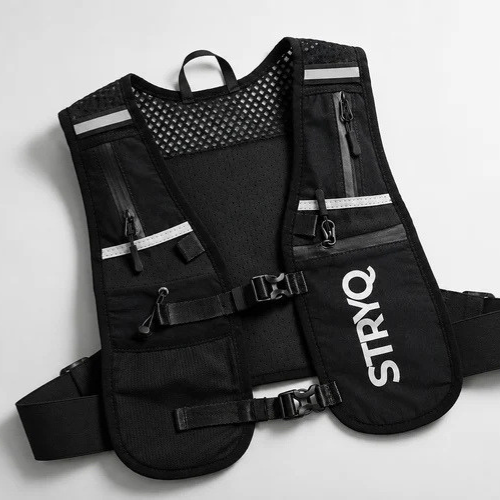
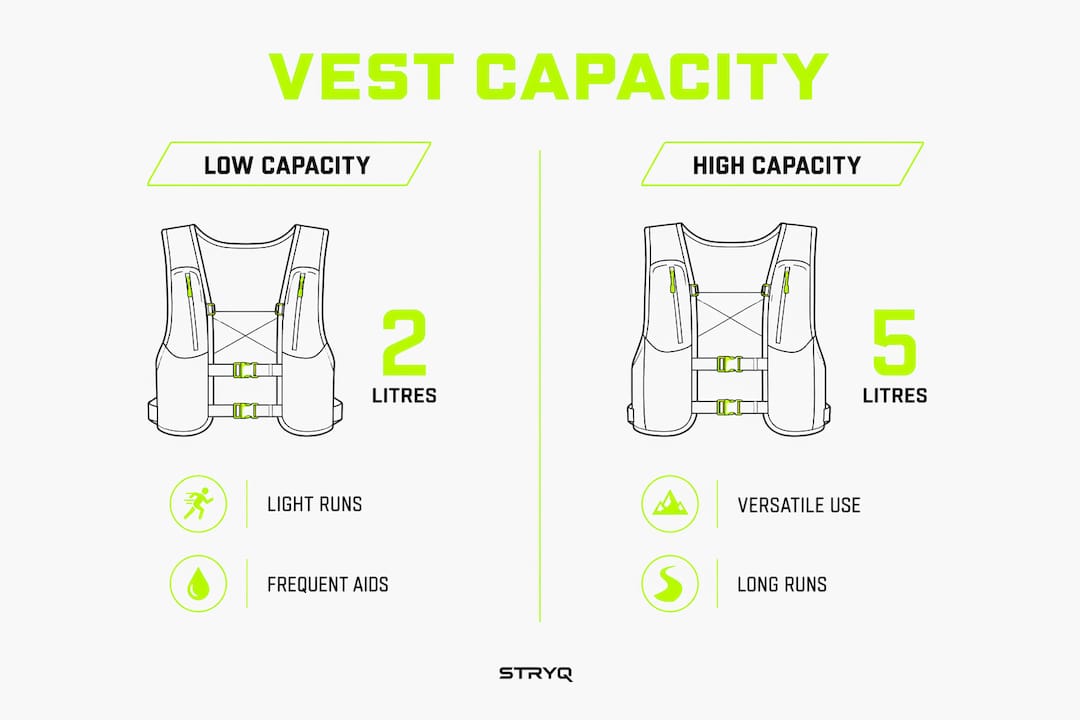
Half marathon running vest capacity is defined as the total volume, measured in litres, that a vest can carry across its fluid compartments and storage pockets. For most half marathon runners, a 2–5 litre vest hits the sweet spot, providing enough room for 500–1,000ml of water, a phone, and race nutrition without adding bulk that disrupts your stride. Getting this number right matters more than most runners realise. Too small and you run dry on a warm day. Too large and the vest bounces, chafes, and slows you down before you reach the finish line.
What is the right half marathon running vest capacity?
A 5 litre vest is the most versatile choice for half marathon runners who need water, nutrition, and an emergency layer. It covers the vast majority of training runs and race-day scenarios without excess weight. Vests in the 2–5 litre range typically weigh 150–200g empty, while larger 8–12 litre options exceed 230g. That weight difference feels minor at the start line but compounds over 13.1 miles.
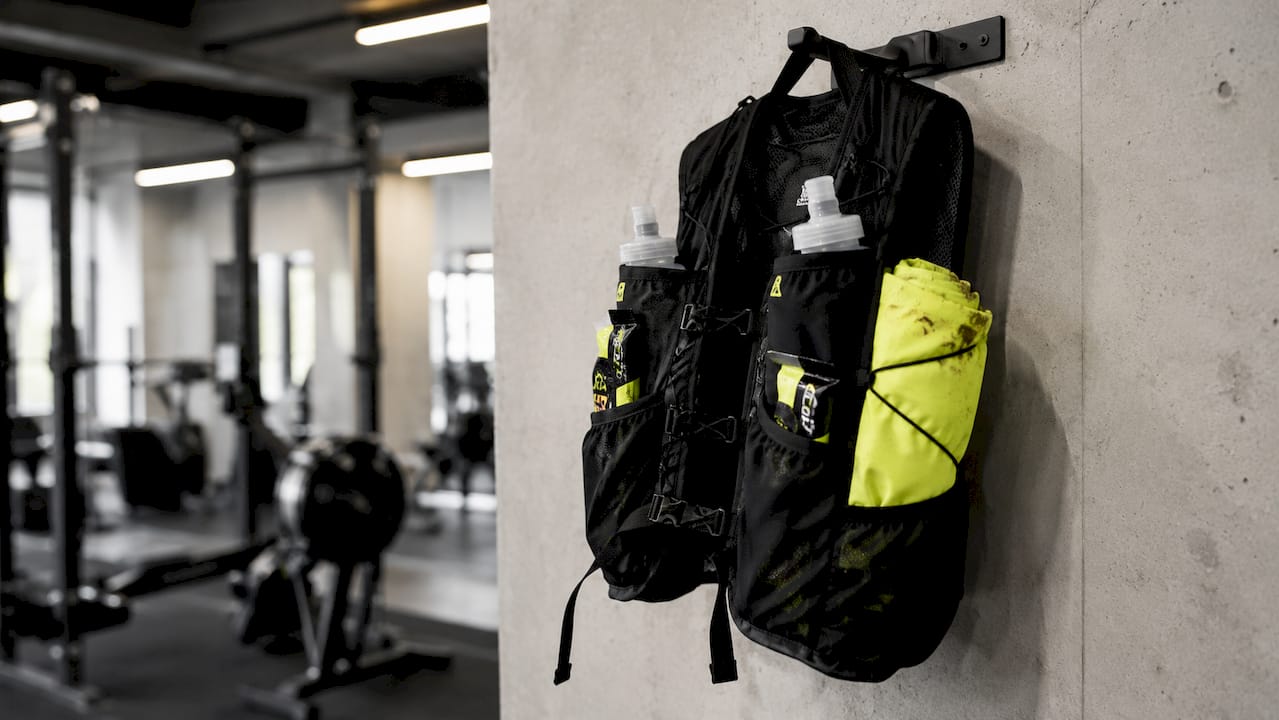
The industry term for this category is “hydration vest” or “running pack,” and both terms describe the same product: a close-fitting vest with integrated fluid storage and pockets. The key measurement is total volume in litres, which includes both the fluid capacity and the dry storage. Understanding this distinction stops runners from buying a vest that holds 2 litres of water but barely fits a gel.
A 2 litre vest suits runners who race on well-supported road courses with aid stations every 2–3 miles. A 5 litre vest suits trail runners, those training in heat, or anyone who prefers self-sufficiency. Anything above 5 litres is generally unnecessary for a half marathon and introduces stability problems on faster efforts.
How do route conditions affect the capacity you need?
Aid station frequency is the single biggest factor in choosing vest capacity for a half marathon. A road race with stations every 2 miles means you rarely need to carry more than 500ml at any one time. A trail half marathon with one unmanned checkpoint at mile 7 demands a completely different approach.
Heat and terrain multiply your fluid requirements significantly. Running in temperatures above 20°C increases sweat rate, which means carrying more water or planning more frequent top-ups. Technical trail terrain also slows your pace, extending time on feet and increasing the total fluid you burn through.
- Well-supported road half marathon: A 2–3 litre vest or even a running belt covers most needs. Aid stations reduce the burden of carrying large volumes.
- Trail or unsupported half marathon: A 4–5 litre vest gives you room for 500–1,000ml of fluid, two to three gels, a lightweight layer, and a phone.
- Hot weather or remote routes: Prioritise fluid volume over dry storage. A vest with two front flask pockets lets you carry 1,000ml without a bladder.
- Winter or cool conditions: Fluid needs drop, but you may need space for gloves, a hat, or an extra layer, so dry storage becomes more relevant.
Pro Tip: Vests are prioritised when runs exceed 90 minutes or involve uncertain water access. If your half marathon route has reliable aid stations and takes you under two hours, a belt may serve you just as well.
Running vest versus running belt: which carries more effectively?
A running vest outperforms a belt on storage capacity, but a belt wins on simplicity and heat management for shorter, supported efforts. The choice is not about which product is tougher. It is a practical decision based on what your route demands.
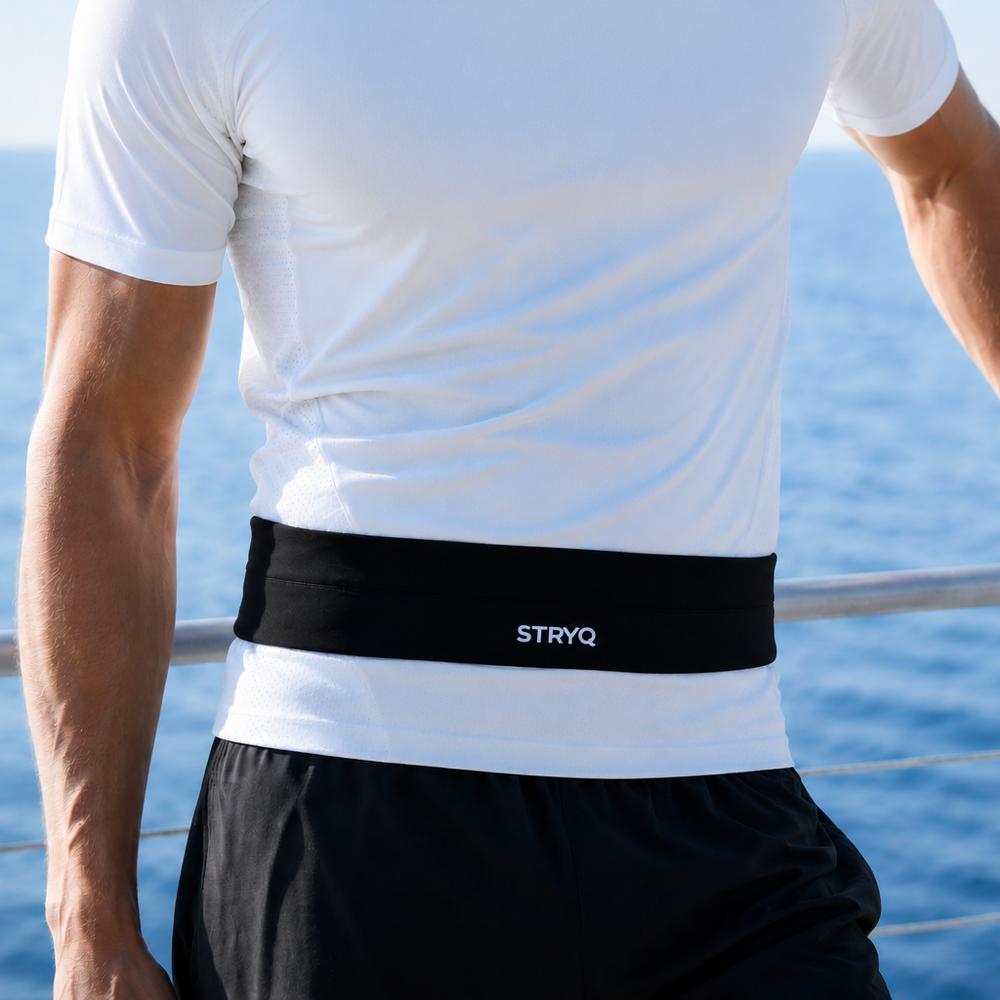
Belts carry 250–500ml comfortably and suit road half marathons where aid stations are plentiful. They sit lower on the body, generate less heat across the back, and are quicker to put on and take off. For runners who run a sub-two-hour half marathon on a flat road course, a belt is often the better tool.
A vest becomes the right choice when you need more than 500ml of fluid, more than two pockets of storage, or when the route has limited support. The vest distributes weight across the shoulders and chest rather than concentrating it at the waist, which reduces the sensation of load on longer efforts. Choosing based on route support rather than perceived toughness consistently produces better race-day comfort.
| Scenario | Best carry option | Reason |
|---|---|---|
| Road half, aid stations every 2 miles | Running belt | Low storage need, cooler, simpler |
| Trail half, one checkpoint | 4–5L running vest | Self-sufficiency, dry storage, fluid volume |
| Hot weather, any route | Running vest | Front flasks, better weight distribution |
| Training run under 90 minutes | Running belt or small vest | Minimal kit needed, less bounce |
Pro Tip: If you train with a vest but race on a supported road course, practise with your race-day carry method at least twice before the event. Switching from vest to belt mid-training block can affect your pacing rhythm.
What vest features actually affect usable capacity?
Soft flasks versus a bladder is the first design decision that shapes how you use your vest’s capacity. Soft flasks sit in front chest pockets and give you instant access to fluid without slowing your pace. A bladder sits against your back and requires a drinking tube, which some runners find awkward on faster efforts. For half marathon distances, two 500ml soft flasks in front pockets is the most practical configuration.
Retention systems matter more than most runners expect. As a soft flask empties, it loses rigidity and can drop lower in the pocket, making it harder to grab mid-run. Bungee cord retention systems hold the flask in place as it empties, keeping it accessible without breaking stride. This is a feature worth checking before you buy.
Key features that affect how well a vest uses its stated capacity:
- Front flask pockets with retention: Keeps fluid accessible and prevents bounce as flasks empty.
- Zippered rear pocket: Fits a phone, emergency layer, or first aid kit without items shifting during the run.
- Chest strap and sternum buckle: Pulls the vest tight against the body, reducing lateral movement that causes chafing.
- Adjustable shoulder straps: Allows precise fit across different torso lengths, which directly affects how stable the load feels.
- Mesh back panel: Reduces heat build-up on longer efforts, particularly relevant in warmer months.
Fit is the most underrated element of effective capacity. A vest that fits poorly will feel unstable even when lightly loaded. A well-fitted vest carrying its full 5 litres will feel more controlled than a poorly fitted vest carrying 2 litres. Always try a vest loaded with your intended kit before committing to it for race day.
Pro Tip: When assessing a vest’s fit, load it with your full race-day kit and run at race pace for at least ten minutes. Bounce and chafe only reveal themselves under real running conditions, not while standing in a shop.
How to select and pack your vest for training and race day
Buying for your typical run rather than your longest race is the most practical approach to vest capacity. A 10 litre vest is less stable than a 5 litre vest for routine 90-minute runs. Carrying excess capacity means carrying excess weight and accepting more bounce, neither of which improves performance.
Follow this process when selecting and packing your vest:
- List what you actually carry. Write down every item you bring on a typical half marathon training run: flasks, gels, phone, keys, emergency layer. Weigh the list against the vest’s stated capacity before buying.
- Match capacity to your most common run, not your hardest one. If 80% of your runs are 10–16km on roads, a 2–3 litre vest serves you better than a 5 litre vest bought for a future trail race.
- Use compression straps to stabilise a partially filled vest. Compression features prevent a half-empty vest from becoming floppy and unstable. Tighten them after each aid station top-up.
- Pack heaviest items closest to your back. A phone or nutrition block placed in the rear pocket, close to the spine, reduces the pendulum effect that causes bounce.
- If undecided between two sizes, choose the larger with compression. A slightly larger vest with good compression straps adapts to different load levels. An undersized vest limits your options on longer or hotter days.
- Test your full race-day pack in training. Run at least one long training session with every item you plan to carry on race day. Adjust fit and packing before the event, not during it.
Aligning vest capacity with your actual running conditions, rather than buying for future ambitions, consistently produces better comfort and efficiency on race day. Runners who buy a 10 litre vest for a half marathon typically find it half-empty, unstable, and warmer than necessary.
Key takeaways
For half marathon runners, a 2–5 litre hydration vest covers the full range of training and race-day needs, with a 5 litre vest offering the most versatility across varied conditions and distances.
| Point | Details |
|---|---|
| Optimal capacity range | A 2–5 litre vest suits most half marathon runners, balancing fluid volume with weight and stability. |
| Route conditions decide capacity | Aid station frequency, heat, and terrain determine whether you need 2 litres or closer to 5 litres. |
| Vest versus belt | Use a belt for supported road races; choose a vest when storage needs or fluid volume exceed belt capacity. |
| Fit affects usable capacity | A well-fitted vest carrying 5 litres feels more stable than a poorly fitted vest carrying 2 litres. |
| Buy for typical runs | Match capacity to your most common run distance and conditions, not your longest or hardest planned event. |
What I have learned about vest capacity after years on the trails
Most runners I speak to make the same mistake: they buy too much capacity. They see a 10 litre vest, think about the marathon they might run one day, and buy it for their half marathon training. Six months later, they tell me the vest bounces, it is too warm, and they have stopped using it.
The honest truth is that a 5 litre vest covers almost everything a half marathon runner needs. I have run trails in July heat with two 500ml flasks, three gels, a phone, and a lightweight jacket, and still had room to spare in a 5 litre vest. The runners who carry 8–10 litres on a half marathon are almost always carrying air.
What I find more interesting is how much fit matters relative to capacity. I have worn a cheap, oversized vest that felt terrible at 3 litres and a well-made 5 litre vest that felt controlled at full load. The number on the label is less important than how the vest sits on your specific torso. If you can, try before you buy, loaded with your actual kit.
My practical advice: start with a 5 litre vest from a brand that prioritises fit and materials. If you find yourself consistently running out of space, upgrade. If you find yourself consistently running with a half-empty vest, consider whether a running belt would serve your most common routes better. Gear should match your running, not the other way around. For those interested in endurance recovery alongside their training, oxygen infusion bundles have gained traction among distance runners looking to support performance between sessions.
— martin
Stryq running vests and gear for half marathon runners
Stryq builds lightweight hydration vests designed specifically for the practical needs of half marathon runners. The range covers varied capacities with front flask pockets, retention systems, and adjustable fit, so you carry what you need without excess weight or bounce.
Alongside the vest range, Stryq offers collapsible soft flasks sized at 500ml to pair directly with vest front pockets, and running belts for runners who prefer a lighter carry on supported road routes. Every product goes through real-world testing and multiple sample revisions before it reaches you. If you are building your half marathon kit, the full running accessories range covers the essentials without unnecessary complexity.
FAQ
What capacity running vest do I need for a half marathon?
A 2–5 litre vest covers the full range of half marathon needs. A 5 litre vest is the most versatile option, fitting water, nutrition, a phone, and an emergency layer comfortably.
Do I need a vest or a belt for a half marathon?
For road half marathons with regular aid stations, a running belt is often sufficient. A vest becomes the better choice when you need more than 500ml of fluid or additional dry storage for trail or unsupported routes.
How much water should I carry in a running vest for a half marathon?
Most half marathon runners carry 500–1,000ml of water in their vest. Two 500ml soft flasks in front chest pockets is the most practical configuration for quick access during the run.
Is a 5 litre vest too big for a half marathon?
A 5 litre vest is not too large for a half marathon. It is the most commonly recommended size because it handles varied conditions without the instability that comes with larger 8–12 litre packs on shorter distances.
What should I carry in a running vest for a half marathon?
The core kit for a half marathon vest includes water (500–1,000ml), two to three energy gels, a phone, and a lightweight emergency layer. On hot days, prioritise fluid volume over dry storage.