Your first few runs can feel surprisingly complicated. Where do your keys go? Why are your socks slipping? Do you need water for 20 minutes? The best starter running gear removes those little distractions, so you can concentrate on building the habit rather than fiddling with kit.
You do not need to buy a full runner’s wardrobe before starting Couch to 5K or heading to parkrun. A few well-chosen essentials will do more for comfort and consistency than a drawer full of specialist gear. Start with what solves a real problem on your runs, then add to it as your distance, confidence and routine grow.
Best starter running gear: start with comfort
The most useful running kit is not always the most technical. For a new runner, comfort means shoes that feel stable, socks that stay put, clothing that does not chafe and a simple way to carry the basics. Get those right and running becomes easier to return to.
Running shoes that suit your feet
Running shoes are the one area worth prioritising from day one. You do not need the most expensive model or a carbon plate. You need a pair that feels comfortable straight away, has enough room around your toes and does not rub your heel or pinch the sides of your feet.
Try shoes on later in the day if possible, when feet are naturally a little larger. Wear the socks you plan to run in. Walk and jog around the shop if you can. A good shoe should feel unremarkable in the best way: no pressure points, no sliding heel and no need to hope it will improve after a few runs.
There is no single best shoe for every runner. Some prefer more cushioning for pavement running, while others like a firmer, more responsive feel. If you have recurring pain or are unsure about fit, a specialist running shop can be useful. Their advice is a starting point, not a rule you have to follow forever.
Proper running socks
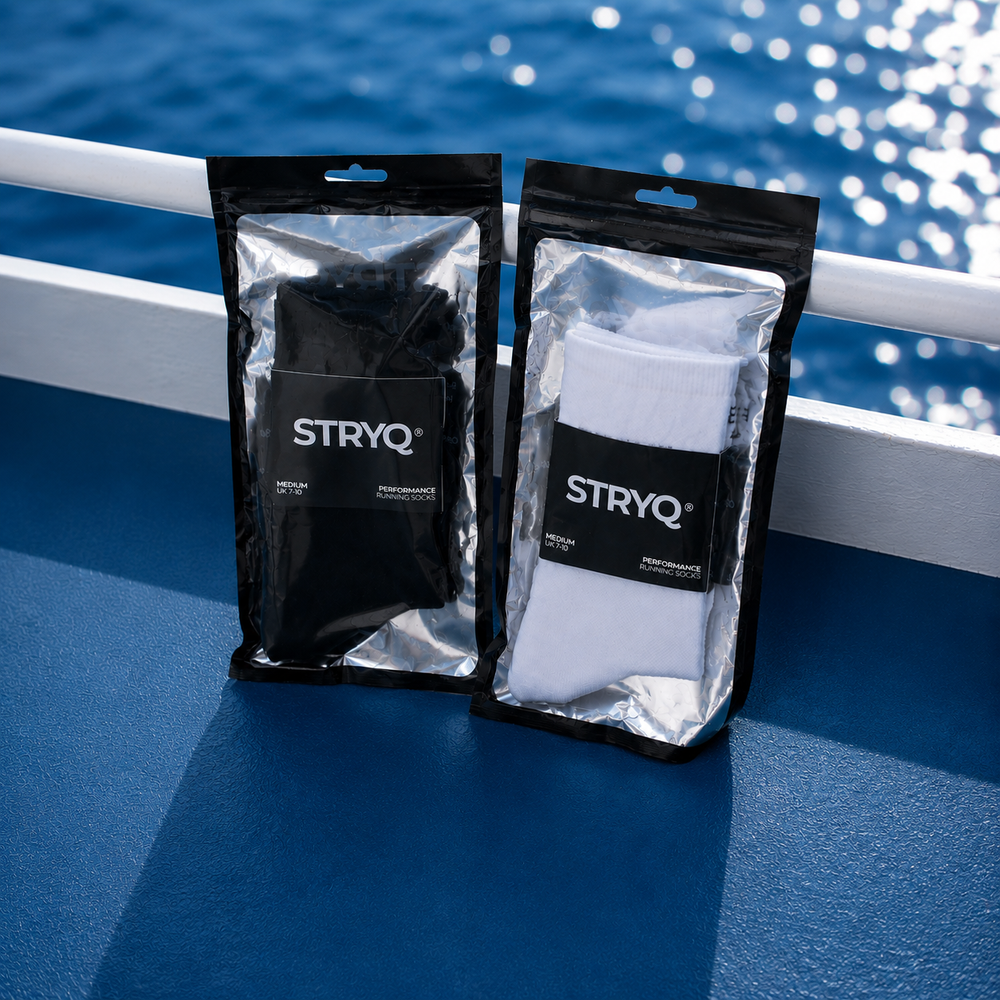
Cotton socks hold moisture, bunch up and can make blisters far more likely. A pair of purpose-made running socks is a small upgrade that most new runners notice quickly. Look for a close fit, light cushioning where you prefer it and fabric that moves sweat away from the skin.
Sock height is personal. Invisible socks can work well, but only if the heel stays in place. Crew socks offer more coverage in colder weather and can protect ankles from trail debris. The important part is that they do not slide, wrinkle or leave you thinking about your feet halfway through a run.
Clothing you can move in
For most beginners, breathable shorts or leggings and a lightweight technical top are enough. Avoid heavy cotton T-shirts for longer or warmer runs. Once wet with sweat or rain, they can feel cold, cling to your skin and cause rubbing.
Choose fit over fashion. Shorts should not ride up. Leggings should stay in place without a tight waistband digging in. Tops need enough length and movement through the shoulders. For runners who need it, a supportive sports bra is equally essential. Test it on an easy run before relying on it for a longer session.
You will also need a light layer for cooler British mornings. A thin long-sleeve top or lightweight running jacket is usually more useful than a bulky sweatshirt. You should feel slightly cool when you leave the house. You will warm up within the first ten minutes.
Carry essentials without pockets or bounce
Keys, phone, inhaler, gels, tissues and a bank card all seem small until they are stuffed into a hand or bouncing in a loose pocket. Carrying essentials securely is one of the simplest ways to make a run feel calmer.
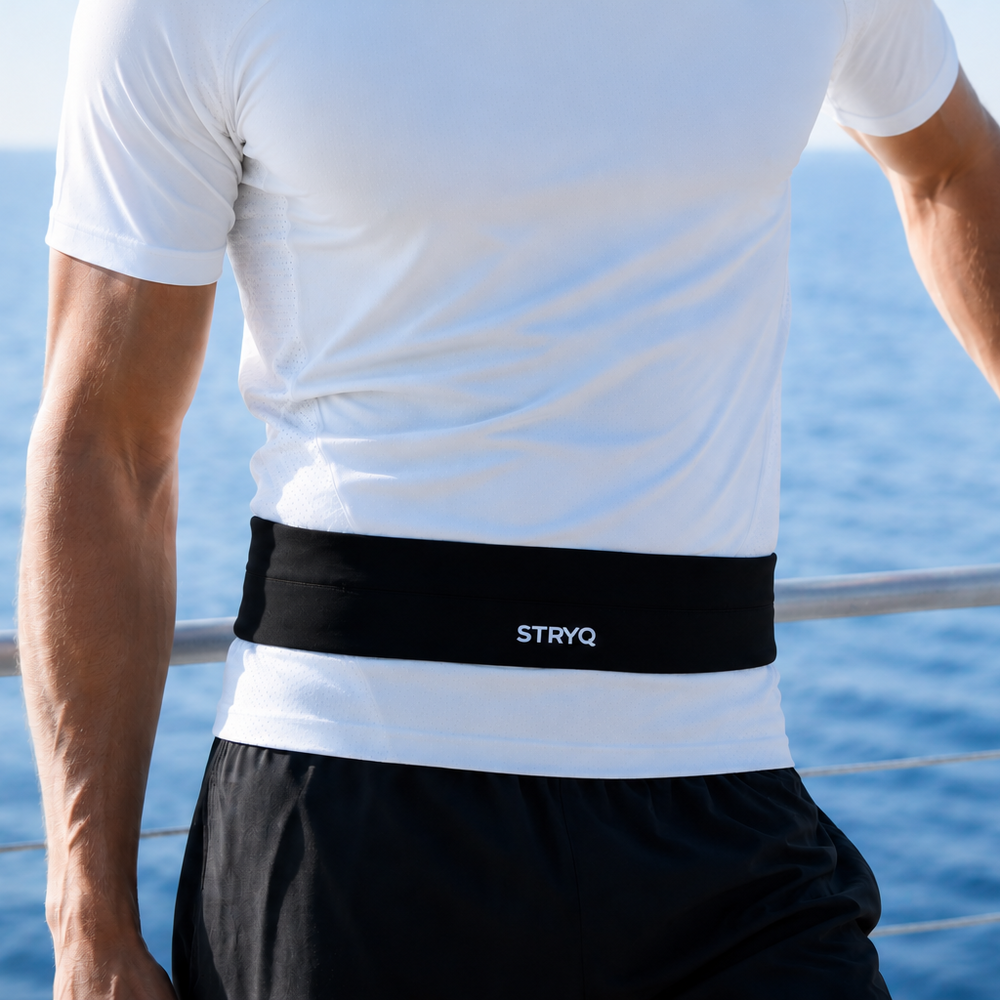
For short runs, a running belt is often the most practical option. It keeps your phone and keys close to your body without the swing of an armband or the bulk of a backpack. Look for a belt that sits securely around your waist, has enough stretch to stay comfortable and does not bounce when you pick up the pace. No bounce. No bulk. That is the goal.
Check the pocket size before buying. Many runners want to carry a larger phone, but some slim belts only suit keys and a card. If you run in low light, it also helps to have space for a small light or reflective item.
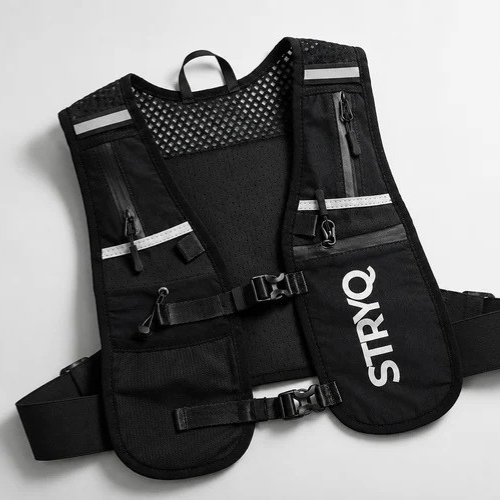
A hydration vest becomes more useful when runs get longer, the weather is warm or you need to carry water, nutrition and an extra layer. It is not essential for every first 5K. In fact, a vest can be more kit than you need at the beginning. But for runners building towards a half marathon, marathon or trail event, a well-fitted vest spreads the load better than holding bottles in your hands.
STRYQ focuses on the practical details that matter here: secure storage, soft flasks that are easy to drink from and a fit that stays settled as the miles build.
Do you need water on a beginner run?
Usually, no. If you are running for 20 to 40 minutes in mild conditions and have had a normal drink beforehand, you are unlikely to need to carry water. Drinking when you finish is often enough.
It depends on the conditions, though. During warm weather, on humid days, or when you are out for an hour or more, taking water becomes sensible. If you are thirsty before you set off, address that first rather than trying to catch up during the run.
When you do start carrying water, soft flasks are a comfortable option. They reduce in size as you drink, which means less sloshing and less wasted space. A belt may handle one small flask for a steady road run, while a vest is better for more water or longer outings.
Sports drinks and electrolyte tablets are not a requirement for every run. Plain water is suitable for most beginner sessions. Electrolytes may be helpful during longer, hotter or sweatier runs, but they cannot replace regular drinking and sensible pacing.
Safety gear is worth having early
UK winter mornings and evenings can be dark, wet and busy. Visibility is not an optional extra when you are running near roads, cycle paths or shared paths. A reflective detail helps when car headlights catch it, while a light helps you stay visible at other times. For the clearest result, use both when it is properly dark.
A small clip-on light, reflective vest or reflective straps are easy additions. They do not need to be complicated. The aim is to make it easier for others to see you, especially at junctions and crossings.
Take a charged phone on solo runs, particularly when you are still getting used to routes and distances. Keep it close to your body in a belt or secure pocket. If you use it for music, leave enough awareness to hear traffic, bikes and people around you.
Gear you can wait to buy
A GPS watch can be motivating, but it is not necessary to become a runner. Your phone and a simple timer are enough for Couch to 5K intervals. The same goes for expensive recovery tools, compression boots, advanced nutrition and race-day carbon shoes.
There is nothing wrong with enjoying running gear. Just avoid buying equipment for a problem you have not actually encountered. Run consistently for a few weeks first. You will soon learn whether you need more warmth, better storage, water capacity, trail grip or a light for dark commutes.
Build your kit around the runs you actually do
Your starter setup should fit your route, weather and goals. A runner doing two 30-minute pavement sessions each week needs different equipment from someone training for their first trail half marathon. Begin with comfortable shoes, running socks, suitable clothing and secure storage. Add hydration equipment when your time on feet makes it useful.
The right gear should fade into the background. When nothing rubs, slips, bounces or needs adjusting, it is easier to enjoy the simple win of getting out the door again tomorrow.