The two highest-impact fixes for running vest chafing are correct fit and a durable skin barrier, applied together, not one or the other. Tighten the sternum strap so it stops lateral walk, then apply a film-forming barrier to your mapped contact zones before you set off.
Do this in the next five minutes:
- Load the vest as you would for your run, then set the sternum clip so the shoulder straps sit flat with no side-to-side movement when you twist your torso.
- Run a finger along your collarbone, lateral ribs and underarm seams. Wherever the vest touches skin, that’s your contact zone. Apply a dimethicone or petrolatum-based balm there now, and again on the strap underside.
Pro Tip: If skin is already broken or weeping, skip the barrier and go straight to the treatment steps further down. Barrier products on raw skin sting and can trap bacteria against damaged tissue.
Key Takeaways
Fixing running vest chafing comes down to two combined actions: eliminating unnecessary strap movement through correct fit, and applying a film-forming skin barrier to precisely mapped contact zones before you run.
| Point | Details |
|---|---|
| Fit comes first | Set the sternum clip last, loaded, to stop the lateral strap walk that causes most collarbone chafing. |
| Map zones under load | Mark contact points with a fully loaded vest rather than guessing at where the straps sit empty. |
| Choose dimethicone or petrolatum | Film-forming silicone barriers and petrolatum outlast wax sticks on runs over two hours. |
| Treat raw skin properly | Clean, pat dry, apply petrolatum or zinc oxide, and watch for infection signs before returning to a vest. |
| Stryq designs against the problem | The Stryq hydration running vest’s strap and sternum clip system is built and tested loaded to reduce the movement that causes chafing. |
Table of Contents
- Why running vest chafing happens: load, strap migration and sweat
- How to fit your vest and what to wear underneath
- Which skin barrier products actually last a long run?
- How do you treat chafed skin after a run?
- How Stryq thinks about vest chafing when designing gear
- Which Stryq gear helps you avoid vest chafing?
- Sources
Why running vest chafing happens: load, strap migration and sweat
Vest chafing rarely comes from a single bad decision. It comes from geometry changing under you while you run.
A hydration vest fits differently full than when empty. As you drink through a soft flask or bladder, weight shifts, the pack rides differently on your back, and straps that felt snug at mile one can walk two centimetres sideways by mile ten. A practitioner analysis from Friction Prescription describes this as a dynamic problem: load shift and strap migration create new friction points hours into a run that simply didn’t exist at the start line. This is why a vest that felt perfect in the shop can still leave you raw by the finish.
Sweat compounds the mechanical problem. Damp skin softens and loses some of its natural resistance to friction, so the same strap pressure that was harmless at kilometre two becomes abrasive by kilometre twenty. As sweat evaporates, it leaves salt behind on the skin and fabric, and that crystallised salt acts almost like fine sandpaper against already-softened skin. Staying properly hydrated keeps sweat less concentrated in salt, which can modestly ease this effect over a long effort.
Three zones take the brunt of it:
- The collarbone and upper sternum, where chest straps cross bone with almost no cushioning fat or muscle beneath the skin.
- The lateral ribs and underarm, where the vest body meets your side on every arm swing.
- Under the armpit strap, particularly on hot days when sweat pools and fabric bunches.
None of this is really about the vest being poorly made. It’s about a load-bearing garment interacting with skin that softens, straps that migrate, and salt that accumulates, all while you’re too focused on pace to notice a hot spot forming until it’s already a problem.
How to fit your vest and what to wear underneath
Fit comes before every other fix on this list because a well-fitted vest addresses the root cause of most chafing: unnecessary movement. Testers at REI found that a snug fit reduces bounce, and bounce is what turns a stationary strap into a moving abrasive surface.
Work through fit in this order:
- Measure torso circumference, not chest size, wearing the layer you’ll actually run in. Most sizing charts, including the fit guidance behind choosing a running vest, use torso wrap rather than standard clothing sizes, and this is the measurement that actually predicts strap contact.
- Set chest and torso straps snug but not restrictive. You should be able to take a full breath without the strap digging in, but there should be no visible gap between strap and body when you jump on the spot.
- Tension the sternum clip last, after the shoulder straps are set. This is the adjustment that stops lateral strap walk, and it’s the one most runners skip.
- Pack heavier items low and close to your back. Soft flasks up front should sit level with each other; an uneven front load pulls the vest sideways with every stride and drags straps across skin that was previously untouched.
- Re-check fit once loaded with water. A vest that’s snug empty can sit noticeably differently with 1.5 litres in it, so this final check catches problems the shop fitting never will.
Clothing choice underneath matters almost as much as the vest itself. Moisture-wicking, seamless base layers are consistently recommended over cotton, which holds sweat against skin and dries slowly, according to guidance from Healthline. Coarse flat seams positioned directly under a shoulder strap are a common, avoidable cause of hot spots, so rotate a top slightly or choose one with strap-free shoulder panels if you know you’re vest-sensitive there.
For runners wearing sports bras under a vest, look for a style with minimal back closures or seams along the strap line; for anyone wearing a looser training top, a slim-fit base layer under the vest reduces the bunching that a chest strap will otherwise dig into. Whatever you wear, the goal is the same: nothing between skin and strap that can gather, fold, or drag.
Pro Tip: Do your fit check in the exact kit you’ll race in, including any phone or gel pouches. Adding weight to a chest pocket after your fit check is a common way runners undo twenty minutes of careful strap adjustment.
Which skin barrier products actually last a long run?
Fit stops most unnecessary movement, but no vest sits perfectly still for three or four hours. The second layer of defence is a barrier applied precisely, in the right amount, before it’s needed.

Start by mapping your contact zones properly, not guessing at them. Friction Prescription recommends loading the vest fully, exactly as you’ll wear it on race day, then marking every point of skin contact with a light, washable marker or a small strip of tape. This matters because contact zones under load are often a centimetre or two away from where the vest touches when you’re standing still in a shop mirror, which is why so many runners treat the wrong spot and still chafe.
Once you know your zones, product choice comes down to ingredients. Health and consumer sources consistently point to two ingredient families that outperform basic moisturisers:
- Dimethicone-based silicone barriers form a thin, flexible film that stays put through sweat and repeated strap contact, and dermatology-facing guidance from Time recommends this and petrolatum over alcohol-based or heavily fragranced products, which tend to sting and can actually worsen irritation on already-stressed skin.
- Petrolatum-based ointments are thicker and more occlusive, better suited to already-sensitive skin or very short, high-friction zones like the underarm.
- Anti-chafe powders absorb moisture rather than block friction directly, which makes them a reasonable pre-run layer under a barrier balm but a poor stand-alone choice for anything past an hour.
Format longevity matters more than most runners realise. Coverage from Men’s Health notes that many waxy anti-chafe sticks are built for short sessions and can compress or wear thin under sustained strap pressure, while film-forming balms with higher thermal stability hold their protective layer through several hours of heat and movement. If you’re training for runs longer than short distances, that distinction is worth building your kit around.
Application technique separates runners who chafe from those who don’t. Apply a generous layer to every mapped zone, not a token dab, and let it set for a minute before dressing so it doesn’t just rub straight off onto fabric. Collarbone areas benefit from a second, slightly heavier coat given how little cushioning sits under that skin. A layer on the underside of the strap itself, not just the skin, extends protection at the exact friction interface and is one of the more overlooked steps in most people’s routine. On runs over two hours, plan to reapply to your worst zone at a natural stop rather than waiting for discomfort to force it.
For a fuller product-by-product breakdown, Stryq’s round-up of anti-chafing products covers specific balms and powders worth carrying.
How do you treat chafed skin after a run?
Once skin is broken or raw, the goal shifts from prevention to protecting a wound while it heals. Clinical guidance from the Cleveland Clinic sets out a straightforward sequence.
- Clean gently with mild soap and lukewarm water, then pat, don’t rub, the area dry.
- Apply a protective ointment, petrolatum or zinc oxide, over the cleaned area rather than a fragranced lotion.
- Cover with a non-adhesive dressing if the area needs protection during a run or work day, changing it once it’s damp or dirty.
- Use 1% hydrocortisone briefly if the skin is inflamed and itchy, for a few days at most, not as an ongoing routine.
- Watch for infection signs: spreading redness, warmth, swelling, pus, or fever mean it’s time to see a doctor rather than keep self-treating, a point MedlinePlus also flags for anyone managing skin damaged by repeated friction.
Severe chafing deserves a proper break from vest running, not a determined push through it. Give raw skin several days clear of any strap contact, and when you do return, wear looser, seam-free clothing underneath and apply a heavier-than-usual layer of barrier balm to the healed area before you even clip the vest on. Reintroducing load gradually, on shorter runs first, gives you a chance to catch any recurring hot spot before it becomes a multi-week problem again.
Race day and long run checklist
Run through this before any effort longer than two hours:
- Fit-check the vest fully loaded, sternum clip set last.
- Apply a heavier-than-normal barrier layer to your collarbone and worst zone from previous runs.
- Pre-treat the underside of every strap that touches skin.
- Run a hand along seams under where straps sit, and swap the top if anything feels rough.
Carry these fixes with you, not just apply them at the start:
- A travel-size film-forming balm for reapplication at aid stations or natural stops.
- One or two small adhesive dressings for a hot spot that’s already forming.
- A spare lightweight top if conditions turn wet, since a soaked layer chafes far faster than a dry one.
- A soft flask you can reposition to rebalance front-pocket weight if one side starts pulling.
How Stryq thinks about vest chafing when designing gear
Every vest, belt and flask Stryq sells goes through multiple sample revisions and real-world testing with runners before it launches, precisely because fit problems like strap migration only show up over distance, not in a five-minute shop try-on. That testing philosophy shapes how the products are built.
A few things guide Stryq’s approach to reducing chafing at the design stage:
- Strap and sternum clip geometry gets tested loaded, not empty, because that’s the state a vest is actually in for most of a long run.
- Fabric choices around shoulder and rib contact points favour seam-free construction over cheaper flat-seamed alternatives.
- Feedback from runners who’ve logged marathon and ultra distances in prototype gear feeds directly into revisions before a product goes to sale.
For more on getting the fit itself right before you even think about barrier products, Stryq’s guide to fitting a hydration vest without bounce walks through the same load-first approach covered here in more depth.
— martin
Which Stryq gear helps you avoid vest chafing?
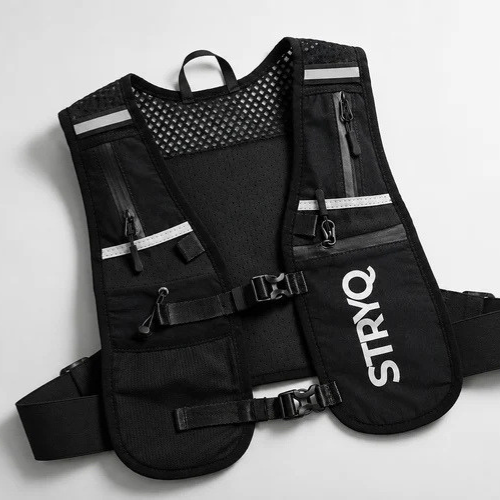
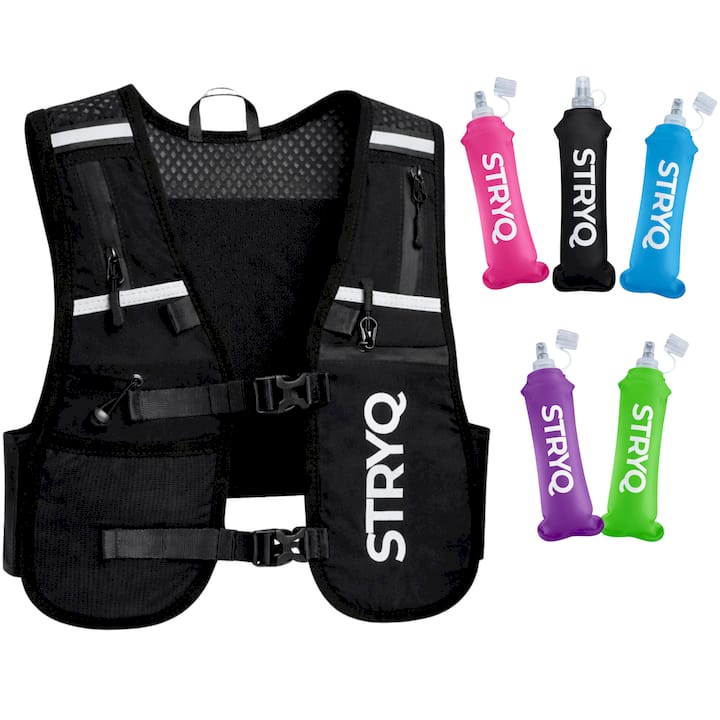
Stryq built the hydration running vest with adjustable straps and a sternum clip designed specifically to stop the lateral strap walk that causes most of the collarbone and rib chafing covered above. Multiple pocket positions also mean you can balance load across your front rather than piling weight into one soft flask, which keeps the vest’s geometry stable as you drink through a run.

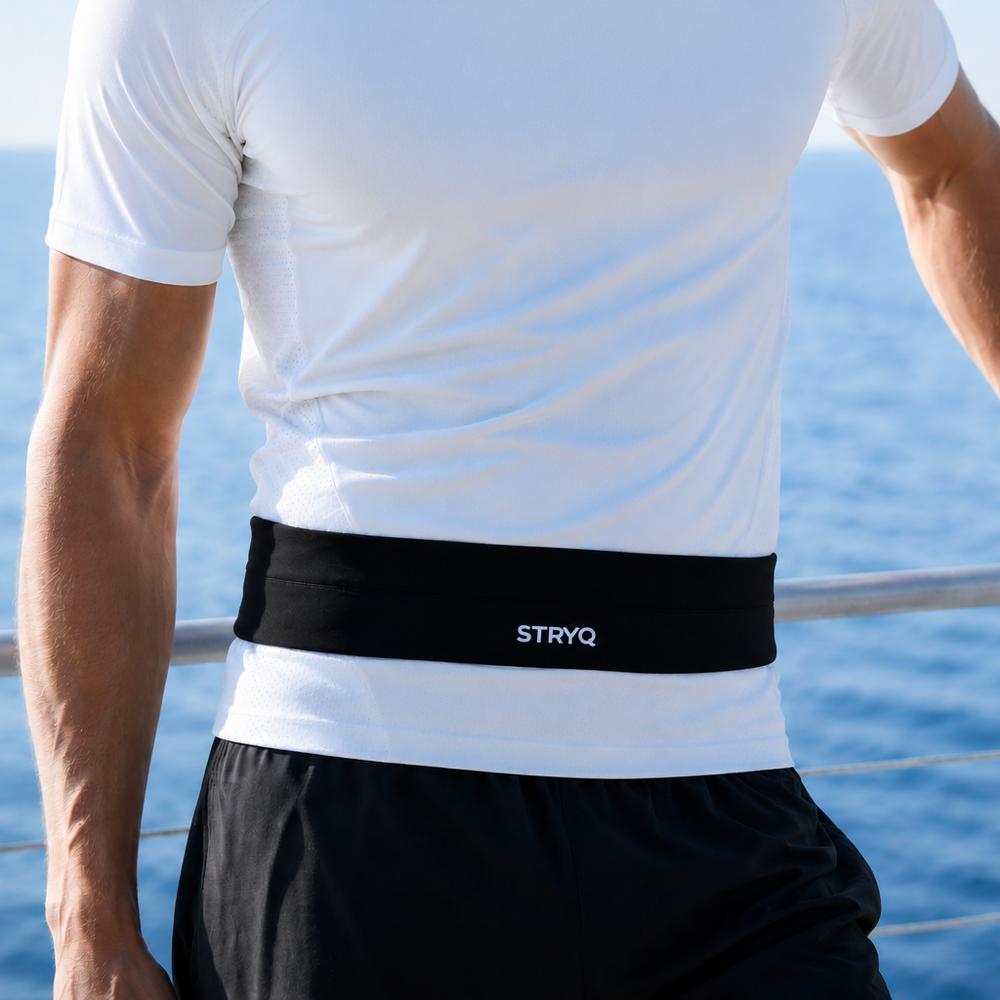
Pairing the vest correctly matters as much as the vest itself. The green 500ml hydration vest bottle and the black soft flask are both sized to sit flush in front pockets without bulging or shifting, while the pink and purple 500ml flasks and the collapsible blue bottle give you options to split weight evenly across both sides as you drink down. If you’re recovering from chafing and want a lower-contact carry option for shorter runs, the running belt sits at the waist rather than across the collarbone entirely.
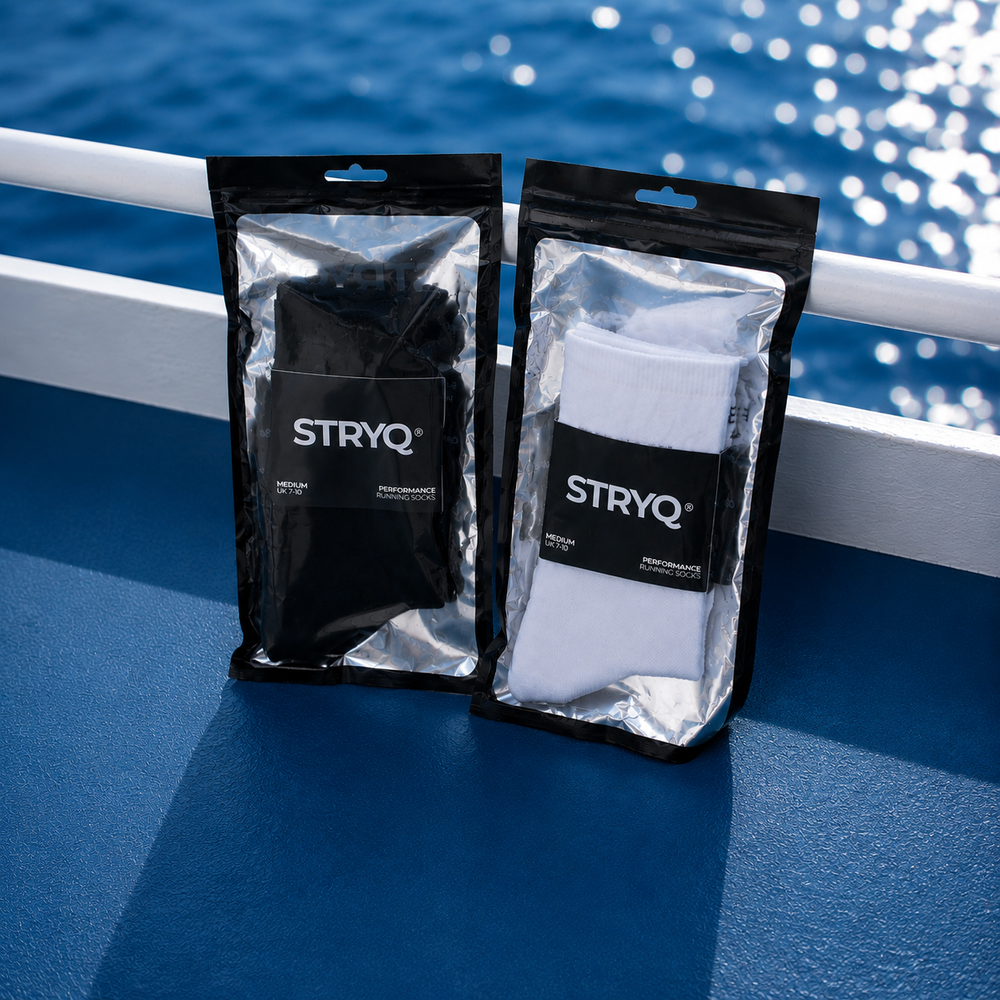
Under the vest, Stryq’s running socks in black or white are built with the same seam-free, moisture-wicking priority as the vest straps, so you’re not fighting friction from your feet up while you’re managing it everywhere else. Head to the hydration running vest page to check sizing against your torso measurement and get the fit right before your next long run.
Sources
- The Best Science-Backed Way to Stop Chafing — Time
- Chafing — Cleveland Clinic
- The running vest problem nobody talks about — Friction Prescription
- The 4 Best Running Hydration Vests of 2025: Tested — REI
- The best anti-chafing sticks — Men’s Health