A running vest that creeps up your shoulders, rubs under your arms or sends soft flasks bouncing is hard to ignore after the first mile. The best lightweight running vests for women should do the opposite. They should carry water, fuel and essentials securely enough that you can get on with your run.
For many runners, a vest becomes useful long before ultra-distance training. A warm day, a longer weekend run, a hilly trail route or a marathon build can all make pockets alone feel limiting. The right vest gives you practical storage without the bulky, restrictive feel that puts people off wearing one.
What a lightweight running vest should do
Lightweight does not simply mean the lowest number on the label. A very minimal vest can be ideal for a short race, but it may be frustrating if it cannot carry the water, phone and nutrition you genuinely need. What matters is low weight combined with a stable fit and sensible access to your kit.
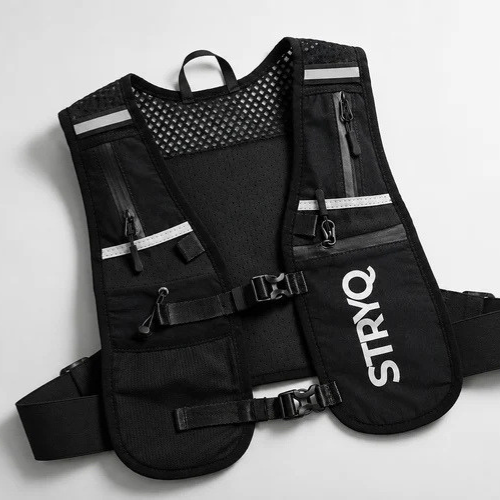
A good vest sits high and close around the torso rather than hanging from the shoulders. It spreads the load across your chest and upper back, helping to reduce bounce when you run downhill or pick up the pace. You should be able to reach a gel, soft flask or jacket pocket without stopping and taking the vest off.
The aim is simple: no bounce, no bulk, and no need to spend every few minutes adjusting your straps.
Why fit matters more than the label
Women often find that a unisex vest can technically fit but still feel wrong. The chest straps may sit too high, the armholes may rub, or the body length may be too long for a shorter torso. None of these issues are minor on a two-hour run.
Look for a vest with adjustable chest straps that can be positioned comfortably around the bust, rather than forcing pressure across it. The side panels should pull the vest snug without needing to be overtightened. If you have to cinch every strap to its limit, try another size or shape.
A vest should feel secure when loaded, not only when it is empty. Fill the flasks, add your phone and carry the layers you would normally take. Then jog up and down the road or stairs. A little movement is normal, but repeated bouncing, rubbing or shifting is a sign that the fit is not right.
Check the armholes and neck line
Chafing tends to appear where movement and moisture meet. Armholes are a common problem area, particularly if they sit close to the front of the shoulder. A neckline that presses into the base of your throat can also become irritating once you are breathing hard.
Wear your usual running top when trying a vest. A vest that feels fine over a thin summer vest may sit differently over a long-sleeve layer in winter. If you run in a sports bra with a racerback design, make sure the rear panel does not catch or bunch against the straps.
Choose adjustment you can use mid-run
Elasticated chest cords and easy-pull side adjustments are useful because your load changes during a run. As you drink, the vest can become looser. If you are adding or removing a layer, you may need a small adjustment.
This does not mean more straps are always better. Too many loose ends can flap or feel fiddly in gloves. The best system is one you can understand and adjust without breaking stride.
How much capacity do you really need?
Capacity is usually measured in litres, but the right size depends on the run rather than your experience level. A first-time 10K runner may need a vest more than an experienced runner heading out for an easy 30 minutes, especially in warm weather or on a route without water stops.
For shorter training runs, a low-capacity vest is usually enough for a phone, keys, a gel or two and a small amount of water. For long runs, trail sessions and marathon training, you may need room for extra fuel, a light waterproof, gloves, tissues and more hydration. If you use your vest for commuting to a parkrun or carrying a larger jacket, that affects the choice too.
Avoid buying the biggest vest just in case. Extra material can mean extra warmth and more potential movement. However, choosing a vest that is too small often leads to stuffed pockets, awkward access and a jacket strapped on the outside. It is better to match capacity to the runs you actually do most often.
Hydration: soft flasks or bladder?
Front soft flasks are popular for good reason. They keep water easy to reach, let you see how much you have left and reduce the need to twist round for a drink. As they empty, they shrink down, so there is less sloshing than a partly filled bottle.
They also make it easy to split drinks. You might carry water in one flask and an electrolyte drink in the other. For marathon training, this can be handy when you are practising the same hydration routine you plan to use on race day.
A rear hydration bladder can carry more water and may suit longer trail runs where refill points are scarce. The trade-off is that it can be harder to refill, clean and monitor. A full bladder also places more weight on your back, so fit becomes even more important.
For most road runners, front flasks offer the simplest setup. For long, remote routes, a bladder or a vest that gives you both options may be worth considering.
Storage that works while moving
Think about the items you need to access, not just the total number of pockets. Your phone should fit securely without bouncing. Gels should be easy to take out with one hand. A key needs a safe place where it will not scratch your screen or disappear into the bottom of a large compartment.
Stretch pockets are useful because they hold items close to the body as the load changes. A zipped pocket adds reassurance for valuables, though you should still check that its position is comfortable with your phone inside. Rear storage is best for items you will not need often, such as a packable waterproof or emergency layer.
For runners training through a British winter, a vest with enough room for gloves, a buff and a light layer earns its place quickly. In summer, breathable mesh and minimal fabric can make a noticeable difference when the temperature climbs.
Getting the fit right before race day
Do not save your first proper vest run for a race. Use it on several training runs, including one with the same water, fuel and clothing you expect to carry on the day. Small details become obvious when you are tired: a gel tab that is hard to reach, a chest cord that loosens, or a flask that sits too high.
Start with the vest snug enough that it does not move when you hop or jog. Fill your flasks and tighten the side adjustments evenly. The vest should feel like part of your running kit, not a bag strapped to your back. Recheck the fit after ten minutes, because straps and fabric can settle once you are moving.
If a hot spot appears, do not assume you need to tolerate it. Try adjusting the chest straps, changing the layer underneath or moving an item to another pocket. Persistent rubbing may mean the vest shape is not right for you.
Lightweight running vests for women: practical buying checks
Before choosing between lightweight running vests for women, focus on the questions that affect every run. Does it fit your torso and chest comfortably when loaded? Can you carry enough water for your usual route? Can you reach your essentials without stopping? And will it still work when the weather changes?
Material quality matters here too. Lightweight fabric should still feel dependable at the seams, around the flask pockets and at the adjustment points. A vest is repeatedly pulled on, filled, washed and worn against sweaty layers. Durable construction is not a luxury when it is carrying your phone, hydration and race fuel.
At STRYQ, the focus is on the practical details that help runners stay comfortable and prepared: a close fit, accessible hydration and storage that does not get in the way. The best choice is not necessarily the vest with the most pockets or the lowest weight. It is the one that solves your carrying problem without creating a new one.
Once your vest fits properly, keep your setup consistent. Put your phone, fuel and keys in the same places each time, and your longer runs become one thing less to think about.