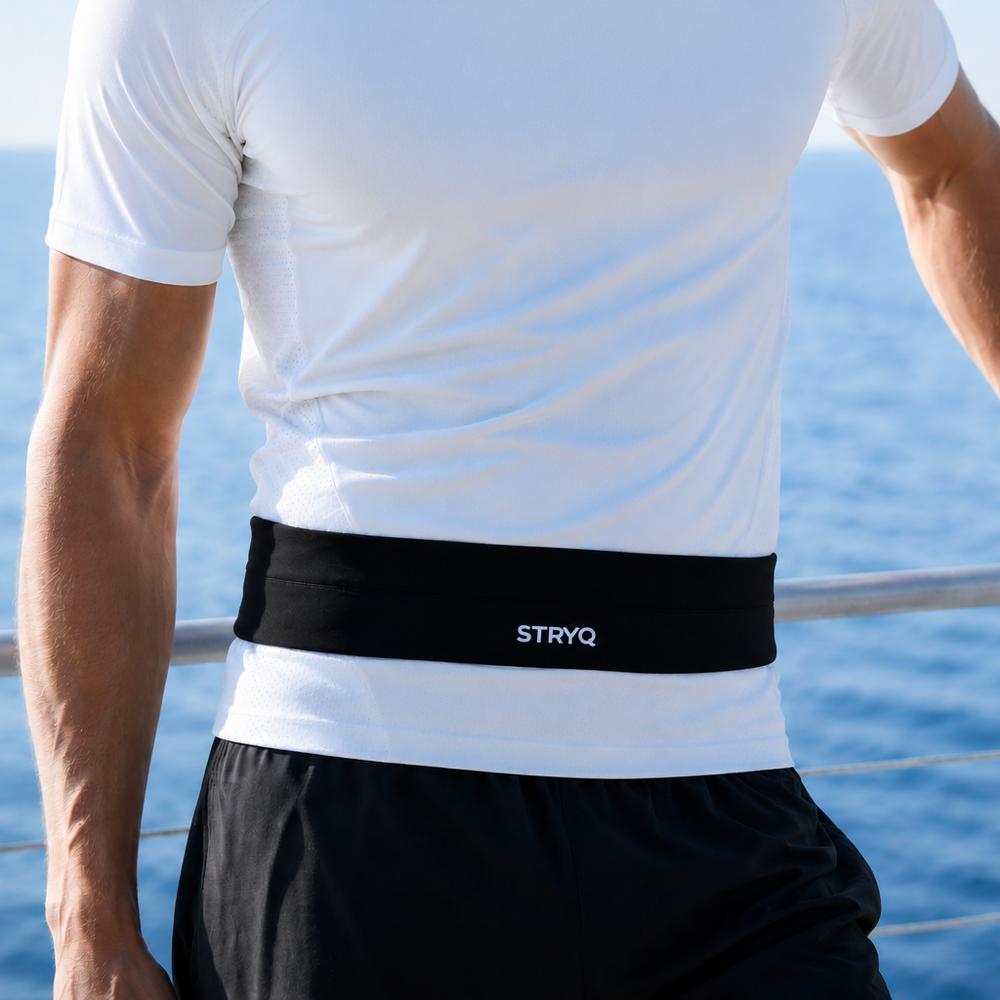
The last thing you need at mile 18 is a vest rubbing your neck, bottles bouncing against your ribs or gels buried where you cannot reach them. A lightweight running vest for marathon training should make carrying essentials feel simple. Once it fits properly, you should be able to focus on pace, fuel and the road ahead - not your kit.
For many marathon runners, a vest is most useful during long training runs. Race-day rules, weather and the number of aid stations may mean you need less capacity on the day itself. The right choice depends on what you genuinely need to carry, rather than buying the biggest vest available.
When a marathon running vest makes sense
A vest is not compulsory for every marathon. If your race has frequent water stations, you are happy with the drink provided and you can carry a few gels in shorts pockets or a running belt, you may prefer to run without one. Less kit can feel cooler and freer, particularly in a crowded city race.
A vest earns its place when it solves a problem. Perhaps you need a specific electrolyte drink that is not available on the course. Perhaps your long runs take you away from shops and water fountains. You may need space for extra fuel, your phone, keys, tissues, a light layer or inhaler. For trail marathons and self-supported events, capacity becomes even more useful.
The key is avoiding the common mistake of treating a vest like a small rucksack. Marathon kit should be purposeful. Every item adds weight, warmth or potential movement. Carry what supports your plan and leave the rest behind.
What to look for in a lightweight running vest for marathon
The best vest is not necessarily the lightest one on a product page. A very minimal vest that chafes or cannot hold enough fluid will be a poor choice after two hours of running. Look instead for low weight combined with a close, stable fit and enough accessible storage.
Fit comes before capacity
A good running vest sits high and close to your torso. It should not swing side to side when you turn a corner or bounce vertically when you pick up the pace. Adjustable chest straps help you tune the fit, but the vest also needs to suit your body shape when partly loaded.
Try it on with soft flasks filled, your planned fuel and the layers you expect to carry. A vest can feel perfect when empty and completely different with a litre of liquid in it. Move your arms as if running, breathe deeply and jog if possible. Check that the armholes do not cut in and that the chest straps sit comfortably rather than pressing across the wrong point.
Women and runners with smaller frames often benefit from a vest designed with a more considered chest fit. This is not only about comfort. A secure shape reduces movement, which reduces rubbing and the constant distraction of adjusting straps.
Choose capacity around your longest run
For most road marathon training, a compact vest of roughly two to five litres is enough. That usually gives room for two front soft flasks, fuel, a phone and a few small extras without tempting you to overpack.
Smaller capacity works well when you can refill regularly and only need a few gels. More capacity makes sense for warm days, remote routes, trail training or runners who prefer to carry a light waterproof. If your vest has a large rear compartment, make sure it compresses well when it is not full. Loose gear in a half-empty pocket can cause bounce just as easily as a badly fitted vest.
There is a trade-off here. Carrying more water gives you control, but it adds weight. One litre weighs one kilogram before you add the vest, fuel and phone. Plan refill points on your route where possible, then carry enough to bridge the gaps rather than automatically filling every flask.
Keep hydration easy to reach
Front-mounted soft flasks are popular for good reason. You can drink little and often without changing your stride or reaching behind you. They also shrink as you drink, helping to reduce sloshing and movement.
For many runners, two 500ml soft flasks offer a practical set-up for long runs. That does not mean everyone needs to start with a full litre. Your fluid needs change with temperature, effort, sweat rate and access to water. A cool, steady Sunday run requires a different plan from a humid marathon build-up session.
Practise with the same drink you plan to use in training and, where possible, on race day. If you use electrolyte tablets or powder, test the concentration too. A vest gives you the option to carry your preferred drink, but your stomach still needs to tolerate it while running.
Pockets should work while you run
Storage is only useful if you can get to it. Front pockets are the best place for gels, chews, salt tablets and anything you will use frequently. You should be able to take fuel without stopping or twisting around.
Put heavier, less-needed items close to your back and as high as the pocket design allows. A phone is usually most comfortable in a secure rear or side pocket, while keys should be zipped away so they cannot work loose. If you carry a jacket, roll it tightly and make sure it cannot move around as the run goes on.
Think through your fuelling order before leaving home. Put the first gel in the easiest pocket, then arrange the rest in sequence. It sounds small, but at marathon effort, simple habits save mental energy.
How to stop bounce and chafing
Most vest problems are set-up problems rather than proof that a vest is wrong for you. Start by filling your bottles and tightening the chest straps enough to hold the vest close. The fit should feel secure, not restrictive. You should still be able to breathe deeply and expand your ribcage.
Check the fit again after ten minutes of running. Soft flasks reduce in volume, layers shift and your posture can change as you settle into pace. A small adjustment early is better than tolerating an annoying rub for 20 miles.
Chafing tends to appear at the neck, armholes, chest straps and lower back. Wear the top you plan to use for long runs, especially if it has seams or a high collar. Anti-chafe balm can help at known hot spots, but it should not be used to disguise a poor fit. If a vest consistently rubs in the same place, adjust the load, straps or size.
Avoid loading one side more heavily than the other. Even weight distribution helps the vest sit still. It also makes your running feel more natural when fatigue sets in.
Train with your marathon vest, not just in it
Do not buy a vest in the final fortnight and hope for the best. Use it on several long runs, including at least one run close to the duration you expect on marathon day. This is where you learn whether your bottles are easy to refill, how much fluid you actually drink and whether your preferred gels fit in the front pockets.
Use different conditions as part of the test. Run in rain if you can, wear a light layer beneath it on a colder morning and see how it feels when full versus nearly empty. A vest that is comfortable for 60 minutes may reveal pressure points after three hours.
It is also worth practising the small race-day actions. Can you open a gel with cold fingers? Can you replace a flask while jogging? Can you get your phone out without dropping it? Familiar kit makes these moments routine rather than fiddly.
A sensible marathon-day set-up
Your race vest should carry only what the event and your plan require. For a typical supported road marathon, that might mean your own drink in one or two soft flasks, the fuel you know works, phone, keys and a few essentials. Check the event rules before you travel, particularly if you plan to use a hydration bladder or carry poles for a trail event.
Consider the weather honestly. A warm forecast may justify extra fluid, while cold conditions may call for a packable layer or gloves at the start. Do not let anxiety turn the vest into a cupboard. Most runners are better served by a stable, lightly loaded vest than an overfilled one.
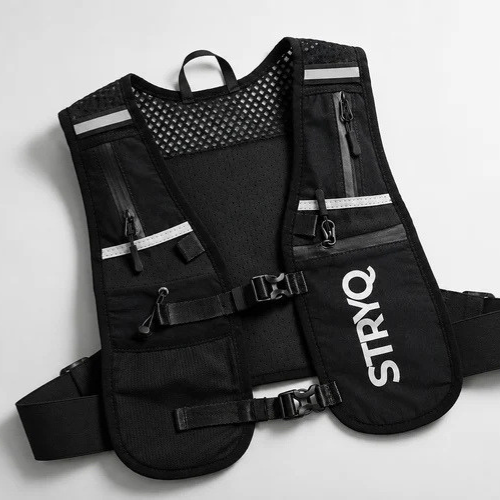
STRYQ running vests are designed around that principle: secure storage, easy-access hydration and a close fit that keeps bulk to a minimum. Whatever vest you choose, the aim is the same. No bounce. No bulk. Just the items that help you run your race.
A marathon is long enough without negotiating with your gear. Test your set-up on the miles that do not matter, make small changes as you learn, then arrive at the start line wearing something that already feels familiar.