Carry your phone and ID first, and take cash only if you have a clear reason, such as a bus fare, a post-run coffee or an emergency. If you do, keep a few crisp small notes, not a wallet’s worth. Below we cover when cash makes sense, what to bring, and how to store it dry, hidden and comfortable.
TL;DR:
- Add an emergency contact to your ID or phone lock screen, carry one cancelable card, and limit cash to a few small notes.
- Cash is most useful when card systems fail or a route offers no easy return; routine short runs rarely justify carrying it.
- Carry a few £5 or £10 notes, with at most one £20; a thick roll adds bulk and theft risk.
- Choose a zipped belt for shorter runs or internal vest pockets for longer distances, then test the loaded setup for bounce, rubbing, and chafing.
- Seal notes in a small resealable bag, pill container, or cleaned lip balm tube, keep them away from gels, and replace them after sweaty runs.
Table of Contents
- When does it make sense to carry cash on a run?
- What should you carry: ID, a card and the right notes?
- How can you carry cash securely and comfortably?
- How do you protect cash from sweat, damage and loss?
- What quick hacks help in an emergency?
- Which priorities should guide every runner?
- Which STRYQ products make carrying cash and essentials easy?
- FAQ
- Sources
When does it make sense to carry cash on a run?
Most runs do not need cash. Your phone does more than a handful of notes ever will, which is why running-safety experts put a phone first and ID second, and say that if you carry one thing for an emergency, it should be those two.
Cash earns its place in a few situations:
- A short post-run purchase, such as a coffee or a bottle of water, at a shop with a dodgy card reader.
- A local bus or train fare home when you have run further than planned.
- A rare outage where cards and cash machines are offline.
- A point-to-point route where you cannot easily double back.
US preparedness guidance backs the idea of a small cash reserve for emergencies, and FEMA’s financial preparedness guide lists cash and change among the items to keep accessible. That is a household plan, not a daily habit, so treat it as a reason to carry a little occasionally, not every run.
There is a trade-off. New York police running-safety advice says to avoid jewellery and visible valuables, because anything on show can attract theft. Keep any cash out of sight.
What should you carry: ID, a card and the right notes?
Build your kit in order of importance. Your phone comes first, then ID, then a card, then cash.
- Phone and ID: The Road Runners Club of America advises carrying a phone and ID, or a medical ID band, so first responders can identify you and reach your contacts.
- Emergency contact: Put a name and number on your ID card or phone lock screen. Write it on a slip of paper if you run without a phone.
- One card: A single debit or credit card pays for almost anything and is easy to cancel if lost. Notes cannot be cancelled.
- A few small notes: Preparedness guidance from the FDIC favours small bills for emergencies, and FEMA’s guide suggests ones, fives and tens, with a twenty as the largest. We translate that for UK runners as a few £5 and £10 notes, and a single £20 at most.
If you are tempted to carry a thick roll, remember that it adds bulk and risk. Small change also gets accepted more readily on buses and in kiosks.
How can you carry cash securely and comfortably?
The best method depends on how far you run. Whichever you choose, the aim is the same: no bounce, no rub and no visible bulge.
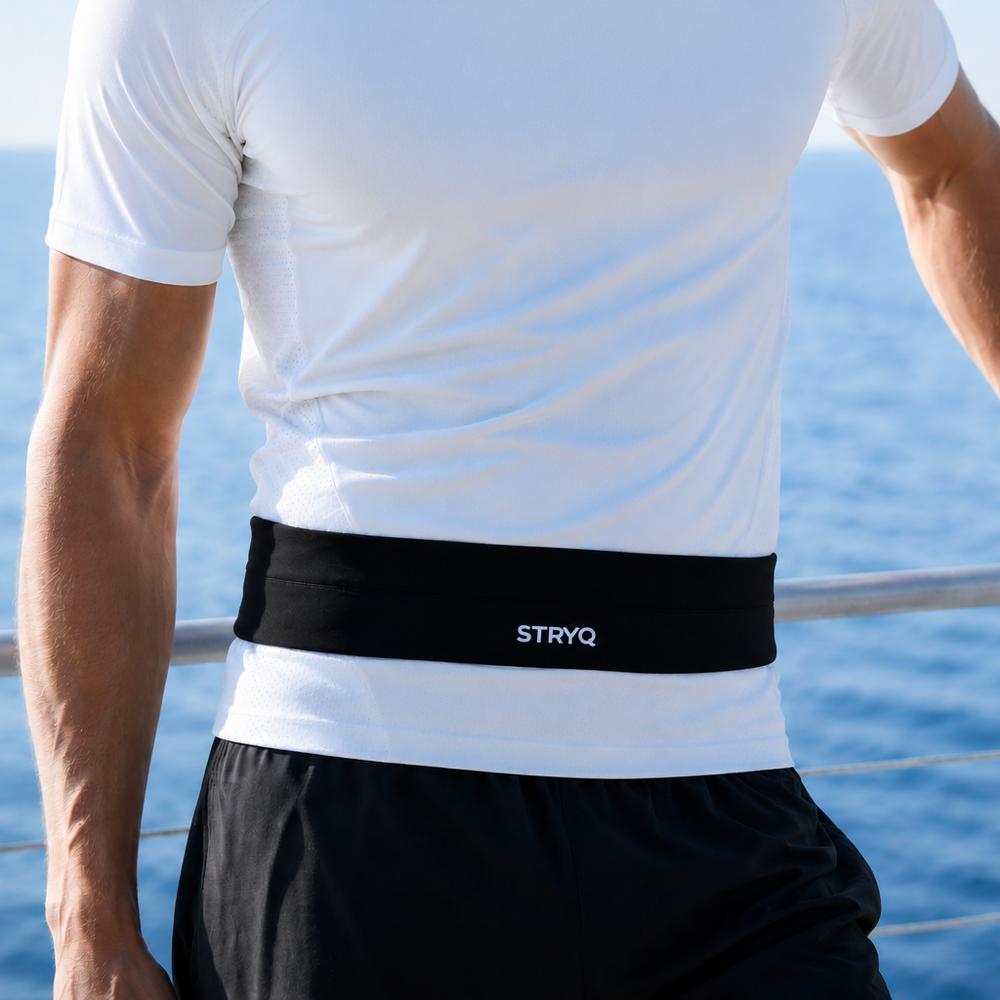
- A no-bounce waist belt. A snug belt sits low and stays put, and the zipped inner pocket keeps folded notes flat beside your card and phone. Runner reviews have long noted that small belts and pouches hold keys, cards and a little cash with minimal movement. Our guide on how to choose a running belt that stays put covers fit in detail.
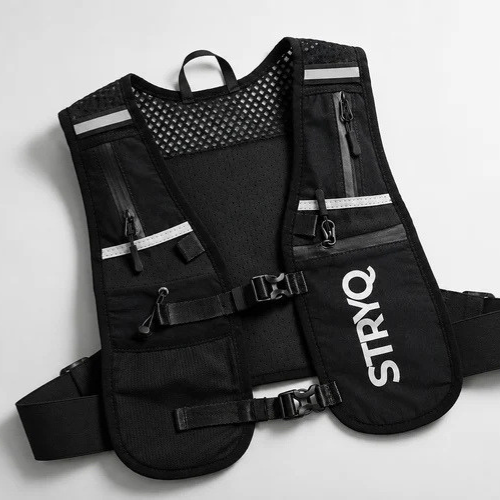
- A hydration vest. For longer runs, a vest has small internal pockets that keep notes and cards secure and out of sight, close to your body.
- Minimalist options. Shorts with a zipped pocket, a sewn sock pocket or a flat note tucked under the shoe tongue suit short, light runs.
- A waterproof container. A resealable bag, a pill bottle or a cleaned lip-balm tube stops sweat reaching the paper.
- Smart placement. Keep cash under a layer or in a zipped pocket. Leave wallets, watches you would hate to lose and jewellery at home.
Pro Tip: Test any carry method on a training run before race day. Run with the belt or vest loaded for the full distance and check for bounce, rubbing and wet notes.
Comfort matters as much as security, so check for chafing too. A test-your-gear approach works for any new kit.
How do you protect cash from sweat, damage and loss?
Sweat is the main enemy of paper money. Practitioners report that sweat can soak, tear or stick notes together, and they recommend resealable baggies, pill containers or repurposed lip-balm tubes to keep emergency cash dry.
- Use a small resealable bag or pill container as your first layer, and squeeze out the air.
- Try a cleaned lip-balm tube as a cheap, hard-sided option. It also looks like nothing to anyone watching.
- Fold notes neatly and keep them away from gels, salty snacks and anything sticky, which can tear or glue them.
- Swap in fresh notes after a very sweaty run. A limp, damp note is more likely to be refused at a till or ticket machine.
- Keep cash in a different pocket from your phone so a leaking flask does not ruin both.
If a note does get wet, dry it flat at room temperature before you use it, never on a radiator.
What quick hacks help in an emergency?
You can adopt these today, whether you run daily or only on race day.
- Lip-balm tube or pill bottle method. Empty and clean the container, fold one or two notes tightly, roll them and slide them in. Seal the lid and stash it in a zipped pocket. This runner hack keeps notes dry and hides them.
- ID in the phone case. Slip a card with your name and contact into the back of the case, or wear a medical ID band.
- Shoe-tongue note. Write an emergency contact on a slip or on the tongue of an old pair, then tuck it under the laces.
- One card, zipped away. If you prefer plastic, keep a single card in a zipped belt pocket, under a layer, so it never shows.
Which priorities should guide every runner?
Here is my view after weighing the evidence. Your phone and ID are essential, and cash is a conditional convenience, not a requirement. A tiny reserve for a fare or an emergency is sensible, but it should never be the reason a run feels clumsy or risky. We build and test our gear with that hierarchy in mind: secure storage that stays comfortable mile after mile. Whatever you choose, trial it on a training run before you rely on it in a race. If something bounces, rubs or gets wet at 5K, it will be worse at 15K.
— martin
Which STRYQ products make carrying cash and essentials easy?
We design our gear so runners can carry essentials without thinking about them. Each item is developed from runner feedback and tested before launch.

- STRYQ RUNNING BELT: A practical way to carry your card, ID, a few small notes and your phone, ideal for everyday runs.
- STRYQ HYDRATION RUNNING VEST: Multiple pockets and secure bottle storage for longer runs.
- STRYQ 500ml Running Soft Flask: A lightweight option for hydration on the run.
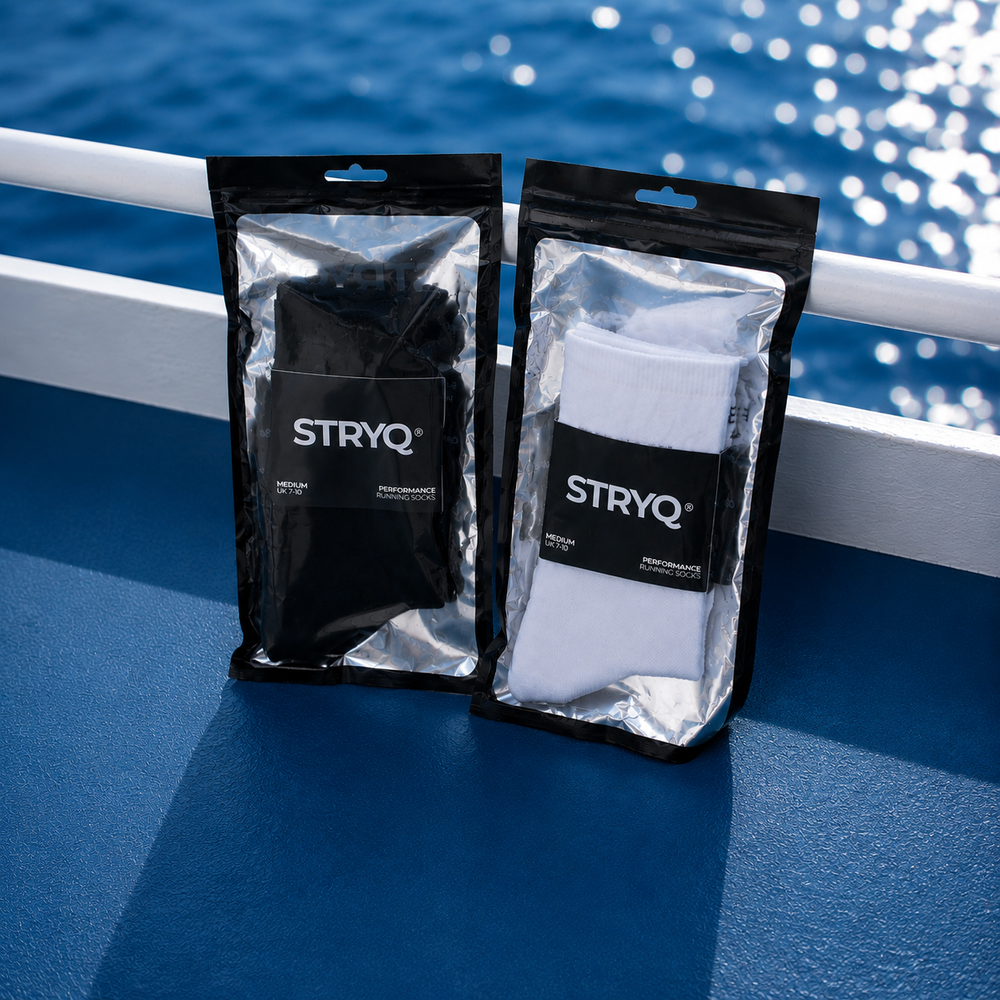
- STRYQ Running Socks: A comfort extra while you trial different carry methods.
Browse the full running gear collection and pick the setup that suits your distance.
FAQ
Can you legally carry more than $10,000 in cash?
Yes, in general. The IRS Form 8300 rules apply to businesses that receive cash in the course of trade, not to what an individual owns or carries. It is also a bad idea to run with that much, as it makes you a target.
Should runners carry cash at all?
Not by default. Carry your phone and ID first, and add a few small notes only if you have a reason, such as a fare or an emergency.
What is the safest place to hide cash on a run?
Use a zipped pocket in a belt or vest, under a layer. A sealed container such as a cleaned lip-balm tube keeps notes dry and out of view.
How do you keep notes from getting soaked in sweat?
Seal them in a small resealable bag or pill container and keep them away from gels. Replace notes that have been soaked, since worn, wet ones are more likely to be refused.