The three most reliable ways to carry sunglasses while running are tucking them on your cap or temple, storing them in a low-bounce belt or vest pocket, or securing them with a retainer strap or clipped soft case. Short runs suit the cap or strap method, long runs reward a pocket with a soft case, and trail runs call for the most secure retention option. Whatever method you choose, pick sunglasses with 100% UV protection for outdoor activity (UV 400).
TL;DR:
- For intervals, a retainer strap avoids repeated pocket stops, while cap placement can loosen during hard efforts, sharp turns, or without a cap.
- Fold sunglasses before pocketing them, preferably in a soft case; front pockets allow quick access, while back pockets reduce impact from arm swing.
- On trails or in changing weather, pair a close fitting retainer with a secured soft case; loose cap placement risks drops, moisture, and scratched lenses.
- Check for UV 400 before considering tint or price; polarization cuts glare but adds no UV protection and can obscure some watch or phone displays.
Table of Contents
- Step-by-step methods to carry sunglasses on a run
- Choosing a carry method by run type
- Why UV protection and polarisation matter for runners
- How STRYQ gear solves the sunglasses carry problem
- A note from the author on testing carry methods
- FAQ
- Sources
Step-by-step methods to carry sunglasses on a run
Each method below suits a different kind of run, and knowing the mechanics of each one prevents the usual problems: bounce, fogging and lost lenses.
On-cap or hat placement works by hooking the temple tips over the brim of a cap, or sliding the frame to the back of the head with the arms resting against the skull. This stays secure at easy paces on flat ground but can shake loose during hard efforts, sharp turns or when a cap is not worn.
Belt or vest pocket storage is the steadiest option for most runs. A front pocket keeps sunglasses within easy reach, while a back pocket reduces the chance of impact during arm swing. Folding the sunglasses closed before placing them in a pocket, ideally inside a soft case, stops the lenses knocking against keys, gels or a phone.
A soft case clipped to a zipper or strap spreads the weight away from the lenses and keeps the rim protected from impact. A small carabiner or a sewn loop on a vest does the job without adding noticeable bulk.
Retainer straps, whether silicone cord or neoprene, hold the glasses around the neck or against the head. Getting the tension right matters: too loose and the strap bounces, too tight and it slips forward under sweat.
Temporary stowing, such as tucking the frame into a collar or waistband for a very short stretch, works only briefly and only when you can retrieve the glasses within seconds. Leaving them wedged against skin or fabric for longer increases the risk of scratched lenses or a fall.
- Fold sunglasses before pocketing them to stop the arms splaying and catching on fabric.
- Choose a back pocket for storage and a front pocket for anything you need mid-run.
- Check strap tension before you set off, not once you are already moving.
Pro Tip: Thread a retainer strap through the vest’s rear loop as a backup, so a dropped pocket item does not mean a lost pair of sunglasses.
Choosing a carry method by run type
Matching the method to the run avoids both wasted effort and lost gear.
- Short runs and intervals: go for the cap placement or a retainer strap, since pockets add a step you do not need for a 20-minute loop and repeated digging in and out of a pocket during intervals increases the chance of a drop.
- Long runs: prioritise a belt or vest pocket paired with a soft case, and add a strap as backup so a bouncing pocket never costs you the glasses entirely.
- Trail runs: favour retention over convenience: a close-fitting strap or a case secured inside a vest pocket handles uneven footing and branches far better than a loose cap placement.
- Wind, rain or changing light: combine a strap with a case, since fluctuating conditions mean more time with sunglasses off and more time for lenses to pick up scratches or moisture.
Why UV protection and polarisation matter for runners
Lens protection is not just about keeping sunglasses scratch-free. The American Academy of Ophthalmology names 100% UV protection, often labelled UV 400, as the single most important feature to look for, well ahead of tint or price.
Polarisation reduces glare from road surfaces and water but does not add UV protection on its own, according to Harvard Health.
Frame shape plays a part too: Cleveland Clinic advises that larger or wraparound frames protect both the eyes and the surrounding skin better than smaller lenses, which matters on long outdoor sessions.
- A soft pouch protects lenses from scratches between runs; a hard case suits travel or days off.
- Polycarbonate lenses resist impact better than standard plastic, useful for trail running.
- A microfibre cloth carried in a pocket handles sweat smears and light fogging mid-run.
UV 400 labelling is the detail worth checking before anything else on the sunglasses themselves: it confirms 100% UV protection regardless of lens colour or price.
How STRYQ gear solves the sunglasses carry problem
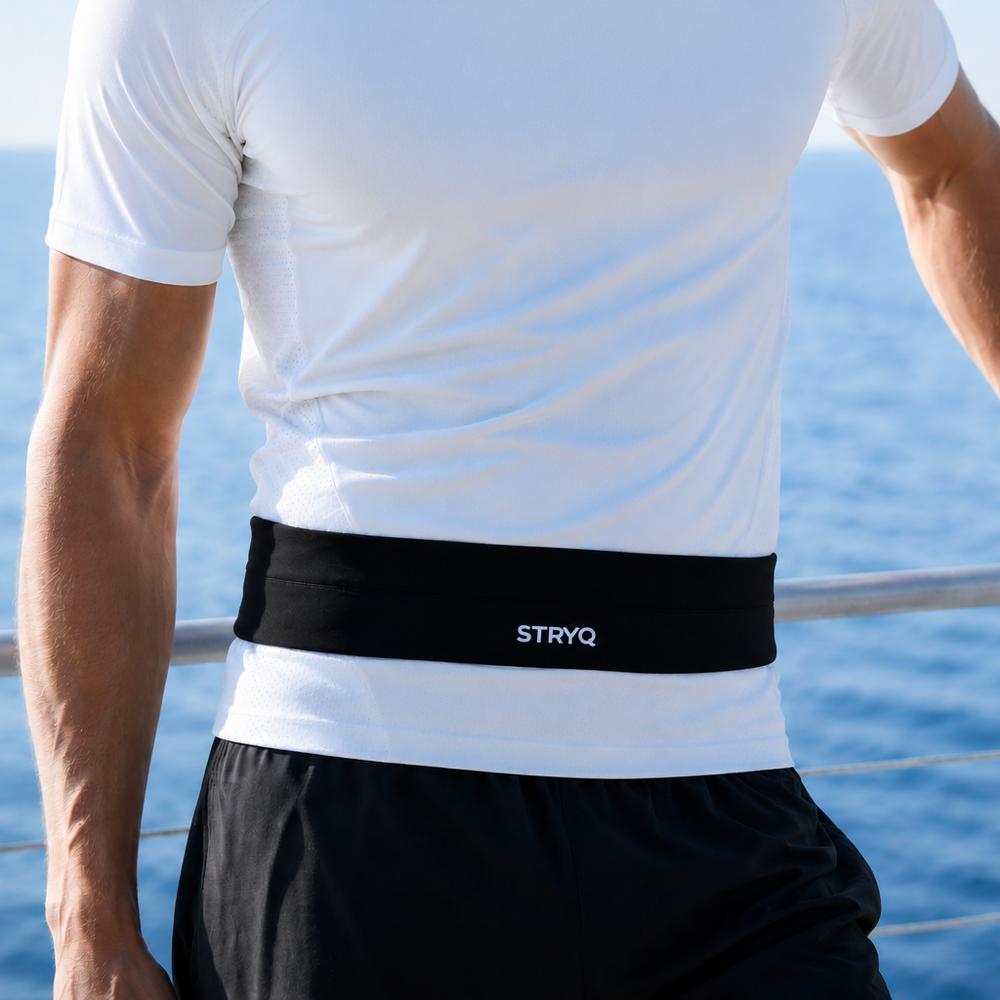
Pocket space is the real constraint on most runs, and that is the problem we built our gear around. The STRYQ RUNNING BELT gives you a dedicated, low-bounce pocket where sunglasses can sit folded and protected, away from keys and gels that would otherwise scratch the lenses.

- Fold sunglasses into the belt’s main pocket for short and medium runs where quick access matters most.
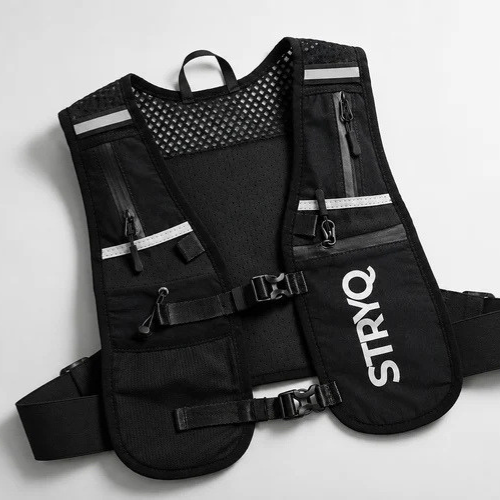
- Clip a soft case to the hydration vest’s front loop for long runs, keeping the lenses away from arm swing.
- Pair the belt with the STRYQ Blue Collapsible Running Bottle 500ml on long runs, so hydration and eyewear storage sit in the same low-bounce setup.
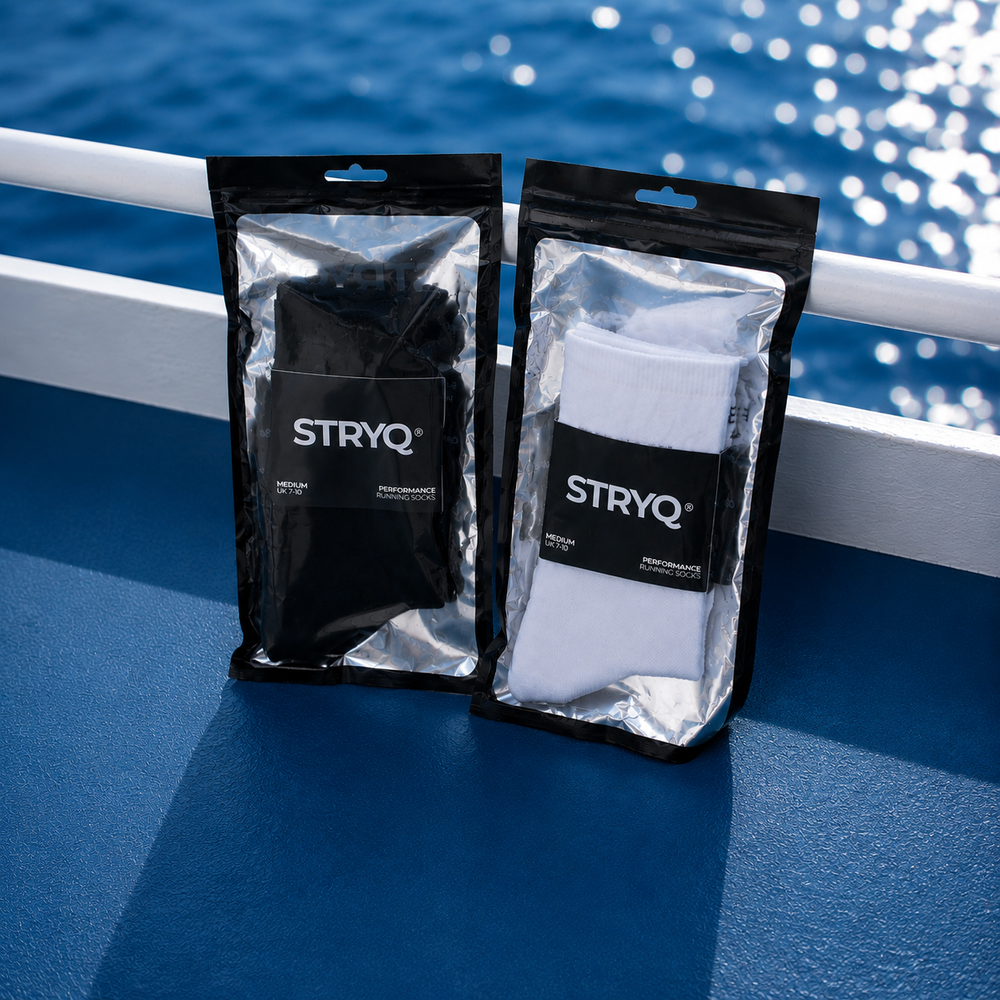
Our running belt and vest range is built from runner feedback on exactly this kind of everyday carry problem: keeping small essentials secure without added bulk. For a full kit on long runs, our running socks and STRYQ Running Socks - Black round out a setup built for comfort over distance.
A note from the author on testing carry methods
Years of trial and error on daily runs taught me which carry methods actually hold up past the first kilometre, not just at the start line. Our product range is shaped by that same real-world feedback, tested and revised by UK runners before anything reaches the shop. If you have found a carry hack that beats the ones here, we would genuinely like to hear it.
— martin
FAQ
Do you need special sunglasses for running?
Polycarbonate lenses and venting to reduce fogging are worth looking for if you run often, according to specialist running gear guidance.
How do you carry sunglasses when not wearing them?
The steadiest options are a cap or temple placement for short runs, a belt or vest pocket with a soft case for longer runs, or a retainer strap for trail and off-road sessions. Folding the glasses before pocketing them prevents the arms catching and the lenses knocking against other items.
Is there a downside to wearing sunglasses?
Polarised lenses can make certain LCD screens and instrument panels harder to read, which is worth knowing if you check a running watch or phone screen often, per American Academy of Ophthalmology guidance. Otherwise, properly UV-rated sunglasses carry no real drawback for runners and mainly add comfort and eye protection.
Who should avoid polarised sunglasses while running?
Runners who rely heavily on reading a screen mid-run, such as checking pace data on certain displays, may find polarised lenses make that harder. For most other runners, polarised lenses are a comfort choice for glare rather than something to avoid, provided they also carry full UV protection.
Sources
- How to choose the best sunglasses to avoid sun damage - American Academy of Ophthalmology
- Importance of wearing sunglasses this summer - Cleveland Clinic newsroom
- Polarized sunglasses: protecting your eyes from harmful glare - Harvard Health