The first long run that goes wrong is rarely ruined by your legs alone. It is often a mobile phone bouncing in a pocket, a gel packet rubbing your waist, or the realisation that the water fountain is out of order. Carrying essentials on long runs should make you feel prepared, not weighed down. The aim is simple: take what you genuinely need, keep it easy to reach, and forget it is there once you start moving.
What counts as essential changes with the distance, weather and route. A 75-minute run close to home needs a different setup from a three-hour marathon session on rural paths. The right carrying system is the one that lets you run naturally, with no bounce, no bulk and no constant adjustments.
Start with the run, not the kit
Before choosing a belt or vest, look at the session in front of you. Think about duration, temperature, access to water and shops, how isolated the route is, and whether you will finish in different weather from the one you start in.
For a steady run of up to around an hour, many runners only need a mobile phone, keys and perhaps an inhaler or emergency medication. Once you move beyond 75 to 90 minutes, water and fuel become more likely to matter. During marathon training and trail runs, you may also need an extra layer, gloves, sunscreen, a card or cash, and a way to get home if something changes.
This is not about packing for every possible disaster. Overloading your kit can be as distracting as carrying too little. It is about making sensible choices for the conditions and giving yourself enough margin when plans change.
Carrying essentials on long runs: choose the right setup
A running belt and a hydration vest solve different problems. Neither is automatically better. The best choice depends on how much you need to carry and how you prefer weight to sit on your body.
When a running belt is enough
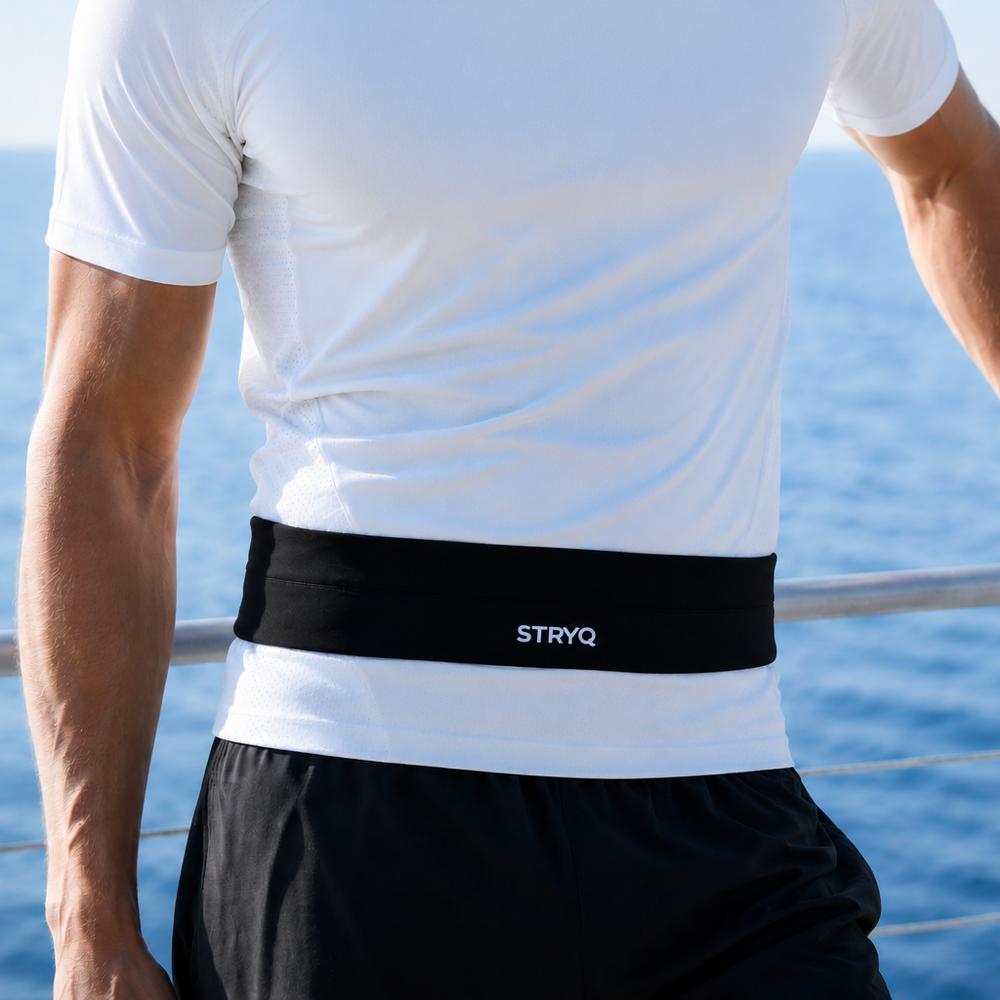
A well-fitted running belt works brilliantly for road runs where water is available, or for sessions where you only need small items. It keeps your mobile phone, keys and gels close to your centre of mass, without covering your back or shoulders.
Look for a secure fit rather than simply choosing the biggest pocket. A loose belt will move as you tire, especially when loaded with a mobile phone or soft flask. A good belt should sit firmly around the waist or hips without digging in. You should be able to breathe deeply and rotate your torso without it rolling or creeping upwards.
Belts are particularly useful for runners who dislike the feel of a vest, run in mild conditions, or want a simple option for parkrun, weekday miles and race day. They are less suitable when you need to carry substantial water, a jacket and several hours of nutrition.
When a hydration vest makes more sense
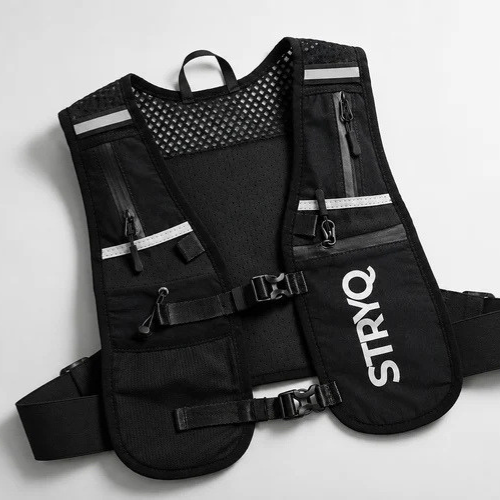
A hydration vest comes into its own when water is non-negotiable. That might be a warm summer long run, a route with no reliable refill points, or any session lasting two hours or more. It also gives you more usable storage without stuffing every pocket in your running kit.
The key is fit. A vest should wrap around your torso, not hang from your shoulders. Adjust it while loaded, then jog for a minute before leaving the house. If it bounces in the hall, it will bounce more after 10 miles. Tighten the chest straps enough to stop movement, but not so much that your breathing feels restricted.
Soft flasks are often easier to manage than rigid bottles because they shrink as you drink. This reduces sloshing and keeps the load closer to your body. Front flask pockets also make hydration and fuelling quicker, so you do not need to break stride to reach around your back.
For runners building towards longer distances, a properly fitted vest can remove a lot of stress. STRYQ running accessories are designed around that practical point: secure storage should stay secure when your pace changes, your hands are cold, or the route gets longer than planned.
Pack by priority, not by pocket space
Start with the items that affect your safety or ability to complete the run. Then add comfort items only if they earn their place. A useful order is water, fuel, mobile phone, keys or payment, identification, and weather protection where needed.
Your mobile phone deserves a secure, sweat-resistant pocket. It is not just for music or tracking. It is your route backup, contact point and way to deal with an unexpected problem. Keep it somewhere you can access without taking off your vest or emptying half a pocket.
Keys should be kept separately from your mobile phone where possible. A small internal key clip or zipped compartment stops them scratching the screen and prevents the annoying rattle that becomes impossible to ignore after a few miles.
Fuel should be placed where you can reach it when tired. There is little value in carrying gels if they are buried under a jacket at the back of a vest. Put the next gel in a front pocket and keep the rest organised together. If you use chews, tablets or real food, test the packaging too. Fumbling with a stubborn wrapper while breathing hard is not a race-day skill anyone needs.
For routes away from home, carry basic identification and an emergency contact. A small card is enough. If you have a medical condition, include the relevant details. This weighs almost nothing and can make a genuine difference.
Hydration and fuel need a rehearsal
Long-run carrying is not something to sort out the night before a race. Your training runs are where you learn how much fluid you use, whether a flask is easy to drink from, and which foods your stomach tolerates.
Fluid needs vary hugely. A cool, easy-paced February run may require very little, while a humid July session can leave you thirsty far sooner than expected. As a starting point, consider the length and heat of the run, then plan refill opportunities rather than assuming you must carry all your water from the start. On some UK routes, public taps and cafés are useful. On others, they are not reliable enough to form the whole plan.
For runs lasting longer than around 90 minutes, practise taking carbohydrate regularly rather than waiting until you feel flat. The exact amount depends on your pace, body size and experience, but the habit matters most at first. Take a small amount early, then continue at planned intervals. Carry a little more than you expect to need when trying a new route or training in hot weather.
Electrolytes can be helpful when you are sweating heavily or running for several hours, but they do not replace drinking enough fluid. Test any drink mix before race day. A flavour that feels fine at your desk may be unpleasant after two hours of running.
Avoid the common comfort mistakes
The biggest mistake is buying capacity when you need stability. More pockets are useful only if the load stays still. Choose the smallest setup that comfortably carries your actual long-run essentials.
Also avoid putting all the weight on one side. Balance gels, flasks and heavier items where you can. A mobile phone on one side and nothing on the other may not feel dramatic at the start, but it can cause the belt or vest to twist over time.
Chafing is another issue that usually appears late. Check where straps, bottle tops and seams sit against bare skin. If you wear a vest over a thin top in summer, use the same combination on a long training run before relying on it for an event. A small adjustment to strap height or pocket placement can be more effective than adding more anti-chafing balm.
Finally, do not confuse accessible with exposed. Gels should be easy to grab, but valuables need a zipped or secure compartment. If your route includes stiles, busy paths or a café stop, you want confidence that nothing will work loose.
A simple pre-run check
Before a long run, check that you have enough water for the first section, fuel you have already tested, a charged mobile phone, keys or payment, and a layer if the forecast or finish time calls for it. Put each item in the same place whenever possible. Routine saves time and makes it obvious when something is missing.
Then do a short bounce test. Jog up and down outside, take a few deep breaths and reach for your first gel. If anything shifts, rubs or feels hard to access, fix it before you head out. Small irritations do not usually improve after mile 12.
The best carrying setup is not the one with the most storage. It is the one you stop noticing. When your water is within reach, your fuel is organised and your essentials stay put, you can give your attention back to the run itself.