A gel is easy to carry when you are standing still. Add a steady pace, a few layers, rain and tired hands, and it can become the thing bouncing in your pocket or stuck at the bottom of a vest. Knowing how to carry gels running means you can fuel when you need to, without breaking stride or losing focus.
The right setup depends on your distance, how many gels you use, what else you are carrying and whether you prefer everything close to hand. There is no single best answer. The aim is simple: secure storage, quick access and no bulk.
Start with how many gels you will need
For a short easy run, you may not need a gel at all. Many runners only start taking carbohydrate on runs lasting more than 60 to 90 minutes, depending on pace, fitness, what they ate beforehand and their own fuelling plan.
For a half marathon, you might carry two to four gels. A marathon could mean six to ten, particularly if you take one every 20 to 30 minutes. Longer trail runs often require even more, alongside water, electrolytes, a phone and mandatory kit. That changing load should guide where you store them.
Do not wait until race day to work it out. Take the number of gels you expect to use on a long training run, including any spare, and test your carrying method at your normal pace. A pocket that feels fine with two gels may sag or bounce with six.
How to carry gels running in a belt
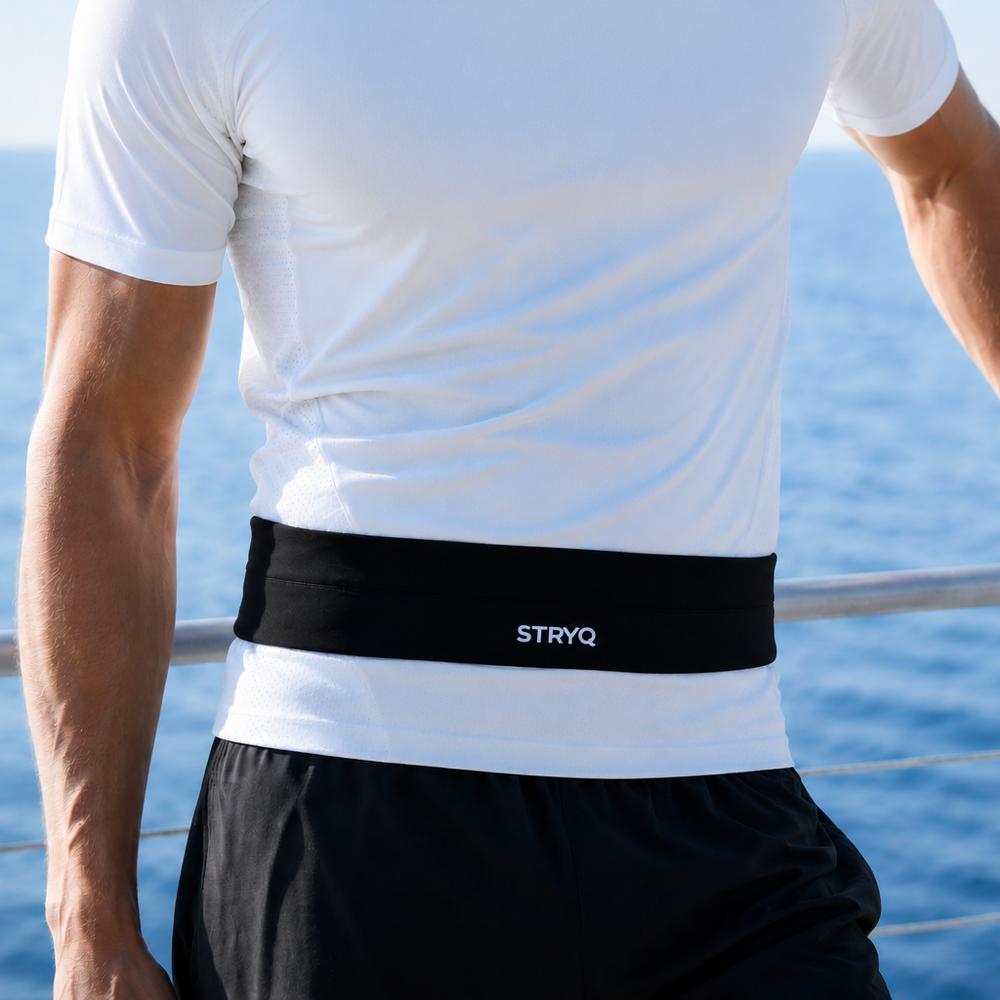
A running belt is often the simplest choice for road runners carrying a few gels, keys and a phone. It keeps weight around your waist rather than pulling at your shorts or jacket pockets. It also lets you keep gels separate from sweaty hands, loose keys and screens.
Look for a close, stable fit. A belt should sit snugly around the hips or natural waist, depending on its design, without needing to be tightened so much that it feels restrictive. Pack gels flat against the body rather than stacked in one heavy bundle. This spreads the load and makes bounce far less likely.
For most runners, arrange gels in the order you plan to take them. Put the next gel where you can reach it most easily and keep later gels in the main compartment. If you use caffeinated gels, keep them separate or turn them the other way round. It is surprisingly easy to grab the wrong one when you are tired.
A belt works especially well for 5K to half marathon training, road races and long runs where water is available at fountains or aid stations. Some runners can also carry soft flasks in a larger belt, but once your load includes significant water, a vest may feel more balanced.
Use shorts or leggings pockets for small loads
Modern running shorts and leggings can be excellent for carrying one to three gels. Side thigh pockets are useful because they keep gels flat and easy to reach. A rear waistband pocket can work well too, particularly for a single gel or a small phone.
The trade-off is capacity. Overfill a pocket and the fabric can pull down, the gel can rub against your leg or the packet can work its way upwards with each stride. Thin, lightweight race shorts may also have pockets that are fine for one gel but not a full marathon supply.
If you use pockets, keep the packet tabs facing upwards or towards the centre of your body. This reduces the chance of an edge digging into your skin. Test this with the exact shorts or leggings you plan to wear. Pocket depth and fabric stretch vary far more than most runners expect.
Avoid putting gels in a loose jacket pocket if you can. They swing around, make noise and are harder to find once gloves, a key or a packet of tissues are in there too. A zipped pocket is better, but it is still slower to access than a belt or vest pocket.
Choose a vest when water is part of the plan
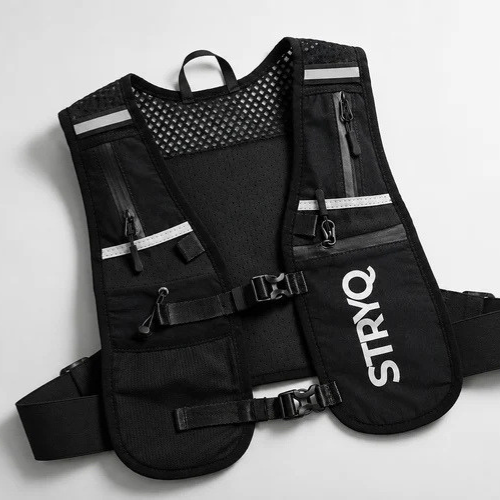
A hydration vest is the better option for marathons without reliable water stops, summer long runs, trail routes and ultras. The front pockets are designed for the things you need while moving: gels, soft flasks, salt tablets and wrappers. You can take fuel without reaching behind you or stopping.
Put the gels you will use first in the front pockets. Use the deeper or lower pockets for later gels and spares. If your vest has stretch pockets, avoid filling one side heavily while leaving the other empty. Balance matters, especially when you are carrying flasks.
A vest should fit close to the body with the chest straps adjusted before you set off. It should not sway when full. If it does, move items around before pulling the straps tighter. Overtightening can restrict breathing and cause rubbing, while a poorly balanced load still moves even when the vest feels tight.
For longer events, save one easy-to-reach pocket for empty wrappers. Do not rely on stuffing them back into a pocket with unopened gels. Wet, sticky wrappers can cling to packets and turn a simple fuelling stop into a frustrating rummage.
Carrying gels by hand: useful, but limited
Some runners hold one gel for the first part of a race, particularly when they plan to take it within the first 30 minutes. It is convenient and there is no chance of forgetting where it is. For a short race or fast session, that can be enough.
The downside is obvious after a few miles. Your hand is occupied, the packet can get slippery in rain, and you may unconsciously tense your arm. Holding several gels is rarely comfortable and is not a practical long-run solution.
If you like having the next gel immediately available, carry one in your hand and store the rest in a belt or vest. That gives you quick access without committing to holding packaging for the entire run.
Make gels easy to open while moving
Where you store a gel matters, but so does how you prepare it. Some runners tear a small notch into the top before setting off. This can make opening easier with cold fingers or when wearing gloves. Do not tear it so far that the gel leaks into your pocket.
Practise opening your usual brand at an easy pace. Packet sizes, tabs and thickness all differ. A gel that is easy to open in the kitchen may be awkward at mile 18 with wet hands.
Take gels with water where the product instructions recommend it. Water helps with texture and makes it easier to wash down a thicker gel. If you are relying on race water stations, think about timing. Taking a gel just before a station is often easier than carrying it around half-open while you look for a cup.
Avoid the common carrying mistakes
The biggest mistake is using untested gear on race day. A new belt can chafe, a vest may bounce when loaded, and pockets that seemed generous can become difficult to use with a race number pinned over them.
It also helps to avoid packing every item into one place. A phone, keys, gels and headphones in a single small pocket create a hard, lumpy mass that moves with every step. Split your kit by priority: fuel where you can reach it, valuables secured, water balanced and wrappers contained.
Finally, remember that gel carrying is part of your fuelling practice, not a separate gear decision. Rehearse when you will take each gel, where it sits and how you will drink with it. By race day, it should feel automatic.
A good carrying setup disappears once you start running. Your gels stay put, your stride stays relaxed, and when it is time to fuel, everything is exactly where it should be.