To stop water sloshing, purge most of the air from the bladder while it stands upright, keep the hose full between sips, and tighten your vest or belt so the reservoir sits flat against your back. That routine takes only a short time. Below we cover hose handling, simple inserts, fit and when a soft flask is the easier fix.
TL;DR:
- Fill the bladder upright, squeeze air upward before sealing, and vent the hose with its valve raised; simulations identify fill level as a sloshing factor.
- After each sip, push or blow a little air back into the reservoir, then clip the tube near your collarbone and replace a faulty valve.
- For short, fast runs, use a snug vest and nearly full bladder; endurance runs allow more room if the straps hold the reservoir still.
- Choose a soft flask for short, fast sessions, frequent aid station refills, or when a loaded vest keeps bouncing; it collapses as you drink.
- If fit and purging fail, test an insert made of material safe for food; keep it clear of the suction tube and removable for washing.
Table of Contents
- A two-minute routine to silence the slosh
- How to keep the hose full and quiet
- Fit and packing: keep the reservoir from moving
- Anti-slosh inserts you can try safely
- When a soft flask is the simpler fix
- A runner’s view: small tests beat big theories
- How our gear helps you stop the slosh
- FAQ
- Sources
A two-minute routine to silence the slosh
Work through these steps in order before every run:
- Fill the bladder upright, holding it by the reservoir handle, so the air rises to the top.
- Squeeze the bladder from the bottom upwards and seal it with the air pushed out. A little air helps clear the system, but most of it should go.
- Leave as little empty space as you can. A bladder that can collapse slightly has no free surface to slosh across.
- Raise the bite valve above the bladder and let any trapped air escape from the hose.
- Slide the bladder into the vest, then tighten the shoulder straps first and the sternum straps second.
- Jog on the spot or run a short distance. If you still hear water, check the hose and straps again.
Pro Tip: Do your purge with the hose end held higher than the bladder. Air always rises, so it leaves through the tube instead of hiding in the corners.
Simulations back up the fill step. Researchers found that filling ratio is a dominant factor in how intense sloshing becomes. In plain terms, the fuller you get the bladder (with air out), the quieter it runs.
How to keep the hose full and quiet
Air in the tube makes that hollow, clicking sound, because a few millilitres of water rattle around inside the gap. The fix is a habit, not a gadget. After each sip, push or blow a small amount of air back into the reservoir so the water in the tube returns to the bladder. Backpacker recommends this routine, and it also stops the tube freezing in cold weather.
Then stop the hose bouncing:
- Clip the tube to a strap near your collarbone so it cannot swing.
- Tuck the slack under a shoulder strap instead of leaving a loop.
- Press the bite valve into its seat and check that it closes fully.
- Replace a worn valve if it keeps pulling in air between sips.
Pro Tip: Fill the hose before you leave the house, not at the start line. A tube full of air is a common cause of noise early in a run.
Fit and packing: keep the reservoir from moving
A bladder only sloshes loudly when it moves. If it travels with your torso, the water inside has far less room to build momentum. Our fit routines all start from the same idea: anchor the reservoir first, then adjust everything else around it.
- Pull the micro-adjust straps until the bladder pocket presses lightly against your back.
- Keep loose items out of the space behind the bladder, because they let it shift.
- Place heavier items low and centred, with lighter items higher.
- On short, fast runs, a snug vest with a nearly full bladder gives the quietest ride. On long endurance runs, a bit more room is fine as long as the straps hold the reservoir still.
For a full walk-through, our guides on fitting a hydration vest without bounce and fixing bounce with micro-adjustments cover each strap in order. If your pockets are what pushes the bladder around, see how to organise your vest storage.
Anti-slosh inserts you can try safely
If fit and purging are not enough, a simple insert can break up the open water surface. These are the options runners try most:
- Strips of food-safe open-cell foam.
- Small sealed floating objects.
- Taped internal partitions.
- Adhesive foam baffles fixed to the bladder wall.
The engineering side is encouraging. Lab work on floating balls found they damp sloshing, especially in shallow water, which is what you have when a bladder is part empty. Numerical work on flexible baffles found they can raise the damping ratio compared with rigid ones, so a soft, light insert can work.
Dual-biomimetic research found that internal boundaries and notched features markedly reduce sloshing and spillage by pinning the liquid surface. The same idea, scaled down, is what a foam strip does inside your bladder.

Test one insert at a time on a short loop. Check that it does not block the suction tube, and that you can still remove it and wash it. Only use materials rated safe for food contact.
When a soft flask is the simpler fix
Sometimes the quietest bladder is no bladder. A soft flask collapses as you drink, so it never has a large free surface to slosh across. Consider switching when:
- You are running short, fast sessions and want to reduce noise.
- You race with frequent aid stations and can refill quickly.
- You want instant access without reaching for a hose.
- You keep fighting the same bounce in a fully loaded vest.
Our 500ml soft flasks and hydration vest bottle are shaped to sit snugly in front vest pockets, so they stay put instead of swinging.
A runner’s view: small tests beat big theories
I treat silence like a puzzle you solve in short runs. Before every outing I do the same check: purge, fill the hose, tighten, jog a short distance. If something still rattles, I change one thing, run a short loop, and note whether it helped. Changing three things at once tells you nothing. I also prefer fixes that come out easily and wash clean, because a clever hack you cannot clean is a bad trade. Write down what works for your vest and bladder, and you will rarely have to troubleshoot again.
— martin
How our gear helps you stop the slosh
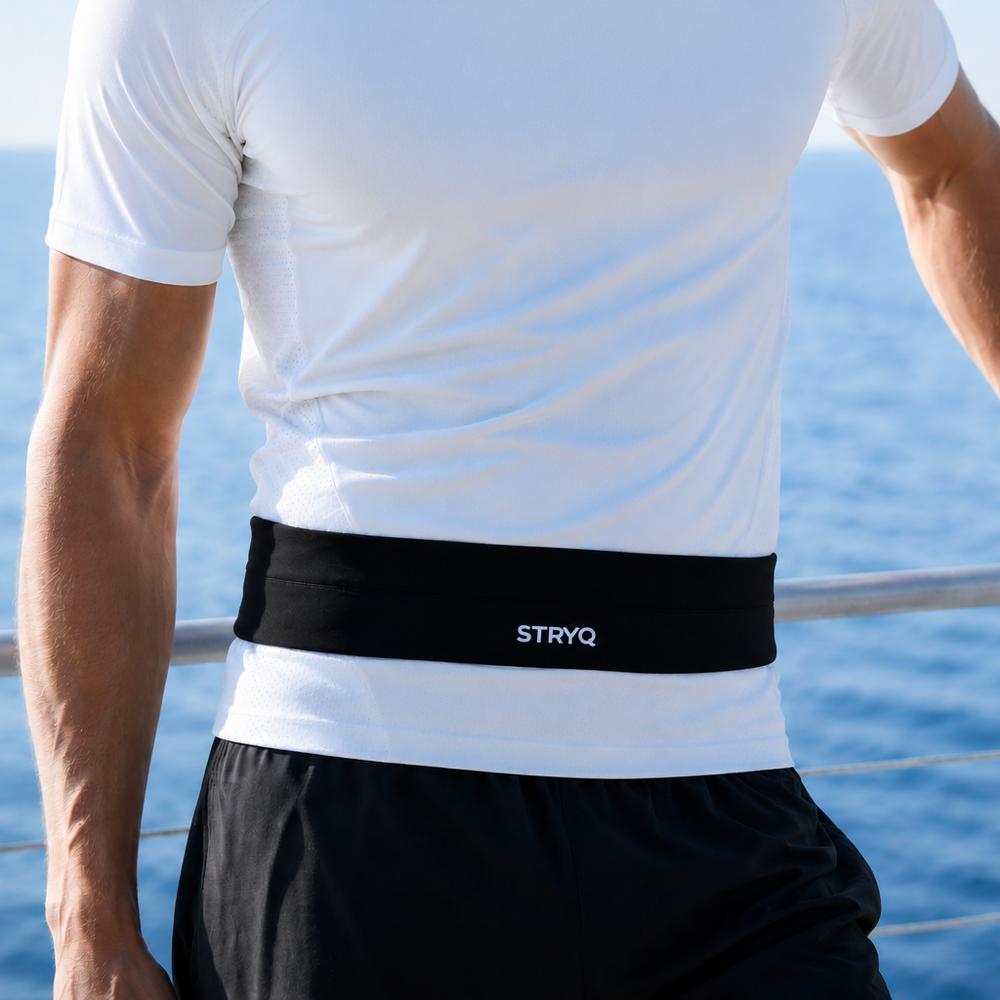
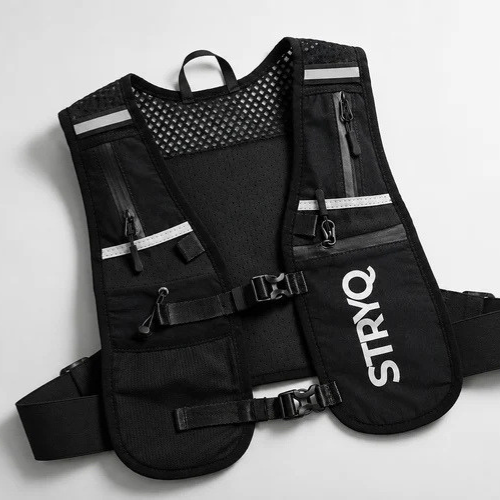
Each fix in this article maps to something we make. Our STRYQ Hydration Running Vest has adjustable straps and pockets designed to hold a reservoir flat against your back. Our 500ml soft flasks and bottles remove the free surface that causes slosh in the first place. For shorter runs, our STRYQ Running Belt keeps things minimal and quiet. We design and test our gear with UK runners, so fit and stability come first.

Browse the running gear collection and check our fit guide to pick the right item. The vest, soft flask and belt are available in our collection.
FAQ
How do I stop hydration pack sloshing?
Purge most of the air from the bladder, keep the hose full by pushing water back after each sip, and tighten the vest so the reservoir cannot move. Adding a food-safe foam insert can help if noise continues.
Why do I hear water sloshing from my hydration bladder?
Water sloshes when it has air above it and room to move. A part-filled bladder, a hose full of air or a loose fit all create that space, so the noise follows the runner’s stride.
Does a soft flask slosh less than a bladder?
Usually, yes. A soft flask collapses as you drink, so there is no large pocket of air for the water to travel through. That makes it a simple choice for short, fast runs.
Can I put something inside my bladder to reduce noise?
You can try food-safe foam strips or small floating elements, and test one at a time. Make sure the insert is easy to remove and wash, and does not block the suction tube.
Sources
- Backpacker
- Bioinspired wettability boundary stabilizes water sloshing - PMC
- NUMERICAL INVESTIGATION ON THE LIQUID SLOSHING DAMPING INSIDE A TANK WITH A FLEXIBLE ANTI-SLOSHING DEVICE
- Damping of liquid sloshing by floating balls
- Numerical Research on the Sloshing Suppression Performance of Baffles in Partially Filled Liquid Storage Tanks | Microgravity Science and Technology | Springer Nature Link