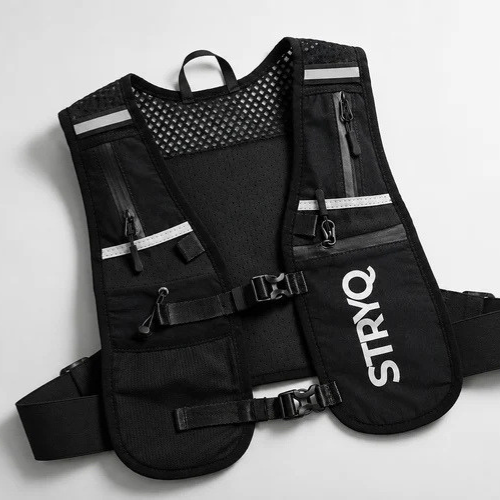
A hydration vest should feel like part of your kit, not a second backpack you spend the whole run fighting. If you are wondering how to fit a hydration vest, the goal is simple: keep water, nutrition and essentials close to your body with no bounce, rubbing or restricted breathing.
The best fit is not necessarily the tightest one. It is secure enough that the vest stays put when you run downhill or pick up the pace, but relaxed enough that you can take a full breath and move your arms naturally. Small adjustments make a big difference.
Start with the right vest size
Fit begins before you touch a strap. Hydration vests are usually sized around chest measurement, so check the brand’s size guide rather than assuming your usual T-shirt size will work. A vest that is too large can be tightened only so far before excess fabric bunches and moves. One that is too small may feel restrictive across your ribs, particularly late in a long run when your breathing is deeper.
Measure around the fullest part of your chest while wearing the sort of running top you normally use. If you sit between sizes, think about how and when you will run. Choose the smaller size if you mainly run in a thin top and want a close race fit. Consider the larger option if you regularly wear a base layer, jacket or extra layer in colder UK weather.
Women should also check how the front straps sit over a sports bra. The fit should be secure without the straps pressing into sensitive areas. Most good vests allow you to alter the height of the chest straps, which can make a noticeable difference.
How to fit a hydration vest step by step
Put the vest on empty first. This makes it easier to feel whether the fit is right before the weight of water masks a problem. Fasten the front straps, then adjust them gradually until the vest sits high and close around your upper torso.
The back section should rest between your shoulder blades and mid-back. It should not hang low over your waist like a school bag. A low-sitting vest tends to bounce, especially once a reservoir or soft flasks are full.
Start with the lower chest strap, then adjust the upper strap. Tighten each side evenly where possible, so the vest stays centred. You should be able to breathe deeply and rotate your shoulders without feeling pinched. If you have to hold your breath to fasten it, it is too tight.
Walk around, swing your arms and jog gently on the spot. Listen and feel for movement. A faint slosh from water is normal. A repeated thud against your ribs or back is not. Make small changes rather than pulling every strap tight at once.
Use the side adjustments last
Side cords or side straps fine-tune the fit around your ribs. They are useful when the vest feels secure at the front but still shifts at the sides. Tighten them a little at a time, especially if you are carrying a full bladder in the rear compartment.
Do not over-tighten the sides. Too much tension can pull the vest inwards and make the front pockets harder to reach. It can also create rubbing under the arms. The vest should wrap around you, not squeeze you.
Fill it before judging the fit
An empty vest can feel perfect, then become loose after you add 1.5 litres of water, gels, a mobile phone and a light jacket. Always do a final fit check with the kit you plan to carry.
For shorter runs, two soft flasks at the front are often enough. Fill them, secure them deep in their pockets and tighten the front straps if needed. Soft flasks can sit high at first, then slide down as you drink. A well-designed pocket should keep them stable, but it is worth checking during your first few outings.
For longer runs, a rear reservoir spreads weight across your back but needs careful packing. Fill it fully, squeeze out as much air as possible, then close it securely. Air trapped in the bladder allows water to move around and can create unnecessary sloshing. Route the drinking tube so it does not flick against your arm or catch on a chest strap.
Place heavier items close to your body. A mobile phone, keys and a compact power bank are best in secure pockets rather than loose in a rear compartment. Put lighter items, such as a buff or gloves, around them to stop shifting. No bounce. No bulk.
Adjust for your running layers
A hydration vest is not a one-setting piece of kit. The fit you use for a warm summer 10K will not be the fit you need over a long-sleeve top and waterproof in November.
Before heading out, loosen the straps slightly if you are wearing extra layers. Once you have warmed up, check that the vest is still stable rather than automatically tightening it further. Cold-weather layers can compress as you run, so a vest may start to feel looser after the first mile or two.
For racing, practise with the exact combination of vest, top, hydration and nutrition you will use on the day. New straps, a different flask position or an extra gel pocket can all change the feel. Race morning is not the time to discover that your mobile phone bounces out of a loose side pocket.
Prevent rubbing before it starts
Chafing is often a fit issue, not simply a skin issue. If a vest rubs, first look for movement. A vest that slides up and down will eventually irritate skin around the neck, collarbones, ribs or underarms.
Make sure loose strap ends are secured. They can flap, catch or rub over long distances. Check that zips, buckles and flask caps are not sitting directly against bare skin. If one area still causes trouble, adjust the strap height or move the item in that pocket before relying on anti-chafing balm.
For runs longer than an hour, test your vest on a few steady training sessions. Sweat, rain and salt can change how fabric feels against the skin. A vest that feels fine for 20 minutes may reveal a pressure point after 90.
Common hydration vest fitting mistakes
The most common mistake is wearing a vest too loosely in an effort to stay comfortable. It usually has the opposite effect. Movement creates bounce, and bounce creates rubbing. The answer is a closer fit, adjusted gradually, rather than simply accepting the movement.
Another mistake is tightening every strap as far as it will go. This can restrict breathing and pull the pockets out of place. Secure is the target, not compressed.
Runners also sometimes load everything into one rear pocket. That makes the vest feel unbalanced, particularly on uneven trails. Spread your kit across the available pockets and keep the weight close to your torso.
Finally, do not ignore fit changes as you drink. A full vest and a nearly empty vest can behave differently. On a long run or ultra, take a few seconds at a refill point to tighten a strap or reposition a flask. That small reset can save miles of irritation.
A quick pre-run fit check
Before leaving home, fill your flasks or reservoir, pack your essentials and fasten the vest over the layers you are wearing. Take three deep breaths, swing both arms and jog for 20 seconds. The vest should stay still, your pockets should be easy to reach, and nothing should dig into your neck or underarms.
If something feels slightly wrong standing still, it will feel much worse after several miles. Make the adjustment now, then get on with the run. A properly fitted vest lets you carry what you need and forget it is there - which is exactly how running kit should work.