

How to use soft flasks for marathon running
Soft flasks are flexible, collapsible hydration bottles designed to replace rigid water bottles during endurance events. Runners who use soft flasks in marathon running carry less bulk, experience less sloshing, and manage fluid intake more precisely than those relying on traditional bottles or paper cups. The American College of Sports Medicine recommends drinking between 400ml and 800ml per hour during a marathon, adjusted for temperature and sweat rate. Soft flasks in standard sizes of 250ml and 500ml map directly onto that guidance, giving you a practical, measurable way to hit your hydration targets on race day.
How to use soft flasks for marathon running: choosing the right size
Flask size is the first decision, and it has a direct effect on your race strategy. The two sizes you will encounter most often are 250ml and 500ml. Each suits a different approach.
| Flask size | Weight (empty) | Typical use case | Refill frequency |
|---|---|---|---|
| 250ml | Approx. 20g | Short races, frequent aid stations, 10k events | Every 15–20 minutes |
| 500ml | Approx. 38g | Marathon, half marathon, trail runs | Every 30–45 minutes |
Flask weights confirm that a 500ml flask adds only 38g to your kit when empty. That is negligible compared to the performance cost of dehydration.
The 500ml flask is the industry standard for marathon runners. It holds enough fluid to cover a 30–45 minute stretch between aid stations without requiring constant refills. The 250ml flask suits shorter events like a 10k or parkrun, where aid stations appear more frequently and you want minimal weight.
Fluid intake science supports drinking 100–200ml every 15–20 minutes. A 500ml flask aligns with that rhythm across a full marathon segment. In hot conditions, you may need to refill more often or carry two flasks, one in each front pocket of a hydration vest.
- 500ml flask: best for marathon and half marathon distances, standard aid station spacing
- 250ml flask: best for 10k races, parkrun, or as a second flask alongside a larger one
- Two flasks: useful in heat above 20°C, or when carrying electrolyte drink in one and water in the other
Pro Tip: Pre-fill your flask to the exact volume you plan to drink per segment. This turns hydration into a measurable checkpoint rather than guesswork.
How do you carry soft flasks during a marathon?
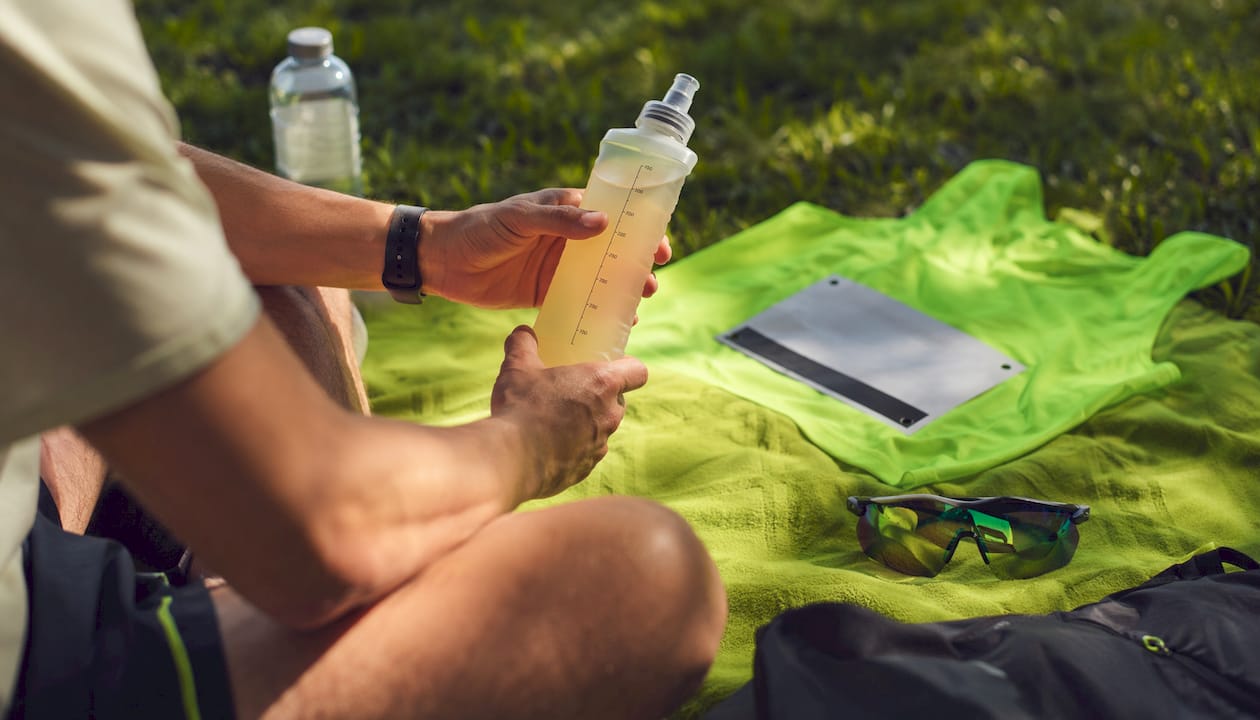
Carrying method determines whether your flask helps or hinders you. The three main options are a hydration vest, a running belt, and a handheld grip. Each has a specific use case.
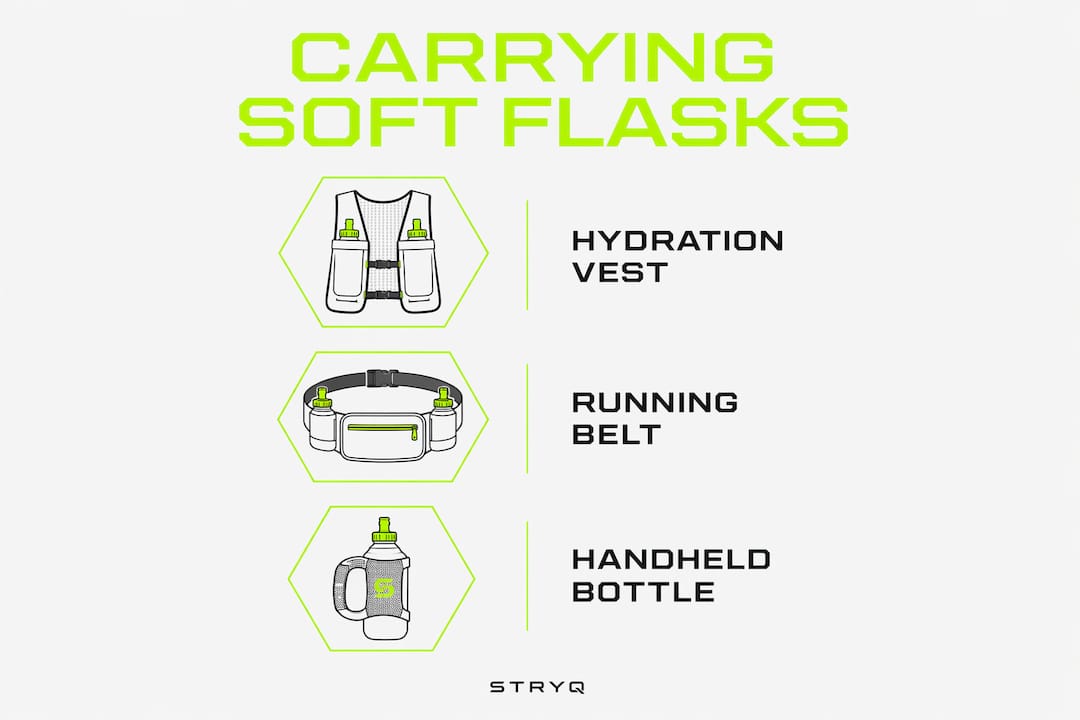
Hydration vests have front chest pockets sized specifically for soft flasks. This placement keeps weight centred on your torso, reduces bounce, and lets you drink without breaking stride. Vest pockets also compress the flask as it empties, which prevents the sloshing that rigid bottles produce. That compression reduces arm fatigue over a long race.
Running belts sit lower on the hips and work well for runners who prefer a lighter setup. A well-fitted belt holds a 250ml or 500ml flask securely at the front or side. The key is fit: a loose belt bounces and shifts, which creates discomfort over 26 miles.
Handheld flasks are the simplest option but the most tiring over marathon distance. Carrying a flask in one hand for hours affects your arm swing and can create shoulder tension. Most experienced marathon runners move away from handheld flasks once they commit to a vest or belt.
- Vest front pockets: best stability, hands-free access, suits marathon and trail distances
- Running belt: lighter setup, good for half marathon and 10k, requires a precise fit
- Handheld: fine for training runs under 90 minutes, not recommended for full marathon racing
Whichever method you choose, test it on a long training run before race day. Gear that feels fine at 5km can cause real discomfort at 30km.
Why practising soft flask use in training matters
Refilling a soft flask mid-race without stopping is a skill, not an instinct. Most runners underestimate how much practice it takes to do this smoothly at race pace. Getting it wrong costs time and fluid.
Follow these steps to build the skill before race day:
- Replicate race conditions. Use the same flask, the same drink mix, and the same carrying method in every long training run. Muscle memory only builds through repetition with identical equipment.
- Practise no-stop refills. At a garden tap or water station during training, practise scooping water into your flask while walking or jogging. The motion becomes automatic after several sessions.
- Test your fluid temperature. Ice-cold water carried for hours can cause muscle cramps through local thermal shock. Find the temperature that works for your body during training, not on race morning.
- Pre-mix electrolyte powders at home. Mixing powder at an aid station mid-race causes clumping and spillage. Prepare your flask contents the night before and store them in a cool bag until the start.
- Adjust your arm swing. A vest distributes weight evenly, but a handheld flask changes your natural arm movement. Spend several runs adapting before committing to this method for a race.
Pro Tip: Tape a small label to your flask with the mix ratio and fill volume. At a busy aid station under fatigue, this removes any decision-making.
Common mistakes when using soft flasks in a marathon
The most serious mistake is drinking too much plain water. The risk of hyponatraemia increases when runners consume large volumes of plain water without electrolytes, particularly in longer races. Hyponatraemia is a dangerous drop in blood sodium caused by dilution. It is more common in slower runners who spend more time on course and drink at every opportunity.
Drinking too much plain water during a marathon is more dangerous than drinking too little. Hyponatraemia, caused by low blood sodium from over-hydration without electrolytes, has caused serious medical incidents at major races. Always include sodium in your hydration plan.
Other common problems and their fixes:
- Plastic taste: Clean new flasks with specialist cleaning tablets such as Bottle Bright dissolved in warm water, then soak overnight. This removes the factory taste before your first run.
- Leaking valves: Check the bite valve and cap seal before every race. A loose cap or cracked valve will leak inside your vest pocket. Replace valves at the first sign of wear.
- Cramps from cold fluid: Test your preferred fluid temperature during training. Room temperature or slightly cool fluid is safer than ice-cold for most runners.
- Sloshing and bounce: A partially filled flask in a loose pocket moves around. Use a vest with a snug pocket fit, or fill the flask fully at each refill point.
What should you put in your soft flask for a marathon?
Plain water is not enough for most marathon runners. The body loses sodium, potassium, and magnesium through sweat, and replacing fluid alone without electrolytes creates an imbalance. The practical solution is an isotonic drink that combines carbohydrates and electrolytes in a single flask.
Your main options are:
- Isotonic sports drink: pre-mixed carbohydrate and electrolyte solution, easy to prepare, widely available at race expos
- Electrolyte tablets dissolved in water: lightweight to carry, allows you to control concentration, suits runners who prefer plain water taste
- Electrolyte powder sachets: pre-measured doses, easy to mix the night before, reduces risk of clumping at aid stations
- Water only (with separate gels): works if you take sodium-containing gels at regular intervals, but requires careful timing
Combining a 500ml flask of isotonic drink with sodium-containing gels every 30–45 minutes covers both fluid and energy needs. This approach suits most marathon runners and removes the need to carry multiple flask types.
Pro Tip: Avoid trying a new drink mix on race day. Gut reactions to unfamiliar carbohydrate concentrations are a common cause of mid-race stomach problems. Test every product in training first.
For a detailed breakdown of flask options and what to look for, the 500ml soft flask guide on the Stryq website covers the key specifications worth checking before you buy.
Key takeaways
Soft flasks are the most practical hydration tool for marathon runners because they collapse as you drink, reduce bounce, and align directly with the 400–800ml per hour fluid intake standard.
| Point | Details |
|---|---|
| Flask size selection | Use a 500ml flask for marathon distance; a 250ml flask suits 10k and parkrun. |
| Fluid intake rate | Drink 100–200ml every 15–20 minutes to stay within safe hydration guidelines. |
| Carrying method | A hydration vest with front pockets gives the best stability and hands-free access. |
| Practise before race day | Rehearse no-stop refills and test fluid temperature during long training runs. |
| Electrolytes are non-negotiable | Always include sodium in your flask contents to prevent hyponatraemia. |
What I have learned from years of running with soft flasks
The single biggest shift I made was treating hydration as a skill to train, not a problem to solve on race morning. For a long time I grabbed whatever bottle was available and figured I would sort the details out during the race. That approach cost me more than a few uncomfortable miles.
The thing most runners miss is how much the carrying method changes the experience. A vest with front flask pockets feels completely different from a handheld after 20 miles. The weight distribution matters more than the total weight. I have run with heavier vests that felt effortless and lighter handhelds that left my shoulder aching by mile 18.
The other lesson took longer to accept: electrolytes are not optional. I spent two years thinking plain water plus gels was a complete strategy. It is not. The marathon long run essentials change when you understand that sodium balance is as important as fluid volume. Once I started using an electrolyte drink consistently, my late-race cramping dropped noticeably.
Small adjustments compound over a marathon. Getting the flask size right, the carrying method dialled in, and the drink mix tested in training adds up to a meaningfully better race. None of it is complicated. All of it requires doing the work before race day.
— martin
Stryq soft flasks and hydration gear for marathon runners
Stryq builds soft flasks and hydration gear specifically for runners who want quality without paying premium brand prices. Every product goes through real-world testing and multiple revisions before it reaches the range.
The Stryq 500ml soft flask is collapsible, lightweight, and designed to sit securely in vest front pockets or running belt pouches. The valve is built for reliable flow without leaking under pressure. Alongside the flasks, Stryq’s running vests and belts are designed to work together as a complete hydration system. If you are putting together your marathon kit, the full range is at stryq.co.uk.
FAQ
What size soft flask is best for marathon running?
A 500ml soft flask is the standard choice for marathon runners. It weighs approximately 38g empty and supports 30–45 minutes between refills at typical aid station spacing.
Why do runners use soft flasks instead of rigid bottles?
Soft flasks collapse as you drink, which eliminates sloshing and reduces the weight and bulk you carry as the flask empties. This improves comfort and reduces arm fatigue over long distances.
Can you use a soft flask for parkrun or a 10k?
Yes. A 250ml soft flask suits shorter distances like parkrun and 10k races where aid stations are frequent and minimal weight is a priority.
How do you stop a soft flask from leaking?
Check the bite valve and cap seal before every run. Replace any valve showing cracks or wear, and always close the cap fully after refilling.
Do you need electrolytes in your soft flask for a marathon?
Yes. Drinking plain water without electrolytes during a marathon raises the risk of hyponatraemia. Include an isotonic drink or electrolyte tablets to maintain sodium balance throughout the race.