A wet run can feel brilliant once you are moving. It can also turn miserable quickly when your jacket traps sweat, your socks soak through, or your mobile phone is bouncing around in a dripping pocket. The best rainy running gear is not about making you completely dry. It is about staying comfortable enough to keep running safely and confidently.
For most UK runners, the right kit depends on the temperature, the length of the run and how exposed the route is. A light shower on a 5K needs a different approach from a two-hour trail run in persistent rain. Start with the pieces that solve the problems you actually face, then add more protection when the conditions demand it.
Best rainy running gear starts with a breathable jacket
A running jacket is the first thing most people reach for, but not all rain jackets work well at running pace. A heavy waterproof walking jacket may keep out rain, yet it can leave you damp from sweat within ten minutes. The goal is breathable protection, not a plastic bag.
For steady drizzle and shorter runs, a lightweight water-resistant jacket is usually enough. It should block the wind, shed light rain and pack down easily if the weather improves. Look for a close but unrestricted fit, sleeves that do not ride up, and a collar that sits comfortably when zipped.
For long runs, hill routes or proper downpours, choose a waterproof running jacket with taped seams. A hood is useful in exposed conditions, especially if it can be adjusted to stay put without blocking your peripheral vision. Venting matters too. Underarm openings or a back vent help heat escape when your effort rises.
Do not automatically wear a jacket because it is raining. In mild weather, a technical long-sleeve top may be more comfortable in light rain than a shell. If you can feel yourself overheating before the first mile, take a lighter layer.
Avoid cotton next to your skin
Cotton holds water and gets heavy fast. Once wet, it can rub at the neck, underarms and waistband. Choose a synthetic or merino running top that moves moisture away from your skin.
Synthetic fabrics dry quickly and suit most runners. Merino can feel warmer and less clammy in cooler weather, but it takes longer to dry and is often more expensive. Either can work well. The key is to test it on a wet training run rather than discovering its limits on race day.
Keep rain off your face and out of your hands
A running cap is one of the simplest upgrades for wet weather. The peak stops rain hitting your eyes and makes it easier to see puddles, kerbs and uneven paths. It also prevents you constantly wiping your face with wet gloves.
In colder rain, gloves make a bigger difference than many runners expect. Hands often cool quickly when they are wet and exposed to wind. Lightweight, quick-drying gloves are enough for most conditions. For colder winter runs, water-resistant gloves offer more protection, although no glove stays completely dry in sustained rain.
Avoid thick gloves unless the temperature genuinely calls for them. Overheated hands are awkward, and bulky fabric can make it harder to use a watch, open a gel or adjust your jacket zip.
Shoes and socks matter more than waterproof trainers
Wet feet are hard to avoid. Even waterproof shoes can fill from the top in heavy rain or when you run through deep puddles. Once water gets inside, it has fewer ways to escape, which can leave your feet feeling heavier for longer.
For road running, a normal pair of well-fitting trainers with reliable rubber grip is often the best choice. Check the outsole before the wet season starts. Worn-down tread can feel slippery on painted road markings, metal drains, wet leaves and smooth paving slabs.
Trail runners need deeper lugs and a stable upper when mud is involved. There is a trade-off: aggressive trail shoes can feel less smooth on tarmac, while road shoes can become unpredictable on wet grass and loose ground. Match the shoe to the surface you will cover most.
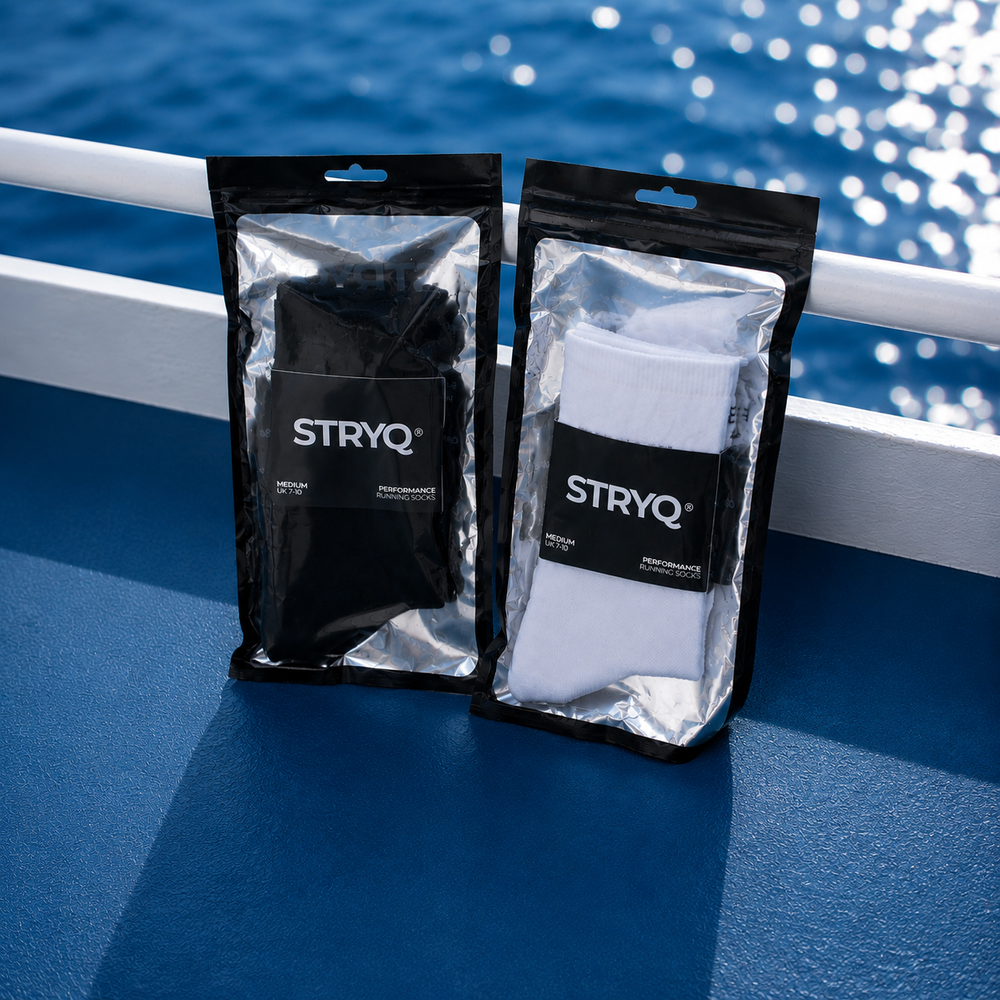
Socks are just as important. Technical running socks reduce movement inside the shoe and help manage moisture. A close fit around the heel and arch helps lower the risk of rubbing when the fabric gets wet. Carrying on in soaked cotton socks is one of the quickest routes to blisters.
If you regularly run in rain, use anti-chafing balm on known hot spots before heading out. Between the toes, around the heel and under the sports bra line are common problem areas. It takes less than a minute and can save a long run.
Carry essentials in weatherproof, no-bounce storage
Rain changes what you need to carry. A mobile phone, keys, fuel and an extra layer all need secure storage, and jacket pockets are rarely the answer. They can swing, sag or leave heavier items thumping against your side.
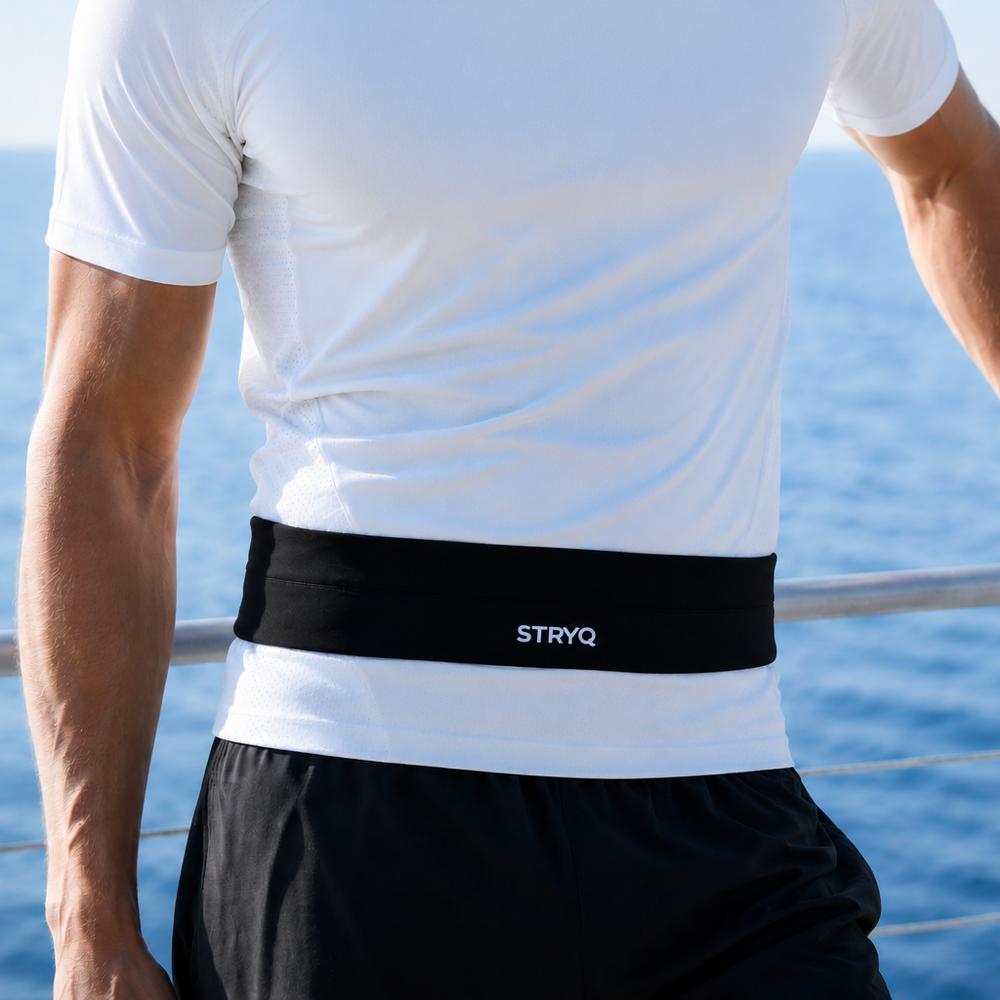
A well-fitted running belt works well for shorter runs when you only need the basics. Choose one that sits securely around the waist without needing to be overtightened. Your mobile phone should stay close to the body, while keys need their own secure pocket so they do not scratch the screen or dig into your back.
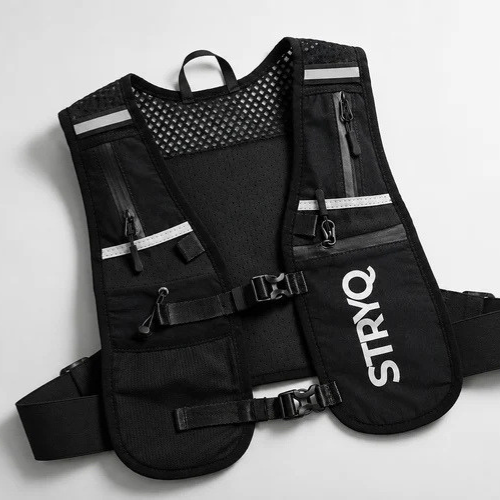
For longer runs, a hydration vest gives you more capacity without loading up your hands or jacket. It is useful when rain is paired with changing temperatures, because you may need water, nutrition, a lightweight layer and a few safety essentials. The fit is crucial. A vest should feel snug enough not to bounce, but not so tight that it restricts your breathing.
STRYQ running belts and hydration vests are designed around that practical balance: secure storage, a close fit and no unnecessary bulk. Whatever you use, test it fully loaded before a longer wet run. A belt that feels fine with a phone can behave very differently when you add gels, keys and a soft flask.
Put electronics in a waterproof pouch or resealable bag, even if your belt or vest has water-resistant fabric. Rain gets into zips and seams, and condensation can build up inside storage pockets too. Keeping your mobile phone dry is not just convenient. It is a safety measure if you need to call someone or use maps.
Hydration does not stop because it is raining
Cool, wet conditions can make thirst less obvious, but you are still losing fluid through sweat. This is especially true on longer efforts or when you are wearing a jacket. Do not assume rain means you can leave your drink behind.
For a run under an hour, hydration needs depend on the temperature and your usual routine. For longer training, carry water in soft flasks or a hydration vest and sip little and often. Soft flasks are comfortable because they shrink as you drink, reducing sloshing and taking up less space.
Fuel also needs protection. Gels can become difficult to open with cold fingers, so keep them accessible but protected from direct rain. It helps to practise opening them while wearing gloves. Small details like this matter when you are tired and your hands are numb.
Be more visible when the skies are grey
Rain often comes with poor light, spray from traffic and reflective surfaces. A bright jacket helps in daylight, but reflective details are more useful when headlights hit you. If you run near roads, use both where possible.
A head torch is worth carrying for early mornings, evenings and woodland routes. It helps you spot puddles, roots and uneven ground before your foot lands. Slow down slightly when visibility is poor. Wet conditions change grip, and there is no prize for attacking a blind corner at your usual pace.
Tell someone where you are going if you are heading out on a remote route in bad weather. Keep your mobile phone charged, and consider an extra layer if the run is long enough that you could become cold after stopping.
Dry your kit properly after every wet run
Do not leave wet shoes, socks and a hydration vest in a closed bag or the boot of the car. That is how odour builds up and materials wear out sooner. Empty pockets, rinse soft flasks, and hang your kit where air can circulate.
Take out insoles and loosen shoe laces to help trainers dry from the inside. Avoid placing them directly on a radiator, as strong heat can affect glues and foam. Stuffing them loosely with paper can speed up drying, especially after a properly wet run.
The right rainy running kit should fade into the background. You notice the route, your breathing and the miles, not rain in your eyes, a soaked mobile phone or a belt that will not stay still. Build your setup one useful piece at a time, test it in ordinary wet weather, and the next downpour will feel like a reason to run rather than a reason to skip it.