A running vest earns its place when your pockets are full, your hands are busy and stopping for water is not an option. The right one should feel settled from the first mile to the last. No bounce. No digging straps. No need to keep checking whether your mobile phone, gels or keys are still where they should be.
For many runners, a vest is the simplest answer to longer training runs, trail routes and race-day hydration. But capacity alone does not make a good running vest. Fit, adjustment, pocket layout and how you plan to use it matter just as much.
Do You Need a Running Vest?
You do not need a vest for every run. For a short 5K on familiar roads, a running belt or a pocket may be all you need. Adding more kit than necessary can make a simple session feel unnecessarily warm and cumbersome.
A vest becomes useful when you need to carry water, nutrition, a mobile phone, keys, layers or mandatory race equipment. That could mean a summer long run, a half marathon where you prefer your own fuel, a trail event, or a commute run. It is also useful for runners who dislike the feel of a handheld bottle.
The key benefit is weight distribution. A well-fitted vest spreads the load across your upper body rather than concentrating it around your waist or in one hand. This makes carrying essentials feel more natural, provided the vest is adjusted properly.
Choose the Right Running Vest Capacity
Capacity is usually measured in litres, but the best size depends on what you actually carry. Bigger is not always better. An oversized vest can encourage you to pack too much, creating movement and heat that you do not need.
For shorter runs and road training
A compact vest is often enough for runs of around 60 to 90 minutes, especially if you can refill water on the route. Look for space for soft flasks, a mobile phone, keys and a few gels. This is a practical choice for runners building towards a 10K, half marathon or first marathon who want water without a bulky pack.
For long runs, trails and race days
Longer outings usually call for more capacity. You may need extra fluid, food, a lightweight waterproof, gloves, a head torch or a small first-aid kit. Trail races can also have mandatory kit lists, so check these before choosing a vest.
A larger capacity vest gives you options, but it should still compress down securely when it is not full. Loose fabric and half-empty compartments are common causes of bounce.
Think about your usual run, not the one epic event you might do once a year. If most of your running is on roads for two hours or less, a compact hydration vest is likely to be the one you reach for most often.
Fit Matters More Than Features
The best pocket layout in the world will not fix a poor fit. A running vest should sit close to the body, high on the torso and comfortably around the ribs. It should not swing from side to side, ride up towards your neck or restrict a full, relaxed breath.
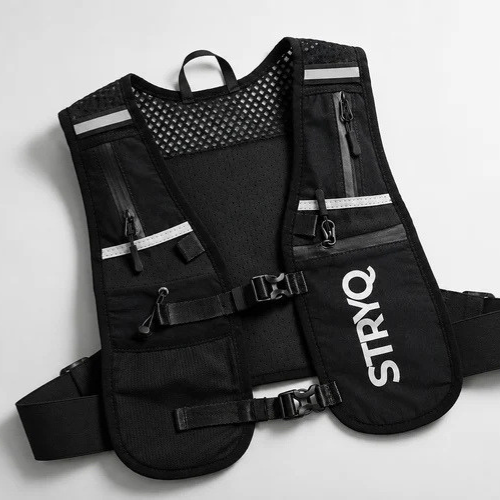
Start by adjusting the side cords or straps, then use the front chest straps to secure the vest. Tighten it enough that the load stays stable, but not so much that you feel compressed. Your fit may need a small adjustment once the flasks are full and the pockets are loaded.
Women and men alike should pay close attention to chest strap placement. Ideally, the straps should be adjustable vertically as well as horizontally. This lets you position them where they feel comfortable rather than forcing a one-size-fits-all setup.
Test it loaded, not empty
A vest can feel perfect in the kitchen and completely different after 20 minutes of running with 500ml of water on each side. Fill your flasks, add your usual mobile phone and nutrition, then jog, climb stairs or run around the block.
Notice where it moves. Small adjustments often solve the issue. If it still bounces when loaded and tightened, the size, shape or capacity is probably not right for you.
Plan Your Hydration Setup
Most running vests carry water in soft flasks at the front, a bladder at the back, or a combination of both. Each option has advantages.
Front soft flasks make it easy to see how much you have left and drink without removing the vest. They also balance the load across your chest and keep heavier items close to your body. For many road runners, two front flasks are the most straightforward setup.
A rear bladder can carry more water and works well for longer trail runs where refill points are limited. The trade-off is that it is harder to monitor your intake, and cleaning takes more effort. A full bladder can also make a vest feel warmer against your back.
Your fluid needs change with distance, temperature, pace and how much you sweat. There is no single amount that suits every runner. Use training to work out what feels manageable, and practise with the same hydration setup you intend to use on race day.
If you use electrolytes, keep this simple. Some runners put electrolytes in one flask and plain water in the other. Others prefer to carry water and take electrolyte tablets or drink mix separately. Test the taste and concentration before a big event. A drink that is too strong can become difficult to tolerate late in a run.
Pockets Should Make Running Easier
A good vest keeps the things you use most within easy reach. Water, gels, chews and a mobile phone are usually best placed in front pockets. This means you can drink or refuel without stopping, twisting around or taking the vest off.
Look for secure storage for valuables. A zipped pocket is useful for keys, bank cards or a mobile phone, particularly in wet weather. Stretch pockets are handy for a lightweight buff, gloves or used gel wrappers, but they should hold their shape when full.
Pocket layout is personal. Some runners want a large mobile phone pocket at the front for quick access. Others prefer their mobile phone at the back to reduce weight on the chest. What matters is that nothing rubs, rattles or forces you to break stride when you need it.
Watch for Rubbing and Heat
Even a lightweight running vest adds another layer. On warm days, this can mean extra heat across the back and chest. Breathable mesh helps, but the biggest difference comes from wearing the right size and avoiding unnecessary capacity.
Rubbing usually develops at the neck, under the arms, around the ribcage or where a flask edge meets the chest. A vest that feels slightly irritating at the start of a run can cause real discomfort after two hours, especially when sweat and salt build up.
Wear it over the tops you normally run in. A vest may sit differently over a thin technical T-shirt than it does over a long-sleeve layer or waterproof. If you are preparing for a marathon or trail race, test the full combination in similar conditions to the event.
It is also worth keeping soft flasks properly seated in their pockets. As they empty, push them down or tighten the retention cord if your vest has one. This reduces movement and stops the flask neck from catching on fabric.
Running Vest or Running Belt?
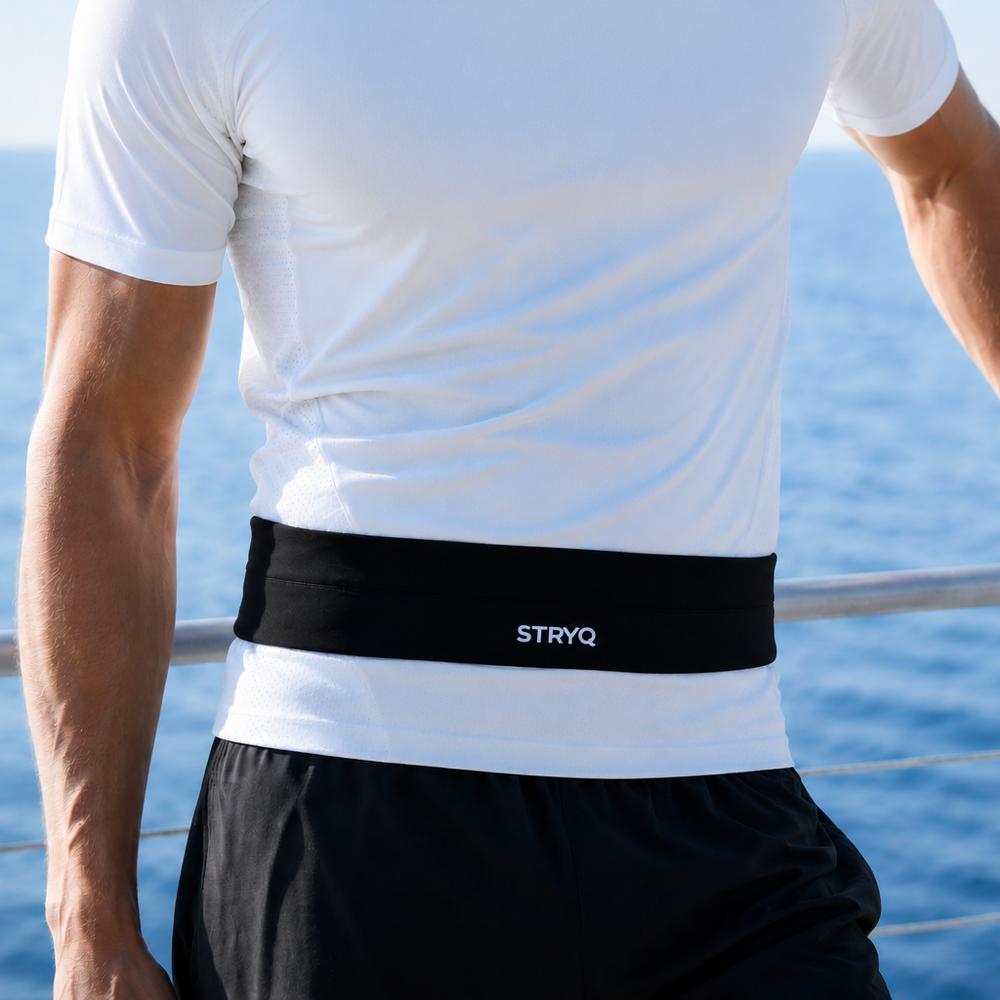
A running belt is often the better choice when you only need a mobile phone, keys and a small amount of nutrition. It is lighter, cooler and quicker to put on. For everyday 5K runs, parkrun or shorter sessions, keeping kit minimal is usually more comfortable.
Choose a vest when hydration and carrying capacity are the priority. It is particularly useful for marathon training, long trail runs, summer mileage and events with limited aid stations. Some runners use both: a belt for short runs and a vest for long days.
At STRYQ, the focus is on solving the practical problems that interrupt a run: bounce, awkward storage and hydration that is difficult to reach. The right choice is the one that lets you forget your kit once you are moving.
Use Training to Dial It In
Do not save your new vest for race day. Wear it on several runs and change one thing at a time: strap tension, flask position, pocket contents or the top underneath. This makes it easier to identify what is causing any movement or rubbing.
Practise taking gels from the pockets and drinking while running. Learn how the vest feels when the flasks are full, half empty and nearly empty. These details sound small, but they matter when you are tired, wet or trying to hold a steady pace.
A running vest should support the miles rather than become another thing to manage. Start with the capacity you genuinely need, load it as you would for a real run and take the time to get the fit right. Once it feels secure, comfortable and easy to use, you can put your attention back where it belongs: the road, trail and next mile ahead.