You can spend months preparing for a race, then ruin the first mile by fighting a bib that is tugging at your vest. That is the real point of a race belt comfort review. A good belt should keep your race number flat, secure and easy to see, without pinholes, flapping corners or pressure around your waist.
For many runners, a race belt is a small upgrade that makes race morning simpler. It is not essential kit for everyone. Safety pins still work, particularly for a short event in cool weather. But if you wear a delicate running top, use a hydration vest, or simply dislike the feeling of pins pulling at fabric, a well-fitted belt can be far more comfortable.
What makes a race belt comfortable?
Comfort is not just about how soft the elastic feels when you first put it on. A race belt has to stay comfortable when you are warm, sweating and moving repeatedly for anything from 20 minutes to several hours.
The best designs use soft, flexible webbing that sits close to the body without digging in. The adjustment buckle matters too. A stiff or bulky buckle can press into your stomach, especially when you lean forward on hills or take deep breaths late in a race. Look for a low-profile fastening that can be positioned away from the centre of your abdomen.
The belt should also have enough adjustment range. Tightening a loose belt halfway through a race is frustrating. Wearing one that is too tight is worse. You want it snug enough that the number does not bounce, but loose enough to breathe normally and take on fluids comfortably.
A comfortable race belt should feel almost forgettable. If you are constantly aware of it after the first kilometre, something is wrong with the fit, the placement or the design.
Race belt comfort review: belt versus safety pins
Safety pins are cheap, familiar and supplied at most events. They can be the right choice if you are wearing an old T-shirt, racing a 5K and want the simplest possible setup. The downside is that they make holes in your kit and can pull the fabric when the number catches the wind. Pins can also rub when they sit directly against skin through a thin top.
A race belt avoids those problems by holding the number on elastic cords or toggles. This keeps the fabric of your top intact and makes it easier to change your number from one race to the next. It is especially useful if you rotate a favourite race vest and do not want it covered in tiny holes by the end of the season.
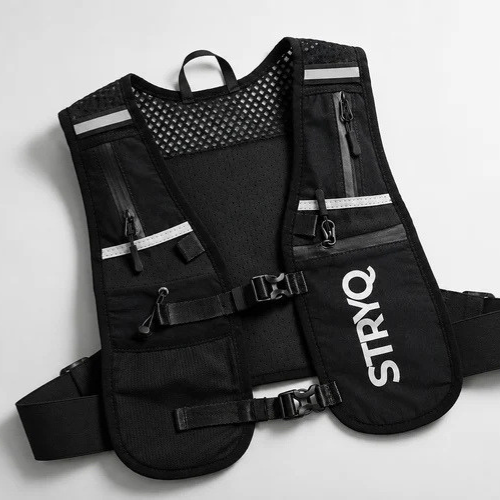
The trade-off is that a belt introduces another item around your waist. Some runners do not enjoy anything there, particularly if they already wear a running belt or hydration vest. In that case, a bib attached to a vest may be the better option, provided event rules allow it and the number remains visible.
For most runners, the comfort benefit comes down to freedom of movement. A correctly adjusted race belt moves with your body rather than pulling your clothing in four fixed places. That can be a noticeable improvement over 10K, half marathon and marathon distances.
Fit is where most comfort problems start
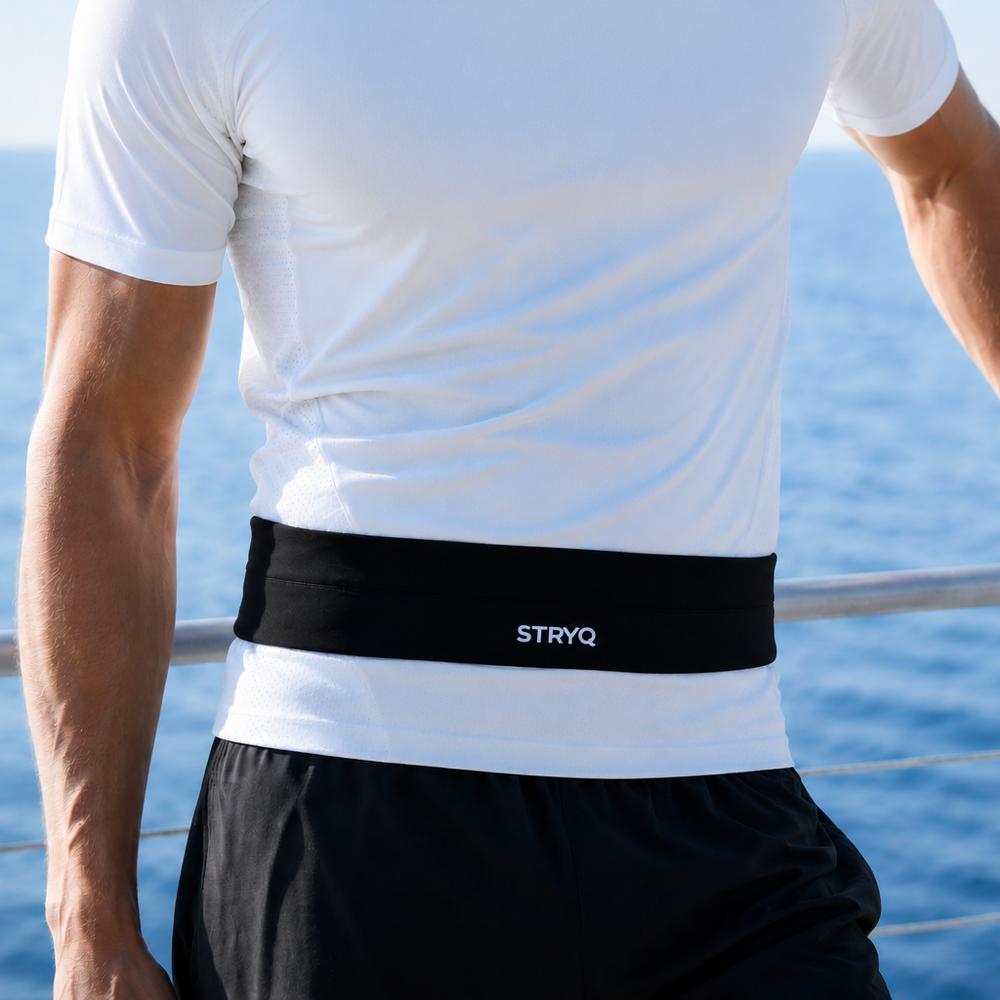
A race belt should sit around your natural waist or slightly lower on the hips, depending on where it feels most stable. There is no single correct position. Your body shape, your clothing and what you are carrying all affect the best placement.
Start by putting it on over the exact kit you plan to race in. This is particularly important if you wear a base layer on chilly mornings or a hydration vest for longer events. Fasten the race number to the toggles, then jog for a minute, lift your knees and take a few deep breaths. The belt should stay in place without restricting your breathing.
If it rides upwards, it is often too loose or sitting on a narrow part of your torso. Try lowering it slightly and tightening in small steps. If it digs in, loosen it a little or move the buckle towards one side. Avoid over-tightening in an effort to stop bounce. A flat, properly attached bib creates less movement than a belt pulled uncomfortably tight.
It is worth practising this before race day. A five-minute easy run is enough to reveal whether the number flicks up, the toggles press against you or the belt shifts under your top.
Check the bib position
The number needs to face forward and stay readable. Keep it flat rather than wrapping it too tightly around your body. If you attach the toggles through the outer corners only, the middle of the bib can catch the wind and flap. Securing the lower points as well usually keeps it steadier.
Do not fold the number unless race organisers specifically permit it. Folding can hide sponsor information, timing details or barcode sections. It can also affect how a timing chip is read when the chip is built into the bib.
Will a race belt chafe?
Chafing is possible with any item worn close to the skin, but it is usually avoidable. The biggest risk comes from a belt that is too loose and repeatedly slides, or too tight and presses into damp skin. Sweat, rain and rough fabric beneath the belt can all make the issue worse.
For shorter races, a soft belt over a technical top is unlikely to cause trouble when it fits well. For a half marathon, marathon or trail event, test it during a longer training run. Wear the same shorts, top, vest and nutrition setup you will use on the day. This is the only useful way to know how the full system works once you are sweaty and moving for a while.
If you are prone to chafing, apply your usual anti-chafe balm where the belt sits. Do not rely on a brand-new belt to feel perfect straight from the packet. No bounce. No bulk. But still test it first.
Useful extras, and when they become a drawback
Some race belts include loops for gels, small clips for a race number, or attachment points for a light layer. These can be genuinely useful for runners who want quick access to nutrition without carrying it in their hands.
Gel loops work best when they hold packets securely but allow you to remove one without stopping. Check that the gels do not bounce against your waist or knock into the bib. For a short race where you will not take nutrition, extra loops may add unnecessary clutter.
A belt designed only for a race number is often the lightest and simplest choice. A more versatile model suits runners who want to carry gels during a half marathon or use the same belt for different events. Neither option is automatically better. Choose based on what you will actually carry, not what might be useful once a year.
Who benefits most from a race belt?
Race belts are particularly helpful for runners who enter several events each year, protect a favourite vest, or find safety pins awkward to use. They are also useful for triathletes, where the number needs to move from the bike leg to the run, and for anyone getting changed at a busy start area.
They can make a good first purchase for newer runners too. Pinning a bib to a top while nervous on race morning is a small task, but it can feel needlessly fiddly. A belt prepared the night before removes one decision from an already busy morning.
At STRYQ, the focus is always on kit that solves a real running problem. For a race belt, that means a secure bib, a comfortable fit and no distractions once you cross the start line.
Before your next event, set your belt up with the number, try it with your full race kit and jog around the block. The best race-day gear is the gear you stop noticing before the starting gun goes.