The right winter running layering guide starts with a simple truth: you should feel slightly chilly when you leave the house. If you are cosy before you start, there is a good chance you will be too warm after the first mile. The aim is not to wrap up for a walk. It is to stay comfortable as your body heats up, the weather changes and the effort rises.
Winter kit does not need to be complicated or expensive. It needs to work together. A breathable base layer, an insulating middle layer when needed, and an outer layer that deals with wind or rain will cover most UK running conditions. Get the balance right and cold-weather running becomes far more consistent.
Start with the conditions, not the temperature
A weather app gives you a useful starting point, but it cannot tell the whole story. Wind, rain, route exposure and effort level all change what you need to wear.
A dry 4°C morning on a sheltered route can feel comfortable in a long-sleeve top and light gloves. The same temperature with strong wind and rain can feel bitter, particularly on open paths, bridges or coastal routes. A slow recovery run also needs more insulation than hard intervals, because you generate less heat.
Think about the first ten minutes, the middle of the run and the final stretch when you may cool down. If you are heading into the wind on the way out, you may be grateful for a light outer layer. If the wind is behind you on the return, that same jacket can quickly become too much. Choosing layers you can adjust is often better than choosing one heavy item.
Winter running layering guide: the three-layer approach
The three-layer system is useful because every layer has a job. You will not always wear all three, but knowing what each one does makes decisions easier.
Base layer: move sweat away from your skin
Your base layer sits next to the skin. Its job is to manage moisture, not simply to add warmth. When sweat stays against your skin, you can feel cold quickly once you slow down or run into a headwind.
Choose a close-fitting technical top made from synthetic fabric or merino wool. Synthetic tops dry quickly and are often a practical choice for regular training. Merino can feel warmer and is less likely to hold odour, but it may dry more slowly and needs a little more care.
Avoid cotton for winter running. It absorbs sweat, stays damp and can make a manageable run feel much colder than it should. A short-sleeve technical top may be enough for mild days. On colder mornings, use a long-sleeve base layer instead.
Mid-layer: add warmth without bulk
The mid-layer traps a little warm air around your body. It is most useful when temperatures are low, when you are running easy, or when you know you will be exposed to wind for long periods.
A lightweight long-sleeve running top, half-zip or thin fleece usually does the job. Look for something breathable rather than thick. Heavy sweatshirts can feel warm at the start but often become damp and restrictive once your pace lifts.
A zip is particularly useful. Open it on a climb or during faster efforts, then close it when the wind picks up. That small adjustment can prevent the familiar cycle of overheating, sweating and then getting cold.
Outer layer: block wind and rain when required
Your outer layer protects you from the weather. It should not be your default on every cold run. If conditions are dry and calm, an extra jacket may trap too much heat.
For windy days, a lightweight windproof layer can make a major difference without feeling bulky. For rain, choose a running-specific waterproof with good breathability and a fit that allows your arms to move freely. A waterproof will always feel warmer than a thin windproof, so reduce what you wear underneath if the rain is mild.
There is a trade-off here. More weather protection usually means less ventilation. On a short, hard run in drizzle, accepting that you may get a little wet can be more comfortable than wearing a jacket that holds in every bit of heat. On a long run, trail route or race where you may be out for hours, protection becomes more worthwhile.
Do not neglect hands, head and feet
Your extremities often decide whether a winter run feels enjoyable. They also give you the easiest way to fine-tune your temperature without changing your main layers.
Light gloves are useful well before you think you need them. Cold hands can make it harder to use your watch, open a gel or hold a soft flask. Thin gloves work for most runs, while a warmer pair is better for frosty or wet conditions. If you overheat, they are easy to take off and tuck into a belt or vest.
A lightweight hat or headband helps on cold, windy days. A headband is a good choice if your ears are cold but you tend to run hot. In rain, a running cap keeps water off your face and helps you see where you are placing your feet.
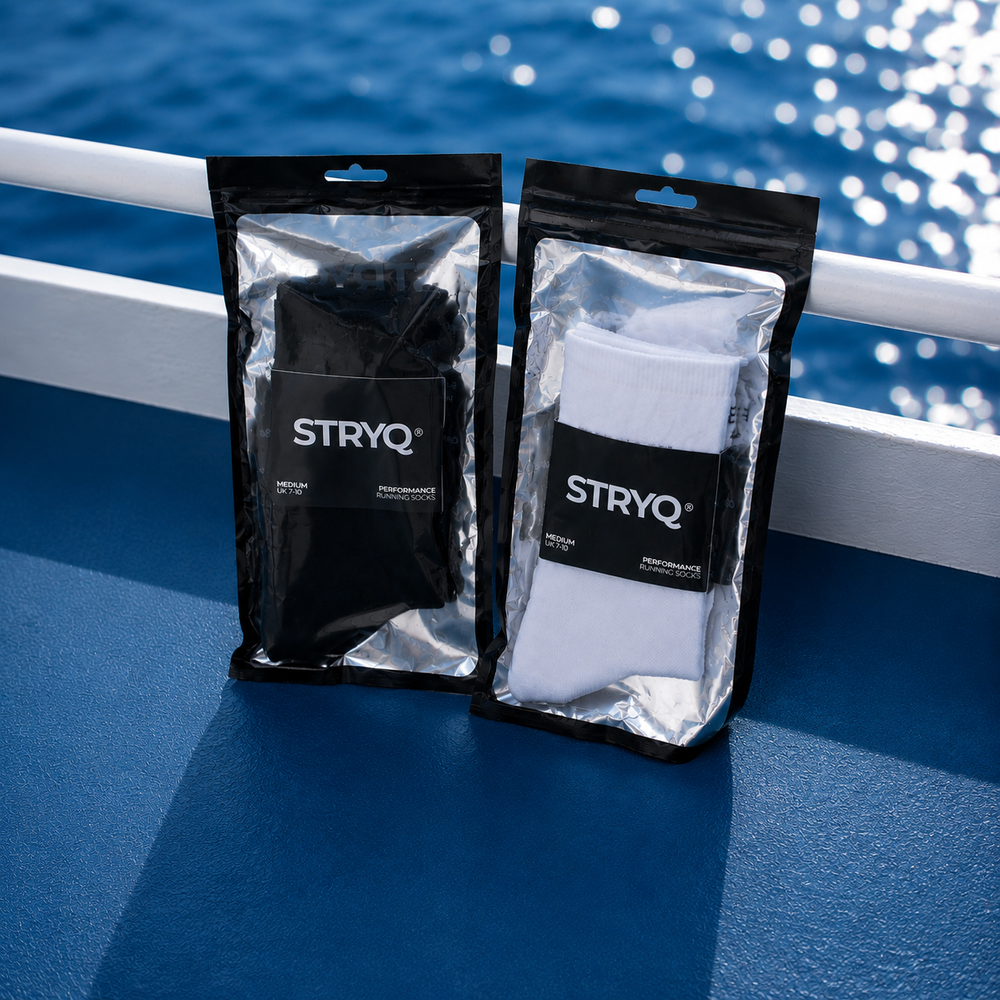
For your feet, start with technical running socks that manage sweat and fit securely. Wool-blend socks can be a good option in colder weather, especially if your feet run cold. Do not automatically wear thicker socks, though. If they make your shoes tight, they can cause rubbing, numb toes or blisters. Your normal shoes are usually fine unless conditions are icy or your route is particularly muddy.
Match your layers to the run
There is no single temperature chart that suits every runner. Some people run warm, others need an extra layer. Use these combinations as a starting point, then adjust after a few runs.
At around 10°C to 12°C, many runners are comfortable in a short-sleeve technical top or thin long sleeve, with optional gloves for the first mile. Between 5°C and 10°C, a long-sleeve base layer is often enough, with a light windproof if the route is exposed.
Between 0°C and 5°C, consider a base layer plus a thin mid-layer or windproof. Add gloves and a hat or headband. Below freezing, use a warm base layer, a breathable mid-layer and wind protection where needed. Keep the layers light enough that you can still move freely and regulate heat.
Rain changes the equation. A cold, wet run needs a layer that keeps wind-driven rain off you, especially if you are out for more than 30 to 45 minutes. Pack or wear a jacket with enough room for your chosen layers, but avoid a loose fit that flaps and catches the wind.
Carry the layers you may remove
The best clothing plan can still change halfway through a run. You may warm up faster than expected, the rain may stop, or a hard effort may turn a jacket into a nuisance. If you have nowhere to put a removed layer, you are tempted to keep wearing it and overheat.
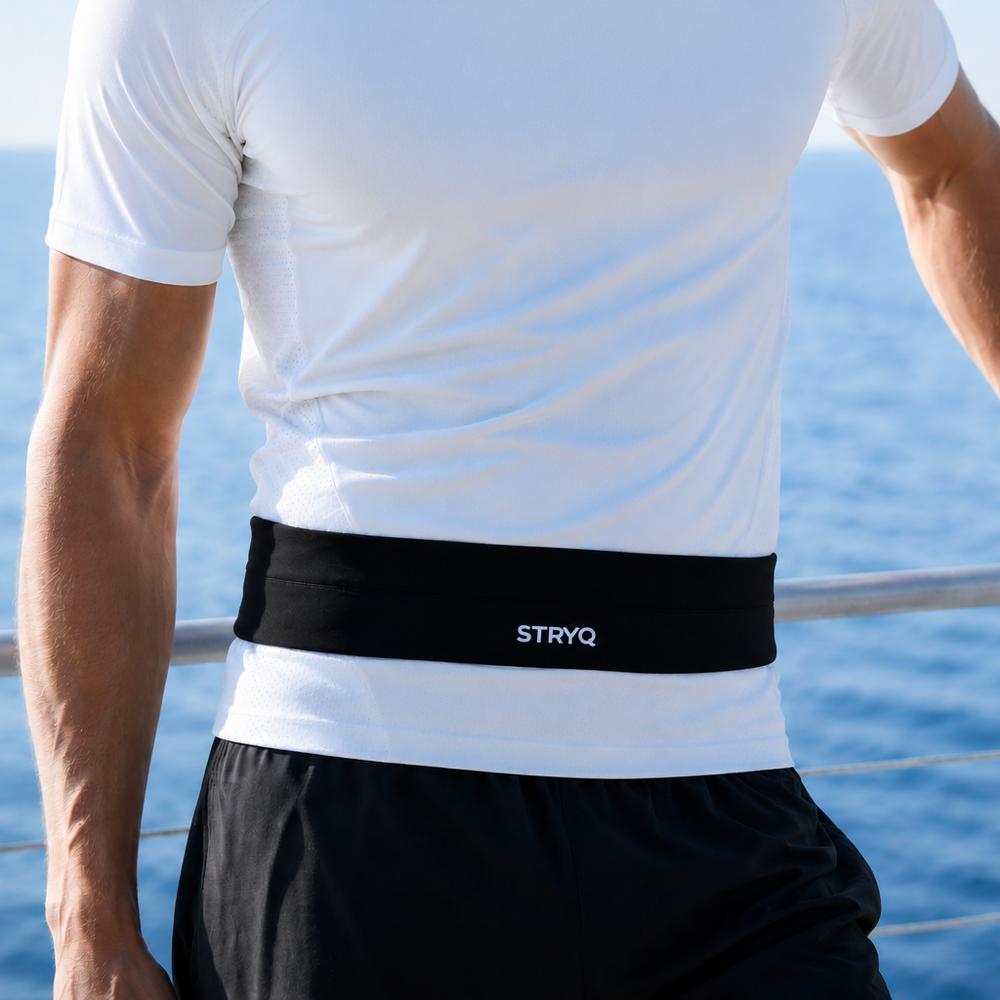
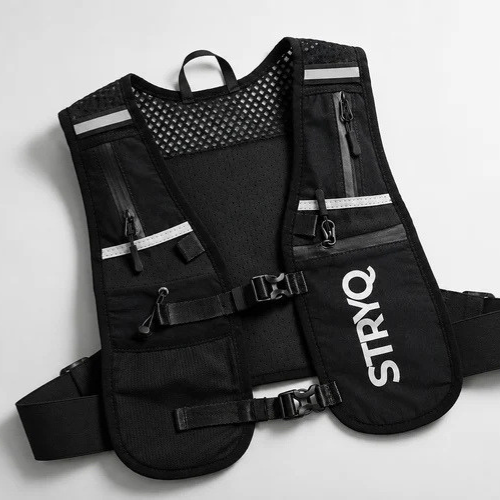
A secure running belt or hydration vest gives you options. It can carry gloves, a hat, a lightweight jacket, your mobile phone and nutrition without the bouncing that makes gear distracting. For longer winter runs, a vest also makes room for soft flasks. Cold weather can dull your thirst, but you still lose fluid through sweat and breathing.
STRYQ accessories are designed for this practical side of running: keeping essentials secure, accessible and out of your way. No bounce. No unnecessary bulk.
Common layering mistakes to avoid
The most common mistake is dressing for standing outside rather than running. You should not be shivering, but a little initial coolness is normal. Give your body ten minutes to warm up before deciding you got it wrong.
Another mistake is relying on one thick layer. Thick kit gives you fewer ways to adapt, and it often holds sweat once you are working hard. Two lighter layers are usually more useful than one heavy top.
Finally, do not save a new jacket or base layer for race day. Test it on an ordinary training run. Check whether the collar rubs, whether the sleeves stay put, whether you can reach pockets with gloves on, and whether it still feels comfortable once wet.
Winter running rewards preparation, not perfection. Check the wind and rain, choose light layers with clear jobs, and carry enough space for the pieces you may take off. When your kit stops distracting you, it is much easier to focus on the miles ahead.