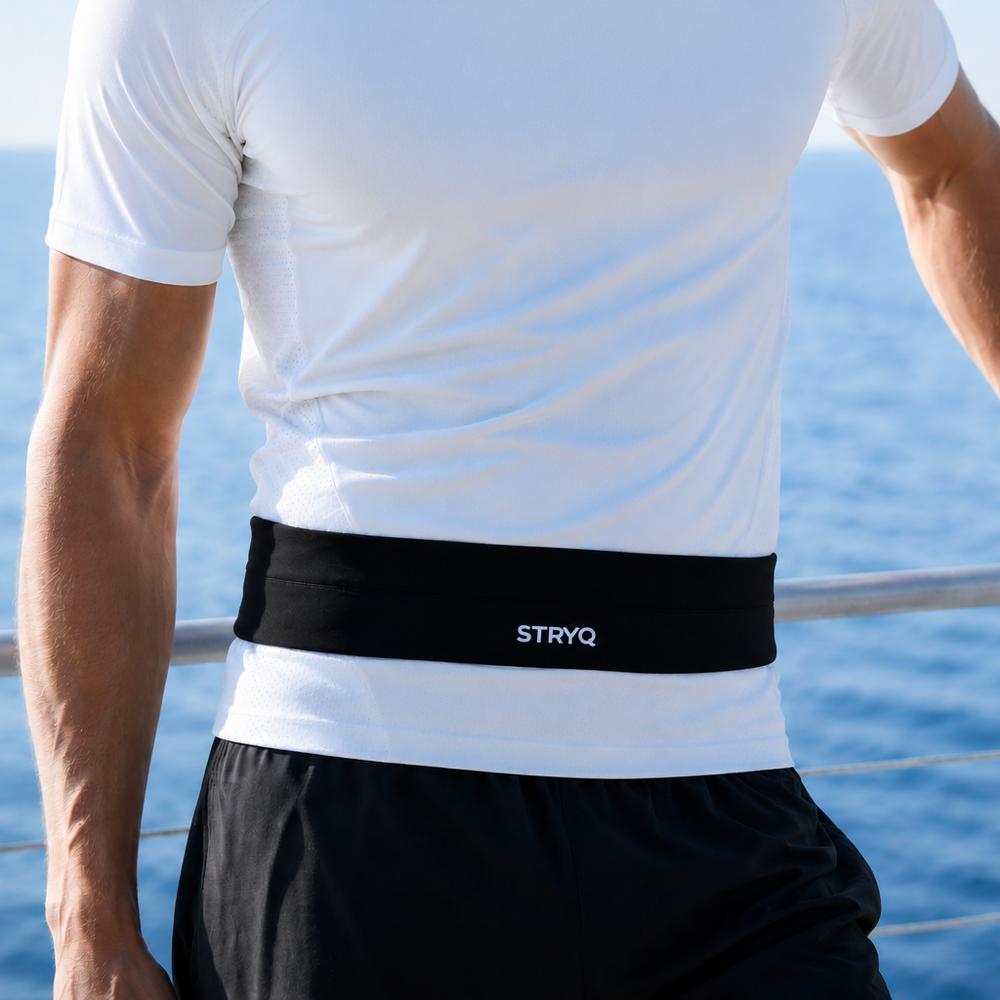
A running belt should make your run easier, not leave a sore red line around your waist. So, do running belts chafe? They can, but chafing is not something you should accept as part of carrying your phone, keys or gels. In most cases, rubbing comes down to fit, movement, sweat or what the belt is worn against.
The good news is that these are usually simple problems to fix. A well-fitted running belt should sit securely, carry the essentials without bouncing and be easy to forget about after the first few minutes.
Why do running belts chafe?
Chafing happens when skin or fabric repeatedly rubs in the same place. Running creates thousands of small movements through your hips and torso, so even a minor amount of belt movement can become uncomfortable over a longer distance.
Sweat makes this more likely. Damp skin is softer and more vulnerable to friction, while a wet waistband can stick, shift and drag. This is why a belt that feels fine on a cool 5K may cause trouble during a humid long run, a half marathon or an event where you are running for several hours.
The main causes are usually a loose fit, an overloaded pocket, rough seams, or wearing the belt directly against bare skin. The belt itself is not always the issue. Often, it is the combination of the belt, your clothing and the way you have packed it.
Fit matters more than tightness
A running belt should be snug enough that it does not bounce, but not so tight that it digs into your waist or restricts breathing. Getting that balance right is the biggest factor in avoiding rubbing.
If the belt is too loose, it moves up and down with every stride. That motion creates friction, especially when a phone or soft flask pulls the belt down at one side. If it is too tight, the edges can press into your skin and the fabric may roll. Both can lead to chafing.
Position also matters. Many runners find a belt sits best low on the hips, rather than high around the narrowest part of the waist. Your hips give the belt a more stable place to rest, particularly when you are carrying a phone. Try a few positions on a short run before committing to it for race day.
Do not judge fit while standing still. Jog on the spot, take a few strides outdoors and check whether the belt shifts when you breathe deeply. A belt that feels secure in the kitchen can behave very differently after three miles.
The load inside the belt can cause rubbing
A running belt is designed for essentials, not everything you own. Loading it with a large phone, keys, several gels, headphones and a full flask can alter how it sits against your body.
Weight concentrated in one pocket is a common cause of bounce. A phone may pull the belt down or make it rotate, which creates rubbing at the opposite edge. Spread smaller items around the belt where possible, and keep hard objects from sitting directly against sensitive areas.
Keys deserve particular attention. Secure them in a designated key clip or separate pocket so they cannot move around. A loose key can turn a comfortable run into an irritating one surprisingly quickly.
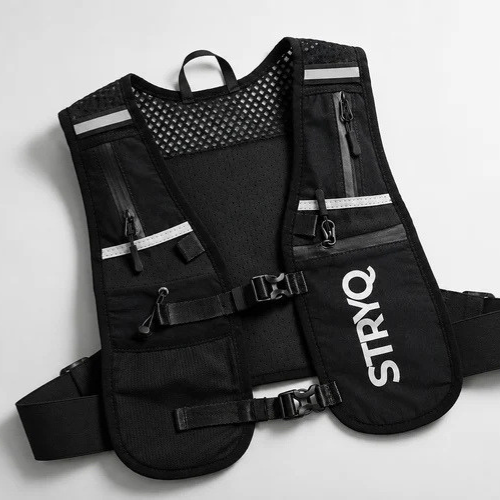
For longer runs, be realistic about capacity. If you need significant water, nutrition, a jacket and safety kit, a hydration vest may be more comfortable than forcing it all into a belt. Belts work brilliantly for short runs, parkruns, races and everyday training when the load is sensible. They are not always the right answer for every distance or route.
Clothing can make the difference
Running belts are generally more comfortable over a smooth technical top, running tights or shorts with a stable waistband. The layer reduces direct skin friction and helps the belt stay in place.
A loose cotton T-shirt can bunch beneath the belt when wet, creating pressure points. Equally, a waistband with thick drawcords, zips or bulky seams can make a belt less stable. If you have had rubbing in one outfit, do not assume the belt will feel the same with another.
For many runners, the simplest solution is to wear the belt over your top. It is easier to adjust, easier to access and less likely to rub bare skin. In warmer weather, when you prefer a vest or cropped top, a soft, low-profile belt and careful fit become even more important.
Anti-chafing balm can help on long or hot runs, particularly if you know you are prone to rubbing. Apply it to likely contact points before you leave, rather than waiting until the irritation starts. It is useful support, but it should not be used to disguise a belt that is clearly bouncing or digging in.
What to look for in a running belt that will not chafe
No running belt can promise zero rubbing for every body shape, outfit and weather condition. But certain design details give you a much better chance of a comfortable run.
Look for soft, smooth fabric against the body, with minimal bulky seams around the edges. A wide, flexible contact area can spread pressure more evenly than a narrow strap. The belt should have enough stretch to hold its shape as you move, without becoming slack once you add your essentials.
A secure, close-fitting pocket is just as valuable as the waistband. When your phone and nutrition stay still, the whole belt stays more stable. Water-resistant protection can be useful in British weather too, but it should not come at the expense of breathability or comfort.
Choose capacity based on your usual run. A slim belt is often ideal for a phone, key and one or two gels. If you routinely carry more, select a belt designed to distribute that load rather than choosing a smaller option and overfilling it. STRYQ running belts are designed around this practical balance: secure storage, low bulk and a fit that stays settled while you run.
How to prevent chafing before your next run
Start by adjusting the belt with the items you genuinely plan to carry inside it. Place your phone flat, secure your keys and add any gels before tightening the belt. Then set it low on your hips or wherever it feels most stable for your stride.
Wear it over a smooth running layer where possible. Take it out for a short, easy run first, especially if it is new or you are changing how you wear it. Notice any movement early. If it starts to creep, rotate or bounce, stop and adjust it rather than hoping it will settle.
It also helps to test your full race setup in training. The belt, top, shorts, nutrition and hydration plan work as a system. A marathon belt that feels good for 30 minutes still needs proving over the length of time you expect to wear it on the day.
Wash the belt regularly according to its care instructions. Salt, sunscreen and sweat residue can make fabric less pleasant against the skin over time. Let it dry fully between runs, and inspect seams or elastic if the fit begins to change.
If your belt is already causing a rash
Stop using the belt against the irritated area until your skin has settled. Keep the area clean and dry, avoid further friction, and seek advice from a pharmacist or healthcare professional if the skin is broken, painful, swollen or does not improve.
Before your next run, identify what changed. Was the belt looser than usual? Did you carry more? Was it a hotter day, or did you wear a different top? Small details often reveal the cause. If the belt continues to rub despite sensible adjustments, it may simply not suit your body shape or the way you run.
A running belt should support your miles quietly. Take the time to test the fit, pack only what you need and choose the right setup for the distance. When it stays put, you can get on with the run rather than thinking about your gear.