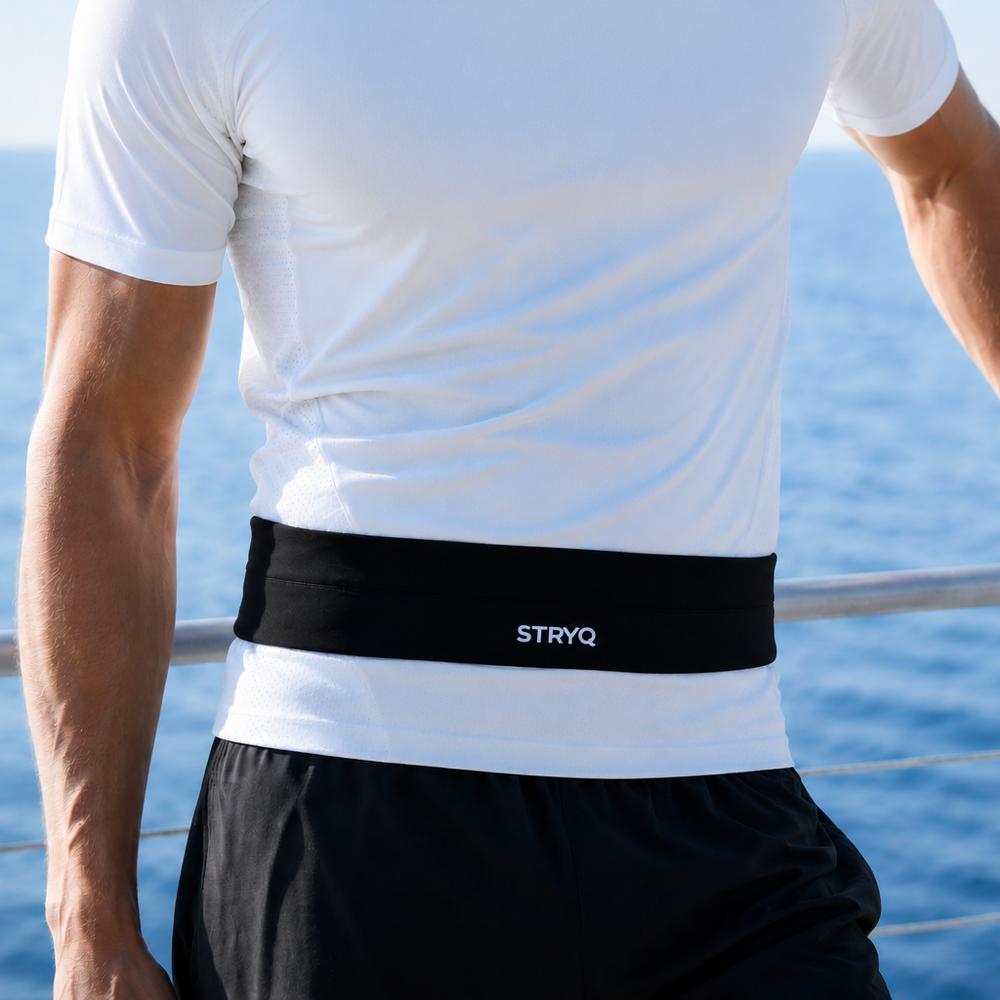
A belt can look perfect on the kitchen table and become irritating within the first kilometre. It may ride up, bounce against your hips or make getting to your mobile phone far harder than it should be. This running belt review UK guide focuses on what actually matters once you are moving: fit, storage, comfort and the conditions you run in.
A good running belt should let you forget it is there. It should keep your essentials close, stable and easy to reach without adding bulk around your waist. That is useful whether you are heading out for a 5K, fitting in a lunchtime run or carrying fuel through the later miles of a marathon.
Running belt review UK: what makes one worth wearing?
The best belt is not necessarily the one with the most pockets or the lowest price. It is the one that works for your usual runs. A runner carrying a key and mobile phone has different needs from someone carrying gels, a soft flask, inhaler and a lightweight layer.
Start with bounce. This is the biggest reason runners stop using a belt. Bounce usually comes from excess space, a loose elastic strap or heavy items sitting away from the body. A close-fitting belt with stretchy fabric helps hold contents against you, rather than letting them swing with every stride.
Fit also needs to remain secure as the run goes on. Many runners tighten a belt before leaving home, then find it loosens once they settle into their pace. Look for an adjustable fit that stays put without needing to be pulled uncomfortably tight. You should be able to take a deep breath and move naturally through your torso.
The right position is personal. Some runners prefer a belt low on the hips, while others wear it higher around the waist. If it is climbing upwards, it may be too loose, too high, or loaded in a way that is pulling it out of place. Try repositioning it before assuming the belt itself is the problem.
Storage should match your real running kit
It is easy to buy a large belt for the occasional long run, then use it every day with a single key inside. Equally, a slim belt can feel restrictive if you regularly carry a larger mobile phone, several gels and hydration. Think about the kit you take most often, not just the kit you might carry once or twice a year.
For short runs, a secure pocket for a mobile phone, keys and perhaps a card is usually enough. A separate key attachment or smaller internal section is helpful because it stops metal keys scratching your screen or digging into your side.
For longer runs, pocket access matters more. Gels should be easy to remove without breaking stride or taking the belt off. A mobile phone pocket needs enough stretch for your device, but not so much that it sags once the pocket is loaded. If you run in the rain, consider whether the fabric offers basic protection from road spray and showers. No running belt is a substitute for a fully waterproof case in prolonged heavy rain, but a protected pocket is still useful.
It is worth checking the size of your mobile phone before ordering. Modern phones vary widely, and a pocket that suits one runner may be too narrow or too shallow for another. Include your case in the measurement if you run with one.
Pockets versus one continuous tube
A continuous stretch pocket gives flexibility. You can move items around and carry an odd-shaped extra, such as gloves or a buff. This works well for runners who like a simple setup and do not mind organising their items before setting off.
Separate pockets make it easier to keep kit in place. They can be better for a mobile phone, keys and fuel because each item has a clear home. The trade-off is less flexibility when you want to carry something bulky. Neither design is automatically better. It depends on whether you value quick organisation or adaptable space.
Comfort is about more than soft fabric
A soft material feels good at first, but comfort over an hour or two depends on several details. The edges should sit smoothly against the body. Seams should not rub. The belt should not trap excess heat or hold sweat against your skin for longer than necessary.
Wide belts often spread pressure more evenly than narrow straps. That can make them more comfortable when carrying a mobile phone or gels. However, a very wide belt may feel warmer in summer or bunch when worn under a fitted top. Narrower options can feel lighter for short runs, but need excellent stability to avoid pressure points.
Your clothing affects the result too. A belt may feel different over a thin technical top than it does against bare skin or over a winter base layer. Test it on an easy run before race day. Load it as you would for an event, including the same mobile phone, fuel and hydration. A belt that is comfortable empty tells you very little.
When a running belt is the right choice
A belt is ideal when you want to carry a modest amount of kit with minimal fuss. It is often the simplest answer for a 5K, parkrun, 10K or regular training run where you need your mobile phone, keys and a little fuel. It can also be a useful race-day option if you prefer your belongings low and close to your body.
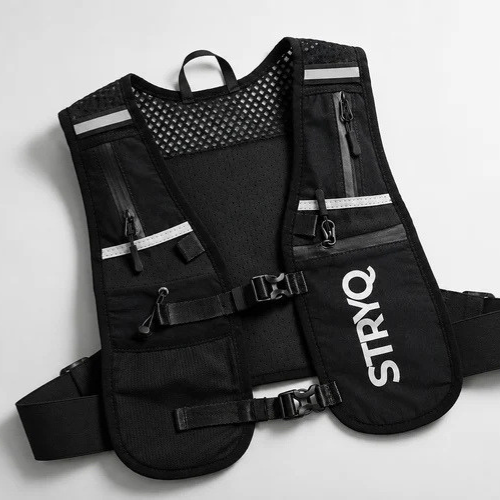
For marathon training, it depends on your plan and the weather. A belt can carry gels, salt tablets and a mobile phone comfortably, especially if you are relying on water stations. If you need to carry significant water, multiple soft flasks, a jacket and more nutrition, a hydration vest is usually the better tool. Trying to make one piece of gear do every job often creates the bounce and discomfort you were hoping to avoid.
This is where a practical accessories range makes sense. STRYQ focuses on giving runners straightforward options for different carrying needs, from low-profile belts to hydration gear for longer days out.
Common mistakes that make belts uncomfortable
Overloading is the most common issue. Even a well-designed belt has a sensible limit. If you pack it with items you do not need, it can stretch, sag and become harder to access. Take what your run requires and leave the rest at home.
Another mistake is putting all the weight on one side. A mobile phone, keys and gels packed into one pocket can pull the belt round as you run. Spread items across the belt where possible, keeping heavier kit centred or balanced around the hips.
Finally, do not wait until a race to try a new belt. Wear it during a few ordinary training runs. Practise opening the pocket, taking out a gel and putting it back. These small details are much easier to sort out when there is no finish time or crowded start pen to worry about.
How to choose the right size
Use your waist or hip measurement according to the brand's size guide, rather than relying on your usual trouser size. Running belts are designed to fit snugly, but snug should not mean restrictive. If you are between sizes, consider what you carry and where you prefer to wear the belt.
A runner wearing the belt low on the hips may need a different size from someone wearing it at the narrowest point of their waist. If you plan to wear it over thicker winter layers, allow for that too. The goal is a stable fit with enough stretch to breathe, twist and run freely.
Once it is on, give it a short test at home. Jog on the spot, lift your knees and reach for a pocket. If it slides immediately or pinches when you move, adjust the fit before heading out.
The right running belt does not need to be complicated. Choose one that suits the essentials you genuinely carry, fit it close to the body and test it properly before relying on it for a big run. When your kit stays secure, dry enough and out of your way, you can put your attention back where it belongs: the next mile.