You have four realistic ways to drink during a marathon: rely on the aid stations, carry a handheld bottle, wear a belt with a flask, or wear a hydration vest with soft flasks. The right one depends on how long you will be out there, how much you sweat and how often the course offers fluid. It also depends on whether you have practised with it. This guide compares each option, gives you the numbers to size your plan, and shows how to test it before race day.
TL;DR
- Aid stations alone work for many road marathons, but you are tied to what the organisers serve and to queues at busy tables.
- Handheld bottles and belts suit runners who want a small top-up between stations. Vests suit those who also carry gels, a phone and layers.
- Aim to limit body-mass loss to around 2-3%, not zero. Overdrinking is a genuine risk, particularly for slower runners.
- Work out your own sweat rate on a long run, then practise the exact kit and drinks you plan to use on race day.
Table of Contents
- What you actually need to carry
- Option 1: Relying on aid stations
- Option 2: Handheld bottles
- Option 3: Running belts with a flask
- Option 4: Hydration vests and soft flasks
- Comparing the options side by side
- Before the start: getting hydrated without overdoing it
- During the race: drink to thirst, and watch for overdrinking
- How to test your plan in training
- Our view: pick the lightest setup that covers your gaps
- Kit to carry your plan
- A simple race-day checklist
- FAQ
- Sources
What you actually need to carry
Start with the numbers, because they decide the kit. For prolonged exercise beyond 90 minutes, a review of fluids in prolonged endurance performance cites a range of 600-1200 mL per hour of a drink containing 4-8% carbohydrate and a modest amount of sodium, adjusted to personal sweat rate. That is a wide range, and it is a ceiling for planning, not a target to hit.
The same review points out that dehydration beyond about 2-3% of body mass raises perceived effort and cardiovascular strain, while aiming for zero loss risks overhydration. So the goal is to limit the loss, not erase it.
A slower marathoner is on the course for longer, but usually sweats less per hour and has more time to drink at stations. A faster runner loses fluid quickly but covers the distance sooner. Neither needs to match a textbook figure. They need a plan they have tested.
A quick worked example
Say you run a 3 hour 59 minute marathon and plan to drink roughly 500 mL per hour. That is about 2 litres over the race. If the course has a fluid station every 2 miles, you could take a few mouthfuls at each and carry little or nothing. If the stations are every 5 miles, or you know you hate stopping, a 500 mL flask refilled once starts to make sense.
The point is the arithmetic: work out the hours, multiply by your own hourly intake, then subtract what the course will realistically give you.

Option 1: Relying on aid stations
Most big road marathons in the US and UK put fluid on the course regularly. Plenty of first-time marathoners report drinking at nearly every station and carrying only gels. If that is you, you may not need to carry fluid at all.
Pros
- Nothing to carry, nothing to chafe.
- Simple on a cool day.
- Many races serve both water and a sports drink, so you can alternate.
Cons
- You drink what the organisers serve, and you may not have trained with it.
- Early tables can be crowded. Cups are hard to drink from at pace and you spill a good share.
- Stations can run short or change position, so check the race guide for the exact locations and what is served.
If you go this route, find out the sports drink brand on course and drink it in training. It is a simple step that prevents a stomach surprise at mile 18.
Option 2: Handheld bottles
A handheld bottle is the lightest step up from nothing. You take sips on your own schedule and refill at a station, which also helps if you want to dilute a sports drink.
Pros
- Cheap and simple.
- Easy to see how much you have drunk.
- Useful for the first half of the race, when you want to avoid crowded tables.
Cons
- Your hand is occupied, and some runners find their grip and arm swing change after a few miles.
- Limited capacity.
- Awkward to stow gels or a phone.
If you want a handheld feel but less gripping, a soft flask is a good middle ground. Soft flasks collapse as you drink, so they stop sloshing, and they stow in a pocket once empty. Our 500ml running soft flask is made for exactly this use.
Option 3: Running belts with a flask
A belt moves the weight to your waist. A well-fitted belt should sit still without bouncing, which is the main thing to test.
Pros
- Carries a flask, gels, keys and a phone in one place.
- No weight on your shoulders or chest, which some runners prefer in warm weather.
- Light and quick to put on.
Cons
- A heavy flask on one side can pull the belt off-centre.
- Less capacity than a vest.
- You need to practise reaching for the flask without slowing down.
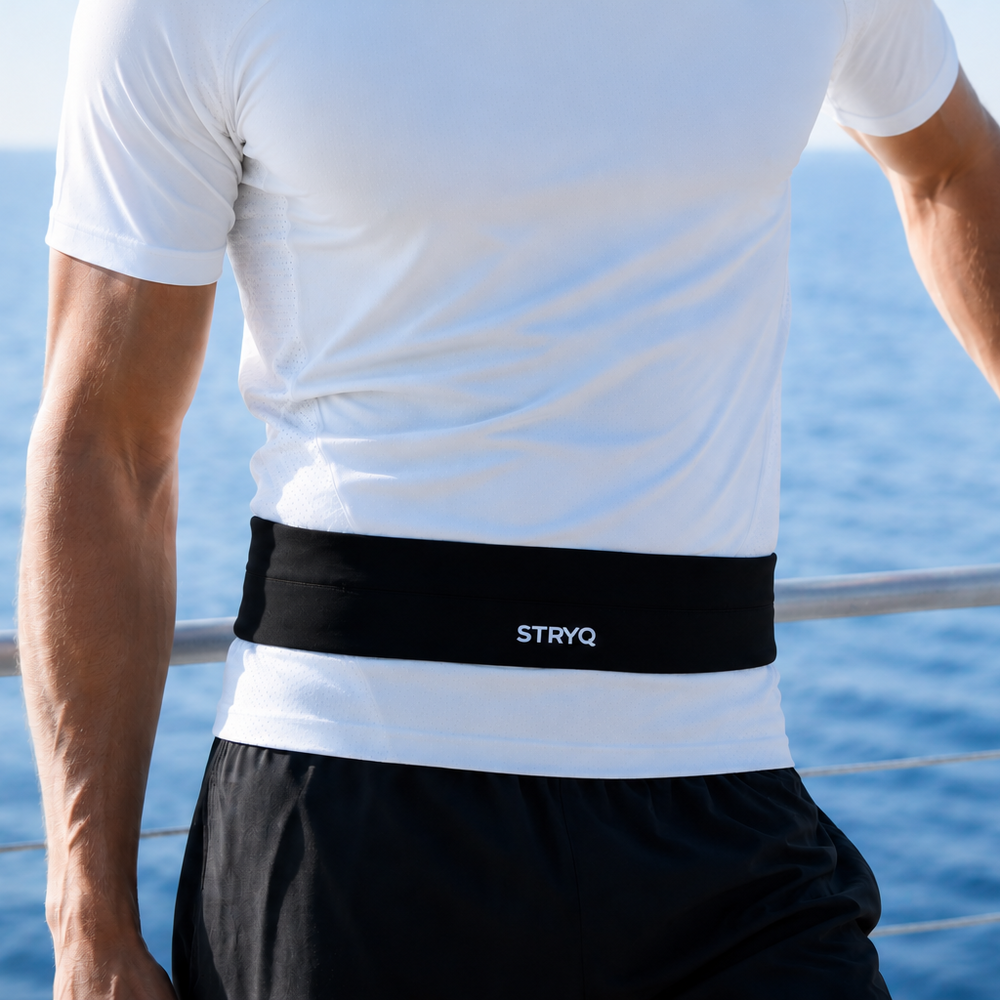
Our STRYQ running belt has 360° storage, so the load can be spread around your waist rather than sitting in one pocket. That helps with the bounce problem, but you should still test it on a long run with the exact items you will carry.
Option 4: Hydration vests and soft flasks

A vest spreads the load across your torso and gives you the most storage. This is the option most people picture when they think of carrying hydration, and it is the standard choice for ultras. For a road marathon it is a matter of preference, not necessity.
Pros
- Carries flasks at chest height, where you can reach them without breaking stride.
- Room for gels, a phone, a light jacket and spare nutrition.
- Adjustable straps let you tune the fit to your torso.
Cons
- Warmer than a belt or handheld on a hot day.
- Can chafe if it is badly fitted or you have never run long in it.
- More kit than a road marathon with frequent aid stations strictly needs.
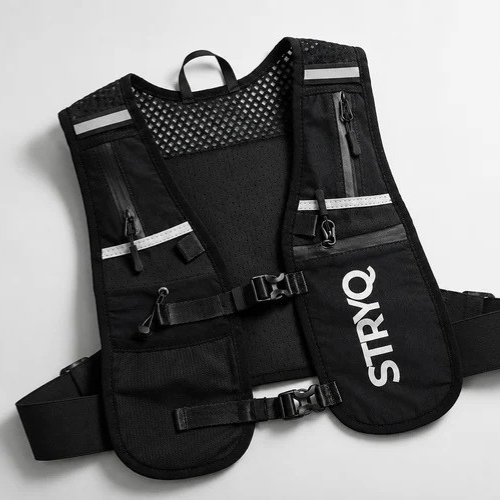
Our hydration running vest has adjustable straps and multiple pockets, and it takes soft flasks, such as the 500ml flask for hydration vests. If you are building towards a longer event, our ultramarathon hydration planning guide covers how the plan changes when stations are far apart.
Comparing the options side by side
| Option | Typical capacity | Best for | Main drawback |
|---|---|---|---|
| Aid stations only | None carried | Cool days, frequent stations | Dependent on the course and the crowd |
| Handheld bottle or flask | Around 500 mL | Top-ups between stations | Occupies a hand |
| Belt with flask | One flask plus small items | Warm days, light load | Can bounce if overloaded |
| Vest with soft flasks | Two flasks plus pockets | Long gaps, extra kit | Warmer, needs fit testing |
The capacity column is a general guide, not a specification of any one product. Check the product page for the exact figures before you buy.
Before the start: getting hydrated without overdoing it
Hydration begins before the gun. The American College of Sports Medicine’s hydration and electrolytes guidance suggests drinking 5-7 mL per kg of body weight about four hours before exercise. For a 70 kg runner, that is roughly 350-490 mL. If your urine is still dark or you have passed none, it suggests another 3-5 mL per kg about two hours before.
The same page notes that taking around 500 mg of sodium 90 minutes before exercise in the heat can help maintain fluid balance, which can be as simple as salting your pre-race breakfast. That advice is aimed at hot conditions, so do not apply it blindly on a cold morning.
If you have a medical condition, take medication that affects fluid balance, or have been told to restrict sodium or fluid, speak to your doctor before changing your race-day intake.
During the race: drink to thirst, and watch for overdrinking
More is not better. Exercise-associated hyponatremia, where excess fluid dilutes blood sodium, is potentially life-threatening. ACSM says drinking to thirst is widely recommended to prevent it, and notes it is more common in slower runners who spend longer on the course.
A study of fluid replacement during marathon running found that runners who gain weight during a race face a significantly higher risk of this condition. That is why weighing yourself before and after long training runs is useful: if you finish heavier than you started, you drank too much.
There is a balance. Research on planned drinking versus drinking to thirst notes that thirst tends to be satisfied before you are fully rehydrated, so in hot conditions with high sweat rates, a cumulative loss can build. For most runners on a mild day, thirst is a sound guide. On a hot day, you may need a loose schedule as well, such as a few sips every 15-20 minutes, tested in training.
If you feel bloated, nauseous, develop a headache, or notice confusion or swelling in your hands during or after a race, slow down, stop drinking plain water and get help from medical staff on the course.
Water, sports drink or electrolytes?
Alternating water and a sports drink is a common approach, and many races offer both. The ACSM page also makes a useful point: commercial electrolyte products are often about convenience, not physiological necessity, and salty snacks can do the same job if you plan for them. Electrolyte tablets or powders earn their place when carrying or eating real food is impractical, which is often the case mid-race.
For more depth, see our guides on electrolytes versus sports drinks, when you need electrolytes and electrolyte timing.
How to test your plan in training
No plan survives contact with race day if you have never tried it. Use your long runs as rehearsals.
- Measure your sweat rate. Weigh yourself before and after an hour-long run, with minimal clothing. Add the weight of any fluid you drank. ACSM suggests losing no more than about 2% of body weight in a session. For example, if you drop 1 kg and drank 0.5 L, you lost about 1.5 L in that hour. Our sweat rate guide walks through it.
- Practise with the real kit. Wear the belt or vest you will race in, filled the way you will fill it. Look for bounce, rubbing and how easily you can reach the flask.
- Practise the drink. Use the same sports drink or electrolyte mix you will have on race day, at the same hourly amounts.
- Repeat in similar conditions. ACSM’s consensus guidance stresses practising your hydration and fuelling strategy under conditions like the race. A plan that works in October may not in a warm spring marathon.
- Note how you feel. Record stomach comfort, thirst and energy at each hour, then adjust one thing at a time.
Other factors can also affect how a long run feels. If you run through your cycle and cramps are part of the picture, this guide to running with period cramps is worth reading, since it is easier to judge a hydration plan when you know what else is behind a rough long run.
A walkthrough of a typical session is in our long run hydration example, and our marathon long run essentials list covers the rest of what to pack.
Our view: pick the lightest setup that covers your gaps
We build running gear for everyday runners, and every product goes through several sample revisions and testing with runners before it is released. That shapes how we think about hydration kit.
Most marathoners do not need the biggest vest. They need the lightest setup that fills the gaps the aid stations leave. For many road runners, that is a belt or a single soft flask. If you carry gels, a phone and a layer as well, a vest is more comfortable than stuffing pockets.
Whatever you choose, fit matters more than features. A bottle that bounces or a strap that rubs will cost you more than a missed sip. That is why we focus on adjustable fit, secure storage and materials that last, and why we tell runners to test everything on a long run first.
The other thing we would say is that kit does not replace a plan. Know your sweat rate, know what is on the course, and practise.
— martin
Kit to carry your plan
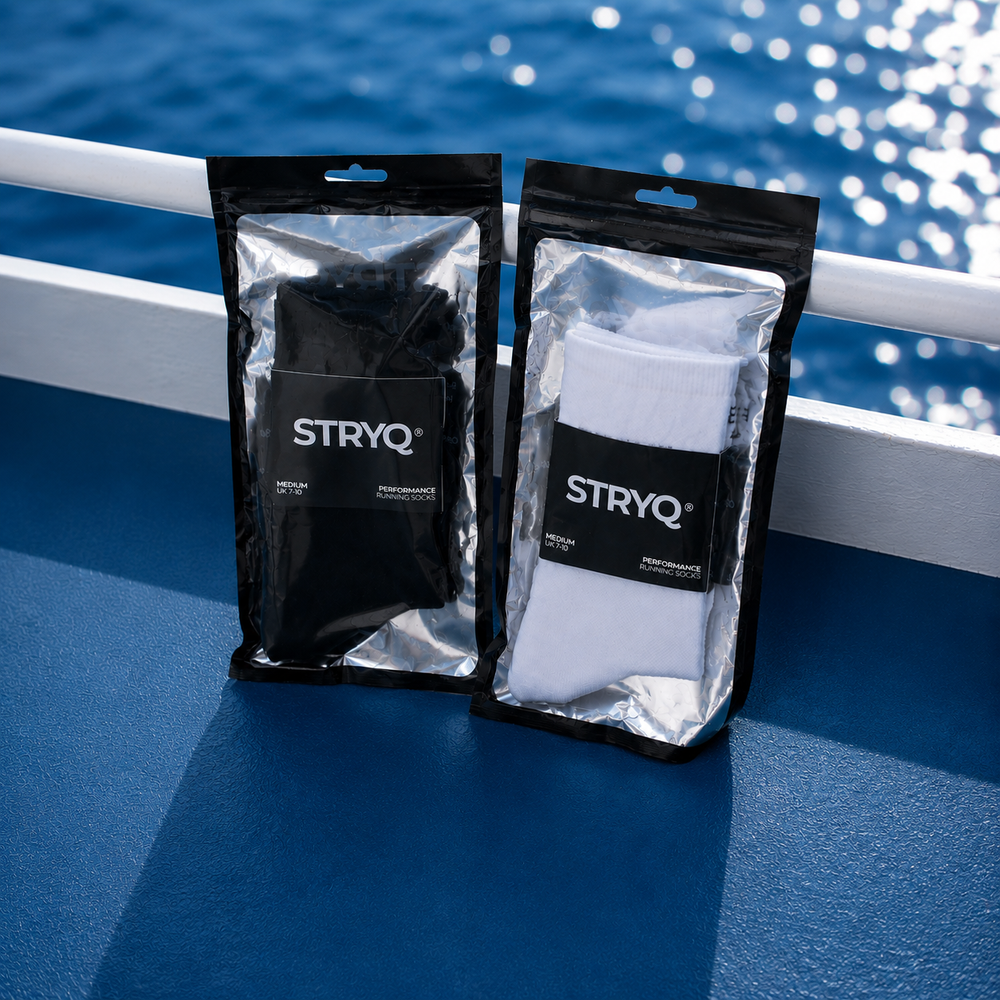
If you have decided what suits your race, our range covers the main options: the running belt and hydration vest, 500 mL soft flasks in several colours, and running socks for the miles in between. Browse the range and check the product pages for current prices and sizing.

A simple race-day checklist
- Read the race guide: station locations, what is served, and whether cups or bottles are provided.
- Decide what you will carry, and test it on your last two long runs.
- Pre-hydrate using the 5-7 mL per kg guideline four hours out, and check your urine colour.
- Plan fuel and electrolytes alongside fluid so you are not relying on drink alone.
- Drink to thirst on a mild day, with a loose schedule if it is hot.
- Know the signs of overdrinking and of heat illness, and where the medical points are.
For a course-specific example, see our London Marathon hydration strategy, and for wider context, the best hydration options for runners and marathon hydration trends.
FAQ
Do you need to carry water for a marathon?
Not always. Many road marathons have frequent fluid stations, and plenty of runners drink at those and carry nothing but gels. Carry your own if the gaps are long, if you want a specific drink, or if you dislike crowded tables. Check the race guide and decide in training.
How much should you drink during a marathon?
It varies by person. A review of endurance hydration cites 600-1200 mL per hour as a planning range for efforts over 90 minutes, but slower runners often need less. Drinking to thirst is the usual advice, and gaining weight during a race is a warning sign of overdrinking.
Do people run marathons with hydration vests?
Yes, though it is a minority on road courses and the norm on trail and ultra events. Runners choose a vest when they want to carry flasks, nutrition and a phone together. If you do, wear it on several long runs first to check for chafing and bounce.
How much water should you drink the day before a marathon?
There is no fixed figure that suits everyone. Drink normally and regularly, keep your urine pale, and avoid forcing large volumes. Focus on the guideline of 5-7 mL per kg about four hours before the start, and see a doctor if you have a medical condition affecting fluids or sodium.
Sources
- 9 Facts About Hydration & Electrolytes, ACSM
- Fluids and hydration in prolonged endurance performance, PubMed
- Fluid replacement during marathon running, PubMed
- Drinking Strategies: Planned Drinking Versus Drinking to Thirst, PMC