Most runs under 60 to 90 minutes need no carried water if you start hydrated. For anything longer, plan to drink within a range generally recommended between lower and higher amounts per hour, adjusted for heat, sweat rate and body size, and add electrolytes once you pass about 75 to 90 minutes. The ACSM sets this range for endurance efforts. The wider goal, whatever the distance, is to avoid gaining weight mid-run and to keep body-mass loss generally below a low percentage to maintain performance and safety.
TL;DR:
- Most runners do not need to carry water for runs shorter than 90 minutes if properly hydrated before starting.
- During runs over 90 minutes, drinking 400 to 800 millilitres per hour, adjusted for conditions, helps maintain performance and safety.
- Testing individual sweat rates through a weight-in method provides personalized hydration targets, since sweat losses vary widely between individuals.
- Consuming electrolytes becomes important after 75 to 90 minutes, especially in hot conditions or for heavy sweaters, using drinks, salts, or salty snacks.
- Overhydration risks exercise-associated hyponatraemia if drinking beyond thirst, with weight gain during a run indicating overhydration rather than adequate hydration.
Table of Contents
- How much to drink by run duration
- How to estimate your sweat rate
- Electrolytes and sodium: when to use sports drinks or salts
- Practical carrying and timing: bottles, belts and vests
- Risks of overdrinking and exercise-associated hyponatraemia
- A practical hydration plan for long runs and race day
- Practical notes on testing kit for long runs
- Why training-first hydration beats fixed rules
- Getting your kit to match your hydration target
- Sources
- FAQ
How much to drink by run duration
Duration sets the plan. Under 60 minutes, most runners manage without carried fluid, provided they started the session properly hydrated; heat, humidity or heavy sweating are the main exceptions. Between 60 and 90 minutes, a small 300 to 500 millilitre soft flask covers most needs, sipped as required rather than finished on schedule. Beyond 90 minutes, the ACSM points to 400 to 800 millilitres per hour as the working range, with heavier sweaters, faster paces and hotter conditions sitting at the top end.
In everyday units, 500 millilitres is about 17 fluid ounces, and 800 millilitres is roughly 27 fluid ounces.
- Under 60 or 90 minutes: no carried water needed for most runners in normal conditions.
- 60 to 90 minutes: carry 300 to 500 ml and sip as needed.
- Over 90 minutes: target 400 to 800 ml per hour, sipped every 15 to 20 minutes.
A simple starting rule: carry roughly one litre for every 90 to 120 minutes on the move, then adjust after testing your own sweat rate.
How to estimate your sweat rate
A weigh-in test removes the guesswork. The NATA position statement notes that sweat rates vary widely between individuals, commonly between 0.5 and 2.0 litres per hour, which is why a personal figure beats a generic one.
- Weigh yourself naked and dry immediately before running.
- Run for exactly 60 minutes at your normal training pace and note any fluid drunk during the run.
- Weigh yourself naked and dry again straight after, before eating or using the bathroom.
- Add the weight lost (in kilograms) to the fluid drunk (in litres) to get your hourly sweat rate.
As a worked example, say you lose 0.8 kilograms and drank 0.3 litres during the hour: your sweat rate is roughly 1.1 litres per hour. Repeat the test on a warm day and a cool day, since conditions shift the number. Clothing weight, gut contents and bathroom breaks before weighing all introduce small errors, so treat the result as a working estimate rather than a fixed target.
Electrolytes and sodium: when to use sports drinks or salts
Sodium matters once runs stretch past about 75 to 90 minutes, in hot conditions, or for runners who sweat heavily and notice salt marks on kit. A PubMed record on sodium replacement puts practical intake at roughly 0.3 to 0.7 grams of sodium per litre of fluid, while typical sweat sodium losses often sit between 500 and 700 milligrams per hour, though the range across individuals is wide.
- Diluted sports drinks: convenient and provide both fluid and sodium together.
- Electrolyte tablets or powders: easy to dose precisely and carry dry until needed.
- Salty snacks: useful on very long runs alongside plain water.
Test any electrolyte product in training first, since gut tolerance varies and race day is the wrong place to find out. Our guide to electrolytes versus sports drinks covers the options in more detail.
Practical carrying and timing: bottles, belts and vests
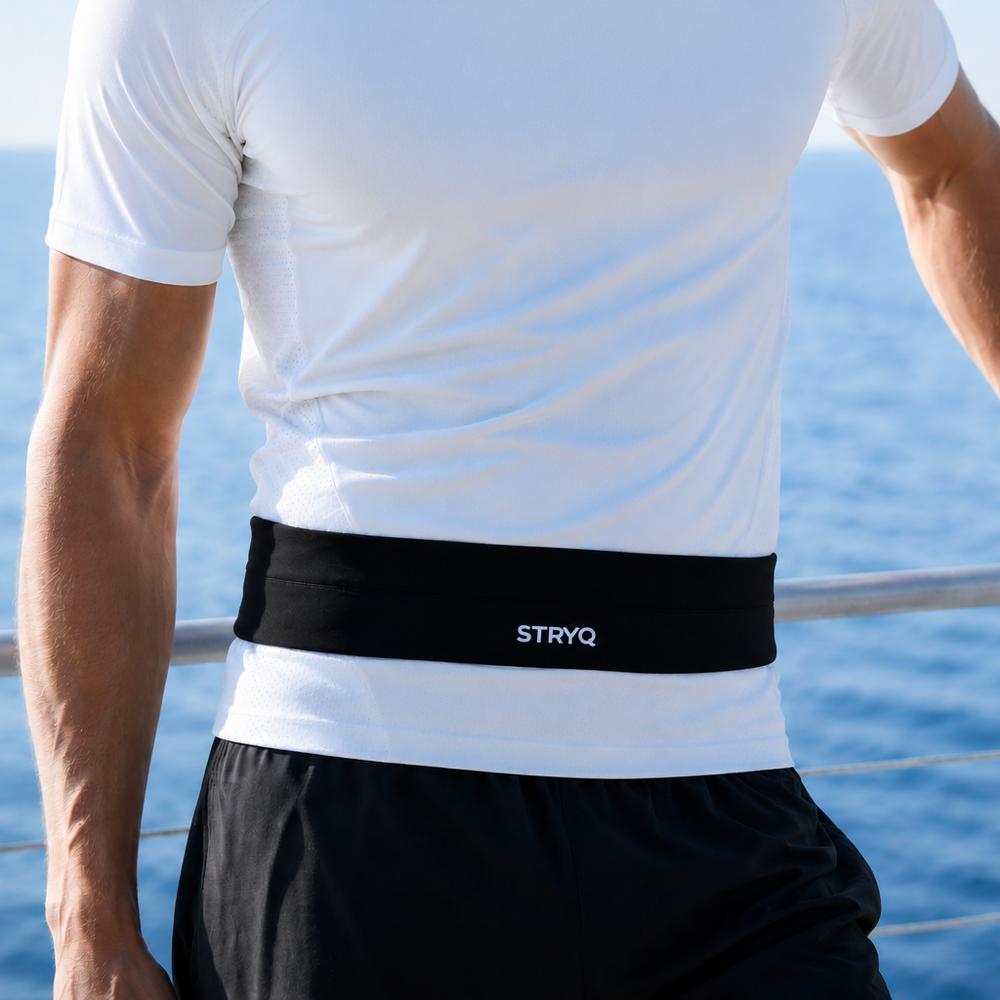
Kit choice should follow run length, not habit. A small soft flask or waist belt suits 60 to 90 minute sessions, while a hydration vest or bladder makes sense once you are carrying fluid for two hours or more.
- Sip small amounts every 15 to 20 minutes rather than large gulps once an hour.
- Use a flask with visible fill markings if you want an easy way to track intake.
- Train with the exact kit you plan to race in, including how you refill and reach it on the move.
Our overview of hydration options for runners breaks down belts, vests and flasks side by side.
Risks of overdrinking and exercise-associated hyponatraemia
Exercise-associated hyponatraemia, or EAH, happens when the body takes in more hypotonic fluid than it can process relative to sodium levels, not simply from sweating out salt. The NATA guidance links EAH risk to drinking beyond thirst, exercise lasting over two hours, frequent stops at aid stations, and pre-race overhydration by inexperienced runners.
- Drink to thirst rather than on a fixed volume schedule.
- Watch for weight gain during a run, since that signals overhydration rather than good hydration.
- If you have had hydration problems before, consider a supervised sweat-rate test to set a personal baseline.
The Korey Stringer Institute frames the same target from the other direction: losing more than 2% of body mass during exercise can hurt performance, while any weight gain during a run points to overhydration.
A practical hydration plan for long runs and race day
A plan works best in stages, tested well before race day.
- Two to three hours before the run, drink 500 to 600 millilitres; the Johns Hopkins guidance recommends this window to allow normal urinary clearance.
- Ten to 20 minutes before starting, take a smaller top-up of 200 to 300 millilitres.
- During the run, sip toward your personal sweat-rate target every 15 to 20 minutes, adding electrolytes once you pass 75 to 90 minutes.
- After finishing, replace 100 to 150% of your measured fluid deficit over the next two to four hours, a figure the NATA position statement sets to cover ongoing fluid loss through urine.
On hot days, shift toward the top of your ml/h range and add a salty snack; on cool days, the lower end is often plenty. Our worked long-run hydration example walks through a full session using this template.
Pro Tip: Write your sip schedule on your hand or set a repeating watch alarm for the first few long runs, until sipping every 15 to 20 minutes becomes automatic.

Practical notes on testing kit for long runs
Capacity should match distance, not the other way round. A 500 millilitre soft flask handles most runs up to about 90 minutes, while anything longer benefits from a vest with enough pockets to carry fluid, gels and a phone without bouncing.
- A soft flask suits short and medium runs where 300 to 500 ml covers the session.
- A hydration vest suits long runs and races where total fluid needs exceed one bottle.
- Strap adjustment and pocket layout matter as much as total capacity, since a flask that shifts around is one you stop using.
- Practise refilling on the move before race day, not during it.
Why training-first hydration beats fixed rules
Generic ml/h numbers are a starting point, not a script. The reliable approach is testing your own sweat rate, watching weight and urine colour in training, and adjusting gradually rather than trying something new on race morning. Safety, meaning avoiding both dehydration and EAH, matters more than hitting an exact figure.
— martin
Getting your kit to match your hydration target
Once you know your ml/h target, the remaining problem is usually carrying it comfortably. The STRYQ 500ml Running Soft Flask and the STRYQ Purple 500ml Soft Flask are built for runs up to about 90 minutes, sized to sit flat in a belt or vest pocket without sloshing.

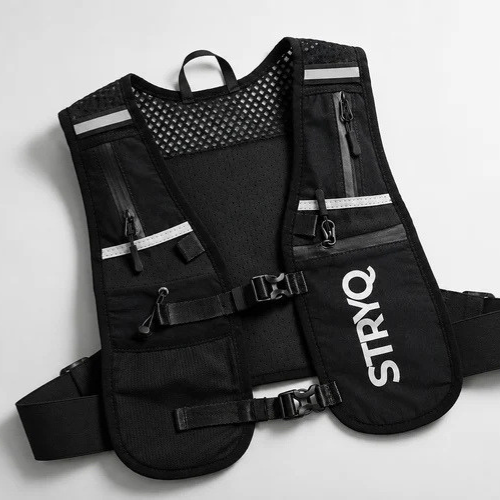
For long runs and races where you are carrying fluid for two hours or more, the STRYQ HYDRATION RUNNING VEST has adjustable straps and multiple pockets for flasks, gels and electrolyte tablets. Every hydration product goes through repeated revisions with runner feedback before it reaches the shop, aimed at fit and durability rather than the cheapest possible build.
- Short to medium runs: pair a soft flask with a belt for hands-free carrying.
- Long runs and races: a vest keeps fluid, food and electrolytes accessible without breaking stride.
Browse the full soft flask range or the wider running gear collection to match capacity to your own hourly target.
Sources
- 9 facts about hydration & electrolytes — ACSM
- National Athletic Trainers’ Association position: Fluid replacement for the physically active — PMC
- Fluid replacement for the physically active — NATA (2025)
- Korey Stringer Institute — hydration guidance
FAQ
How much water for a 1 hour run?
Most runners need no carried water for a run of about an hour if they started the session hydrated. If conditions are warm or you sweat heavily, a small 300 to 500 ml soft flask sipped through the hour is a reasonable buffer.
Should I run on an empty stomach?
This is a personal tolerance choice rather than a hydration rule, and it does not change your fluid needs during the run. Whatever you decide about food, drink 500 to 600 ml two to three hours beforehand and a smaller top-up nearer the start, as the Johns Hopkins guidance suggests.
What is the 3-3-3 rule for running?
This is not a term used in the sports science sources behind this article, so no single definition applies. Runners use various shorthand pacing and warm-up rules under similar names, but none is backed by the hydration guidance cited here.
What is the 10 gulp rule?
There is no established definition of this rule in the hydration research reviewed for this article. The safer approach, supported by the NATA position statement, is to sip small amounts every 15 to 20 minutes and drink to thirst rather than follow a fixed gulp count.