A hydration vest vs belt decision usually comes down to one question: how much do you need to carry before your run starts feeling less free? Get it right and you barely notice your kit. Get it wrong and you are pulling at straps, dealing with bounce or running short of water miles from home.
Neither option is automatically better. A running belt is often the simplest answer for shorter runs and lighter loads. A hydration vest earns its place when distance, heat, trails or self-supported running demand more fluid and more storage. The best choice is the one that fits your route, pace and usual running habits.
Hydration vest vs belt: the key difference
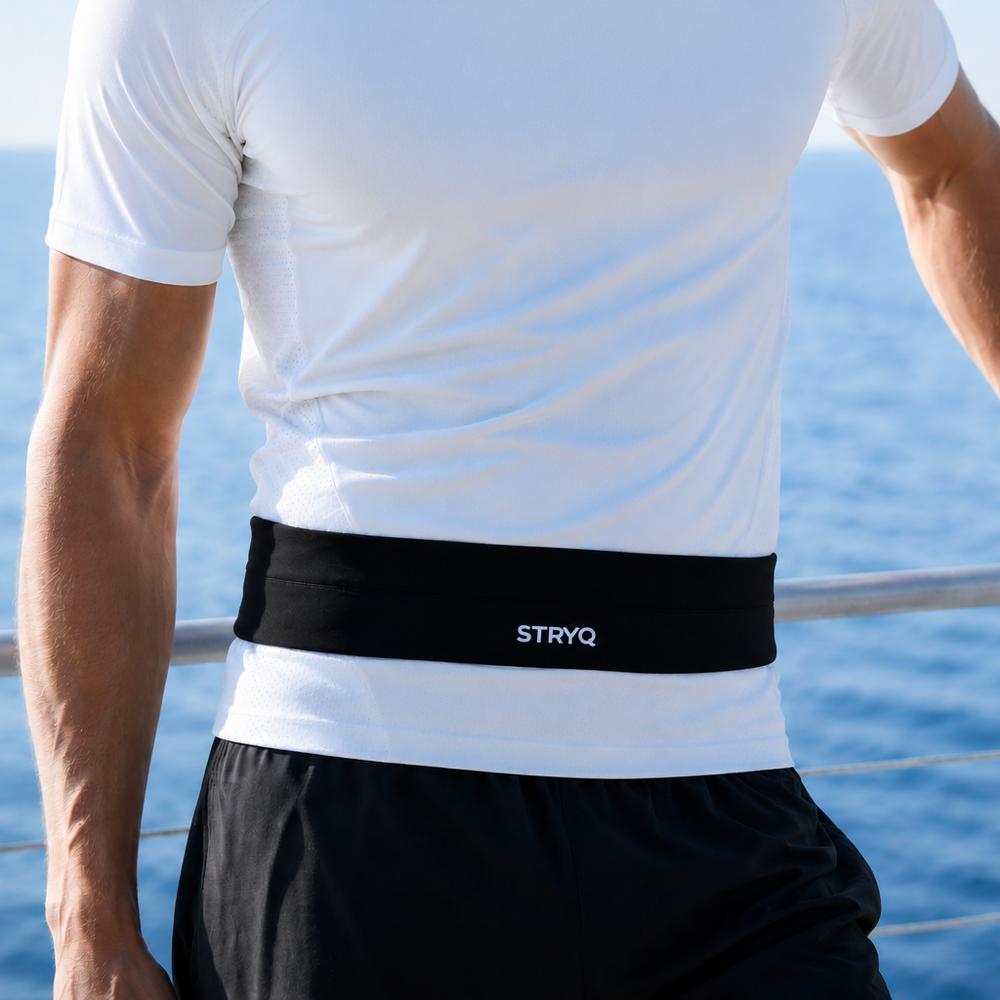
A hydration belt sits around your waist. It is designed to hold essentials close to your body, usually with a secure pocket and, depending on the design, space for a soft flask. It keeps your upper body clear and is quick to put on, adjust and forget about.
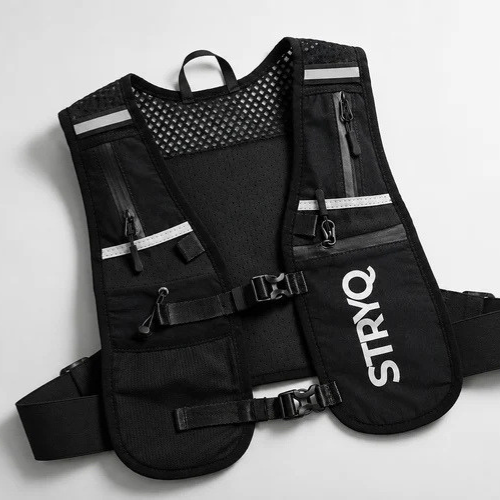
A hydration vest sits over your shoulders and around your torso. It spreads weight across your chest and back, with front pockets for soft flasks, gels and a mobile phone. Most vests carry more water and have room for extra layers, nutrition and safety kit.
The trade-off is simple. Belts are lighter and less restrictive when you only need the basics. Vests carry more without overloading your waistband, but they cover more of your body and take a little longer to fit correctly.
When a running belt makes more sense
For many runners, a belt is all they need. If you run for 30 to 60 minutes, pass water fountains, or can plan a route near home, carrying a large amount of fluid is rarely necessary. A well-fitted belt can hold your mobile phone, keys, inhaler, gels and a small soft flask without the bulk of a vest.
It is also a good choice for beginners. On a Couch to 5K plan, the priority is building a regular habit. You do not need to buy kit for an ultra before you have found your rhythm. A secure belt solves the immediate problem of where to put your essentials while keeping running straightforward.
Belts suit road running particularly well. They are useful for parkrun, lunchtime runs, treadmill sessions and local training loops where you can top up water before or after. If you dislike the warm feeling of fabric across your back, a belt can feel noticeably more comfortable in mild weather.
The fit matters more than the amount you carry. A loose belt can ride up or bounce, especially once a mobile phone and flask are added. Look for an adjustable fit that sits securely around your natural waist or hips, depending on what feels most stable for you. Pack heavier items close to the body and avoid leaving loose objects rattling around.
Choose a belt if you usually carry
A belt is the practical option when you need a mobile phone, keys, card, one or two gels and perhaps a small amount of water. It can also work for longer runs if you have planned refill points or are happy to stash a bottle on a looped route.
Do not assume a belt is only for short distances, though. Some experienced marathon runners prefer a belt for races where water is provided frequently. There is no benefit in carrying two litres if the next water station is a few miles away and you are comfortable drinking little and often.
When a hydration vest is worth wearing
A hydration vest is built for runs where water access is uncertain or your kit list grows quickly. Think long Sunday runs, marathon training, trail routes, warm weather, holidays, events with long gaps between aid stations and any route that takes you well away from home.
The biggest benefit is weight distribution. Two soft flasks in front pockets feel more balanced than a heavy bottle on one side of a belt. As the distance builds, that balance can make a real difference to comfort. You can drink without stopping or reaching behind you, then stow the empty flask neatly as it shrinks.
A vest also gives you space for the things that make longer runs safer and more manageable: extra gels, electrolyte tablets, a lightweight waterproof, gloves, a buff, a charged mobile phone and basic first-aid supplies. On UK trails, conditions can change quickly. Having a layer available is not overpacking when you are an hour from the nearest shelter.
The downside is that a vest needs to fit well. If it is too big, it can bounce at the chest and shoulders. If it is over-tightened, it may restrict breathing or rub once you are sweaty. Fill the flasks before testing the fit, tighten the side and chest adjustments gradually, and take it out on a few shorter runs before race day.
Choose a vest if your runs involve
A vest is usually the better call for runs over 90 minutes without reliable water stops, especially in warmer conditions. It is also sensible for trail running, hilly routes and long-distance events where mandatory kit may be required. The more variables your run has, the more useful the extra capacity becomes.
This does not mean every marathon runner needs a vest. If your race has frequent water stations, check the course information and practise your fuelling plan. A belt may still be the lighter, cooler option. But for self-supported marathon training runs, a vest often makes hydration easier to manage.
Comfort is about fit, not just capacity
The most common mistake is choosing by litre capacity alone. A vest with more pockets is not better if it rubs your neck. A belt with a large storage compartment is not useful if it bounces every time you pick up pace.
For belts, check that the waistband stays flat and secure when loaded. Stretchy fabric can be comfortable, but it needs enough structure to stop the belt sagging under the weight of a mobile phone or flask. Test it with the items you actually carry, not just empty in the kitchen.
For vests, pay attention to chest adjustment, side tension and the position of the front pockets. You should be able to reach your flasks and gels without breaking stride. There should be no loose fabric around the shoulders, but you should still be able to take a full breath on a hill.
Chafing is often a sign of movement, not simply a sign that the material is wrong. Adjust the fit first. If you still get rubbing, consider where seams meet your skin, whether your top is causing friction, and whether the vest is overloaded on one side.
Match your hydration plan to the run
Your carrying choice should support a realistic hydration plan, not replace one. How much you need depends on duration, temperature, effort, your sweat rate and what is available on route. A cool 45-minute run around town is very different from a humid two-hour trail run with no taps nearby.
Start by checking the route. Are there public water fountains, cafés or race stations? Will you pass your car or home during the run? Then consider your fuelling. If you take gels, you may want water to wash them down. If you use electrolytes, front flask pockets make it easy to keep one flask with electrolytes and one with plain water.
Practise exactly as you plan to race. Wear the belt or vest, carry the same flask size, use the same nutrition and run at a similar effort. This is where small problems show up early: a zip that is hard to open with tired hands, a pocket that does not fit your mobile phone, or a flask that sloshes because it is only half full.
Do not buy more carrying space than you will use
It is tempting to prepare for every possible situation. In reality, overfilled running kit can make an ordinary run uncomfortable. More water means more weight. More pockets make it easier to carry items you do not need.
Build from your normal runs. If you currently need somewhere for your mobile phone and keys, start with a belt. If you are training for a half marathon or marathon and your long runs are becoming self-supported, consider a vest with space to grow into. STRYQ running accessories are designed around this practical balance: secure storage, a stable fit and no unnecessary bulk.
You may end up owning both, and that is perfectly reasonable. A belt for easy weekday miles and race-day essentials. A hydration vest for long runs, trails and hot-weather sessions. Choosing by the run rather than trying to force one piece of kit into every situation will make both options work better.
Before your next longer run, lay out what you truly need, check where you can refill, and try carrying it at an easy pace. The right setup should leave your hands free, your essentials secure and your attention where it belongs: on the next mile.