The difference between finishing an ultra strongly and spending the final miles feeling flat is often not fitness. It is what you drank, when you drank it and whether you could actually carry it comfortably. This ultramarathon hydration planning guide will help you build a simple plan that works in training, on race day and in changeable British weather.
Hydration is personal. A runner who is comfortable with 500ml an hour may struggle on far more, while another needs extra fluid and sodium on a warm, exposed course. The goal is not to force a fixed amount of water. It is to understand your own needs, then make your plan easy to follow when you are tired.
Why ultra hydration needs more than a water bottle
An ultramarathon gives small mistakes time to grow. Starting slightly under-hydrated, missing a refill or carrying a drink you do not enjoy can feel manageable at 10 miles. Several hours later, it can mean headaches, nausea, cramp, low energy or a difficult final section.
Fluids, electrolytes and carbohydrates all have different jobs. Water replaces some of the fluid you lose through sweat. Electrolytes, particularly sodium, help you retain and use that fluid properly. Carbohydrate in a sports drink provides energy, but can also upset your stomach if the mix is too strong or you drink it too quickly.
Your race plan therefore needs to account for four practical questions: how much you are likely to drink, where you will refill, what is in each flask and how you will carry everything without bounce or rubbing.
Build your ultramarathon hydration planning guide in training
Do not wait for race week to decide on a hydration strategy. Long runs are your testing ground. Use them to practise the same flasks, vest, drink mix and refill routine you expect to use in your event.
Start with a realistic hourly fluid range
Many ultra runners land somewhere around 400ml to 800ml of fluid per hour. That is a starting range, not a rule. Your needs will rise in heat, humidity, strong sun, long climbs and when you run at a harder effort. They may be lower on a cold, wet day when you barely notice yourself sweating.
A useful test is to weigh yourself before and after a one to two-hour run in conditions similar to your race. Weigh yourself without wet kit, note how much you drank, and avoid using a run where you needed a toilet stop as your only data point. A large drop in body weight suggests you may need more fluid next time. A gain in weight can mean you are drinking more than you need.
You do not need laboratory-perfect numbers. You need a sensible range that lets you begin a long run well hydrated and finish without feeling bloated, unusually thirsty or drained.
Plan sodium alongside fluids
Sweat contains sodium, but the amount varies widely between runners. White salt marks on your clothing, stinging sweat in your eyes and repeated cramping can suggest you lose a fair amount, though none is a perfect diagnosis on its own.
For long runs, many runners use an electrolyte drink, electrolyte tablets or capsules. Check the labels and calculate what you are getting per hour, rather than assuming every product provides the same amount. In hot conditions, or if you know you are a salty sweater, you may need more. If you have high blood pressure, kidney concerns or have been advised to limit salt, speak to a healthcare professional before making major changes.
Plain water still has a place, especially at aid stations. But drinking large amounts of plain water without replacing sodium over many hours can be a problem. Your plan should avoid both extremes: do not ignore thirst, and do not keep drinking simply because a schedule tells you to.
Keep sports drink strength consistent
More powder does not always mean more useful energy. A drink that is too concentrated can sit heavily in your stomach, particularly late in a race. Follow the mixing guidance first, then test it over time.
Some runners prefer one flask with electrolytes and one with water. Others use a lighter carbohydrate drink in both flasks and take gels or real food separately. There is no single right setup. The best one is the option you can drink regularly, refill easily and tolerate after six hours on the trail.
Match carrying capacity to the course
Look closely at the race information. Aid station distance matters more than the total race distance. A 50-mile event with frequent, reliable water stops may only require enough capacity for 60 to 90 minutes. A remote section in warm weather may require two or three hours of fluid, plus a margin for a missed or limited refill point.
Work backwards from the longest gap between water sources. If you expect to drink 600ml an hour and the next reliable refill is two hours away, leaving with around 1.2 litres is the sensible baseline. Add more if the route is hilly, hot or unfamiliar.
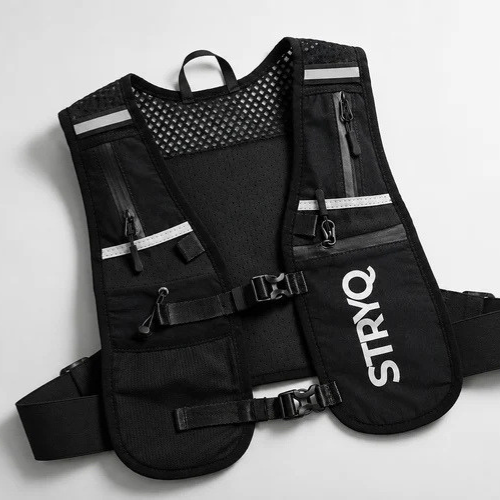
Carrying that volume well is just as important. Loose bottles move around, waste energy and can make you avoid drinking. A properly fitted hydration vest keeps soft flasks close to your body, so you can sip without stopping or fighting with your kit. At STRYQ, the focus is simple: secure storage, low bounce and easy access to what you need when the miles get long.
Test the vest fully loaded. A vest that feels fine with one flask may rub at the shoulders, chest or lower back when it holds water, food, a phone and mandatory kit. Adjust the fit before you leave, not halfway through a long run. Soft flasks also shrink as you drink, which can reduce sloshing and make empty containers easier to pack away.
Use a drinking routine, not a rigid stopwatch
A good race routine is usually small, regular sips rather than large drinks taken only at aid stations. For many runners, drinking every 10 to 15 minutes is easier on the stomach and easier to remember. Use natural prompts if you dislike watching the clock: drink at the top of a climb, after a gel, at each kilometre marker or when you check your route.
Your plan should have flexibility built in. Drink more when you are hot and thirsty. Ease back if your stomach is sloshing or you feel overly full. If you are sweating heavily, take electrolytes as planned rather than trying to solve everything with more water.
Pay attention to urine before and after the race, but do not obsess over it during the event. Very dark urine can be a sign you need more fluid, while completely clear urine all day can suggest you are overdoing it. How you feel, the weather and your actual intake matter more than chasing one colour.
Adjust for heat, cold and long race days
Warm weather changes the equation quickly. Start drinking early, use shade at aid stations where possible and cool yourself with water over the head or neck if the race allows it. If you wait until you feel desperate for a drink, you are already playing catch-up.
Cold weather catches runners out for a different reason. You may not feel thirsty, yet you are still losing fluid through sweat, breathing and layers. Keep a simple drinking rhythm, and consider whether your bottles will be easy to open with cold hands. On winter ultras, lukewarm drinks can also be far easier to tolerate than icy water.
For events lasting all day or into the night, plan for changes in appetite. The sweet drink you enjoy at hour two may become unpleasant at hour nine. Having a second flavour, plain water or a savoury option available can prevent your hydration plan becoming another battle.
Rehearse the boring details
Practise filling flasks quickly. Know how much water each flask holds and how many scoops, tablets or sachets it needs. Carry spare electrolyte portions in clearly labelled bags if you will mix on course. These small details save time and reduce mistakes when you are tired.
Also check whether aid stations provide cups, water only, sports drink or nothing you can rely on. Never assume the advertised drink will suit you. Treat aid-station products as a backup unless you have tested them before.
The right hydration plan should feel almost boring by race day. It should be familiar, comfortable and easy to repeat. That leaves more attention for the route, the weather and the simple satisfaction of keeping moving when the race gets properly long.