Wear running lights whenever you run at dawn, dusk or in the dark, and on dull, wet days when drivers struggle to pick out pedestrians. Put a white light at the front, a red light at the back, and add reflective material on parts of your body that move. Below you will find where each light goes, how to combine lights with reflective gear, and a quick check to do before you leave the door.
TL;DR
- Wear lights at dawn, dusk, at night and in poor weather: white at the front, red at the rear, as US safety guidance advises.
- Place lights where approaching drivers can see them clearly: chest, waist, upper arm or back. A small clip on a shoe can be missed.
- Lights and reflective gear work best together. Reflective bands on ankles, wrists, knees and elbows show drivers a moving human shape.
- Light-coloured or fluorescent clothing is not enough after dark. Retro-reflective material is what bounces headlight beams back.
- Charge, test and position your lights before every run, and carry on facing traffic if there is no pavement.
Table of Contents
- Why running lights matter more than most runners think
- When to wear running lights
- Where to wear running lights
- Do you need a light to see, as well as to be seen?
- Lights plus reflective gear: the combination that works
- Check your lights before you run
- Road rules and habits that go with the lights
- Perspective
- Build a visibility kit that you will actually wear
- Common mistakes with running lights
- FAQ
- Sources
Why running lights matter more than most runners think
Most runners can see the road well enough when they are out in the dark. The problem is the opposite: whether the driver can see you. The US Department of Transportation’s National Roadway Safety Strategy states that 75 percent of fatal pedestrian crashes occur in darkness, and that visibility continues to be an issue for people walking and biking. A runner counts as a pedestrian in those numbers.
There is a second trap. The federal road safety regulator, NHTSA, notes that drivers may have difficulty seeing pedestrians even when the pedestrian can see them. Feeling visible and being visible are different things. A dark jacket, a wet windscreen, oncoming headlight glare and a driver glancing at a junction all work against you.
Lights fix part of that, because they make you a source of light rather than a shape that must be spotted against a dark background. Reflective material fixes another part. You want both, and you want them in the right places.
When to wear running lights
The obvious answer is “at night”, but the situations that catch runners out are the grey ones.
- Early morning runs before sunrise. Autumn and winter shift your usual 6 am route into full darkness for months.
- After-work runs at dusk. Light fades quickly and low sun can put drivers’ eyes in glare. You may feel fine while a car approaching sees only a silhouette.
- Rain, fog and heavy cloud. Visibility drops in the middle of the day. A light worn on a gloomy afternoon costs you nothing.
- Tree-lined roads and shaded paths. Dappled shade breaks up your outline.
- Parkrun and club sessions on winter mornings. The walk or jog to the start can be along roads that are still dark.
NHTSA’s guidance is simple: wear bright clothing in the daytime, and at night or in poor visibility use reflective gear and lights, white in front and red at the rear. If you are unsure whether you need lights, you do.
Where to wear running lights
Placement decides how useful a light is. A light buried under a jacket or swinging by your hip is no help. A University of Washington Medicine expert cautions that small lights clipped to shoes may be ineffective if they are not consistently visible to drivers. The point is to put the light where approaching traffic sees it clearly, consistently.
Front: white
A white light on your chest or waist faces oncoming traffic and shows a steady point at a sensible height. Because your arms swing and your head moves, a torso position stays more consistent than a hand or head position for being seen. If you want a deeper look at how a light on your chest behaves differently from a head torch, see our piece on chest running lights versus headlamps.
Rear: red
A red light at the back of your waist, on a belt, vest or pack, speaks to traffic coming up behind you. If you run on a road with no pavement and follow the advice to face oncoming vehicles, the rear light still matters on bends, at junctions and where side roads join.
Upper arm, wrist and ankle
Upper-arm lights are a popular choice and adjust quickly. Lights or reflective bands on moving limbs add the motion cue drivers read as “a person”. We cover the options in more detail in our guide to running light placement.
A quick placement table
| Position | Colour | What it does | Watch out for |
|---|---|---|---|
| Chest or waist (front) | White | Shows oncoming drivers a steady light | Cover it with a jacket and it disappears |
| Back of waist, pack or vest | Red | Warns traffic approaching from behind | Bag straps or a loose top can hide it |
| Upper arm | White or red | Adds a second point of light at head height | Fit it snugly so it does not slip |
| Ankles and wrists | Reflective bands | Show movement, which helps drivers recognise a person | Light alone on a shoe can be missed |
| Head | White | Lights your path | May not help drivers see you more, see below |
Do you need a light to see, as well as to be seen?
They are two different jobs. If you run on unlit paths, pavements with trip hazards or trails, you need light to see where you put your feet. UW Medicine recommends a headlamp as a light source along with reflective or retro-reflective clothing for night running.
Be realistic about what a headlamp does for visibility to traffic, though. Outside reports that research has not conclusively shown headlamps make runners more conspicuous to traffic, and it recommends wearing one together with retro-reflective gear to light the path. So think of it this way:
- To see: a headlamp or a bright chest light that lights the ground ahead.
- To be seen: lights at torso level front and back, plus reflective material on moving parts.
On well-lit streets you may only need the second group. On unlit roads you need both.
Lights plus reflective gear: the combination that works
Runners often ask whether they should buy lights or reflective gear. The honest answer is that they cover different weaknesses. Lights work when a driver is looking in your direction, even from a distance, and they keep working in rain and mist. Reflective material needs no battery, so it still works when a light has run out of charge. A blog from a running retailer makes the same point: reflective patches work even when a head torch has died. We would add: do not rely on that as a plan.

What actually reflects
UW Medicine is clear that light-coloured or white clothing is insufficient at night, and fluorescent clothing does not work because it needs UV light. Retro-reflective material is different: it sends light back directly to its source. Outside describes the same effect: retro-reflective material bounces light straight back to sources such as headlights, creating contrast in traffic light.
In practice: a neon top is a good daytime choice and still worth wearing at dusk, but after dark it needs reflective detail and lights added to it.
Put reflective material on parts that move
Both UW Medicine and Outside point to the same idea. Reflective material on ankles, knees, wrists and elbows helps drivers recognise motion, and Outside calls it a powerful visual stimulus for oncoming drivers. A reflective vest on your torso shows a drivers a block. Reflective bands at wrists and ankles show a pumping, human pattern.

We go through the research and the numbers in our articles on reflective gear versus running lights and on adding a rear LED to reflectors.
A simple four-layer setup
- Base visibility: a bright top for dusk and daylight.
- Reflective vest or jacket details on your torso.
- Reflective bands on wrists or ankles.
- Lights: white at the front, red at the rear.
That mirrors the thinking in our four-part night running visibility kit. If you are building a kit from scratch, our list of the best reflective running items is a place to start.
Check your lights before you run
A light that fails at mile two is worse than no light, because you stop thinking about it. Before every dark run:
- Charge or replace batteries. Do it after each run, not before the next one, so you are never caught short.
- Switch it on and look. Confirm that it works, and that the mode you want, steady or flashing, is the one selected. Daytime-style lights on cars switch on only when you do it; runner lights are the same.
- Fit and angle. Strap or clip it so it faces forward or backward, not at the ground or your own chin. Jog on the spot for a few strides to see if it shifts.
- Check it is not covered. Jackets, vest flaps, hydration pack straps and gloves often hide a light that was clear in the hallway mirror.
- Test it from a distance. Ask someone to look from the end of the street, or put it on and check it in a shop window or a parked car’s reflection. We describe a method for this in our guide to testing lights from a driver’s point of view.
- Think about the run length. Pick a runtime that comfortably exceeds your longest outing, because cold weather tends to shorten battery life.
- Carry a spare if you run long or far from home: a second small light or fresh batteries.
One more point on modes. Many runners prefer a flashing mode for the rear, because it draws the eye. Steady light is easier for a driver to judge distance from. Using a flash at the back and a steady beam at the front is a common compromise. Whichever you choose, keep it consistent so you remember to check it.
Road rules and habits that go with the lights
Lights do not replace road sense. NHTSA advises runners to use sidewalks or paths to separate from traffic, and where there is no sidewalk, to run facing traffic and stay on the shoulder or as far from vehicles as possible. It also asks pedestrians to stay alert and take extra care at intersections.
Some habits that go with the gear:
- Take out headphones, or keep the volume low, so you hear vehicles behind you.
- Make eye contact at junctions. Do not assume a driver who is looking your way has seen you. Slow down or stop until you are sure.
- Choose lit routes in the first weeks of darker months, and save unlit lanes for when your kit is dialled in.
- Tell someone your route if you run alone before dawn or after dark.
- Be extra careful near driveways and parked cars, where a reversing vehicle has little time to react.
The same National Roadway Safety Strategy takes a Safe System Approach, which accepts that human mistakes happen and that people are vulnerable, and builds in layers of protection. Your kit is one of those layers. It is the one you control.
Perspective
We build our range around problems real runners tell us about, and visibility is one that comes up every autumn. Runners tell us they own a light, but it ends up in a drawer, or it sits under a jacket, or it only gets charged the night before a long run. So we think the best visibility kit is the one that is comfortable enough to wear every time.
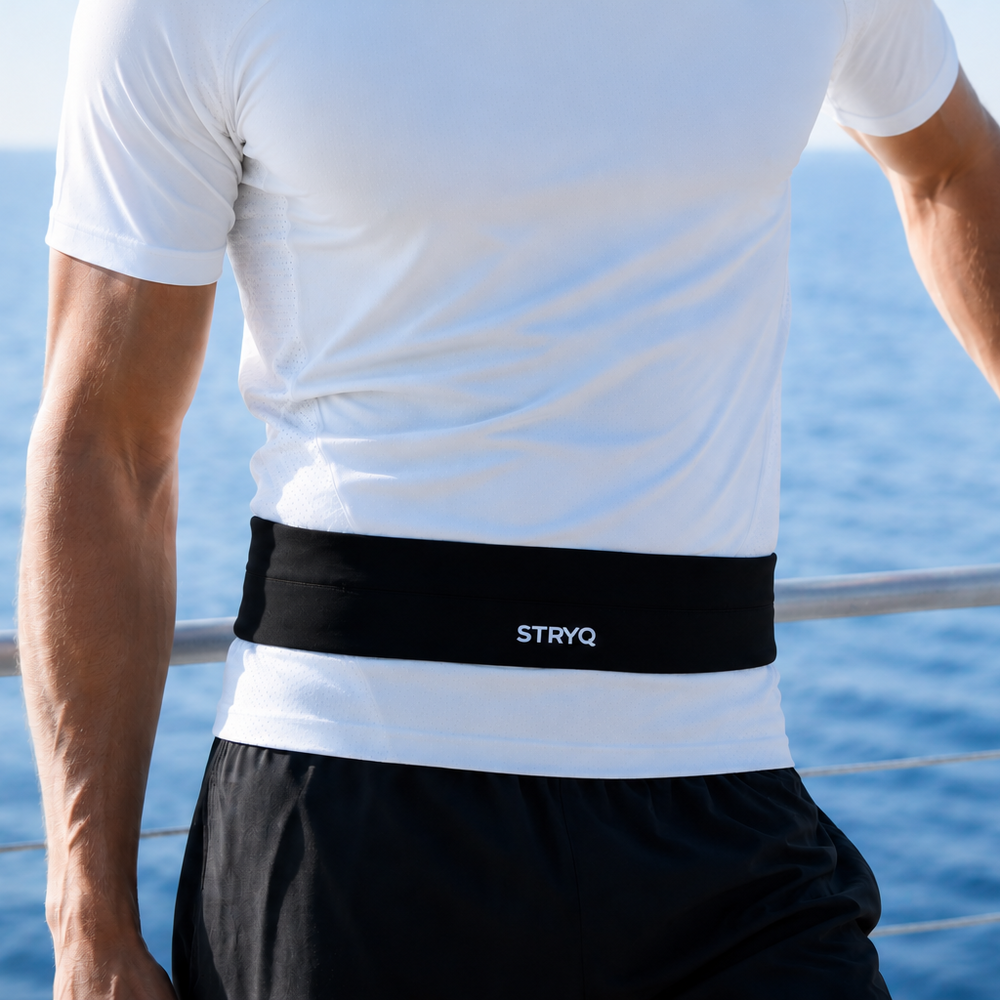
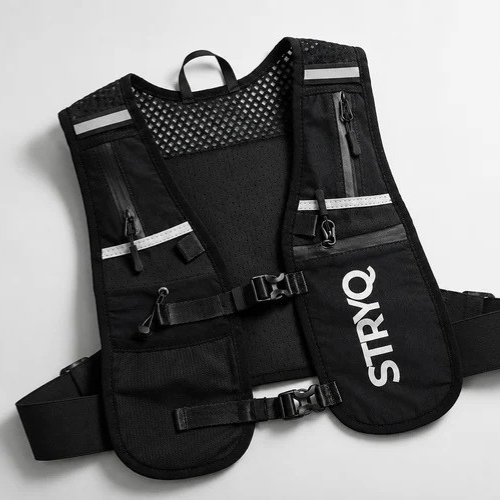
That is why we pair lights with reflective items rather than treating them as rivals. Our High-Vis Running Vest & Reflective Bands Kit is designed to put reflective material on the torso and the moving parts of the body, and our belt and hydration vest give you secure, stable positions for a front or rear light. Because a light needs a steady home, fit matters as much as brightness.
We test products through several sample revisions and listen to feedback from runners before launch. We prefer practical features that work on a cold, wet 6 am run over marketing claims. Visibility gear should be simple: put it on, switch it on, and get on with your run.
martin
Build a visibility kit that you will actually wear
If you are starting from nothing, begin with the torso and the moving parts: reflective material you can put on in seconds, and a white light and red light you can position without fuss. Our High-Vis Running Vest & Reflective Bands Kit is designed for exactly that job, with reflective bands for the parts of you that move.

If you already carry water or a phone, the STRYQ running belt offers 360° storage and a stable spot for a small light, and the hydration running vest has adjustable straps and several pockets. You can see the full range, including prices in pounds, on our running gear collection. Our guide on new runner safety gear explains what to buy first if you are new to running in the dark.
Common mistakes with running lights
- Relying on white or pale clothing. As UW Medicine says, it is not enough at night.
- Wearing only a head torch. It lights your way but may not do much to make you more conspicuous to traffic.
- Hiding lights under layers. Re-check after you put on a jacket or gilet.
- Clipping one tiny light low on a shoe and nothing else.
- Not switching lights on. Many are manual. Build the habit of switching on at the door.
- Leaving charging until the last minute. A flat battery is the commonest reason a light is not on.
- Wearing the same kit in every conditions. Add layers of visibility for roads, and keep trail setups for trails.
For more on reviewing what you own, our page on reflective running gear and our guide on what every runner needs to know about reflective gear go further.
FAQ
Do I need to wear running lights if I run in the daytime?
Usually not on a clear, bright day, where bright clothing is the advice from NHTSA. On foggy, rainy or overcast days, or at dawn and dusk, a light is a cheap extra layer of visibility. Shaded roads and low sun glare are good reasons to switch one on.
What colour running lights should I wear?
White at the front and red at the rear, which is what NHTSA recommends for runners using lights in the dark. That also matches how drivers read vehicles: white means something is coming towards them, red means something is moving away.
Is reflective clothing enough without a light?
Reflective material works when a vehicle’s headlights hit it, so it is far better than light-coloured clothing at night. A light adds visibility when the beam does not land on you, such as at a bend or at the start of a driver’s turn. Using both gives you more chances of being noticed.
Where is the best place to wear a running light?
At chest, waist, back or upper-arm height, where approaching drivers can see it consistently. UW Medicine cautions that small lights clipped to shoes may be missed. Wear reflective bands at your ankles and wrists to add movement.
Should I run with or against traffic?
NHTSA advises using a sidewalk or path where there is one. If you must run on the road with no sidewalk, face oncoming traffic and stay on the shoulder or as far from vehicles as you can.
Sources
- NHTSA: Preventing pedestrian crashes (2015)
- UW Medicine, Right as Rain: Run the Night, tips to keep you running safely
- Outside: The Science of Being Seen At Night
- US Department of Transportation: National Roadway Safety Strategy (2022)