A dark pavement, wet leaves and a low kerb can make an easy route feel surprisingly technical. The best running lights for winter do two jobs: they help you see the ground ahead and help other people see you early. Get either one wrong and a winter run becomes more stressful than it needs to be.
For most runners, the right set-up is not the brightest light available. It is the light that suits your route, stays comfortable for the whole run and is charged when you need it. Whether you are heading out after work, building towards a spring half marathon or keeping a Couch to 5K habit going through January, here is what to look for.
See the road and be seen on it
These are separate needs, and they often call for separate lights.
A front-facing running light illuminates the path. It matters most on unlit pavements, canal paths, country lanes and trails. You need enough useful light to spot uneven ground, puddles, roots and approaching turns with time to adjust your stride.
A visibility light makes you noticeable to drivers, cyclists and other path users. These are usually red rear lights and white front lights with flashing modes. They can be useful even on well-lit streets, where passing traffic may not pick you out against shop fronts, headlights and rain.
A small clip-on light may make you more visible, but it is rarely enough to light the way on a dark route. Equally, a powerful head torch does not automatically make you visible from behind. For regular winter running, using both a main light and front-and-rear visibility lights is the practical answer.
How to choose the best running lights for winter
Start with where you actually run, not the route you imagine doing one day. A runner doing three miles around lit residential streets needs a different light from someone running muddy woodland paths before breakfast.
Brightness: useful lumens, not headline lumens
Lumens measure light output, but a bigger number is not always better. Beam shape, angle and the consistency of the output affect what you can see far more than a number on the box.
For lit roads and pavements, around 100 to 200 lumens from a front light is often enough to highlight poor surfaces while retaining awareness of what is around you. On darker parks, towpaths and country lanes, 300 to 500 lumens gives more confidence. Technical trails, fast downhill sections and rough ground can justify 500 lumens or more.
There is a trade-off. Very bright settings use more battery, can create harsh reflections on wet tarmac and may dazzle oncoming runners or cyclists. A light with several sensible brightness settings is usually more useful than one enormous maximum mode. Use only the power you need for the conditions.
Beam pattern and angle matter more than you think
A narrow beam throws light a long way ahead, which sounds useful but can leave the ground near your feet in shadow. A broad flood beam gives a clearer picture of potholes, kerbs and the edge of the path. Most road and mixed-route runners benefit from a wide, even beam rather than a tightly focused spotlight.
Look for a lamp that can be tilted down slightly. The best angle lights the next few metres without shining straight into the eyes of people coming towards you. It also reduces glare from rain, fog and reflective road signs.
If you run on trails, a wider beam remains useful, but distance matters more when the terrain changes quickly. A combination beam, with a broad spread and a stronger central spot, works well for runners who move between roads and off-road paths.
Head torch, chest light or clip light?
A head torch is the familiar choice because the beam follows your gaze. Look around a bend or towards a loose dog lead, and the light moves with you. It is simple, light and effective for most routes.
The downside is movement. A poorly fitted head torch can bounce, slip over a hat or feel distracting as the beam jumps with every stride. Choose an adjustable, low-profile design and test it at running pace rather than judging the fit while standing still.
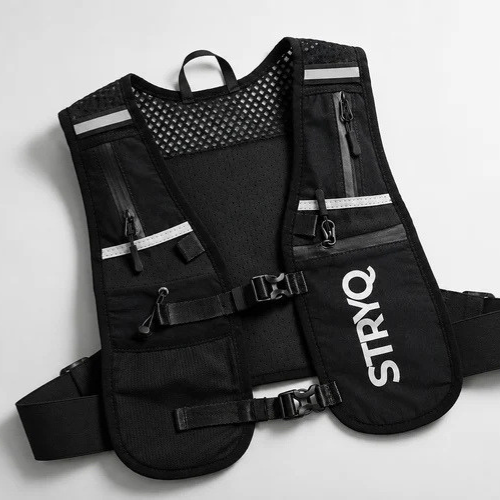
Chest-mounted lights sit lower and can make uneven ground easier to read because shadows fall differently. They also avoid the slight head movement that some runners dislike. However, a chest harness can feel warmer under a jacket and may compete for space with a hydration vest. Fit is everything, particularly on longer runs.
Clip lights are best treated as visibility extras. Attach one to the rear of your running belt, jacket or pack, and another where it will not be hidden by your arm swing. They are compact and useful, but they do not replace a proper front light when the path is dark.
Battery life should cover the real run
Winter drains batteries faster. Cold air can shorten run time, and the highest setting listed on the packaging may last far less than your usual training session. If you normally run for an hour, do not buy a light that only promises one hour at maximum brightness.
Choose a model with enough battery for your longest likely run at the setting you will genuinely use. For many runners, two to three hours of dependable medium-mode runtime offers more value than a short burst of very high output.
USB rechargeable lights are convenient, especially if you can charge them alongside your watch and headphones after a run. A battery-level indicator is worth having. It prevents that familiar moment at the front door when your light switches from reassuringly bright to barely usable.
For long runs, ultras or remote trails, consider a light with a replaceable battery or carry a compatible spare power source where safe and practical. Keep batteries and lights indoors rather than leaving them in a cold car overnight.
Comfort and stability are safety features
A light that bounces is not merely annoying. It can make it harder to judge the ground and tempt you to adjust it while moving. That is exactly when you need your attention on the route.
Try your light with the kit you wear in winter: a cap or beanie, jacket hood, gloves and, if relevant, a hydration vest. Check whether the head strap still grips over a hat and whether a chest harness rubs against layers. Small fit issues become much more noticeable after 45 minutes in rain.
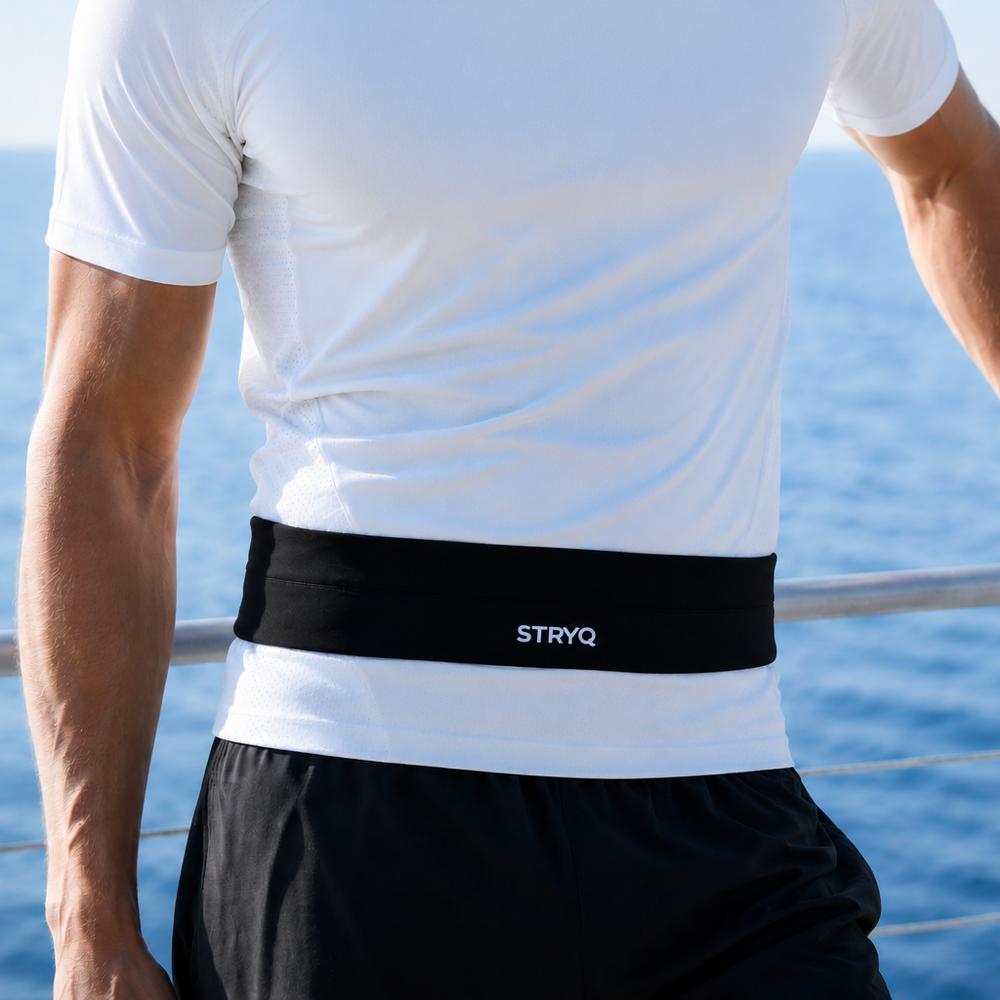
The same principle applies to rear visibility lights. Position them so they remain visible when you are carrying gels, keys and a mobile phone. A secure running belt can keep essentials close without covering the light or adding bounce, which helps when every layer and accessory has to work together.
Weather resistance is worth paying attention to
Winter running in the UK often means drizzle, spray and persistent rain rather than dramatic storms. Your lights should cope with it. Look for a stated water-resistance rating, particularly if you run outside year-round.
A weather-resistant light is not an excuse to ignore care. Wipe mud and road spray from the lens after a run, dry charging ports before connecting a cable and check straps for grit. A clean lens gives a noticeably clearer beam, especially when roads are wet.
Cold fingers also make small buttons harder to use. Simple controls are a genuine advantage. You should be able to change mode with gloves on, without cycling through six flashing patterns to find the setting you want.
A sensible winter lighting set-up
For lit urban routes, use a compact front light on a lower setting and a flashing rear red light. Add reflective details to your jacket or accessories, but do not rely on reflection alone because it only works when vehicle headlights hit it.
For unlit roads, parks and towpaths, use a more powerful head torch or chest light with a broad beam, plus front and rear visibility lights. Slow down slightly on wet or uneven surfaces. More light improves what you can see, but it does not make slippery leaves or black ice less slippery.
For trails, use a stable main light with enough battery for delays, a rear light for any road sections and a backup option if you are running far from home. Tell someone where you are going when conditions are poor. Light is one part of staying safe, not the whole plan.
Before every dark run, take ten seconds at the door: switch the lights on, check the battery indicator and make sure the beam is aimed at the ground ahead. That small routine lets you spend the run thinking about your pace, your breathing and the miles still to come.