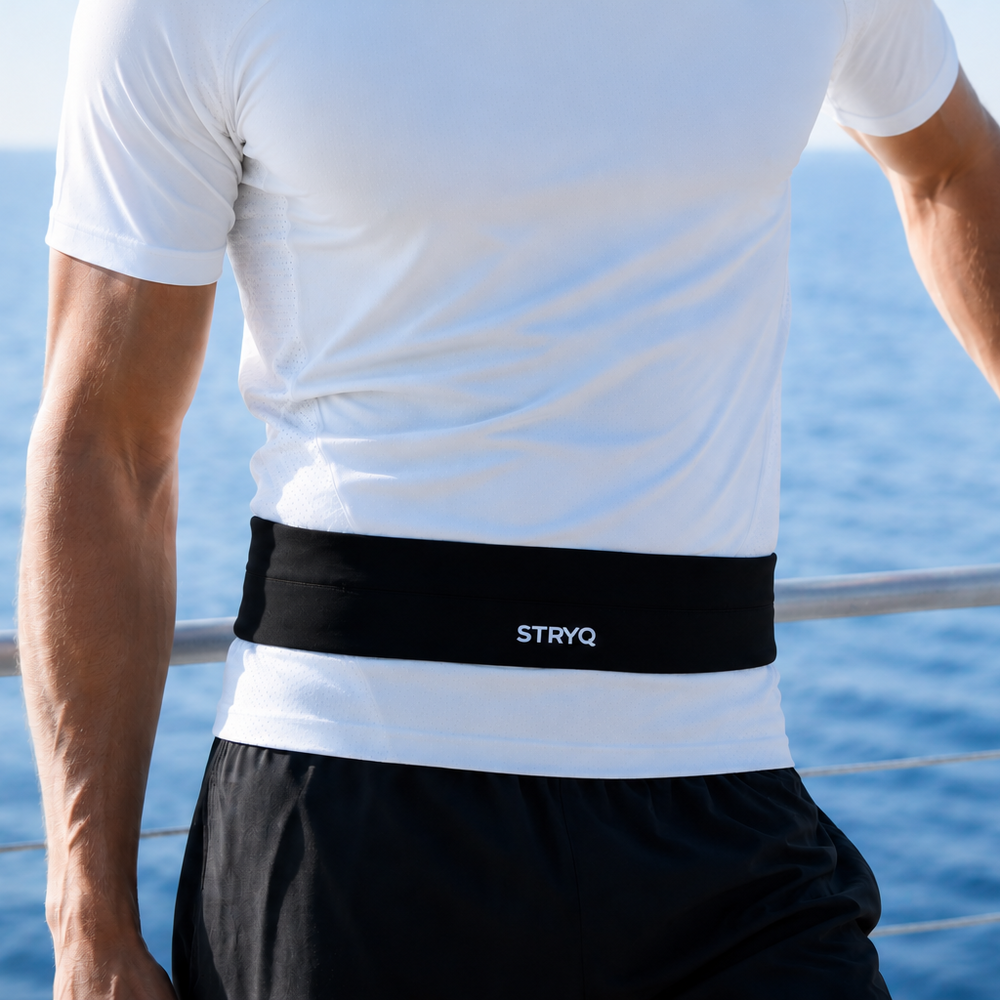
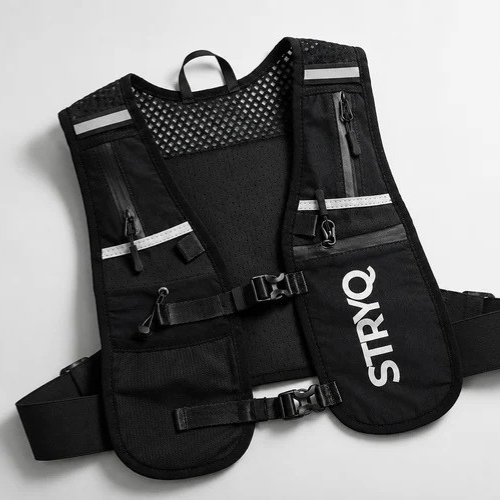
The best way to carry things on a run commute depends on what has to travel with you. If it is a phone, keys and a card, a running belt is the simplest answer. If it is a phone, a layer, water and a few extras, a hydration vest spreads the load better. If it is a change of clothes and lunch, a running-specific backpack is the tool. Most beginners need far less than they think, and the first job is to cut the list down. Our running belt and hydration running vest are built for the first two setups.
TL;DR
- Match the carrier to the load: a belt for phone, keys and card, a vest for a phone plus water and a layer, a pack for clothes and lunch.
- Keep the weight high and close to your body. A pack for run commuting is typically 10 to 20 litres, and the weight is best kept to around 6 to 8 pounds.
- Move heavy items to work in advance. Shoes, toiletries and spare clothes can live in a desk drawer, so you run with almost nothing.
- Light and visible beats fast. Lower-positioned lights and reflective bands help drivers see you without glare.
- Test the setup on a short, easy run before you try the full commute.
Table of Contents
- Start with what you actually need to carry
- Belt, vest or backpack: how to choose
- How much capacity do you need?
- Packing and fitting: stop the bounce
- Staying visible and dry
- What to plan for at the office
- Setups for different commutes
- Why you are better off with a purpose-built setup
- Our approach to commute carry
- Build your commute kit
- FAQ
- Sources
Start with what you actually need to carry
A run commute is a normal run with a purpose and a deadline. The mistake most new run commuters make is treating it like moving house. Write the list, then sort it into three groups:
- Must be on you: phone, house key, bank card or ID. These go on every run.
- Nice to have on the way: a small bottle of water, a gel or snack, a thin layer for the cold start.
- Can be at work already: shoes, trousers, shirt, towel, toiletries, charger, lunch.
Group three is where the weight is. RaceThere’s run-commute guide describes a belt-plus-office-stash setup for exactly this reason: phone, keys, ID and a small wallet travel with you, while shoes and outfits stay at work. It also notes that commutes under 45 minutes in mild weather often need no carried water at all.
The simplest beginner routine is to run home first. Runners Connect suggests starting this way with only a small vest or belt for phone, keys and ID, then bringing a week’s clothes in on non-running days so the next morning’s outfit is already waiting.
Belt, vest or backpack: how to choose
The three carriers solve different problems.
| Carrier | Best for | What it holds | Watch for |
|---|---|---|---|
| Running belt | Short and medium commutes, minimal kit | Phone, keys, card, a gel | Fit it snug so it does not ride up |
| Hydration vest | Longer runs, cooler or wetter days, water on the move | Phone, soft flasks, layer, snacks, keys | Adjust the chest straps so it sits close to the body |
| Running backpack | Carrying clothes, lunch or a laptop | Work kit plus essentials | Use sternum and hip straps, keep it high |
When a belt is the right call
For an urban commute with just a card, key and phone, a belt’s slim profile is the most practical option, as Map Medal’s comparison puts it. Road runs under about 90 minutes with water available at the other end are covered by a belt.
Our running belt is designed with 360° storage so the load sits around your waist rather than in one lump at the front. That matters for commuting, where a phone and keys swinging against you for 30 minutes quickly gets annoying. If you want to see how the options compare in more depth, we have a guide to running belts for phones without bounce, and you can browse the full running belt collection.
When a vest earns its place
The same comparison favours a vest for longer runs, remote routes and trail or ultra training, because the load is distributed across your shoulders and chest with less swing. On a run commute that translates into longer routes home, runs where you want a rain layer, or days when you want water without carrying a bottle in your hand.
Our hydration running vest has adjustable straps and multiple pockets, so you can set the fit to your torso and keep the phone, keys and a layer in separate places. It takes our 500ml soft flasks, which collapse as you drink so nothing sloshes. If you are weighing the two, our guide to hydration vest versus belt walks through it, and for longer events there is a piece on belt or vest for a marathon.
When you need a backpack
If you must bring clothes or lunch both ways, a running-specific pack is the right tool. Runners Connect points to a 10 to 20 litre pack with sternum straps and a waist belt, worn high and close to the back, with the total weight kept to 6 to 8 pounds. A general commuter bag with no chest or hip strap will bounce on every stride, so it is not a good swap.
If you find yourself reaching for a backpack every day, ask whether you could stash more at work instead. Many people end up back at a belt or vest within a few weeks.
How much capacity do you need?
Litres only matter for the backpack route. As a rough guide from Carryology’s size tests, a 16-litre clamshell pack held a 15-inch laptop, its accessories and other work items, and 16 to 20 litres was one tester’s favourite size for work or everyday carry.
That is a lot of bag for a run. For a commute you are actually running, work from the 10 to 20 litre range, and treat these as the usual space eaters:
- a small water bottle takes close to a litre;
- a rolled-up layer takes a couple of litres;
- shoes and gym kit take the most, which is why they are the first thing to leave at work.
Also remember that a litre figure only tells you volume, not shape. Two bags with the same capacity can hold very different amounts depending on the opening and the cut, so try yours with a real load before the first morning you depend on it.
Packing and fitting: stop the bounce
Bounce is the reason people give up on run commuting. It is nearly always a fit and placement issue rather than a bad bag.
- Keep weight close to your centre of mass. The closer your phone and keys sit to the middle of your body, the less they swing. A snug belt or vest pocket does this better than a loose armband or a baggy shorts pocket. If you can feel the phone moving out of rhythm with your stride, tighten the strap, move it or change carrier. Our guide to securing your phone without bounce covers the details.
- Pack heavy things high and tight. In a backpack or vest, put the heaviest item against your back, between the shoulder blades, and compress the rest around it.
- Separate the fragile from the wet. Put the phone and anything you cannot afford to soak in a small zip bag, even if the pocket claims to be water resistant.
- Use all the straps. Sternum and hip straps are what stop a pack from swinging. Done up properly, you should be able to breathe fully with no pinching.
- Test before the real thing. Do a ten-minute easy run with the full load, including the jumps and turns you will make crossing roads.
The phone is the item most people worry about, so we have also written about where runners should carry phones and a lighter option, the best lightweight running vest for a phone.
Staying visible and dry
Many run commutes happen in the dark for part of the year, so visibility is part of the carry plan, not an add-on.
- Choose lights low down. Tree Line Review’s runner-tested light guide, which covered more than 25 lights, notes that lights positioned lower, such as at the waist or chest, create less glare from rain or snow than eye-level beams.
- Check the water rating. The same guide advises looking at a light’s IP rating if you run in rain or snow, and checking the fit with jumping jacks before you trust it.
- Add reflective surfaces. Our Hi-Vis Running Vest and Reflective Bands Kit puts reflective material on your torso and limbs, which move as you run and draw a driver’s eye.
- Keep the vest on top. Whatever you wear to be seen should be the outermost layer so a pack strap does not cover it.
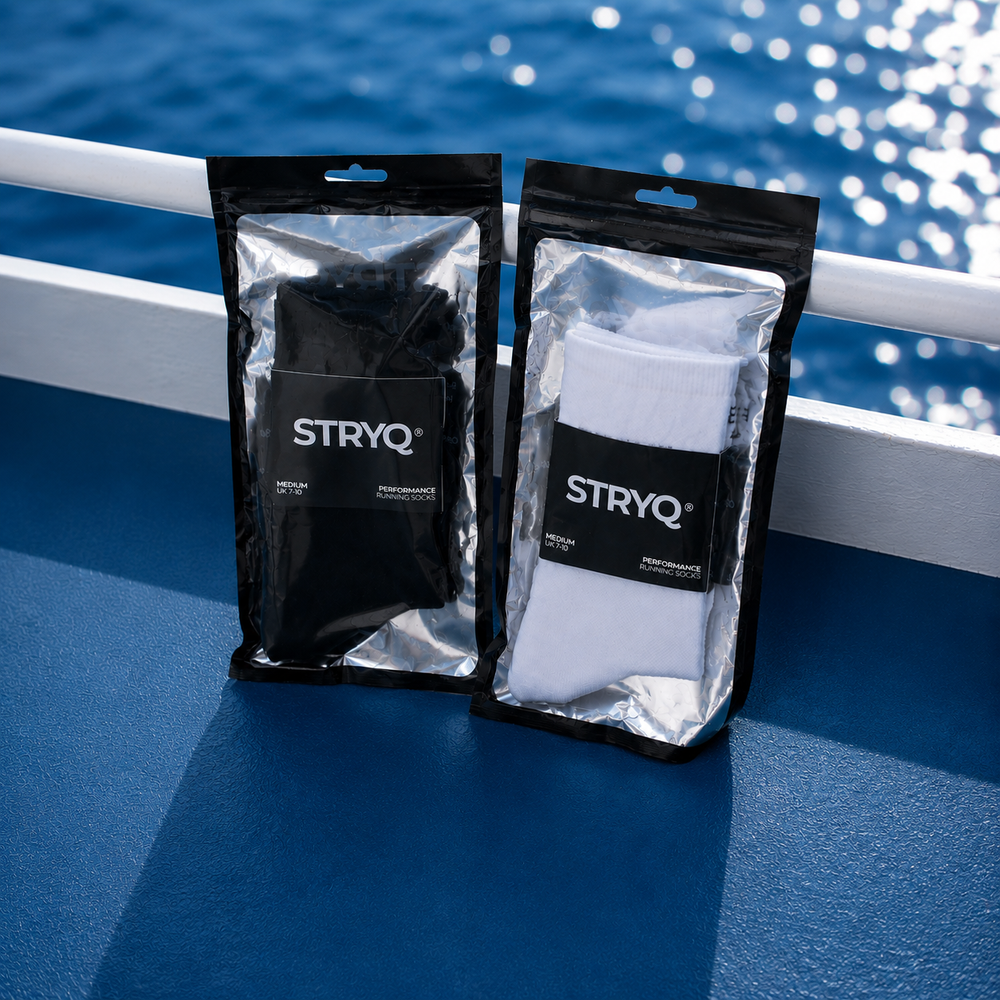
For your feet, a long commute on wet pavements is where blisters start. Our running socks have arch support and cushioning, and a spare pair at work means you finish the day in dry feet.
What to plan for at the office
The carry plan only works if the destination is ready for it. Before your first run in, check three things:
- Where you will change. A toilet cubicle or a quiet room works. Ask about lockers or a shower if your building has them.
- Where gear lives. A drawer or locker for shoes, a towel, deodorant and a spare shirt means you carry them once a week, not daily.
- How you will cool down. An easy final five minutes of walking lets you arrive without a pounding heart and drenched shirt. Wipes and a fresh top deal with most of the rest on short commutes.
A weekly drop-off keeps the daily load tiny. Bring in a few days of clothes on a non-running day, take the dirty ones home in the same trip, and you are never running with a laundry bag.
Setups for different commutes
The 5K-ish commute (about 20 to 30 minutes). Belt only. Phone, key, card. Everything else at work.
The 10K commute (about 50 to 60 minutes). Belt or a light vest with one soft flask, depending on the weather. A thin layer if the start is cold.

The long route home with a stop-off. Vest with flasks, a layer and snack, or a small pack with sternum and hip straps if you need to carry a change of clothes.
Parkrun on the way. If you are combining a commute with a Saturday run, use the same belt or vest you use for training, so the fit is already dialled in.
Why you are better off with a purpose-built setup
A run commute puts the same gear through the same route, week after week, in all weather. A pack not made for running bounces, a pocket that is not secure loses keys, and a weak seam fails at the worst moment. Each piece we make is designed around that kind of repeated use, and a belt, a vest and a soft flask each have a specific job you can plan around.
Our approach to commute carry
We build running gear for everyday runners, and run commuters are some of the most demanding of them. Their kit gets used on the way to work, on wet mornings and in the dark, with a laptop deadline waiting at the other end.
Every STRYQ product is developed from real-world runner feedback. We go through multiple sample revisions, test extensively and apply strict quality control before launch, because a belt that rides up or a vest that rubs is not good enough for somebody who runs every day.
Our advice for most people is to begin with the lightest setup that works. A belt with 360° storage covers the phone, keys and card. A hydration vest with adjustable straps and multiple pockets takes over when you want water and a layer. Soft flasks, running socks and a high-vis kit complete a commute that needs nothing more.
We want you to carry less, run more comfortably and trust your gear.
martin
Build your commute kit
If you are putting together a first setup, start with the running belt for phone, keys and card, and add the hydration running vest if your route needs water or a layer. For dark mornings and evenings, the high-vis vest and reflective bands kit gets you seen. Everything is on our running gear collection.
FAQ
Do I need a backpack to run commute?
Not always. If your shoes and clothes are kept at work, a belt or small vest is enough for phone, keys and ID. A running backpack is for days when you must bring clothes or lunch with you.
Belt or vest for a run commute?
A belt suits short urban commutes with a phone, key and card. A vest is the better choice when you want water, a layer and more pockets, since the load is spread over your shoulders and chest. Our belt versus vest guide helps you decide.
How heavy should my run commute bag be?
Runners Connect suggests keeping a running pack to around 6 to 8 pounds. The easiest way to stay under that is to leave shoes, toiletries and spare clothes at the office.
Do I need to carry water on a run commute?
On commutes under about 45 minutes in mild weather you often do not. For longer or warmer runs, a soft flask in a vest is easy to drink from and collapses as it empties.
How do I stop my phone bouncing?
Keep it close to the centre of your body in a snug belt or vest pocket, and tighten the fit until it moves with you. Our phone carrying guide covers it for runs over 5K.
Sources
- RaceThere: Run Commuting Guide
- Runners Connect: The Complete Run Commuting guide
- Map Medal: Running Backpacks vs. Belts
- Carryology: Which Bag Size Do I Need?
- Tree Line Review: Best Running Lights