For most runners, the best way to carry water on a half marathon is a light setup you have already worn on long training runs: a belt or a small vest with a soft flask, within your race’s rules. It gives you fluid when you want it, not only when the next aid station appears, and it lets you skip the crowded first tables. We build running belts, a hydration vest and a 500ml soft flask for exactly this job, but the right choice starts with your race, your pace and the weather.
TL;DR
- Most half marathons have aid stations roughly every two miles, so plenty of runners carry nothing. Carrying your own fluid is the backup, and it is increasingly expected at cupless races.
- Read the race rules first: some events ban vests with a rear bladder or limit bottle size to 1 litre.
- Drink to thirst, aiming for roughly 400 to 800 ml (15 to 30 oz) an hour at most. Overdrinking carries its own risk.
- A belt, a vest with front pockets or a soft flask each work. Pick one by testing it on several long runs.
- Practise with the exact kit, flask size and fluid you plan to use on race day.
Table of Contents
- Do you need to carry water on a half marathon?
- Check the race rules before you choose a carrier
- How much should you drink during a half marathon?
- The main ways to carry water, compared
- How to choose and practise your setup
- After the finish line
- Our view: carry a little, practise a lot
- Get your half marathon hydration kit
- FAQ
- Sources
Do you need to carry water on a half marathon?
Not always, but it is worth deciding on purpose rather than finding out at mile five. Water stops usually start around mile two and appear about every two miles, according to Verywell Fit’s guide to bringing your own water in a race. Volunteers typically hand out cups of water or sports drink, although some races now use cupless systems.
Three practical reasons runners carry their own:
- Control. You drink when you need to, in a sip, without slowing down to grab a cup in a crowd.
- Backup. Races do sometimes run short of water or sports drink, particularly for slower runners starting near the back of the pack, as one running nutrition coach points out.
- Cupless races. Some events expect half marathon runners to bring their own container and refill it at the stations. The Auburn Half Marathon asks for this, with water stations about two to three miles apart and volunteers who will refill whatever you bring.
There is one trade-off worth knowing. Aid station drinks are kept cold by race directors, while carried fluid warms from your body heat, as Verywell Fit notes. A soft flask worn close to the body is light, and sipping little and often keeps the fluid from sitting long.
Check the race rules before you choose a carrier
This is the step that catches runners out. What you can carry depends on the race, and the rules differ more than you would expect.
Carrying from the start is generally fine. Under USATF rules, as set out in the Salem Half Marathon rules, a competitor may carry water or refreshment by hand or attached to the body if it is carried from the start or collected at an official station. Collecting refreshment anywhere else can lead to disqualification. The Sugar Land Half Marathon says the same in plain terms: carry your own supplies or use the official stations, and do not accept drinks or food from anyone who is not a volunteer. That means a friend handing you a bottle at mile eight is out.
Some races ban bladders. The NYRR Brooklyn Half pocket guide prohibits hydration backpacks and vests with a bladder or water reservoir. Fuel belts, vests with bottles in front pockets and hand-held bottles are allowed, with every bottle 1 litre or smaller. NYCRUNS gives the same rule for its Brooklyn half: vests are fine if water sits in front pockets or holders, not in a rear bladder.
Some races encourage you to bring your own. The Monterey Bay Half Marathon participant guide lists eight aid stations, all equipped to refill personal containers, and encourages runners to bring their own hydration system. It also notes gels at set points and compostable cups, which is the sort of detail you only get from the participant guide.
So the routine is simple: find the participant guide or rules page, look for the words bladder, reservoir, cupless and bottle size, and note where the stations sit on the course map. A 500 ml soft flask, a belt with a small bottle or a vest with front-pocket bottles all sit comfortably inside a 1 litre limit.

How much should you drink during a half marathon?
Less than many runners think, and it depends on your pace, sweat rate and the weather.
The published guidance clusters in a fairly narrow range:
| Source | What it suggests |
|---|---|
| UW Medicine sports physician | 400 to 800 ml (15 to 30 oz) per hour, based on your sweat rate |
| UT McGovern Medical School | Drink to thirst, roughly 0.4 to 0.8 litres (1.5 to 3 cups) per hour depending on sweat and heat |
| Latzka and Montain, peer-reviewed review | Small amounts of 150 to 300 ml every 15 to 20 minutes, keeping fluid loss under 2% of body weight |
| Verywell Fit | 7 to 10 oz every 10 to 20 minutes as a rule of thumb, or 6 to 8 oz every 20 minutes for runners faster than 8 min/mile |
For a runner finishing in around two hours, that works out to a few sips every 15 to 20 minutes, which is exactly what a small flask is good for. The same review notes that water alone is enough for efforts under 90 minutes, while longer efforts benefit from a carbohydrate and electrolyte drink. If you are heading towards two hours or more, or racing in heat, a sports drink in your flask makes sense. UT McGovern also suggests about 30 to 60 g of carbohydrate per hour for a half marathon.
Do not overdrink
This is the safety point that matters most. Drinking more than you lose in sweat can dilute blood sodium and cause hyponatraemia, a condition that can become dangerous. UW Medicine says the risk is higher for runners who drink too much before or during a race, for slower-paced runners and for those with high sweat sodium. On race day, drink only enough to replace what you sweat.
The position stand from the American College of Sports Medicine, hosted by NATA, says drinking to thirst is the safest strategy for athletes who do not know their sweat rate. A study of marathon runners found fewer than 5% named drinking to thirst as a prevention strategy, and that slower and first-time runners understood the condition least. If you are new to the distance, a flask you sip from when thirsty is a better habit than a large reservoir you feel you must finish.
If you have a medical condition, take medication that affects fluid or sodium balance, or have been told to limit fluids, speak to your doctor before settling a race-day plan.
The main ways to carry water, compared
There are four realistic choices for a half marathon. Each suits a different runner.
Handheld bottle or flask
Simple and cheap, and easy to refill at a station. The downside is arm fatigue over 13.1 miles and one hand always occupied. Good for runners who only want a few sips between stations.
Running belt
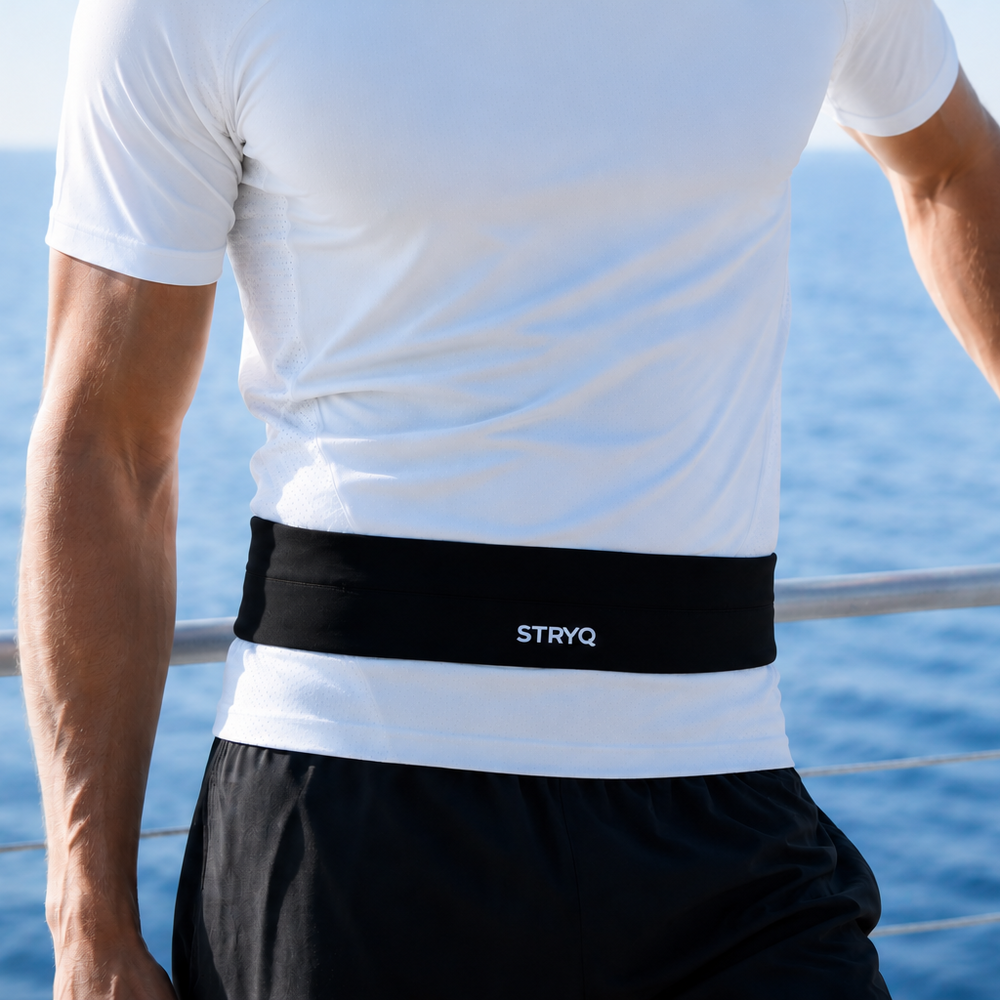
A belt keeps weight around your waist and frees your hands. It also carries gels, a phone and keys, which matters over two hours of running. Our running belt has 360° storage, so the load is spread round the waist rather than bouncing in one pocket. A belt suits runners who want to carry a small amount of fluid plus fuel.
Hydration vest
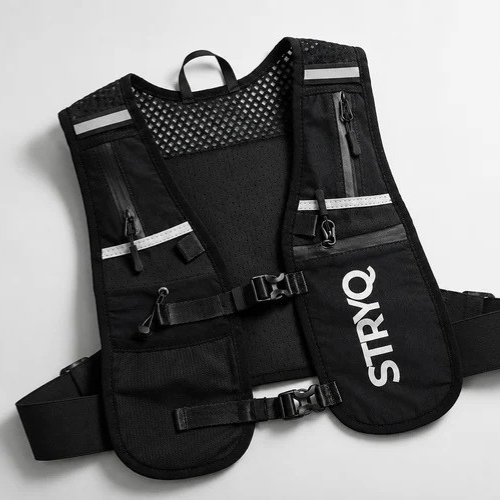
A vest spreads weight across the shoulders and chest and adds pockets for fuel, a phone, a light jacket and flasks. Ours has adjustable straps and multiple pockets, so you can tune the fit and keep everything within reach. If your race bans rear bladders, a vest used with front-pocket bottles or flasks is the format those rules describe. For a deeper look, see our guide on whether hydration vests are worth it, or belt or vest for a marathon, which applies equally to the half.

Soft flask
A soft flask is light, squeezes flat as you drink and is easy to refill. Our 500ml running soft flask is a sensible size for a half marathon: enough for steady sipping between aid stations, and well inside a 1 litre limit. It works as the whole plan on a cool day, or as the fluid part of a belt or vest setup.
| Option | Best for | Watch out for |
|---|---|---|
| Handheld | Short, cool races, minimal gear | Arm fatigue, one hand busy |
| Belt | Fluid plus gels and phone | Fit must stay snug without bouncing |
| Vest | Hot days, long training runs, more kit | Check bladder rules before race day |
| Soft flask | Light sipping, refills at stations | Carry fluid close to the body so it stays comfortable |
How to choose and practise your setup
The most repeated advice from experienced runners is the most reliable: test your method on several long runs. Verywell Fit warns that a carrier may bounce, rub or become uncomfortable, and that what feels fine early on can chafe later, so wear it for the full distance in training.
A simple rehearsal plan:
- Pick the carrier early. Settle on it at least three or four weeks before race day, once you have checked the rules.
- Wear race kit. Run in the shorts, top and socks you will race in, so you find rubbing points before the start line.
- Practise sipping. Drink every 15 to 20 minutes on long runs and note how your stomach responds to water or your sports drink.
- Load it as on race day. Fill the flask to the same level and carry the same gels, phone and keys.
- Plan your refills. Mark the aid stations on the course map and decide where you will top up.
- Work out your sweat rate. Weigh yourself before and after a long run. Every pound lost is roughly 16 to 24 oz of fluid to replace afterwards, according to Run Project’s half marathon plan.
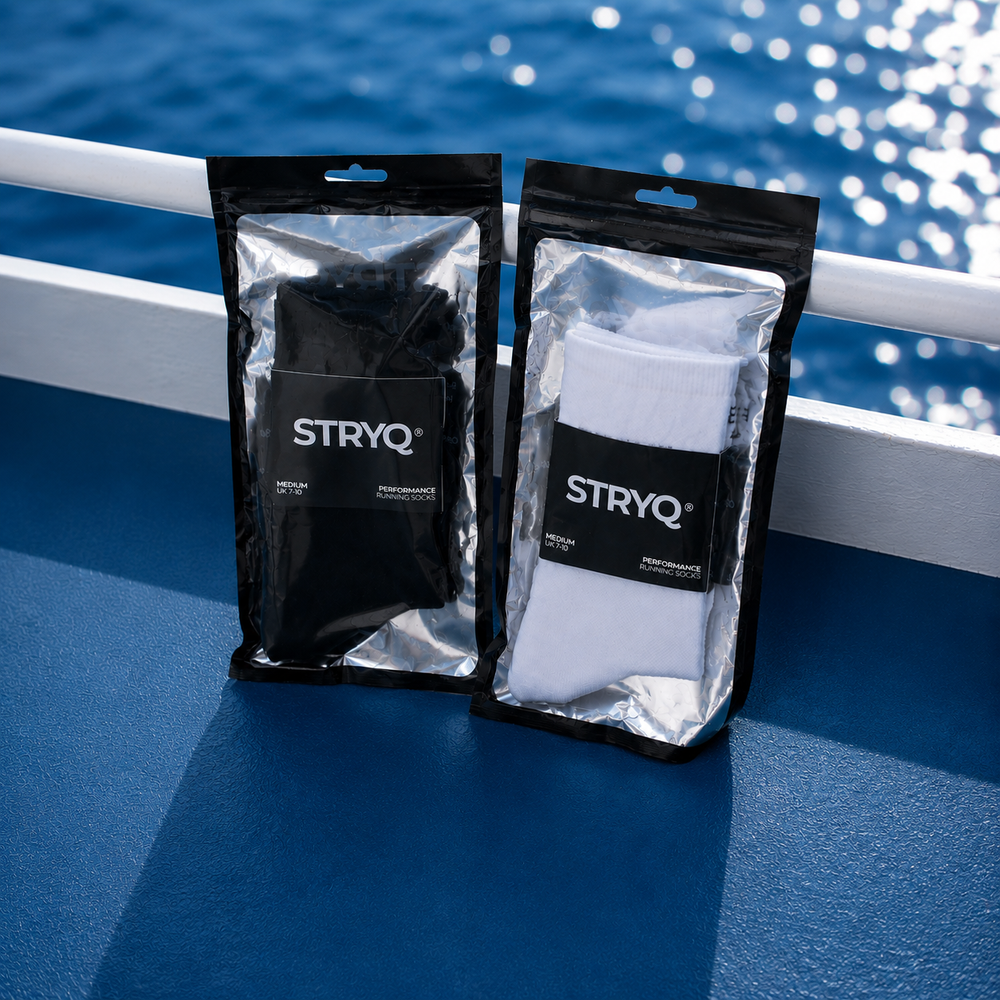
Socks are part of this too, because a long run with fluid, sweat and the occasional splash from a cup is hard on feet. Our running socks are made with arch support and cushioning, so you can wear the same pair for training and race day. For the full kit list, our half marathon gear checklist covers the rest, and the marathon hydration options guide goes through bottles, belts, vests and aid stations in more depth.
After the finish line
Hydration does not stop at the finish. Replace fluid steadily over the following hours, and plan the rest of your recovery too. This day-by-day recovery plan sets out options for the days after a long race, and it applies to a hard half as well.
Our view: carry a little, practise a lot
We design running gear around one idea: it should disappear while you run. A hydration setup that bounces, rubs or needs constant adjusting is worse than none.
That is why every STRYQ product goes through multiple sample revisions, testing and strict quality control, shaped by feedback from real runners. The belt, the vest and the soft flask are all built to be comfortable, secure and durable rather than to carry a long feature list.
For a half marathon, our advice is plain. Choose a carrier you can forget about. A belt with 360° storage suits runners who want hands free and a little fuel. A vest with adjustable straps and multiple pockets suits those who want more room or run in warm weather. A 500ml soft flask gives you enough to sip between aid stations without the weight of a litre.
Then run in it. Several long runs wearing the exact kit teaches you more than any guide, including ours.
martin
Get your half marathon hydration kit
If you want a setup that is ready for race day, start with the STRYQ 500ml running soft flask and pair it with our running belt or hydration vest, both developed and tested by UK runners. Add a pair of STRYQ running socks and your training kit is race kit.

Browse the full range on the STRYQ homepage.
FAQ
Do I need to take water on a half marathon?
Usually you can rely on the aid stations, which typically appear every two miles or so. Many runners still carry a small flask for control, for cupless races and in case a station runs short. Check your race’s participant guide to see what is provided.
Can I wear a hydration vest in a half marathon?
Often yes, but rules vary. Some races, such as the Brooklyn half, prohibit vests with a rear bladder or reservoir while allowing front-pocket bottles and bottles of 1 litre or less. Read the rules page before race day and train with a setup that complies.
How much water should I drink during a half marathon?
Guidance from sports medicine sources is about 400 to 800 ml (15 to 30 oz) per hour, drinking to thirst. Slower runners should be especially careful not to overdrink, as too much fluid can cause hyponatraemia. If you are unsure, practise on long runs and speak to your doctor.
Should I drink water or a sports drink?
For efforts under about 90 minutes water can be enough. Beyond that, or in heat, a drink with carbohydrate and electrolytes is generally recommended. Test whatever you choose in training so it sits well on race day.
Sources
- Should You Bring Your Own Water When You Run a Race? (Verywell Fit)
- Hydration for a Half Marathon (Nutrition for Running)
- Auburn Half Marathon race info
- Salem Half Marathon rules
- Sugar Land Half Marathon rules and safety
- NYRR Brooklyn Half pocket guide
- NYCRUNS prohibited items
- Monterey Bay Half Marathon participant guide
- How to Hydrate on Race Day (UW Medicine)
- Runner Nutrition and Hydration Guide (UT McGovern Medical School)
- Water and electrolyte requirements for exercise (PubMed)
- Fluid replacement for the physically active (NATA)
- Marathon runners’ knowledge and strategies for hydration (eScholarship)
- Too Hot To Handle half marathon training plan (Run Project)