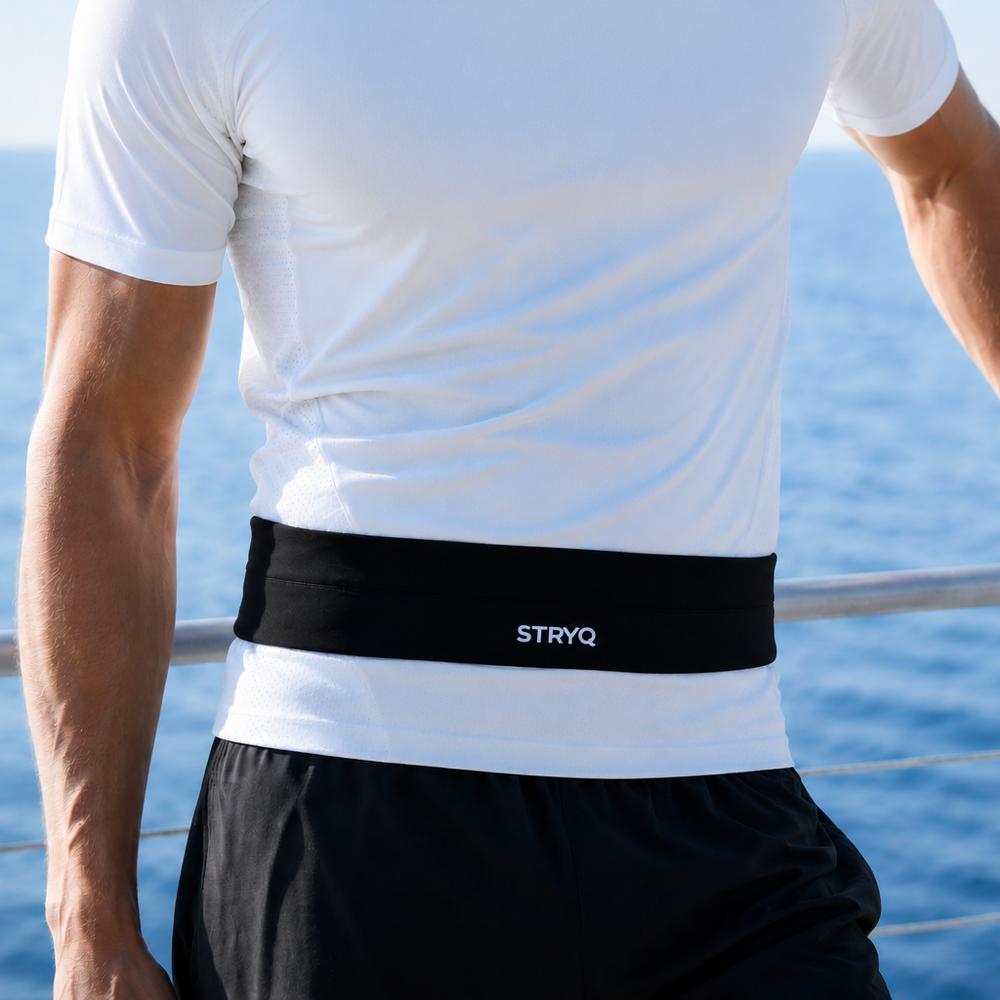
Reflective running gear is defined as clothing and accessories made with retroreflective materials that bounce vehicle headlights directly back to the driver’s eyes, making you visible in low-light and night conditions. This is distinct from hi-vis fluorescent gear, which only works in daylight. Proper retroreflective gear makes a runner visible from 125 metres away, giving drivers four to five times the average vehicle stopping distance to react. That single fact is the core argument for wearing reflective running gear on every dark run. Whether you run at dawn, dusk, or through winter evenings, understanding reflective gear running explained properly could be the most practical safety decision you make this year.
How does reflective gear work to improve runner visibility?
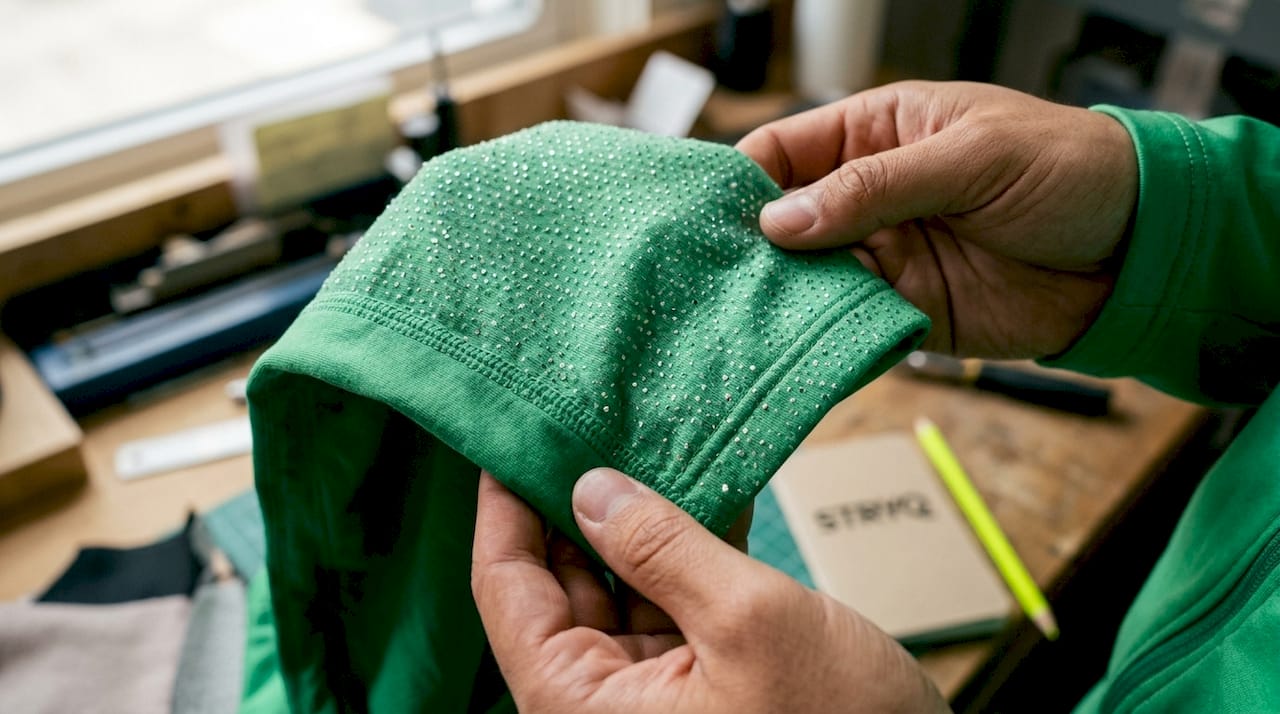
Retroreflective materials contain tiny glass beads or prismatic elements embedded in the fabric surface. When a car’s headlights hit these elements, the light bounces straight back toward the driver rather than scattering in all directions. Reflective materials do not emit light themselves. They depend entirely on an external light source, such as headlights or streetlights, to function. This is why placement and ambient light conditions both matter enormously.
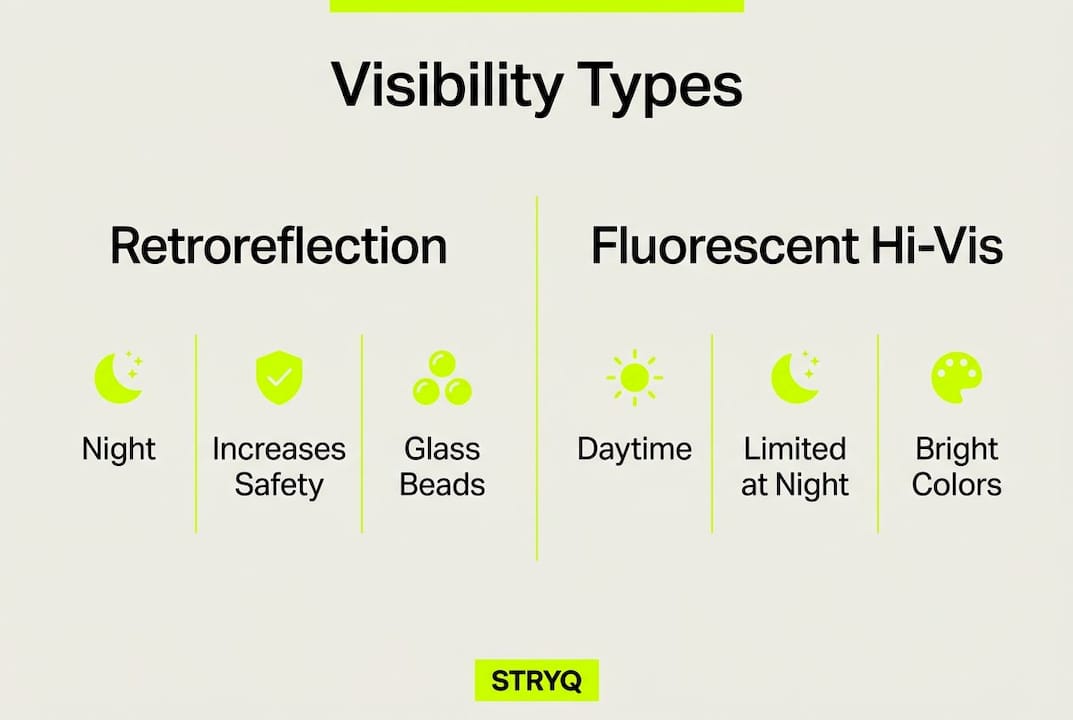
Retroreflection vs. fluorescent hi-vis
Runners often confuse hi-vis yellow or orange clothing with reflective gear. Fluorescent colours only increase visibility during daylight hours when UV light activates the bright pigment. At night, a fluorescent jacket is nearly invisible to a driver unless it also carries retroreflective strips. Retroreflective material is the only effective option after dark.
Why moving joints make you more visible
The placement of reflective elements matters as much as the material itself. Human visual systems detect motion strongly. Reflective gear on moving joints pulses rhythmically as you run, attracting driver attention far more effectively than a static reflector on your back. Drivers recognise the biological motion pattern of a running human, which triggers faster awareness.
The numbers confirm this. Runners with reflectors on moving joints achieve a 94% driver recognition rate, compared to 67% without joint placement. That is a significant gap. Wrists, knees, and ankles are the three priority locations.
- Ankles: First point illuminated by headlights; motion is highly rhythmic
- Wrists: Swing with arm movement, creating a visible bilateral pulse
- Knees: Large joint with strong up-and-down motion pattern
- Torso: Useful for bulk coverage but less effective for motion-based recognition
Pro Tip: Wearing reflective elements on at least two moving joints simultaneously multiplies the motion signal drivers detect, making you recognisable as a runner rather than a static roadside object.
What are the best types of reflective gear for running?
The range of reflective running gear available has expanded well beyond simple reflective strips on a jacket. Runners now have purpose-built options for every part of the body, and combining several creates genuine 360-degree coverage.
1. Reflective socks
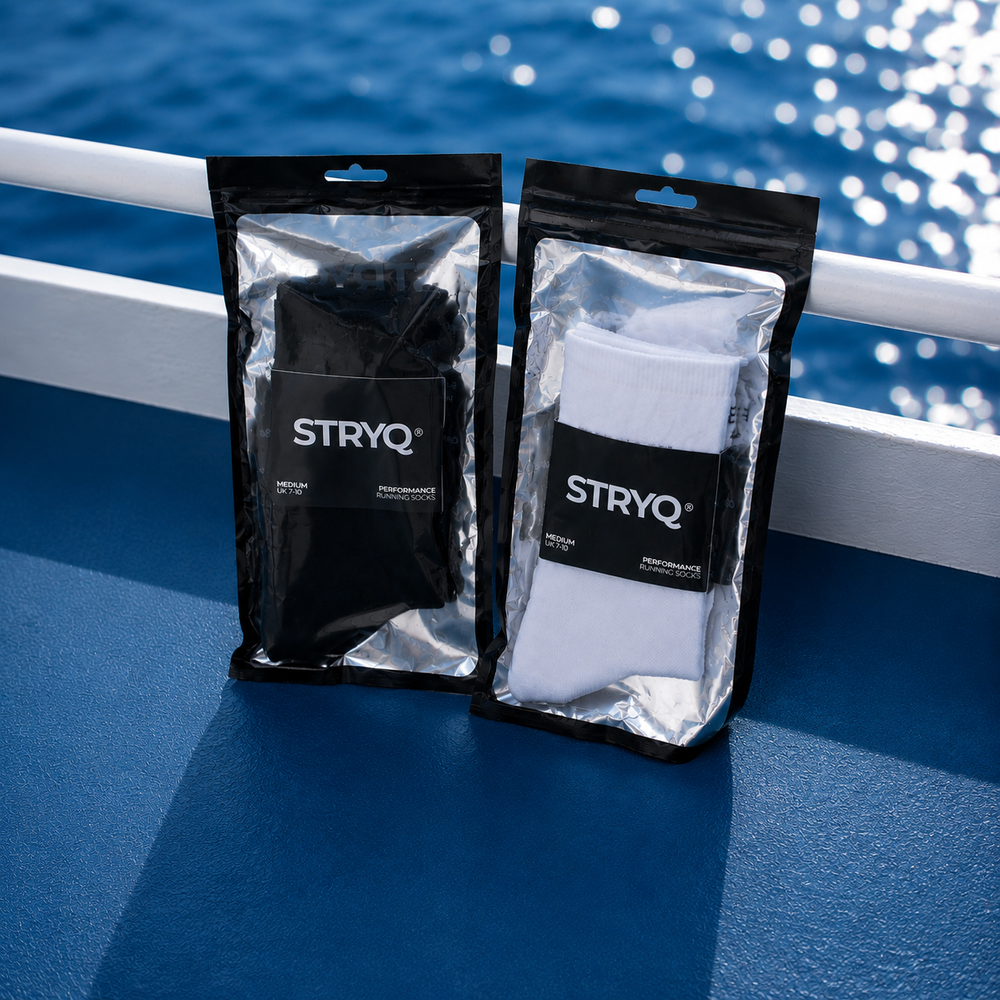
Reflective socks are one of the most underrated pieces of running safety gear. Ankle placement is highly effective because headlights illuminate the lower body first, and the ankle’s rhythmic motion triggers driver attention immediately. Socks require zero extra effort to wear. You are already wearing them on every run.
2. Running vests with reflective panels
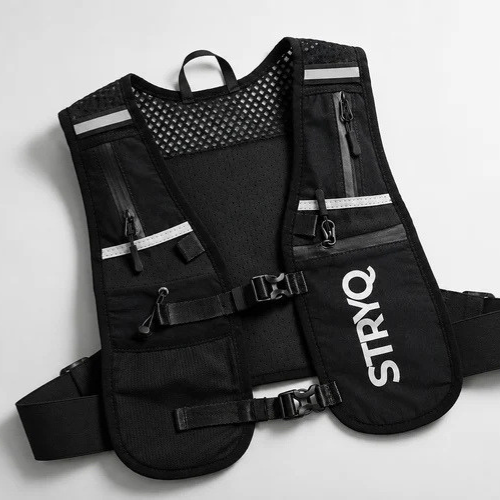
A reflective running vest provides the largest surface area for retroreflective material. Front and rear panels cover your torso, which is the broadest part of your silhouette. Vests work well for road running and trail running in low-light conditions. Look for models with reflective strips on the shoulders and sides for lateral visibility.
3. Reflective headwear
A reflective beanie or headband places visibility at head height, which is where drivers look first when scanning the road ahead. Headwear also solves a practical problem: it keeps you warm in autumn and winter without adding bulk.
4. Arm and ankle bands
Clip-on or slip-on reflective bands are the fastest way to add visibility to any outfit. They attach directly over existing clothing and work on wrists, upper arms, or ankles. They are particularly useful when you want to wear a favourite non-reflective jacket without sacrificing safety.
5. Reflective gloves
Gloves with reflective panels combine warmth with wrist visibility. Because your hands swing forward with each stride, reflective gloves create a strong bilateral motion signal that drivers notice at distance.
Pro Tip: Do not rely on a single reflective item. Combine socks, a vest or jacket, and one piece of headwear to achieve front, rear, and lower-body coverage simultaneously.
Comfort and style directly affect how consistently you wear reflective gear. The most effective reflective gear is the gear you actually wear on every run. A bulky reflective bib that sits in your drawer provides zero safety benefit. Integrated designs, such as reflective socks or a vest with built-in panels, remove the friction of adding extra kit before heading out.
Are smart safety vests worth it for runners?
Technology has moved reflective running gear beyond passive visibility into active hazard detection. The most notable development is the radar-integrated running vest. Radar-integrated vests detect objects up to 30 metres behind the runner and alert them via phone or watch notifications. This gives you advance warning of an approaching vehicle or cyclist before you can hear or see them.
The RunSafePro vest is a current example of this category. The RunSafePro combines reflective materials with rear radar, GPS emergency alerts, and motion detection for fall notification. Notification modes include vibration, audio, and visual alerts, so the system works even with headphones in.
| Feature | Passive reflective gear | Smart radar vest |
|---|---|---|
| Visibility to drivers | Yes, via retroreflection | Yes, plus active alerts |
| Alerts runner to hazards | No | Yes, up to 30 metres |
| Emergency GPS tracking | No | Yes |
| Weight and bulk | Minimal | Moderate |
| Best use case | All runs | Road running, solo routes |
Smart vests carry trade-offs. They add weight, require charging, and cost significantly more than standard reflective gear. For most runners, a well-chosen set of passive reflective accessories covers the majority of risk. Smart vests make most sense for solo runners on busy roads or in areas with limited lighting.
How to choose reflective running gear you will actually wear
Choosing the right gear comes down to three factors: material quality, placement strategy, and wearability. All three must work together.
- Prioritise certified retroreflective materials. Look for gear using 3M Scotchlite or equivalent certified retroreflective fabric. These materials meet tested standards for brightness and durability. Generic reflective prints fade quickly and lose effectiveness after washing.
- Place reflectors on moving joints first. Start with ankles and wrists before adding torso coverage. Motion-based visibility outperforms static coverage for driver recognition.
- Match gear to the season. In summer, lightweight reflective socks and a reflective arm band are sufficient. In winter, layer a reflective vest over a thermal jacket and add a reflective beanie. Avoid overheating by choosing breathable fabrics.
- Check washing instructions carefully. Retroreflective coatings degrade with harsh detergents and tumble drying. Wash reflective gear inside out on a cool cycle and air dry to preserve reflectivity.
- Test visibility before relying on it. Ask someone to shine a torch at your gear from 50 metres in the dark. If the reflection is weak or patchy, the material needs replacing.
Pro Tip: Lay out your reflective gear the night before a run. Runners who treat visibility kit as non-negotiable kit, just like their shoes, wear it far more consistently than those who decide at the door.
Seasonality matters more than most runners acknowledge. The UK’s short winter days mean many runners head out before sunrise or after sunset for the majority of november through february. Building a reflective kit that works across temperatures and conditions removes the excuse not to wear it. A running accessories guide can help you identify which items to prioritise for your specific running habits.
Key takeaways
Retroreflective gear placed on moving joints is the single most effective way to increase driver recognition and reduce risk during low-light running.
| Point | Details |
|---|---|
| Retroreflection beats hi-vis at night | Fluorescent colours only work in daylight; retroreflective materials are effective after dark. |
| Joint placement dramatically improves recognition | Reflectors on ankles, wrists, and knees raise driver recognition from 67% to 94%. |
| Ankles are the highest-priority location | Headlights illuminate the lower body first, and ankle motion triggers driver attention fastest. |
| Consistent wear matters most | Integrated gear like reflective socks outperforms bulky kit that stays at home. |
| Smart vests add active hazard detection | Radar vests alert runners to objects up to 30 metres behind, adding a proactive safety layer. |
Why I think most runners are wearing reflective gear wrong
Most runners I speak to own some form of reflective gear. A jacket with a strip on the back, perhaps a hi-vis tabard they were handed at a race. The problem is that a single static reflector on the back of a jacket is one of the least effective configurations possible. It only works if a driver is directly behind you, and it provides no motion signal.
The ankle insight genuinely changed how I think about this. The fact that headlights hit the lower body first, combined with the rhythmic motion of running, means a pair of reflective socks does more practical work than a reflective patch on your shoulder. Most runners have never considered this. They buy the most visible-looking jacket and assume the job is done.
I have also noticed that runners consistently skip reflective gear when they are “just popping out for a quick one.” That is exactly when the risk is highest, because quick runs often happen at the most awkward light times: early morning or straight after work in winter. The gear you wear on a planned long run is irrelevant if you skip it for the 5km that catches you in the dark.
The technology side is genuinely exciting, but I would not start there. Get the basics right first: reflective socks, a vest or jacket with certified retroreflective panels, and something on your head. Once those are habits, a smart vest becomes a worthwhile addition for solo road running. Comfort and fit determine compliance, and compliance determines whether any of this actually keeps you safe. Check what to wear when running for guidance on building a kit that works across all conditions.
— martin
Stryq running gear built for visibility and comfort
Running safely in low light starts with gear you will reach for every time you head out the door.
Stryq’s reflective running socks are built with ankle-focused retroreflective detailing, placing visibility exactly where headlights hit first. They combine cushioning and breathability with the safety function, so there is no trade-off between comfort and protection. For runners who want broader coverage, Stryq’s running vests add front and rear reflective panels with a lightweight fit that works across seasons. Both products are developed from real runner feedback and tested for durability, so the reflectivity holds up wash after wash.
FAQ
What is retroreflective gear and why does it matter for running?
Retroreflective gear contains materials that bounce light directly back to its source, such as car headlights, making the wearer visible from up to 125 metres away. Standard hi-vis clothing does not achieve this at night.
Where should I place reflective gear on my body?
Ankles, wrists, and knees are the most effective locations because they move rhythmically as you run, triggering driver recognition through biomotion. Ankle placement is the highest priority as headlights illuminate the lower body first.
Does fluorescent hi-vis clothing work at night?
Fluorescent colours only increase visibility in daylight when UV light activates the pigment. At night, only retroreflective materials are effective for runner visibility.
How do I maintain reflective gear so it stays effective?
Wash reflective gear inside out on a cool cycle using a mild detergent, and air dry rather than tumble dry. Heat and harsh chemicals degrade retroreflective coatings and reduce their brightness over time.
Are smart radar running vests worth buying?
Radar vests that detect objects up to 30 metres behind you add a genuine proactive safety layer for solo road runners. For most runners, well-placed passive reflective gear covers the majority of risk at a fraction of the cost.