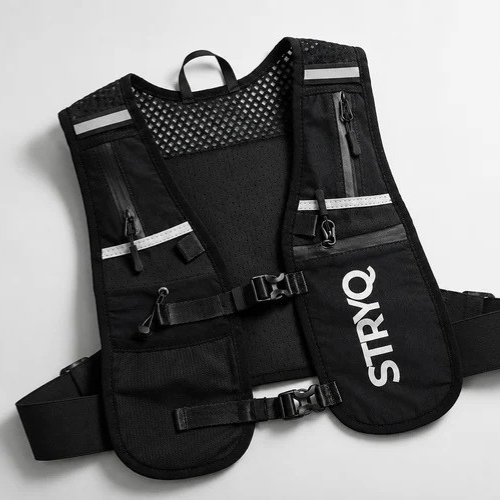
A running hydration vest costs anywhere from about £32 to well over £150, and the price you see is often not the price you pay once flasks or a reservoir are added. Reviewers’ US listings stretch from budget vests to premium race packs, yet most recreational runners are best served by a well-fitted, mid-priced vest with the hydration kit counted in. Our own STRYQ Hydration Running Vest is £42, and the 500ml soft flask for it is £14.
This guide shows what the market charges, what each price band gets you, what drives the cost up, and how to work out your real total before you buy.
TL;DR
- Independent US reviews put typical vest prices between roughly 75 and 230 (US retail listings), with a median near 160 in one 39-vest comparison.
- Recreational vests often sit in a mid band, and that band is often half the price of performance and fastpacking vests.
- Always check what is in the box: some vests include a reservoir or flasks, others do not.
- Fit matters more than price. A cheaper vest that does not bounce beats an expensive one that does.
- Our vest is £42 and our 500ml soft flask is £14, so a vest with two flasks comes to £70.
Table of Contents
- What hydration vests cost: the price bands
- Why some vests cost more than others
- Flasks and reservoirs: the hidden part of the price
- What you need for your distance
- Work out your real total
- Fit before price
- The STRYQ vest and flask
- Our view on vest pricing
- FAQ
- Sources
What hydration vests cost: the price bands
Price lists from independent testers give a clear picture. NerdRunner’s comparison of 39 running vests reports prices from 80 to 229.95, with a median of 159.95. Switchback Tested’s 2026 roundup runs from a budget pick at 75 to a premium pick at 219, with an 89 overall pick and a 145 runner-up in between. These are US retail figures, and they move with sales and new season stock, so treat them as a guide to the shape of the market rather than a fixed price list.
In plain terms there are three bands:
| Band | What the testers describe | Who it suits |
|---|---|---|
| Budget | Simple vests with fewer pockets and basic materials | Beginners, parkrun and 5K runners who want to carry a phone and a drink |
| Mid-range | Recreational vests, which Switchback Tested says are often around 100 to 130 in the US and often half the price of performance vests | 10K, half marathon and marathon training |
| Premium | Performance and fastpacking vests with higher-end materials and more features | Ultra and mountain runners carrying a full kit |
The gap between bands is real, but it is not a gap in whether the vest does its job on a normal road or trail run. It is a gap in capacity, materials and specialist features.
Why some vests cost more than others
OutdoorGearLab’s testing finds that higher-priced packs generally offer more features and use higher-end materials that better suit the natural movements of running. That is the honest summary of what extra money buys. Look at the details one at a time.
Capacity
A 5 litre vest and a 12 litre vest are different products. NerdRunner’s data shows a median storage capacity of 6 litres across the hydration products it lists. More capacity means more fabric, more pockets and more structure, all of which cost more. If your longest run is a 10K, you will never fill a 12 litre pack, so you would be paying for space you carry around empty.

Pockets and carry design
The Guardian’s tested guide lists the usual building blocks: a vest-style harness with holsters for water bottles, a mix of zippered and mesh pockets, and larger rear compartments for bigger kit and bladders. Each added pocket and fastening adds cost. What matters is whether the layout matches what you actually carry: phone, keys, a gel or two, a light layer.
Materials and fit
The same Guardian guide names fit as the top priority and describes the best vests as lightweight, breathable, secure and “bounce-free – even when fully loaded”. Breathable stretch mesh and well-designed strap systems are where a lot of the premium goes. Fit is also the part you can check cheaply: a vest that sits close, with adjustable straps, gives you most of that benefit without a premium price. Our guides on how to size and adjust a running vest and fixing hydration vest bounce show how.
What is in the box
This is the one that catches people out, and it deserves its own section.
Flasks and reservoirs: the hidden part of the price
Vest prices are not like for like, because the hydration part is sometimes included and sometimes not.
The examples in the research show how much it varies:
- A retailer’s own-brand 5 litre vest at 100 includes a 1.5 litre reservoir, according to Outside’s tested guide, but its soft flasks are not included.
- OutdoorGearLab’s 10 best running vests shows a 4 litre vest with a list price of 100 that comes with two 0.5 litre soft flasks.
- CleverHiker’s 2026 guide notes that two of its picks include two flasks, and that those models also work with reservoirs.
- NerdRunner’s data shows a median of two flasks included across the hydration products it lists.
So a vest with no flasks at a lower sticker price can end up costing the same as one with two flasks at a higher price. Before you compare, write down for each vest: how many flasks come with it, whether a reservoir is included, and what a replacement costs. Flask or reservoir compatibility also decides whether you can switch between a bottle-based setup for runs on the road and a bladder for long days. Our guide to choosing a lightweight running vest with a bladder covers that choice.
If you are planning what to drink and when, this science-backed hydration guide for workouts helps you decide how much fluid you need to carry, which in turn tells you how many flasks and how much capacity to pay for.
What you need for your distance
The cost of a vest only makes sense against the run you are training for.
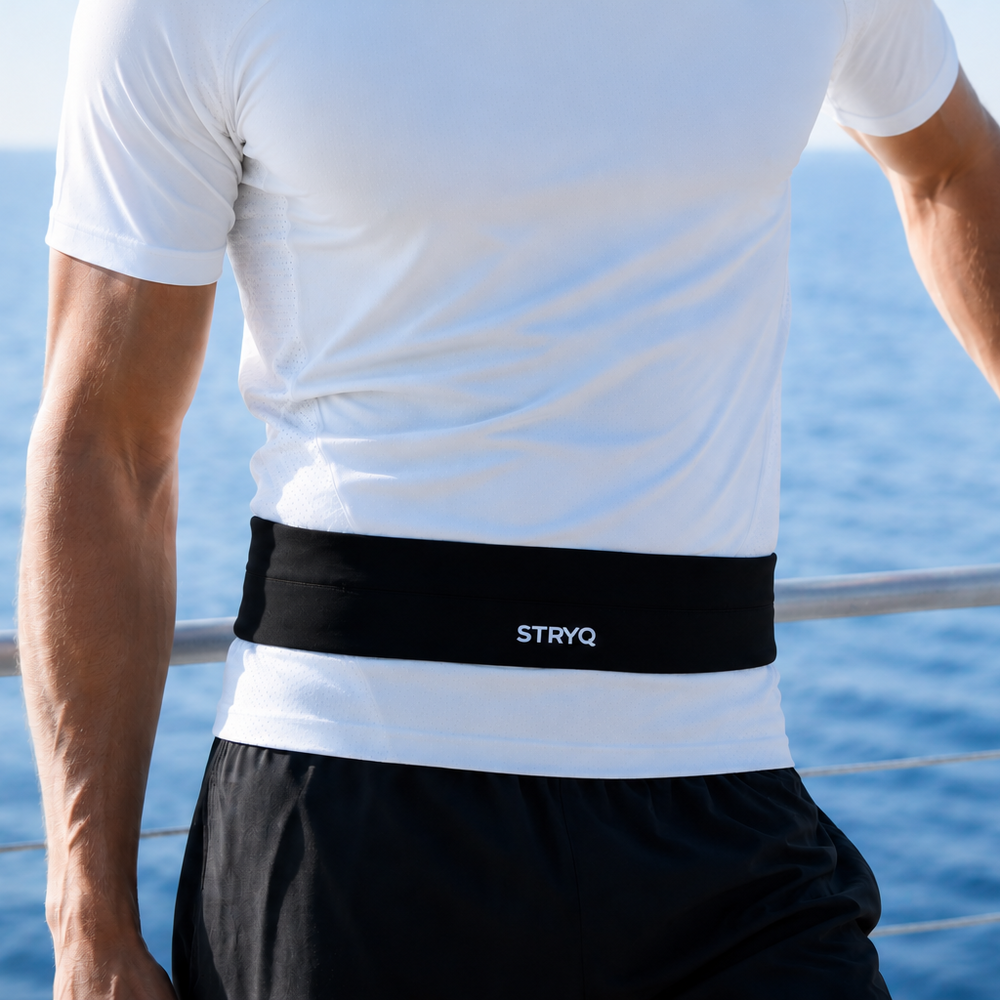
Couch to 5K, parkrun and 5K. Most people running for 30 to 40 minutes do not need to carry a lot of fluid. What a vest can still do is carry your phone, keys and a card hands-free, without a bouncing armband. For this job the cheapest sensible option is a small, simple vest or, for a phone and keys only, a running belt at £32.
10K. Hot weather or a longer training run is when a small flask starts to be useful. A basic vest with one or two 500ml flasks is plenty.
Half marathon. Runs of well over an hour are where carrying your own fluid and fuel pays off, especially if your training routes have no water stops. A mid-priced vest with two flasks is the sweet spot.
Marathon. Long training runs of two to three hours or more are when a vest earns its price: capacity for fluid, gels, a phone and a layer, all carried without your hands being tied up. A mid-range vest with room for two flasks and a few pockets covers most marathon plans.
If you are unsure whether you need a vest at all or would be happier with a belt, read our comparison of hydration vest versus belt and our take on whether hydration vests are worth it.

Work out your real total
Do this sum before you buy, for any vest:
- Vest price. The sticker price, at a normal rather than sale price if you can tell.
- Add the hydration kit. If no flasks or reservoir are included, add the cost of the number you will use. Two flasks is a normal setup.
- Add what makes the run comfortable. Socks that do not blister on a long run matter as much as the vest.
- Subtract nothing for “sale” until you check fit. A discount on a vest that bounces is money wasted.
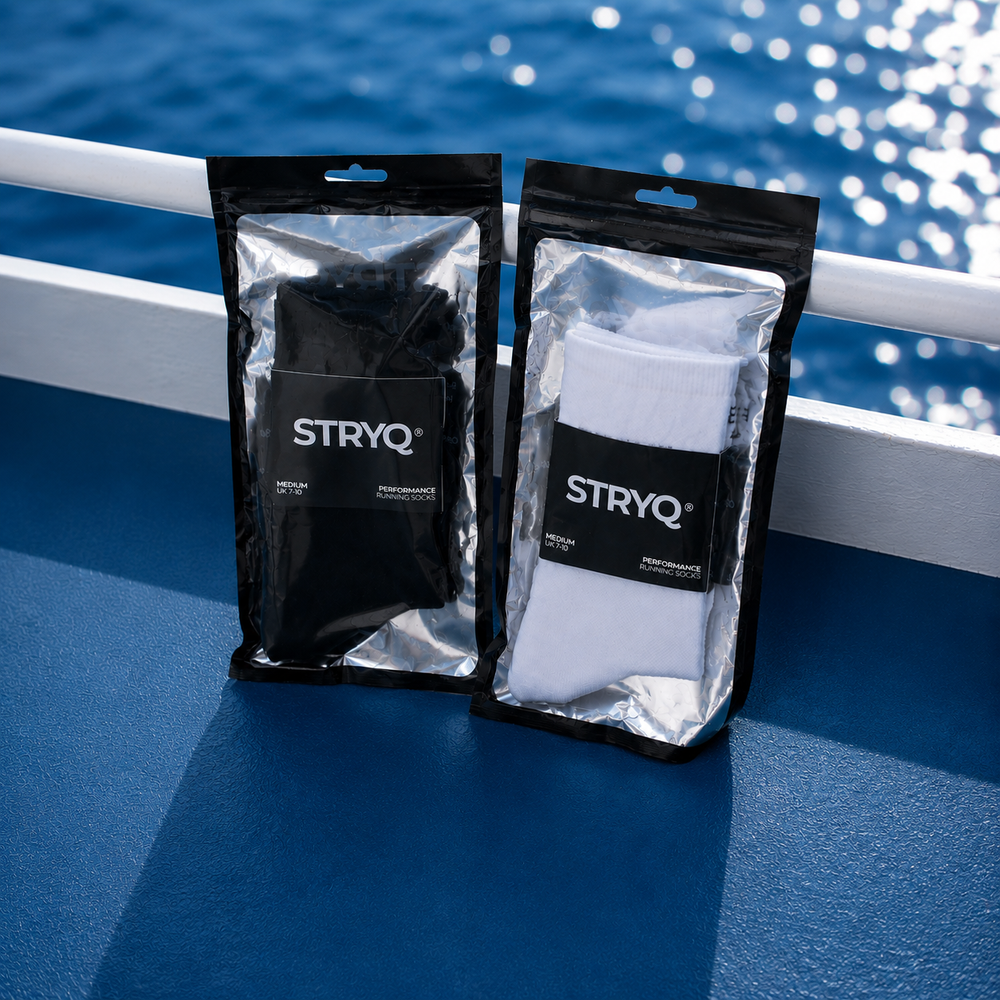
A worked example using our own prices: the STRYQ Hydration Running Vest at £42, plus two 500ml soft flasks at £14 each (£28), makes £70. Add a pair of STRYQ Running Socks at £17 and the full setup comes to £87. That is a complete long-run kit for less than the middle of the premium bands in the research above.
Fit before price
The most expensive mistake is buying a vest that bounces. Once it is loaded, a loose vest chafes and pulls on your shoulders, and you stop wearing it. Three checks, in the shop or at home:
- Load it with the amount of fluid you will carry and jog on the spot, then run a few minutes. Nothing should swing.
- Adjust the chest and side straps so the vest sits close without restricting your breathing.
- Put heavy items, such as full flasks, in the front pockets and light items in the back, so the weight is balanced.
Our step-by-step guide to a no-bounce hydration vest fit goes through it in five steps, and our guide on how to choose hydration vests that do not bounce shows what to look for when comparing models. Our comfort study for runners and our UK hydration vest review cover real-world runs.
The STRYQ vest and flask
The STRYQ Hydration Running Vest is £42. It has adjustable straps and multiple pockets, so you can set the fit to your body and keep phone, keys and fuel organised. The matching STRYQ 500ml Running Soft Flask is £14. Every STRYQ product is developed from real runner feedback, with multiple sample revisions, extensive testing and strict quality control before launch.

If you want to see the vest, the flask and the rest of our running gear together, the running gear collection has them in one place, and the soft flasks collection lists the flask on its own. For a group of runners kitting out for a race season, the sum above is a quick way to budget.
Our view on vest pricing
We started STRYQ because the choice for everyday runners felt split in two: cheap marketplace gear that falls apart, or premium brands priced for people racing ultras.
Our view is that a vest should be judged on comfort, fit and durability, not on how much it costs. Every product goes through multiple sample revisions, extensive testing and strict quality control, and we rework it based on feedback from the runners who use it.
That is why the vest is £42 and the flask is £14. We want you to finish a long run having forgotten you were wearing it, and to still be using the same vest next season. Products that last, honest quality over marketing hype, and performance without unnecessary complexity are what we build for.
When you compare any vest, add up the whole kit, check the straps adjust properly, and choose the one that stays still when you run.
martin
FAQ
How much should a beginner spend on a hydration vest?
A beginner doing parkrun or Couch to 5K needs very little. A simple vest or belt that carries a phone and keys comfortably is enough, and our vest at £42 or belt at £32 covers that. Spend on fit rather than on capacity you will not use.
Does the vest price include water bottles or flasks?
Not always. Reviews show some vests with a reservoir or two flasks included and others where flasks are sold separately. Check the product page, and add the cost of flasks to your total. Our 500ml soft flask is listed separately at £14.
Is a more expensive hydration vest more comfortable?
Often it has more features and higher-end materials, as OutdoorGearLab’s testing notes, but comfort depends mostly on fit. A vest with adjustable straps that you set up properly can feel better than a pricier one worn loose.
Do I need a vest for a 10K or half marathon?
For a 10K, many runners carry nothing, though a flask helps in hot weather. For a half marathon, a vest or belt is useful on long training runs, especially where there are no water stops. Our vest versus belt guide helps you choose.
When is the best time to buy?
Prices in the US research change with seasonal sales and new models, so the numbers here are a guide. Check the live price on the product page and judge by fit and what is included, rather than by the size of a discount.
Sources
- Running Vests: 39 Compared by the Numbers, NerdRunner
- Best Running Hydration Vests of 2026, Switchback Tested
- The Best Running Vests for Men, OutdoorGearLab
- 10 Best Running Vests, OutdoorGearLab
- The 10 best running vests and hydration packs, The Guardian
- The Best Running Hydration Vests for Every Type of Run, Outside Online
- Best Running Hydration Vests & Packs of 2026, CleverHiker