A bottle in your hand can feel fine for the first few miles. Then your grip tightens, your stride changes and you start wondering where to put your gels. For longer runs, warmer days and races where you need to be self-sufficient, hydration vests solve a simple problem: carrying what you need without feeling weighed down.
The right vest should disappear once you start moving. No bounce. No rubbing. No stopping to hunt for fuel in a pocket. But capacity alone does not make a good running vest. Fit, access and the way it sits when full matter just as much.
When do you need a hydration vest?
Not every run needs one. For a short 5K near home, you may be better with nothing at all. For an easy run with regular water fountains, a running belt or a small handheld flask can be enough.
A hydration vest becomes useful when you are out for long enough that water, nutrition or spare kit cannot comfortably fit in your pockets. That might be a half marathon training run, a trail route with no shops, a summer long run or a race with mandatory kit. It is also useful for runners who prefer to take small sips regularly rather than drinking a large amount at an aid station.
The practical benefit is consistency. If your water and fuel are on you, you are less likely to cut a route short, skip a gel or rely on finding an open café at the right time.
Choosing hydration vests by capacity
Capacity is usually measured in litres, but do not assume more space is always better. A larger vest can carry more, yet it can also tempt you to pack things you do not need.
Small vests for shorter training runs
A compact vest is often enough for runs of around 60 to 90 minutes, particularly in cooler conditions or on routes with refill points. It should hold one or two soft flasks, your mobile phone, keys and a couple of gels.
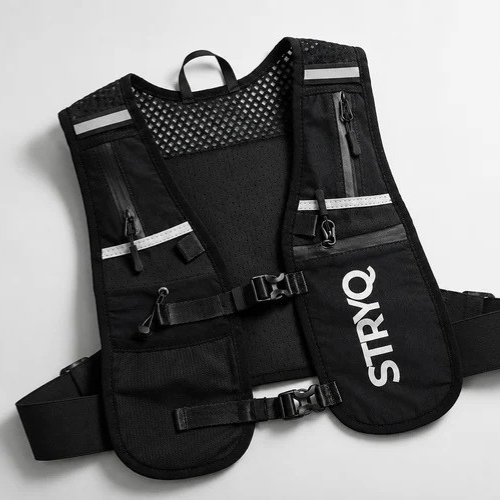
This is a good starting point for runners moving beyond a belt. You get accessible water without carrying a large pack on your back. Look for front pockets that can hold flasks securely and leave enough room for nutrition.
Mid-capacity vests for long runs and races
For marathon training, longer trail runs and all-day events, a mid-capacity vest gives you more flexibility. You may need extra fuel, a lightweight waterproof, gloves, a mobile phone, a small first-aid item and more water between stops.
This size suits many runners best because it works across several types of run. The trade-off is that loose storage can create movement. Compression cords or adjustable bungees help keep the load close to your body as you eat and drink.
Larger vests for self-supported days
A larger hydration vest is for routes where you need to carry more kit, not simply more water. Think hill days, ultras, winter trail running or events with a mandatory kit list. A spare layer and waterproof can take up far more room than you expect.
If you mostly run on roads for an hour or two, this much capacity is likely to feel excessive. Choose for your usual running, not the one event you might do next year.
Fit matters more than storage
A vest can have well-designed pockets and still be uncomfortable if it does not fit your torso. Bounce usually comes from a vest that is too loose, loaded unevenly or adjusted only once before the run.
Start by checking the manufacturer’s size guide, then adjust the chest straps while wearing the vest with some water in it. An empty vest can feel secure at home but move differently once the flasks are full. The fit should be close without restricting your breathing or making your ribs feel compressed.
Women and runners with smaller frames may find that unisex sizing does not always sit well across the chest. In that case, a vest with multiple chest adjustment points is particularly useful. The aim is a stable fit around the upper body, not a tight grip around one area.
During the first few runs, make small changes. Tighten the upper strap if the shoulders lift. Adjust the lower strap if the vest rocks from side to side. Reposition the flasks if one side feels heavier. A good fit is often found through these minor adjustments rather than one big pull on every strap.
Soft flasks or a bladder?
Most hydration vests use soft flasks, a hydration bladder, or both. There is no single best choice. It depends on how you prefer to drink and what you need to carry.
Soft flasks sit in the front pockets. They make it easy to see how much water you have left, refill at an aid station and drink little and often. They also balance the weight across your chest rather than placing it all on your back. For many road runners, this is the simplest option.
A bladder carries more water in a compartment at the back, with a tube running over the shoulder. It can be useful on long stretches without a refill point, especially on trails. The downside is that refilling takes longer, cleaning requires more care, and it is harder to know exactly how much remains.
Some runners use front flasks for water and keep an empty bladder for occasions when extra capacity is needed. That approach gives flexibility, but only if the vest is designed to carry both without becoming bulky.
Think about access while you are moving
A hydration vest should make running easier, not turn every gel into a small logistical task. Before buying, consider what you need to reach without stopping: water, fuel, your mobile phone, keys and perhaps a lightweight layer.
Front pockets are valuable because they let you take a gel or drink without breaking rhythm. Stretch pockets are useful for wrappers and spare nutrition, though very loose pockets can allow items to shift. A secure mobile phone pocket is worth prioritising if you use your mobile phone for navigation, music or safety.
For trail and winter running, check the rear storage too. Can you take out a waterproof without emptying the whole vest? Can you store wet layers separately from your mobile phone and snacks? These details are easy to overlook in a shop and very obvious halfway through a wet run.
Avoid chafing before race day
Even a well-fitting vest can rub if it is worn over the wrong clothing or used for the first time in a race. Common hotspots include the neck, underarms, collarbones and the edges of chest straps.
Test your vest on a few shorter runs first, then use it for a long run at the same time as testing your race socks, top and fuelling plan. This shows whether the vest works with your normal kit, not just when you are standing still in the kitchen.
Use anti-chafe balm where you know you are prone to rubbing, especially in warm or wet conditions. Keep the vest clean too. Dried sweat and spilled drink mix can stiffen fabric and make irritation more likely.
Pack for the run you are doing
The most comfortable hydration vest is usually the one that is packed with purpose. Water is essential, but everything else should earn its place. Check the weather, distance, terrain, available refill points and how long you expect to be out.
For a road long run, you may only need water, gels, a mobile phone and keys. For an exposed trail route, add a layer, waterproof, basic safety items and enough nutrition for delays. If you are racing, follow the event rules rather than assuming every organiser provides the same support.
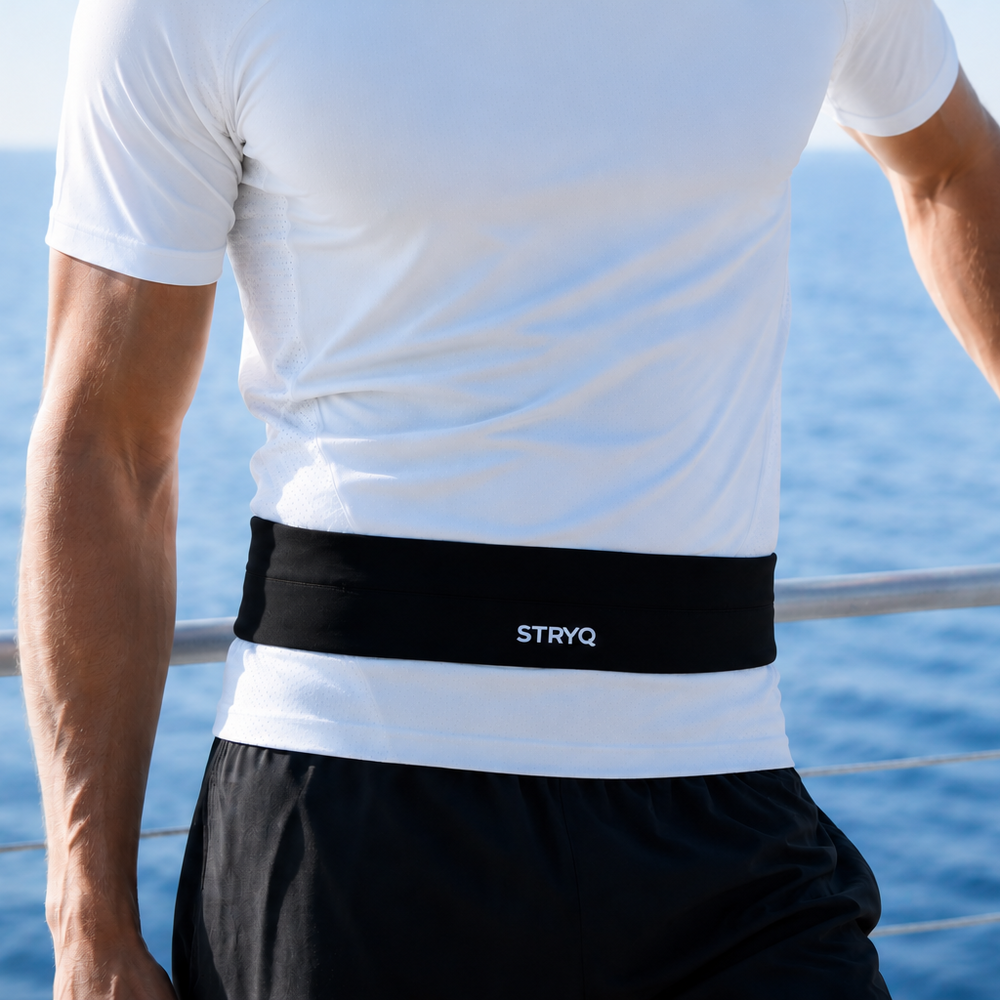
STRYQ running accessories are designed around this practical principle: carry the essentials securely, keep them easy to reach and leave the bulk behind.
A hydration vest is not just for ultrarunners or mountain days. It is a useful bit of kit when your run asks for more than your pockets can manage. Take the time to adjust it, practise with it when it is full and pack only what you will use. Then it can do its job quietly while you get on with yours.