A hydration vest review UK runners can genuinely use should start with the bit that matters most: does it stay comfortable once you are properly moving? A vest can have plenty of pockets and a generous flask capacity, but none of that helps if it bounces, rubs your ribs or makes reaching your gels awkward at mile 12.
For many UK runners, a hydration vest becomes useful well before ultra distance. It makes summer long runs, marathon training, trail routes and race days easier to manage. The right one carries water, fuel, a mobile phone and a light layer without feeling like a bulky backpack. The wrong one becomes the thing you cannot wait to take off.
Hydration Vest Review UK: What Actually Matters
The best vest is not necessarily the one with the largest capacity or the most pockets. It is the one that suits your route, distance and what you need to carry. A runner heading out for 90 minutes on local trails needs something different from someone racing a road marathon with water stations every few miles.
Start with fit. This is where most running vests win or lose. A good vest sits close to the body, with the weight spread across your chest and upper back. It should not swing from side to side when you turn a corner, and it should not rise up towards your neck as the pace picks up.
Look for adjustable chest straps rather than relying only on a general size. These let you fine-tune the fit over a T-shirt in warm weather or a long-sleeve base layer in winter. They also help when the flasks are full, which is when poor fit is most obvious.
A vest should feel snug, not restrictive. Take a full breath. Swing your arms. Twist at the waist. If the edge presses into your underarm or the chest straps make breathing feel shallow, try another size or design. Chafing rarely improves after several miles.
The bounce test
Load the vest before judging it. Empty vests can feel excellent in the hallway and completely different with 500ml or a litre of water on board. Fill the flasks, add your usual mobile phone, keys and nutrition, then jog up and down the road or on a treadmill.
Listen and feel for movement. Sloshing water is normal, especially at the start of a run, but the vest itself should stay quiet and stable. A little adjustment after the first five minutes is common. Repeated tightening throughout a run is a sign that the cut, size or load distribution is not right for you.
Flask Capacity and Hydration Options
Most runners will be deciding between a vest with two front soft flasks, commonly holding 500ml each, and a larger pack that can also take a rear bladder. Neither option is automatically better.
Front flasks are simple. You can see how much you have left, drink without taking the vest off and refill them quickly at a tap or aid station. They also keep the weight forward, which many runners find more balanced. For long runs where you can refill en route, two soft flasks are often enough.
A rear bladder carries more water but can be less convenient. You may need to remove the vest to refill it, and it is harder to tell exactly what remains. It can work well for long trail days with few water stops, particularly when your route is remote or the weather is warm.
Think about the water available on your usual routes. In Britain, a long summer run can still be cool and wet, while a heatwave can make an exposed route feel far more demanding than expected. Carrying extra water is sensible when needed, but overpacking every time adds weight and heat.
If you use electrolyte tablets or drink mix, wide-neck soft flasks are easier to fill and clean. Check whether the flasks supplied with a vest can be replaced when they wear out. Soft flasks are consumable running kit. They will eventually develop an odour or show signs of use, especially if you regularly use sweet drinks.
Storage Should Match Your Running Routine
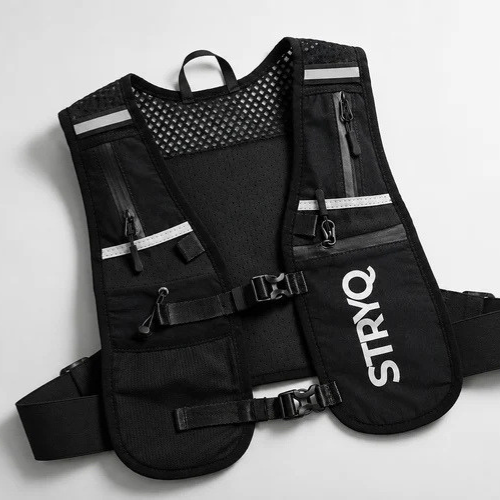
Good storage is about access, not just litres. The items you use while running need to be easy to reach without stopping. That usually means water and gels at the front, with spare layers, a head torch or larger food items at the back.
A useful vest should comfortably carry the essentials: mobile phone, keys, nutrition, tissues, a small first-aid item and a lightweight waterproof where the conditions call for it. If you race or train in areas with changeable weather, a rear compartment that can hold a packable layer is worth having.
Front pockets need enough stretch to keep items secure without making them difficult to remove. A mobile phone pocket should hold your handset firmly, even when you are descending or running fast. Check that it still works with the mobile phone case you actually use, not just a bare mobile phone in a shop.
Zipped pockets are helpful for keys, cards and anything you cannot afford to lose. Open pockets are better for gels, wrappers and quick-access items. The most practical layouts use both. Too many small pockets can be less useful than a few well-placed ones, particularly when your hands are cold or you are tired.
Do not buy capacity you will never use
A large vest can be tempting because it appears more versatile. But extra material and unused space can move around, trap heat and make the vest harder to adjust. For regular 10K training, parkrun and shorter road runs, a running belt or small bottle may be a better option.
A hydration vest makes more sense when you are routinely out for longer, need to carry your own fuel, or run where water fountains and shops are not reliable. Marathon trainees often find it useful for self-supported long runs, then choose whether to wear it on race day based on the event's water stations and their own plan.
Choosing the Right Size and Shape
Sizing varies between brands, so do not assume your usual running top size will be correct. Measure your chest as the brand advises, then use the adjustment range to refine the fit. If you sit between sizes, consider what you normally wear underneath and how much you plan to carry.
Body shape matters too. Some runners prefer a higher chest fit with shorter front pockets. Others need a longer body to stop the lower edge creeping upwards. Women-specific cuts can offer a more comfortable shape around the chest, but the best choice is always the one that stays stable on your own body.
Try not to judge a vest only while standing still. Run in it before committing to a big event. Start with a short, easy run, then use it on a longer session. This gives you time to learn where each item belongs and whether any seams create hot spots.
Small Details That Make a Big Difference
Breathable fabric helps, but no hydration vest will feel cool once it is full and you are working hard. The aim is to minimise unnecessary material against your back while keeping the load secure. Light colours can also feel more comfortable in direct sun, although fit remains the priority.
Look at the pull cords, clips and elastic keepers. You want adjustments that are easy to use but do not leave loose straps flapping around. Small details such as covered zip ends and soft edging can prevent irritation over a long run.
If you are choosing a vest from STRYQ, apply the same test: load it as you would for a real run, adjust it close to the body and make sure the storage suits the miles you actually do. No bounce and no bulk are useful goals, but the right setup is personal.
Care Keeps a Vest Comfortable
Rinse soft flasks after every run, especially after using electrolytes or carbohydrate drink. Let them dry fully with the lids open. Wash the vest according to its care label when sweat and salt build up, paying attention to the shoulder straps and areas that sit against the skin.
Before race day, check the flasks for leaks, test zips and make sure your mobile phone still fits in its chosen pocket. These are small checks, but they stop avoidable distractions when you should be focused on your pacing and the run ahead.
The right hydration vest should disappear into your routine. Once it fits well and carries what you need, you can spend less time managing your gear and more time enjoying the miles.