The simplest way to carry insulin on a run is close to your body’s core, in a snug, no-bounce belt or vest pocket, kept out of direct sun and away from bare skin on hot days. For most runs under an hour you will carry far less than you think. For longer runs and race weekends you need a plan for temperature, fast carbohydrate and a way to get at both without stopping.
This guide covers what to carry, how to protect insulin from heat, which type of carrier suits which run, and what to know when you fly to an event. It is general information for runners, not medical advice. Your dose, your targets and your plan for lows belong to your diabetes care team.
TL;DR
- In-use insulin can stay at room temperature (59°F to 86°F) for up to 28 days, so a normal run rarely needs a bulky cooler. Heat and cold extremes are the real risk.
- Carry fast-acting carbohydrate within reach, not buried at the bottom of a bag. The standard treatment for a low is 15 grams of carbohydrate, then a re-check after 15 minutes.
- A snug belt or vest holds supplies close without bounce. Keep insulin out of direct sun and avoid pressing it against skin on warm days.
- For flights, insulin goes in your carry-on and TSA officers need to be told about it. Frozen-solid gel packs only.
- Test every new setup on a short run before you rely on it for a long one.
Table of Contents
- What you actually need to carry
- Keep insulin in a safe temperature range
- Choosing how to carry it
- Our perspective
- Packing by run length
- Carrying for lows
- Wear ID, always
- Flying to a race with insulin
- A setup that works for most runners
- The STRYQ kit for carrying essentials
- FAQ
- Sources
What you actually need to carry
Start with the job each item does. Most runners with insulin-treated diabetes carry some mix of these:
- Fast-acting carbohydrate for lows: gels, glucose tablets or chews.
- Your phone, which may also display glucose readings if you use a sensor.
- ID and a note about your condition, in case someone else has to help you.
- Insulin, a pen or a spare pump or pod supply, only if the run is long enough or far enough from home that you might need it.
- A small amount of cash or a card for the shop or café if you need to buy more carbohydrate.
The American Diabetes Association explains that physical activity increases insulin sensitivity, so you may need to reduce insulin or take on extra carbohydrate before or during exercise. That is why the first item on the list is almost always the carbohydrate, not the insulin.
The ADA also describes exercise as a trial-and-error process: check your glucose before, during and after runs to learn how a particular session affects your own insulin needs. Your kit list will change as you learn, so treat the first version as a draft.
Do you need to carry insulin at all?
Often you do not. If you are running 30 to 45 minutes from your front door and your insulin plan does not call for a dose mid-run, many runners leave insulin at home and carry only carbohydrate, phone and ID. Once you head further out, run through a mealtime, or travel to a race, the answer changes. That is a decision to make with your care team, based on your regimen.
Keep insulin in a safe temperature range
Many runners assume insulin must stay refrigerated at all times. According to the ADA’s guidance on insulin storage, manufacturers recommend refrigerating unopened insulin, but keeping the bottle you are currently using at room temperature is common practice and can make injections less painful.
The FDA states that insulin in use can be kept at room temperature, between 59°F and 86°F, for up to 28 days. Temperatures below 36°F or above 86°F can reduce potency. Check the leaflet for your product, because storage windows differ between insulins.
That gives you two practical rules for running:
- Heat is the main enemy. A summer long run, a car left in the sun before a race, or a pocket pressed against a hot back can push insulin out of range.
- Cold matters too. A winter run is gentler than a summer one, but insulin must not freeze. Do not store it against a frozen gel pack without insulation.
Where to wear it
The ADA’s exercise safety advice suggests keeping supplies out of direct contact with skin when it is warm, because body heat can raise the temperature of what you carry. A sweat-resistant, insulated pouch or a belt pocket with a small gap between the insulin and your body is the usual solution. In practice that means:
- Put insulin in a small case, then place the case in the belt or vest pocket.
- On hot days, wear the carrier over a thin layer rather than directly on skin.
- Never leave your kit in a parked car before or after a run.
- Shade it at a break stop. Do not leave it on a sunny wall or bench.
If you will be out for hours in warm weather, a cooler case is worth considering. The ADA’s consumer guide to insulin coolers and cases lists models that use gel packs or water-activated cooling and need no electricity, which suits active people. Those cases are better for road trips and race weekends than for the run itself, because they are bulkier than a belt pocket.
Choosing how to carry it
No single carrier is right for every run. The table sets out the main options by type of kit, so you can match the carrier to the distance and the weather.
| Carrier type | Best for | Strengths | Watch out for |
|---|---|---|---|
| Handheld pouch or pocket | Short runs, cool weather | Nothing extra to wear | Bounce, and heat from your hand and body |
| Slim running belt | Runs up to roughly 90 minutes | Low bulk, phone and carbohydrate close, stable at the waist | Limited space for a cooler case |
| Hydration vest | Long runs, trails, warm weather | Room for water, carbohydrate, a small insulated case and layers | More to adjust; test the fit before a long run |
| Insulated case in a bag | Race weekends, travel | Best temperature control | Too bulky to run with |
Why bounce matters more here
Loose pockets slap and slide, and a pen, vial or case that moves around can be uncomfortable or get damaged. A snug belt sits on your hips and stays put. A vest spreads the weight over your torso, which helps once you carry water as well. We cover the mechanics in our guide to carrying essentials on long runs without bounce.
Our perspective
We make running belts, hydration vests and soft flasks, and the same lesson comes up whenever runners tell us what they carry. The problem is rarely a lack of space. It is access and stability. If you cannot reach your glucose in a few seconds while still moving, or your kit shifts and rubs for an hour, you stop using it.

That is how we develop every product: from runner feedback, through several sample revisions, with testing and quality control before launch. We prefer practical features to marketing claims. So we will say plainly what our gear is and is not. Our belts and vests are built to hold a phone, gels, keys and a bottle comfortably and without bounce. We do not sell a medical cooler, and we do not claim any of our products controls the temperature of insulin. What they do is give you a secure, accessible place to carry a small insulated case or your carbohydrate, so you can concentrate on the run.
Our advice, in order: decide with your care team what you need to carry, pick the lightest setup that holds it, put the fast carbohydrate where you can reach it with one hand, and test everything on a short run first.
— martin
Packing by run length
The lists below are starting points. Adjust them for your own regimen and ask your care team what they would add or remove.
Up to 45 minutes, close to home
- Fast-acting carbohydrate (a gel or tablets)
- Phone
- ID
- Door key
A slim belt is enough. See our guide to what to carry in your belt on race day by distance for how much space each distance calls for.
45 to 90 minutes
- Everything above, with extra carbohydrate
- Water in a small soft flask or bottle
- A card or cash
- Insulin supplies if your plan may need them, in a small case away from direct skin contact
This is where a belt with room for a flask, or a light vest, starts to make sense. For hydration timing, our long run hydration example shows a simple pattern.
Over 90 minutes, half marathons and longer
- Extra carbohydrate in two separate places, so one lost or soaked pocket does not leave you without
- Water, plus a plan to refill
- Insulated storage for insulin or spare supplies if you will be away from a safe place to leave them
- A weather layer in cool or wet conditions
A hydration vest is usually the better fit at this length. Practise taking carbohydrate from it on the move, using our guide to carrying gels without bounce and the race-day plan for carrying gels on a half marathon.
Carrying for lows
Exercise can lower blood glucose in several ways, including by increasing insulin sensitivity, so a plan for lows is part of carrying insulin. The ADA describes the 15-15 rule as the standard approach: take 15 grams of carbohydrate, wait 15 minutes, then check again. Runners are encouraged to keep glucose gel or tablets accessible throughout the run.
Some practical points on carrying them:
- Know the grams. Read the label on your gel or tablets so you know how many make 15 grams. Do it at home, not mid-run.
- Split the supply. Keep some in a front pocket and some in a second place.
- Use packaging you can open with one hand. Test it with sweaty fingers.
- Replace anything that has been in a hot pocket for weeks. Check the product’s own guidance.
- Do not wait. If you feel low, stop and treat it. Do not run on to the next lamp post.
If you have frequent lows during runs, or any severe low, contact your doctor or diabetes care team. They can adjust your insulin and carbohydrate plan for exercise. The ADA’s own figures are general: it notes that reducing insulin doses by around 20% can help in some cases, but that is something your clinician sets for you, not something to apply yourself from an article.
For a wider look at fuelling, see our running nutrition guide for on-run carry and the piece on what to eat before and after a run.
Wear ID, always
If you run with insulin, you should be identifiable if something goes wrong. A medical ID band, a card in your belt or a note on your phone lock screen all work. Pick more than one, because phones run out of battery and cards get wet. Our guide to wearing ID while running with a low-bulk kit explains how to fit it without adding bounce. The same principle applies to other medication: we cover it in our guide to carrying an inhaler while running.
Flying to a race with insulin
A race weekend adds a different set of rules. The TSA’s page on insulin says insulin is allowed in carry-on and checked bags. It asks you to tell the officer you have medically necessary liquids and to put them in a separate bin for X-ray screening. Keep insulin in your carry-on. Checked luggage can be exposed to temperature extremes, and a lost bag is not a risk to take with medication.
A few more points:
- Ice packs must be frozen solid. The TSA states that cooling accessories for medically necessary liquids must be fully frozen at the checkpoint. Slushy packs face extra screening, so freeze them well ahead.
- You can ask for a visual inspection of medication rather than X-ray. According to the TSA travel tips, you must ask before your items go into the X-ray tunnel.
- Use the TSA’s medical items page to check your pump, sensor and test kit, and tell the officer you carry diabetes supplies.
- Pack spares of everything, split between two bags where possible.
Once you land, use the same temperature rules: no hot cars, no windowsills, and an insulated case for the walk to the start line.
Choosing a race
Plenty of events welcome runners with diabetes, and some are built around awareness. If you are looking for a first target, an event such as the diabetes awareness 10K in Madrid shows what a community race can look like, and the page covers how race places are transferred between runners. Whichever race you pick, find out in advance where the aid stations are and whether you can leave a bag in the baggage area with your insulin kit. Bag drops are not always temperature-controlled, so keep insulin on you.
A setup that works for most runners
If you want a straightforward answer, this is the route we suggest runners try first:
- Short runs: a slim belt with carbohydrate, phone and ID.
- Long runs: a vest with a soft flask, two carbohydrate stashes and a small insulated case for insulin if your plan calls for it.
- Hot weather: wear the carrier over a thin layer and keep the insulin case away from skin.
- Race weekends: use an insulated travel case for the trip and carry only what you need on the course.
Run the setup on a short loop first. Check for rubbing, bounce, and whether you can get a gel out with one hand. Adjust, then repeat on a longer run.
The STRYQ kit for carrying essentials
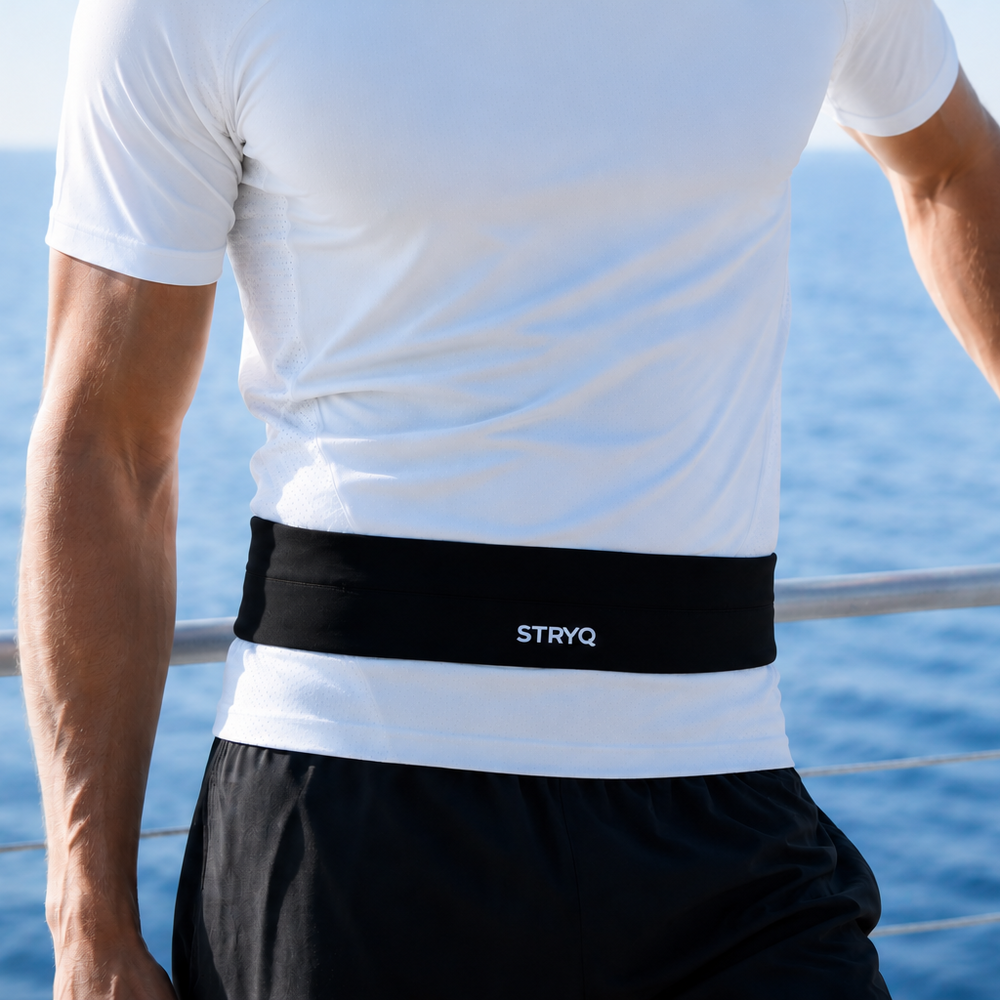
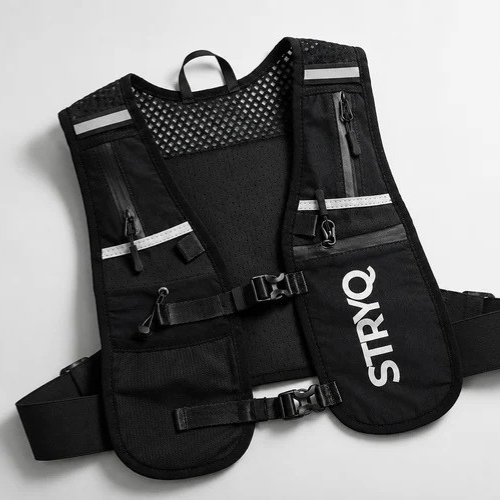
The STRYQ running belt is a no-bounce waist belt for your phone, carbohydrate, keys and ID, and it suits short and mid-length runs. For longer distances, the STRYQ hydration running vest has adjustable straps and several pockets, and it works with our 500ml soft flasks. You can see current prices on each page, and all our running gear is in the running gear collection. If you carry insulin, choose the belt or vest for fit and access, and add a separate insulated case suited to your product.
FAQ
Can I pack insulin in my carry-on?
Yes. The TSA allows insulin, pumps and diabetes supplies in carry-on bags, and recommends keeping them there. Tell the officer you have medically necessary liquids and place them in a separate bin. If you use gel packs, they need to be frozen solid at the checkpoint.
Does running make you more insulin sensitive?
Yes. The ADA says physical activity increases insulin sensitivity, so your muscles can use available insulin to take up glucose during and after activity. That is why runs can cause lows, sometimes hours later. Ask your care team how to adjust your insulin and carbohydrate for your own runs.
Does insulin need to be kept cold on a run?
Not usually for a standard run. In-use insulin can be kept at room temperature, 59°F to 86°F, for up to 28 days according to the FDA, though you should check your product’s leaflet. The concern is heat above 86°F or cold below 36°F, so use shade, insulated storage and distance from bare skin in hot weather.
How do I carry insulin on a long road trip to a race?
Use an insulated travel case with gel packs or water-activated cooling, and keep it in the cabin of the car, never in a hot boot or parked in the sun. The ADA’s consumer guide lists cases that need no electricity. Take the case with you when you leave the vehicle.
Sources
- Insulin Storage and Syringe Safety, American Diabetes Association
- Understanding Blood Glucose and Exercise, American Diabetes Association
- Injury-Free Exercise: 11 Quick Safety Tips, American Diabetes Association
- Insulin Coolers & Cases, American Diabetes Association
- Information Regarding Insulin Storage and Switching Between Products in an Emergency, FDA
- Insulin, Transportation Security Administration
- Travel tips, Transportation Security Administration