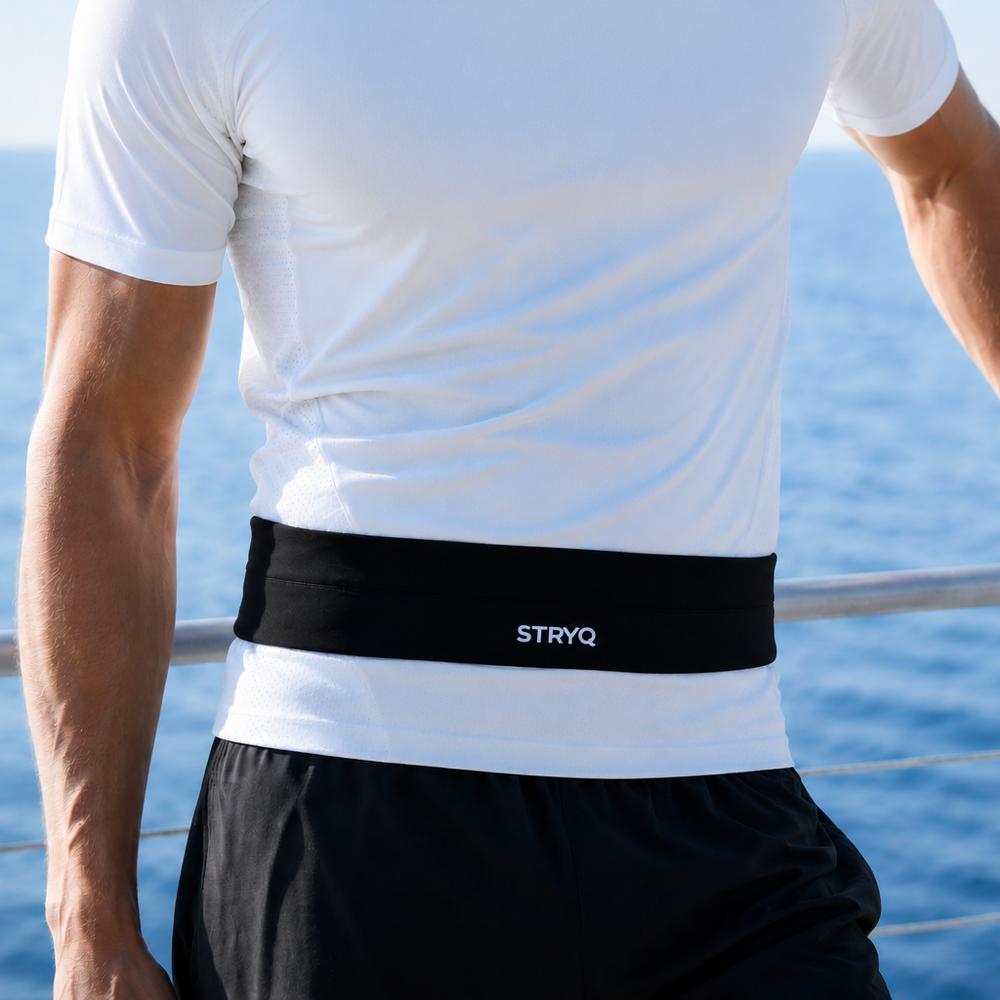
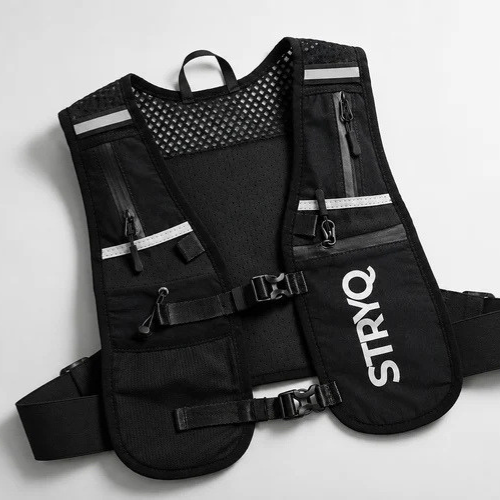
Most half-marathon runners need several energy gels and the simplest way to carry them is a low-bounce waist belt or a secure pocket in your shorts. That covers the majority of scenarios. Sports science sets the target at 30–60 g carbohydrates per hour for efforts under roughly 2.5 hours, and a standard gel delivers 20–30 g per sachet, so the maths points squarely at 2–4 gels for finish times between 1:30 and 2:30+.
Quick checklist — what to pack:
- Your trained gel flavours only (nothing new on race day)
- A clear water plan tied to aid stations or a small soft flask
- One spare gel in case of a drop or a missed aid station
Three things matter most: the sport-science carb guideline above, the principle that your gut must be trained at race intensity before race day, and a carry method you have already tested on long runs. Stryq’s running belts and hydration vests are built around exactly those needs, and they appear throughout this guide where they are the practical fit.
Table of Contents
- How many gels do you need, and when should you take them?
- Which carry method works best for your half marathon?
- Race-day packing and on-course handling
- How to train your gut and practise your carry method
- Common gel mistakes and how to fix them
- Key takeaways
- Why carry method matters as much as what you eat
- Stryq kit for carrying gels on race day
- Useful sources
How many gels do you need, and when should you take them?
The 30–60 g carbs per hour guideline translates directly into gel counts once you know your finish time and the carb content of your chosen gel. Most standard gels sit at 20–30 g carbs per sachet, so one gel per 30–45 minutes is the working rule for the majority of runners.
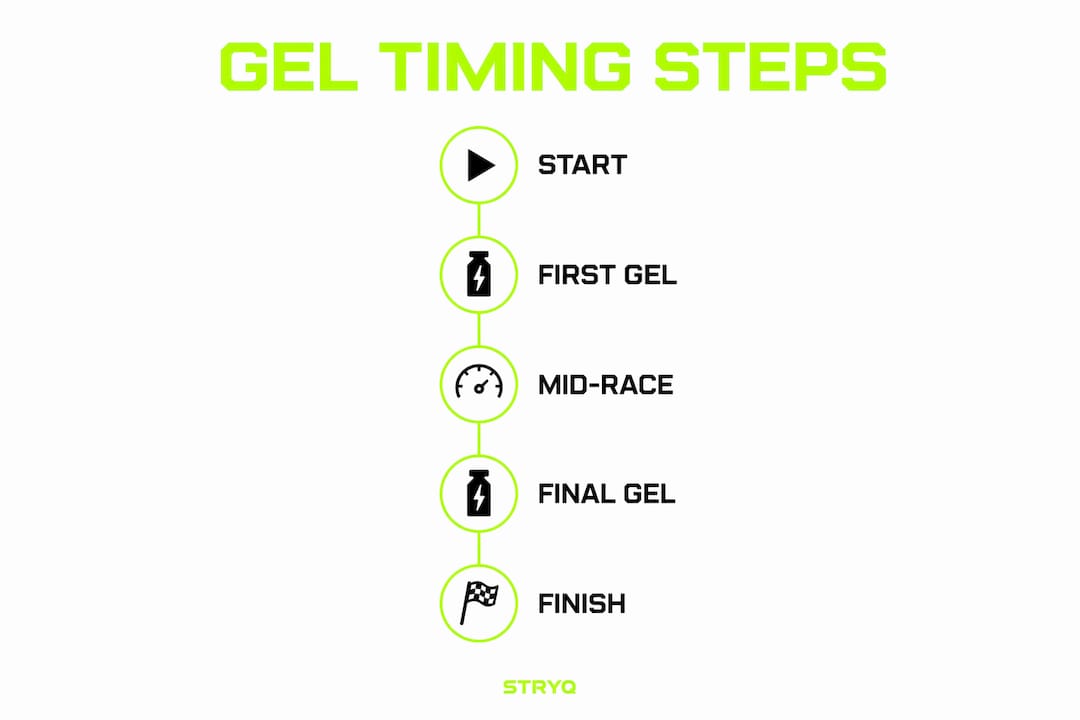
A simple worked example: if you expect to finish in 2:00 and your gel contains 22 g carbs, you need roughly 44–88 g of carbs across the race. Two to three gels covers that range comfortably, with the first taken at 30–40 minutes and the second around 70–80 minutes.
First gel timing at 30–40 minutes is the most widely supported starting point. Taking it earlier than that rarely adds benefit; waiting until you feel tired means you are already behind.
| Finish time | Suggested gels | First gel | Subsequent gels |
|---|---|---|---|
| Faster runners | 1–2 gels | about 30–40 min | optional additional gel later |
| Average runners | 2–3 gels | about 30–40 min | spaced every 30–45 min |
| Slower runners | 3–4 gels | about 30 min | spaced about every 30 min |
Caveats worth noting. Body weight affects glycogen stores, so lighter runners deplete faster relative to their total supply. Caffeine gels (typically 50–75 mg caffeine) are best saved for miles 8–10 rather than taken early. If the course offers a sports drink at aid stations, you can swap one gel for that drink, but only if you have practised with that drink in training.
For pre-race eating guidance that feeds into these counts, the Stryq nutrition guide covers carb loading and breakfast timing in detail.
Which carry method works best for your half marathon?
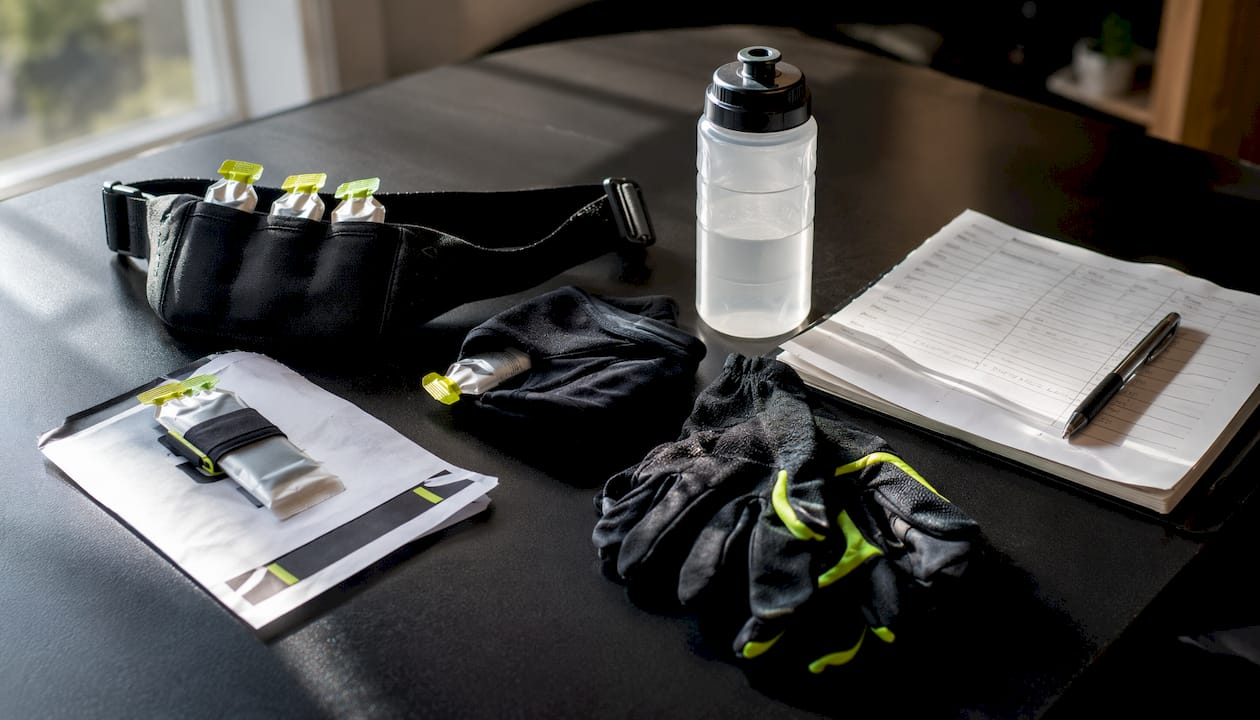
Carry options range from a dedicated running belt to pinning a gel to your race bib. Each has a different trade-off between capacity, stability, and how quickly you can access a gel at pace.
| Method | Capacity | Bounce control | Accessibility | Water carry | Chafe risk | Security |
|---|---|---|---|---|---|---|
| Running belt | 2–4 gels | High (fitted) | Easy one-handed | With soft flask | Low if fitted | High |
| Pocketed shorts | 1–3 gels | High | Easy | No | Low | Medium |
| Hydration vest | 4–8 gels | High | Moderate | Yes (reservoir or flask) | Medium | High |
| Bib stash (pinned) | 1–2 gels | Medium | Easy | No | None | Low |
| Arm sleeve pocket | 1–2 gels | Medium | Moderate | No | Low | Medium |
| Handheld | 1–2 gels | Low | Easy | With bottle | None | Low |
Low-bounce belts and properly sized hydration vests are the most consistently recommended options in tested kit reviews, and for good reason: they keep gels accessible without shifting mid-run.
Running belt
Best for runners carrying 2–4 gels who want a dedicated, purpose-built solution. A well-fitted belt sits at the hip, does not ride up, and lets you grab a gel without breaking stride. Pair it with a 500 ml soft flask and you have water to chase every gel without relying solely on aid stations.
- Pros: high capacity, stable, easy access, compatible with soft flasks
- Cons: requires correct sizing; a loose belt bounces and chafes
Pocketed shorts or tights
A clean, minimal option for runners carrying 1–3 gels. Rear zip pockets or side thigh pockets on modern running shorts hold gels securely. No extra kit required.
- Pros: no additional gear, zero bounce when pockets are sized correctly
- Cons: limited capacity, no water carry, gels can shift if pockets are shallow
Hydration vest
The right choice when you need 4+ gels or want to carry your own water throughout. Front chest pockets on most vests give fast access without removing the vest. Check race rules before using one — a small number of UK events restrict backpacks, though most allow lightweight vests.
- Pros: highest capacity, integrated hydration, stable at pace
- Cons: warmer in summer, requires fitting and training to avoid chafe
Bib stash and arm sleeve
Both suit runners carrying just one or two gels. Pinning a gel to your bib works in a pinch but risks the sachet swinging loose. Arm sleeves with a small zip pocket are tidier, though access requires the opposite hand.
On discarding empty sachets: never drop them on course. Fold the empty sachet and tuck it back into your belt or pocket until you reach a bin or a marshal. Most UK races have litter rules, and a dropped sachet underfoot is a hazard for runners behind you.
For a full breakdown of belt sizing and fit, the Stryq gel belt guide covers what to look for.
Race-day packing and on-course handling
Getting your gels ready the night before removes one decision from race morning. Lay them out in the order you plan to take them, mark caffeine gels clearly, and stow your spare separately so you know exactly where it is.
Packing checklist:
- Count out your planned gels plus one spare
- Mark caffeine gels with a permanent marker (e.g., “Mile 9”) so you do not accidentally take one early
- Label each gel with its planned time or mile (e.g., “35 min”, “70 min”) to remove in-race decision fatigue
- Load gels into your belt or pocket in order, with the first gel at the front
- Confirm your water plan: which aid stations you will use, or whether you are carrying a soft flask
Opening gels cleanly while running. Tear the tab before you reach for water, not after. Most gel sachets have a pre-scored tear point; nick it with your thumbnail a few seconds before you intend to take it, then squeeze half into your mouth, take 3–4 sips of water, and finish the second half. This two-stage method keeps your breathing rhythm intact.
Pro Tip: Write the planned time or mile on each gel sachet with a permanent marker the night before. Mid-race, when your focus is on pace and breathing, you will not have to think about whether it is time to fuel — the answer is already in your hand.
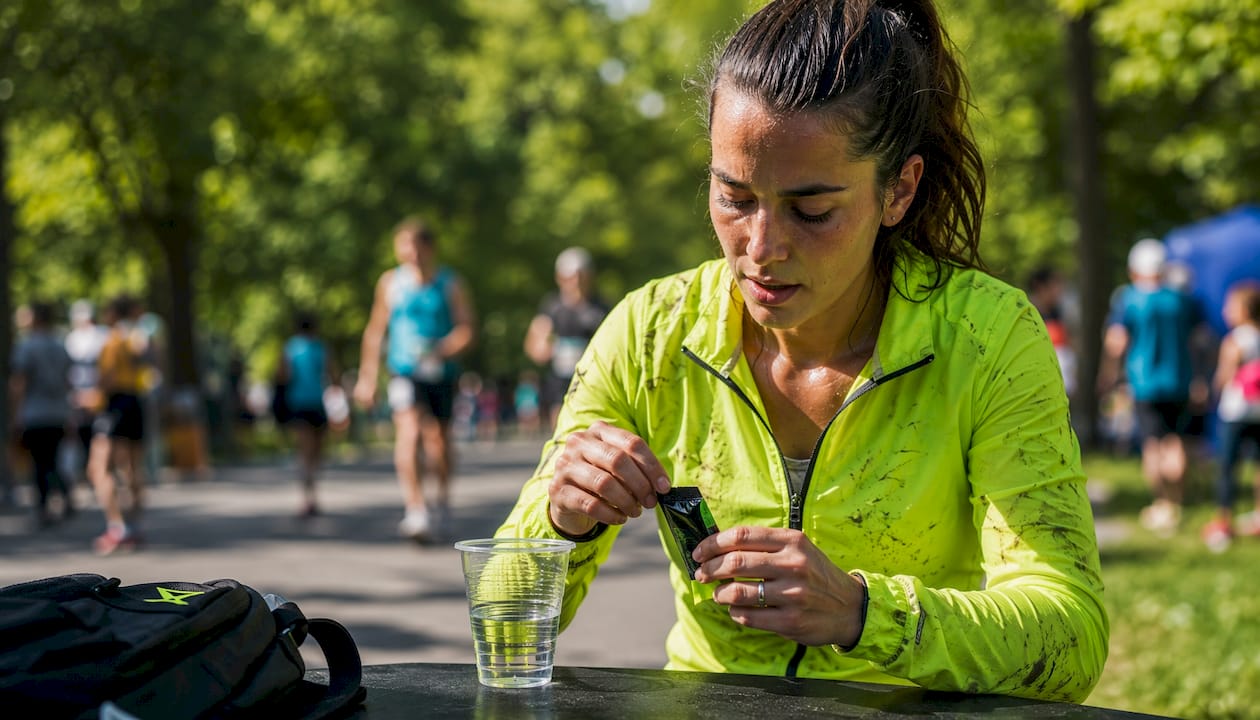
Taking a gel without water is the single most common cause of mid-race GI distress. When you swallow concentrated sugar without fluid, the gut draws water from your bloodstream to dilute it, which slows absorption and can cause immediate bloating. Always pair a gel with water, not sports drink, to avoid stacking two concentrated carbohydrate sources at once.
Empty sachets go back in your pocket or belt. Fold them flat; they take up almost no space.
How to train your gut and practise your carry method
The gut responds to training the same way muscles do. Repeated exposure to carbohydrate at race intensity reduces GI symptoms, but only if you practise at the right effort level. Easy-pace long runs with gels do not replicate what happens at 80–85% of your maximum effort, where blood flow shifts away from the gut and towards working muscles.
A practical 4–6 week build for the final training block before race day:
- Weeks 5–6 out: Take half a gel at race pace during your longest run. Confirm the flavour sits well and that your carry method does not bounce or chafe.
- Weeks 3–4 out: Use full gels at planned race timing intervals during a tempo or race-pace long run. Test the exact sachet brand and flavour you plan to race with.
- Weeks 1–2 out: Run a full dress rehearsal — race clothing, carry method, gel brand, timing, and water source. This is the session that tells you whether your plan is ready.
Pro Tip: Replicate race conditions as closely as possible: wear the same shorts or belt, run at goal pace, and use the same gel brand. A gel that sits fine at easy pace can cause problems at race effort if you have never tested it there.
A few additional points worth building into training:
- Test caffeine gels separately before using them in a race; caffeine can amplify GI sensitivity in some runners.
- If you plan to use aid-station water to chase gels rather than carrying your own, practise drinking from a cup while running — it is a skill that takes a couple of attempts to get right.
- Common training errors around fuelling include skipping nutrition on hard sessions and then wondering why race-day gels cause problems. Practise fuelling on every run over 70 minutes.
The half marathon gear checklist from Stryq covers what to bring to training runs as well as race day.
Common gel mistakes and how to fix them
Most gel-related problems on race day are predictable and preventable. Here are the ones that come up most often, with a fix for each.
-
Trying a new gel on race day. There is no mid-race fix for this one. If it goes wrong, slow your pace, take small sips of water, and skip the next gel if your stomach is unsettled. The lesson for next time: test every product in training first.
-
Taking a gel without water. If you have already swallowed a gel dry, take 3–4 sips of plain water as soon as possible. Do not follow it with sports drink. Drop your pace slightly for 2–3 minutes to allow more blood flow to the gut.
-
Storing gels in an unstable pocket. If a gel falls out mid-race, use your spare. This is exactly why carrying one extra gel is standard practice. After the race, switch to a more secure carry method.
-
Missing a gel because you forgot the timing. If you realise you are 15 minutes late on a gel, take it immediately with water. Do not double up to compensate; that increases GI risk without proportional benefit.
-
Not labelling caffeine gels. Taking a caffeine gel at mile 3 instead of mile 9 will not ruin your race, but it may cause jitteriness early and leave you without the mental lift you planned for the final miles. Mark them clearly before race day.
If GI distress hits mid-race:
- Drop pace by 10–15% for 2–3 minutes
- Take small, frequent sips of plain water rather than gulping
- A 30-second walk break can help the gut settle
- Skip the next planned gel if symptoms are severe; resume fuelling only when comfortable
On aid-station gel availability: never rely on the race to provide your trained brand. UK races vary widely in what they stock, and the gel on offer may be a brand or flavour you have never used. Carry at least one spare of your own tested gel as insurance.
Key takeaways
Carrying 2–4 tested gels in a fitted belt or secure pocket, timed from 30 minutes in and paired with water at every aid station, is the simplest reliable fuelling plan for most half-marathon runners.
| Point | Details |
|---|---|
| Gel count by finish time | Under 1:40: 1–2 gels. 1:40–2:15: 2–3 gels. 2:15+: 3–4 gels. |
| First gel timing | Take the first gel at 30–40 minutes, then one every 30–45 minutes. |
| Always pair with water | Chase every gel with 3–4 sips of water to prevent GI distress and aid absorption. |
| Label and order gels | Mark each sachet with its planned time or mile the night before to remove in-race decisions. |
| Train the gut and the carry | Practise your exact gel brand, timing, and carry method on at least two race-pace long runs. |
| Stryq belts and vests | Stryq running belts and hydration vests are designed for low-bounce gel access and tested for race-day use. |
Why carry method matters as much as what you eat
Most runners spend hours choosing the right gel and almost no time thinking about how they will actually reach for it at mile 8, breathing hard, with their heart rate at 85%. That gap is where races go wrong.
The conventional advice is to “just use your shorts pocket.” For a single gel, that is fine. For three gels, a spare, and a soft flask, it is not. A pocket that works on a relaxed long run can shift, bounce, or become inaccessible when you are locked into race pace and your hands are not cooperating. The carry method is not a secondary detail — it is part of the fuelling plan.
There is also a tendency to treat gut training as optional. It is not. The gut’s response to carbohydrate changes at high intensity, and a gel that sits perfectly on a Sunday long run can cause real problems at race effort if you have never tested it there. Two dress-rehearsal sessions at goal pace, with your actual kit and your actual gels, will tell you more than any amount of reading.
The other underrated detail: empty sachet management. Dropping a gel wrapper mid-race is a littering offence at most UK events and a hazard for runners behind you. Build the habit of folding and pocketing empties in training so it is automatic on race day.
Stryq kit for carrying gels on race day

Stryq builds running kit around the problems real runners actually face, and carrying gels without bounce or chafe is one of the most common. The Stryq running belt range is the starting point for most half-marathon runners: lightweight, fitted, and designed to hold 2–4 gels with one-handed access at pace. No shifting, no bouncing, no stopping to rummage.
For runners who want to carry their own water alongside gels, the Stryq hydration vest collection offers front-pocket gel storage with integrated flask or reservoir options. Pair either with a Stryq soft flask to chase every gel with water without depending on aid stations.
Stryq running socks in black and running socks in white complete the race-day kit: cushioned, breathable, and built to last through a full training block. Every Stryq product goes through multiple sample revisions and runner testing before launch — no guesswork, no marketing padding.
Try any belt or vest on a long training run before race day. Fit and placement interact with your individual gait, and the only way to confirm zero bounce is to run in it.
Useful sources
- Performance nutrition for endurance athletes (PMC4008807) — the primary research basis for the 30–60 g carbohydrates per hour guideline used throughout this guide.
- Gut training and carbohydrate tolerance (PMC5371619) — peer-reviewed evidence that the gut adapts to carbohydrate intake with repeated training at race intensity.
- Exercise intensity and gut perfusion (PMC12175863) — explains why blood flow shifts away from the gut at high effort and why water with gels matters.
- Why gels upset your stomach and how to fix it (Xmiles) — practical UK-based guidance on GI distress causes and the water-pairing fix.
- Energy gels for half marathon (RunDreamAchieve) — sample fuelling timelines and worked examples for common finish brackets.
- The ultimate half-marathon fuelling guide (RunnersNutritionCoach) — step-by-step strategy with gel carb counts and hourly targets.
- How to carry gels while running (RunToTheFinish) — tested carry method comparisons covering belts, vests, and pockets.
- London Marathon hydration strategy — Stryq — UK race-specific guidance on pairing gels with aid-station water and hydration planning.
- Half marathon tips for first-timers — Stryq — race-day pacing and fuelling advice for runners new to the distance.