The best marathon race day accessories are the ones you stop noticing after the start line. Nothing bounces. Nothing rubs. Your gels are where you expect them to be, and you are not wasting mental energy wondering how you will carry your mobile phone once you take off your throwaway layer.
A marathon is long enough for small irritations to become big problems. Race day accessories should solve the practical jobs: carrying fuel, managing hydration, protecting your skin and keeping you comfortable through changing weather. You do not need to buy every running gadget available. You need the few pieces that suit your plan, your kit and the conditions.
1. A secure running belt for fuel and essentials
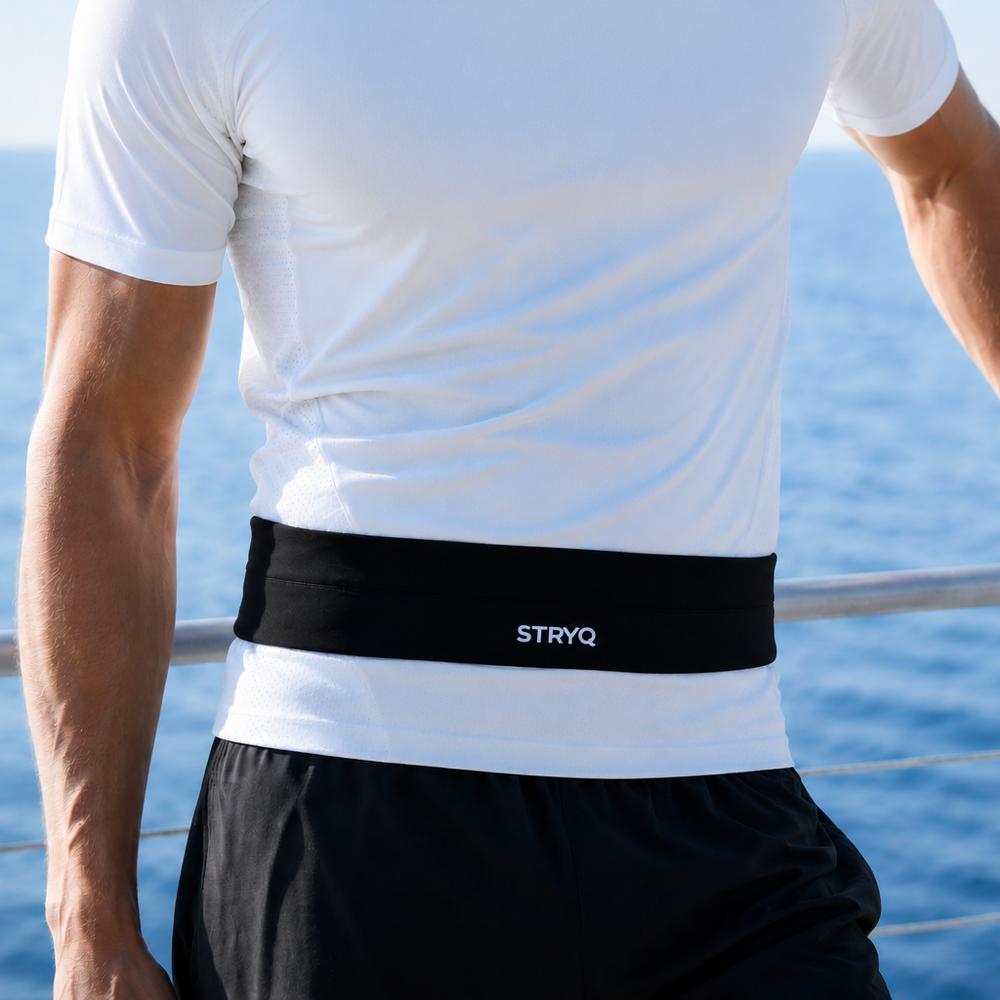
For most road marathons, a good running belt is the most useful accessory you can take. It gives you a reliable place for gels, mobile phone, keys, tissues and any small medical essentials without filling your shorts pockets or forcing you to hold items in your hand.
The priority is fit. A belt that is loose in the kitchen can become a bouncing annoyance after 10 miles. Look for an adjustable, close fit that sits securely around your waist without digging in. It should stay put when loaded with several gels, not ride up when you pick up the pace and remain comfortable when you are breathing deeply.
Think about access too. If your fuelling plan is one gel every 30 minutes, you should be able to reach it without breaking stride or wrestling with a zip. A belt with enough stretch for the essentials is usually better than an oversized option that encourages you to carry things you will not use.
STRYQ running belts are designed around that simple requirement: no bounce and no bulk. Whichever belt you choose, use it on long training runs first, fully loaded as it will be on the day.
2. Soft flasks or a hydration vest - only when the course calls for it
Hydration is personal, and the right answer depends on the event. Many large UK marathons have frequent water stations, so you may only need a belt and a clear plan for when to drink. Carrying extra water can add weight and warmth, which matters late in the race.
A soft flask makes sense if you prefer small, regular sips, want to carry your own electrolyte drink or know you struggle to drink from cups at busy stations. It is also useful if the forecast is warm or the course has longer gaps between aid stations. Choose a flask that fits your belt or vest securely and becomes less bulky as you drink.
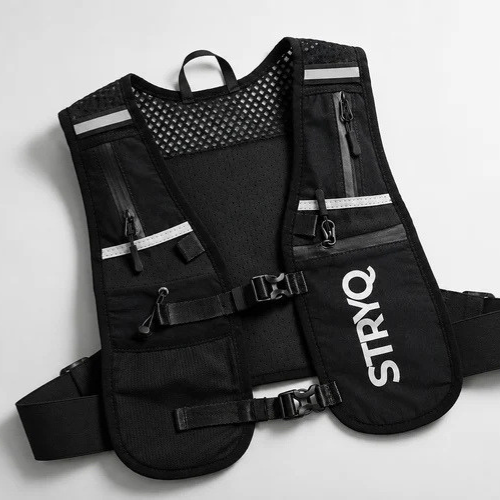
A hydration vest is a better option for a self-supported marathon, a trail event or a race with limited aid. It can carry water, nutrition and an emergency layer comfortably, but it is not automatically the best choice for a city marathon. If you have never run 20 miles in a vest, race day is not the time to test one.
Check the race rules before packing. Some organisers have restrictions around bag size, bottles or hydration packs. Your event instructions should always take priority.
3. Running socks you already trust
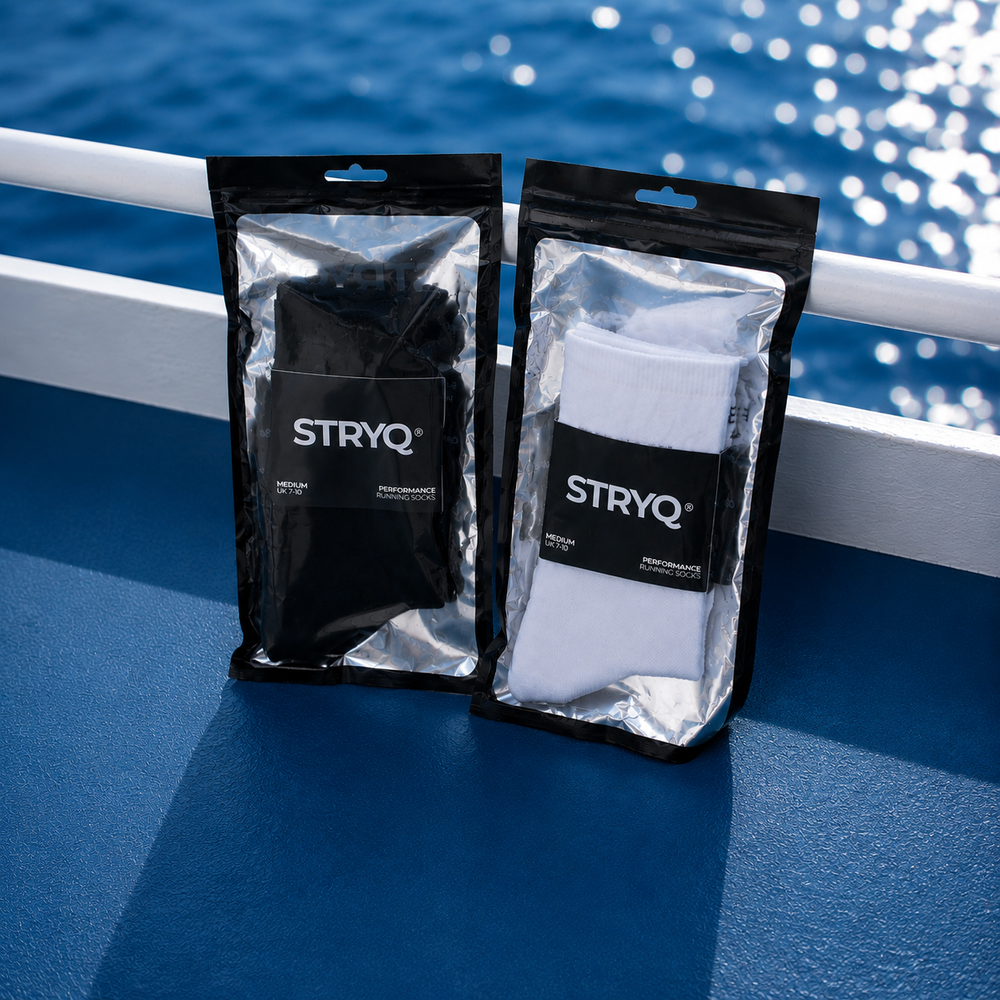
Socks are easy to overlook until wet feet, heat or friction turn them into the main story of your race. A dependable pair of running socks helps manage moisture and reduces the movement that causes rubbing.
Wear the exact model you have used successfully in training. Do not save a new pair for race morning, even if they are a special gift or look like a lucky choice. The material, thickness and cuff height all affect how your shoes feel. A sock that is slightly thicker can make a familiar trainer feel tight after your feet swell.
If rain is likely, pack a dry spare pair in your finish bag. They will feel far better than damp socks while you travel home. For runners prone to blisters, combine trusted socks with the same preventative routine you used in training, whether that is tape, lubricant or toe socks.
4. Anti-chafe protection for the places that catch you out
Chafing rarely arrives all at once. It begins as a mild irritation, then each mile makes it harder to ignore. Apply anti-chafe balm before you leave for the start, rather than waiting for a warning sign.
Common problem areas include toes, heels, inner thighs, underarms, bra lines, waistbands and anywhere a vest or belt edge sits against the skin. Men should also protect their nipples, particularly in wet or humid conditions. This is not over-preparation. It is a small step that can prevent a painful final hour.
Use the product you have trained with. Some runners prefer a balm, while others get on better with tape or patches. Your skin and kit combination decide what works.
5. A cap or visor for sun, rain and focus
A lightweight running cap is useful in more conditions than most runners expect. On a bright day, it keeps glare out of your eyes and makes it easier to spot uneven ground, drinks tables and runners moving across your path. In rain, the peak stops water running directly into your face.
A visor can offer similar shade with more ventilation, but it does not protect your scalp. If the weather is cold or wet, a cap is generally the more practical choice. Avoid a heavy cotton option that holds water and heat. Choose something breathable that you have worn on a few runs already.
Sunglasses can also help on an exposed course, but only carry them if you are comfortable running in them. They need to stay secure, avoid fogging and be easy to stow if the weather changes.
6. Throwaway layers for the start pen
The wait before a marathon can feel much colder than the race itself. You may be standing still for an hour, often in early morning wind or drizzle, while trying to stay relaxed. A disposable outer layer is one of the best marathon race day accessories because it protects your energy before you have even started.
An old sweatshirt, charity-shop fleece, bin bag or inexpensive poncho can make the start far more comfortable. Wear it over your race kit, then discard it only where the organiser permits. Many events collect unwanted layers for charity, but check the instructions rather than assuming.
Do not wear something you will regret losing. Also avoid tying a layer around your waist once the gun goes. It can rub, bounce and make toilet stops more awkward. If you think you may need warmth during the race, pack a layer that is designed to be carried in your vest instead.
7. Gloves and an optional buff for cold starts
Cold hands can make opening gel packets surprisingly difficult. Thin running gloves are light, easy to carry and useful when the temperature is low at the start but likely to rise later. If you warm up, tuck them into your belt, waistband or vest pocket.
A lightweight buff is similarly flexible. It can cover your ears while waiting, keep wind off your neck or act as a sweatband if conditions change. Neither item is essential for every race, but both earn their place when the forecast is cool, windy or wet.
The trade-off is simple: extra kit is another thing to carry. If the temperature is expected to stay mild, leave them behind.
8. A simple way to carry your phone safely
Even if you do not plan to use it, a mobile phone is sensible for travel, meeting family, accessing race details and getting home after the finish. The key is keeping it dry, secure and out of the way.
A zipped belt pocket is often the neatest solution. Make sure your mobile phone fits with its case on, particularly if you use a larger model. Place it consistently so you know which side of your belt carries the heavier item. If rain is possible, use a waterproof pouch or a simple sealed bag inside the pocket.
Turn off unnecessary notifications and make sure your emergency contact details are available on the lock screen. You do not want a low battery because your mobile phone spent four hours searching for signal, recording video or refreshing messages.
9. A race bib belt if pins are not for you
A bib belt holds your number with elastic toggles rather than safety pins. It is particularly handy if you are wearing a vest, want to avoid pinholes in a favourite top or need quick access to gels stored on the belt loops.
It is not essential. Safety pins work perfectly well for many runners, and a bib belt adds another item around your waist. But if you already run with one and like the feel, it can make race-morning preparation quicker and cleaner.
Make sure your number is visible and not folded, covered by a belt pouch or hidden beneath an outer layer. Race officials need to identify it clearly, especially for photographs and timing queries.
10. A finish-bag plan that makes recovery easier
Your race accessories do not stop mattering at the finish line. A well-packed finish bag can make the walk to the train, car or hotel much more comfortable when your legs have had enough.
Pack dry socks, warm layers, comfortable footwear, wipes, your mobile phone charger or power bank, and any post-race food you know you will tolerate. If you are meeting someone, agree a specific meeting point before the race. Mobile signal can be patchy around busy finish areas, and tired brains are not great at vague plans.
Pack what you have rehearsed
The most reliable race-day setup is usually the least complicated one. A belt, fuel, mobile phone, trusted socks and weather-appropriate layers will cover most road marathons. Add hydration carrying only when your race plan genuinely needs it.
Lay everything out the night before, including what goes in your start bag and what goes in your finish bag. Then leave the untested extras at home. Your accessories should make the marathon feel simpler, so you can give your attention to the miles that matter.