For most runners, a low-bounce running belt or hydration vest with a zipped internal pocket is the safest, most comfortable way to carry keys while running. If you’d rather not add kit, a secured waistband pocket, a shoelace thread, or leaving your key in a discreet stash all work too. Whichever you choose, get the key off your hand and onto something that holds it still.
TL;DR:
- Using a running belt with a zipped pocket or a hydration vest is most effective for long-distance runs and prevents bouncing or discomfort.
- Shoelace threading and secure waistband pockets work well for short to medium runs, but may fail in dense brush or if the key is too heavy.
- Quick fixes like wrist pouches, hair ties, or phone cases provide temporary solutions for short-term needs but lack long-term security.
- Storing keys in hidden spots or with a trusted neighbor minimizes the risk of loss or theft but requires careful planning and discretion.
- Carrying only a slim, essential key on a small carabiner attached to a belt or vest prevents damage and maintains comfort during extended runs.
Table of Contents
- Quick shortlist of reliable ways to carry keys while running
- Running belts and hydration vests: fit, pocket choice and packing tips
- Pockets, waistbands and clothing hacks to secure keys
- Shoelace, shoe-pocket and sock techniques and when to use them
- Fast fixes: hair tie, wrist pocket or phone case for keys right now
- Stashing keys and leaving them behind: what to weigh up
- Reduce bulk and protect your key fob before you run
- Why holding keys in your hand while running hurts your form
- How Stryq’s tested belts and vests solve the key problem for runners
- A runner’s honest take on carrying versus stashing keys
- Get running-ready kit that solves the key problem for good
- Sources
Quick shortlist of reliable ways to carry keys while running
Not every run needs the same solution. A five-minute jog around the block calls for something different from a two-hour trail session, and picking the wrong method is how keys end up lost in hedges or jammed uncomfortably against a hip bone.
- Running belt with a zipped pocket. Why it works: keeps the key still against your lower back, away from your stride. Best for: road runs of any length. Avoid when: you’re doing short sprint intervals where even light bounce is distracting.
- Hydration vest pocket. Why it works: distributes weight across your torso. Best for: long runs and trail sessions needing water too. Avoid when: you’re on a quick 20-minute loop, since it’s overkill.
- Shoelace thread. Why it works: zero bounce, nothing to carry. Best for: short to medium road runs. Avoid when: running through dense scrub or brush.
- Secured waistband pocket. Why it works: cheap, uses kit you already own. Best for: casual jogs. Avoid when: your fob is bulky or the fabric is thin.
- Stash at a hidden spot. Why it works: nothing to carry at all. Best for: familiar local routes. Avoid when: the area is busy or unfamiliar.
Running belts and hydration vests: fit, pocket choice and packing tips
A belt or vest earns its place by spreading weight evenly around your body rather than letting it swing from one point, which is exactly what causes bounce and chafing. Good packing choices, like using a small carabiner and carrying only the key you actually need, matter more than the price tag of the kit itself.
Getting the fit right takes a minute before you set off:
- The belt should sit snug against your lower back without digging in when you bend or twist.
- Zipped pockets should sit centrally, not off to one side where they’ll pull unevenly.
- Adjust straps on a vest so the load sits high on your chest and back, not bouncing at your waist.
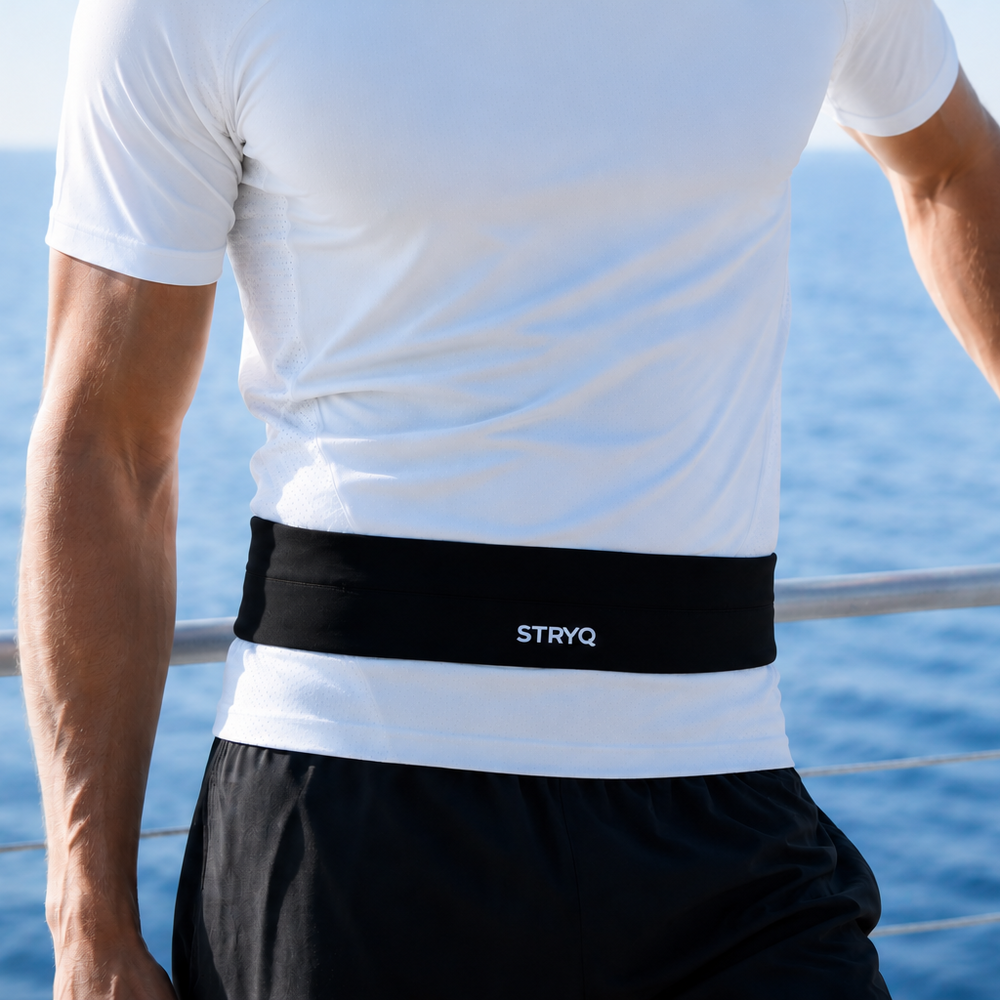
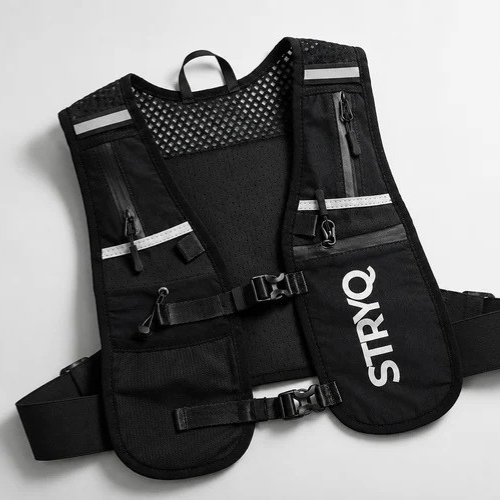
Clip your key to a tiny carabiner inside a zipped pocket, and keep your phone in a separate compartment so the two don’t rub together over several miles. Stryq’s running belt and hydration running vest are both built with this kind of internal pocket layout in mind.
Pro Tip: Do a 60 second jog on the spot in your kitchen with the belt or vest loaded exactly as you plan to run. Bounce shows up in seconds, long before it becomes a problem three miles into your route.
Pockets, waistbands and clothing hacks to secure keys
If you’d rather not buy anything new, your existing running kit can usually do the job with a small modification. Community-tested methods for stashing a key consistently point to waistband pockets and drawstrings as the most reliable free options.
- Use the inner waistband pocket most leggings and shorts have, then reinforce it with a safety pin through the fabric so the key can’t work its way out.
- A small hand stitch across the pocket opening does the same job more permanently.
- Tie your key onto the drawstring and double-knot it. Test the knot by tugging hard before you leave the house.
- Check zippered pockets for weak seams, then run on the spot to see if the key shifts or bounces.
Thin, stretchy fabrics and oversized fobs are where these methods tend to fail. If your pocket gapes or your key is heavier than a slim house key, consider men’s quick dry outdoor pants with secure pockets for running, hiking, yoga and fitness from Shop Nova Online as a different method entirely.
Shoelace, shoe-pocket and sock techniques and when to use them
Threading a key through your laces is one of the oldest tricks in running, and done properly it barely moves for the whole run.
- Remove the top eyelet’s lace, thread your key onto it, and re-lace the shoe from that point. This anchors the key against the eyelet rather than just tucking it under the laces, which is far more secure.
- Always double-knot the lace once the key is threaded through.
- Test on a short run before trusting the method for anything longer than a few miles.
- If your shoe has a small zip pocket built into the tongue or heel, use that instead for short runs or trail starts, since it’s quicker to load than re-lacing.
- Socks and gloves can hold very small keys for winter runs, but check for sliding before committing to a longer distance.
Avoid shoelace threading in dense scrub or overgrown trail sections, where a protruding key can snag on a branch mid stride.
Fast fixes: hair tie, wrist pocket or phone case for keys right now
Sometimes you just need to get out the door in the next five minutes. These aren’t long-term solutions, but they’ll get you through today’s run.
- Loop a key onto a sturdy elastic hair tie and wear it as a bracelet, tucking the key flat against your wrist.
- Slide a slim key flat into your phone case behind the phone itself, then close the case fully and jog on the spot to check it doesn’t rattle loose.
- A cheap sewn wrist pouch or a wrist pocket sold with running gloves works for short, low-intensity runs.
Test any of these for stability before you rely on them for a proper session. What holds still in your kitchen can behave very differently after two miles of road vibration.
Stashing keys and leaving them behind: what to weigh up
Not carrying a key at all removes the bounce problem entirely, but it shifts the risk from your body to your front door.
- A lockbox works well if placed out of obvious sight, ideally away from the door itself, and never left in a spot a delivery driver or passer-by would casually notice.
- Hiding a key under a plant pot or doormat is far riskier than most people assume. These are the first places anyone looks.
- Leaving a spare with a trusted neighbour is often safer than any physical hiding spot, since it removes the object from the property entirely.
- Before you leave, run a quick checklist: is the spot genuinely discreet, does anyone else know about it, and have you got a backup plan if it’s not there when you get back?
Reduce bulk and protect your key fob before you run
Modern car fobs are often bulkier and heavier than the single key you actually need for a run, so separate one before you head out.
- Strip your keyring down to just the essential runner key. Leave house alarm fobs, loyalty cards and spare keys at home.
- Carry that single key on a small carabiner rather than the full bunch.
- If you must bring an electronic fob, a thin zip pouch or a rubber sleeve protects it from sweat and impact.
- Test any bulky fob on a short run first. It’s better to discover a rattling pocket half a mile from home than five miles out.
Why holding keys in your hand while running hurts your form
Coach Mike Hamberger has pointed out that holding something in one hand while running creates an asymmetry in your stride and arm swing, and that imbalance compounds over months into a genuine injury risk.
A single key feels harmless for a five-minute jog, but the asymmetry it creates in your arm swing and stride doesn’t disappear when you put it down. It’s a habit that can quietly erode your running form over repeated sessions.
The practical rule is simple: don’t hold anything for sessions longer than a short sprint effort. If you genuinely have no other option, alternate which hand carries the key every few minutes. But the better fix, every time, is to move the key onto your body with a belt, vest, or pocket rather than into your palm.
How Stryq’s tested belts and vests solve the key problem for runners
Some running belts and hydration vests are designed specifically to stop keys, phones and fuel from bouncing, sliding, or digging in over long distances. Such designs may go through multiple sample revisions and real-world testing with runners before release, which can make the difference between kit that looks secure on a shelf and kit that stays secure at mile ten.
- Zipped internal pockets keep a small carabiner and key completely separate from your phone, so nothing rubs or clatters.
- Adjustable straps let you tighten the load until it sits flat against your back or chest, cutting the vertical bounce that loose kit produces.
- Multiple pocket sections mean you’re not forced to choose between carrying keys, a phone, or fuel. There’s a place for each.
Runners who’ve swapped a stretched-out waistband pocket for a proper belt consistently report one thing: they stop thinking about their keys altogether, which is really the whole point.
A runner’s honest take on carrying versus stashing keys
My own rule of thumb is distance-based. Anything under 20 minutes, I’ll stash a key or use a waistband pocket. Anything longer, it goes in a zipped belt pocket, no exceptions. Beginners should default to carrying, since a lost key on an unfamiliar route is a worse problem than a lost key at home. I trust a dedicated running belt for this precisely because I stop noticing it’s there after the first mile.
— martin
Get running-ready kit that solves the key problem for good
Stryq’s belts and vests exist because bounce, chafing and lost keys are solvable problems, not just things runners put up with. The running belt gives you a zipped, low-bounce pocket built for exactly the carabiner-and-key setup this article recommends, while the hydration running vest suits longer sessions where you also want water on board without adding a separate belt.

If you’re heading out for anything past 20 minutes, pair the vest with a 500ml soft flask for hydration that doesn’t slosh or bounce. Browse the full running belt collection and pick the fit that matches your usual distance, then load it up and head out the door without a second thought about where your key is.
Sources
- The Dangerous Habit of Holding Something While Running
- Runner’s Notes: 15 places to stash your key while running
- How to carry keys while running
- How to carry a key while running | Lifehacker