Armband chafing is friction plus sweat in one spot, repeated for thousands of arm swings. You can reduce it with a lubricant under the strap, a snug but not tight fit and clean, dry kit. If the same patch of skin keeps getting sore, the quickest fix is to take the load off your arm altogether and carry your phone on your hips in a running belt designed to stay put.
TL;DR
- Chafing happens when skin rubs against skin, fabric or a strap, and moisture makes it much worse.
- Put a barrier balm under the armband before you run, and keep the band snug enough not to slide but never tight enough to dig in.
- Treat sore skin gently: wash, dry, protect, and give it a few days off the strap.
- If the same spot chafes run after run, the setup is the problem. A belt moves the weight to your hips and away from your upper arm.
- See a healthcare provider if the skin is not improving after a few days or is getting worse.
Table of Contents
- Why a phone armband chafes
- Before the run: stop it starting
- If it starts chafing mid-run
- Looking after chafed skin afterwards
- Does the armband itself have to go?
- Carrying your phone on your hips instead
- Our view: fix the cause, not just the skin
- Choosing a belt that stays put
- FAQ
- Sources
Why a phone armband chafes
The Cleveland Clinic says friction is always the root cause of chafing, and that moisture makes it much worse because it lets materials slip and rub and makes skin easier to damage. Hot or humid weather raises the risk further, because you sweat more.
An armband sets up that exact combination. It sits in the same place for the whole run. It is held against skin by an elastic or neoprene strap. The arm underneath it is swinging, sweating and flexing with every stride. Add a phone, which is heavy for something strapped to a limb, and the band wants to slide or bounce. Every small movement is a little more rubbing.
There are three things working together:
- Friction. The strap edge, the seam or the phone casing moving against your upper arm or the side of your chest.
- Moisture. Sweat, rain or a damp band. As sweat dries it can leave salt behind, which feels like grit under the strap.
- Time. A 20-minute jog may be fine. A long run, a half marathon or a marathon gives friction far longer to do its work.
That is why runners often report no trouble on a short parkrun and a red, stinging band of skin after a long Sunday run in the same armband.
The area matters too. Upper arms and armpits are common places for runners to chafe, and anything that presses on them, including a strap, adds to the load. If you are asking how to stop chafing in your armpits, the same three drivers apply: reduce rubbing, keep the area dry and put a barrier on before you start.
Before the run: stop it starting
Prevention is easier than treatment, and most of it takes two minutes at the door.
1. Put a barrier on the skin
MedlinePlus, from the US National Library of Medicine, recommends petroleum jelly or baby powder on areas that are easily irritated, such as the upper arms, before activities like running. Marathon Handbook describes pre-run lubricant as the single most effective prevention tool wherever fabric reliably rubs skin. Dedicated anti-chafe sticks and balms are made for exactly this job. For a comparison of what is on the market, our guide to the best anti chafing products for runners goes through them by type.
Apply it where the strap edge and any seam will sit, then slide the band on. A thin, even layer is enough. A thick layer can make the band slip, which creates more movement, not less.

2. Start with dry, clean skin and kit
MedlinePlus also advises wearing clean, dry clothing and the right clothing for the activity. For an armband, that means a band that is dry from the last run, not one balled up in a bag overnight. Wash the strap regularly: dried sweat and salt are exactly the grit you do not want against skin. Wear a short sleeve or a thin technical top that covers the area if you can, rather than going bare-armed against neoprene.
3. Choose the right fit
Runners Blueprint advises tightening gear enough to stop it bouncing but not so tight that it digs in. Both extremes cause trouble. A loose band slides and rubs. A very tight band presses a hard line into the skin and traps sweat beneath it.
A quick test before you leave: with the phone in the band, swing your arm hard ten times. If the band creeps down your arm, it is too loose or the phone is too heavy for that strap. If you can see a deep groove in your skin when you take it off, it is too tight.
4. Think about what you carry
The heavier the load, the more the band moves. A phone plus keys plus a card in an armband pocket is a lot to hang from one upper arm. Take only what you need, and keep anything dense off the arm.
5. Plan for longer runs
Time is a driver in its own right. For anything over an hour, reapply balm before you set off and consider whether an arm-mounted phone is still the best way to carry it. Many runners find the armband fine at 5K and the problem only starts as distances build towards 10K, a half or a marathon.
If it starts chafing mid-run
A stinging or hot patch under the strap is the signal. Do not run through it for another hour hoping it eases. Chafed skin gets worse the longer the rubbing continues.
- Stop and loosen the band. If it is tight, it will be digging in. Take it off and look at the skin.
- Dry the area. Wipe sweat away with the inside of your top or a tissue. Moisture is what turns mild rubbing into a sore patch.
- Move the band, or move the phone. Shifting the armband a few centimetres up or down can put the strap on fresh skin. Better still, put the phone in a pocket, in a belt or in a vest for the rest of the run.
- Add a barrier if you have one. A small balm stick fits in a shorts pocket and is useful on long runs.
- Cut the run short if it hurts. A finished run is not worth a raw patch that keeps you off the road for a week.
Runna’s guide notes that armbands, belts and hydration packs can cause irritation if they bounce or rub, and suggests keeping everything snug and applying lubricant wherever straps touch skin. Treat a mid-run flare-up as information about your setup, not as bad luck.
Looking after chafed skin afterwards
The aim is to stop the cause, keep the skin clean and let it heal.
The Cleveland Clinic advises that for minor chafing you should stop whatever is causing it, wash the skin with mild soap and water, then apply aloe vera gel and a thin layer of petroleum jelly. In practice:
- Wash with lukewarm water and a mild soap, then pat dry. Do not rub.
- Wear loose, breathable clothing over the area until it settles.
- Leave the armband in the drawer until the skin has healed. Strapping it back on over a raw patch restarts the damage.
- If you are using a soothing cream after a shower, a simple, fragrance-free one is the sensible option. Men who want a wider look at looking after skin irritated by shaving, friction or dryness can read about skin treatments for men as part of an aftercare routine.
When to see a healthcare provider
The Cleveland Clinic says to call a healthcare provider if chafing does not improve within a few days or gets worse. Book a GP or pharmacist appointment sooner if the skin is weeping, has pus, is spreading red or hot, or if you have a fever. If you have diabetes or a weakened immune system, do not wait: ask a doctor about any broken skin. Persistent chafing can become infected, and an infection needs proper treatment, not another layer of balm.
Does the armband itself have to go?
Not always. If you run short distances, wear it snug over a thin sleeve and use balm, an armband can work fine. But there is a pattern worth recognising. Runners Blueprint puts it this way: if the same spot keeps chafing, the problem is the setup, not your skin. Ask yourself:
- Does the chafing come back after you have used balm and checked the fit?
- Do you run for longer than an hour, or in warm weather?
- Does the phone bounce, slide or pull your arm swing off?
- Are you carrying more than the phone, such as keys, a card or a gel?
If you answer yes to two or more, the armband is not the right carry for you, and no amount of balm will make a bad setup comfortable.
Carrying your phone on your hips instead
The waist is the steadiest place on a moving body. It does not swing the way an arm does, it sits close to your centre of mass, and a belt spreads the weight around your middle instead of hanging it off one limb. That is why many runners move to a belt once their long runs start to build. Our own comparison, running belt vs armband, covers how they hold up side by side, and our guide on where runners should carry phones covers the other options.
A belt can chafe as well if it is badly made or badly fitted, which is why the details matter. These are the things to look for:
- No bounce. A belt that moves is a belt that rubs. It should sit flat and stay where you put it. Our guide to picking a secure phone belt explains what to check.
- Storage that balances the load. Storage that wraps around the body keeps weight even rather than putting it all on one side.
- A fit you can adjust. Wear it snug on the hips, over a base layer if needed, and tighten until it does not move when you jump.
- Room for what you carry. Phone, keys and a card all in one place instead of spread across a pocket and an arm.
If belt rubbing is a worry, our page on how to prevent belt chafing walks through fit and skin care for that carry. For a wider view of the category, there is also a round-up of the best running belts for phones in the UK.
Some runners prefer to keep their phone in a shorts pocket. We have looked at shorts pockets versus a belt, and for runs over 5K, trying a belt first is the route we suggest.
Our view: fix the cause, not just the skin
Most chafing advice treats the skin. Balm, powder, loose tops. All of that helps, and we would use it. But when a runner writes to us about a sore band of skin on their arm, the useful question is why the phone is hanging from their arm in the first place.
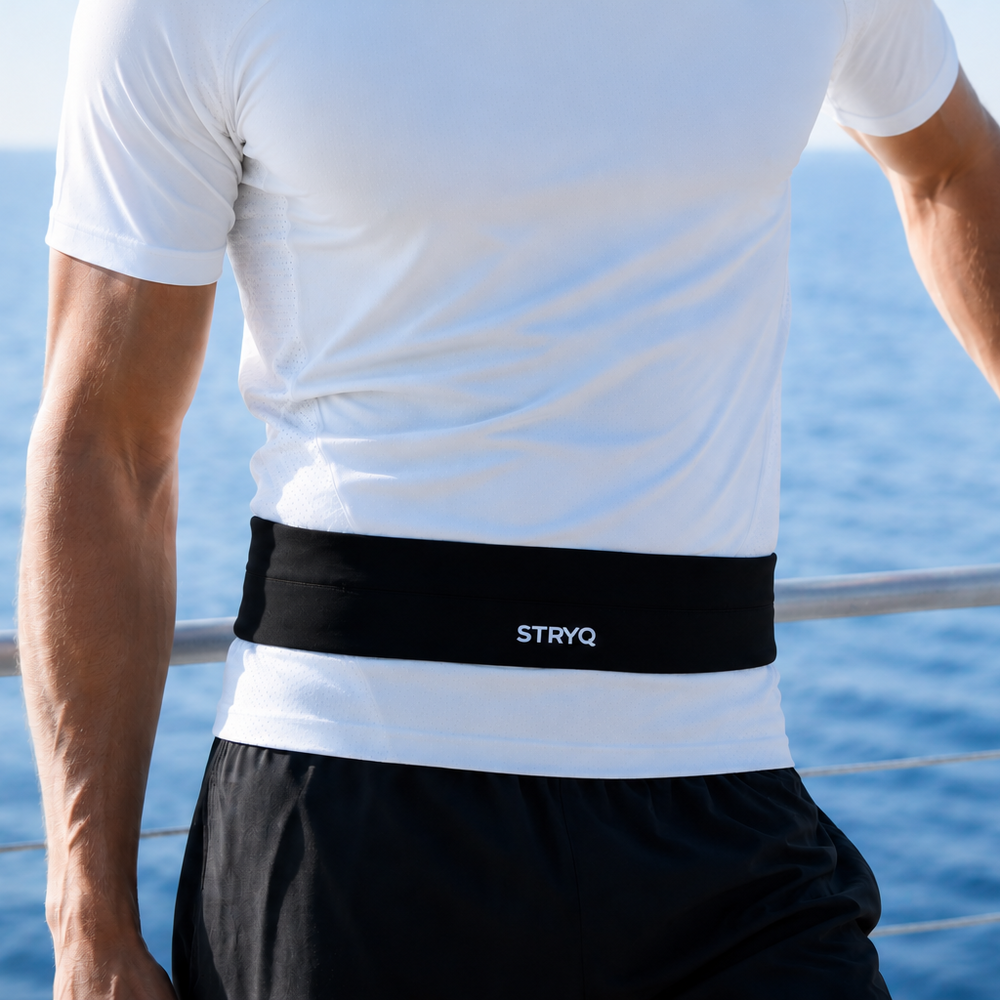
We design STRYQ products around problems like this one. Every product is developed from real-world runner feedback, with multiple sample revisions, extensive testing and strict quality control before launch. Our running belt has 360° storage and a no-bounce design, because a carry that stays still is a carry that does not rub.
Our approach is premium quality at an accessible price: practical features that make a run more comfortable, rather than extras that sound good on a box. If you are building up from Couch to 5K towards a first half marathon, the gear you pick now is the gear you will be wearing for hours later. Choose the kit that disappears while you run.
martin
Choosing a belt that stays put
If you are ready to move your phone off your arm, the STRYQ running belt is made for it, with 360° storage for your phone and essentials and a design built so it does not bounce. It was developed and tested by UK runners through several rounds of sample revisions.

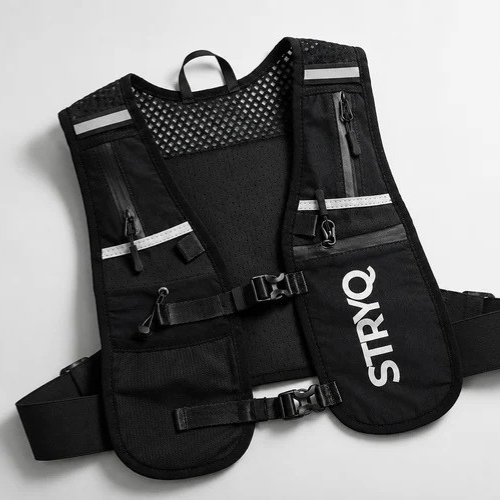
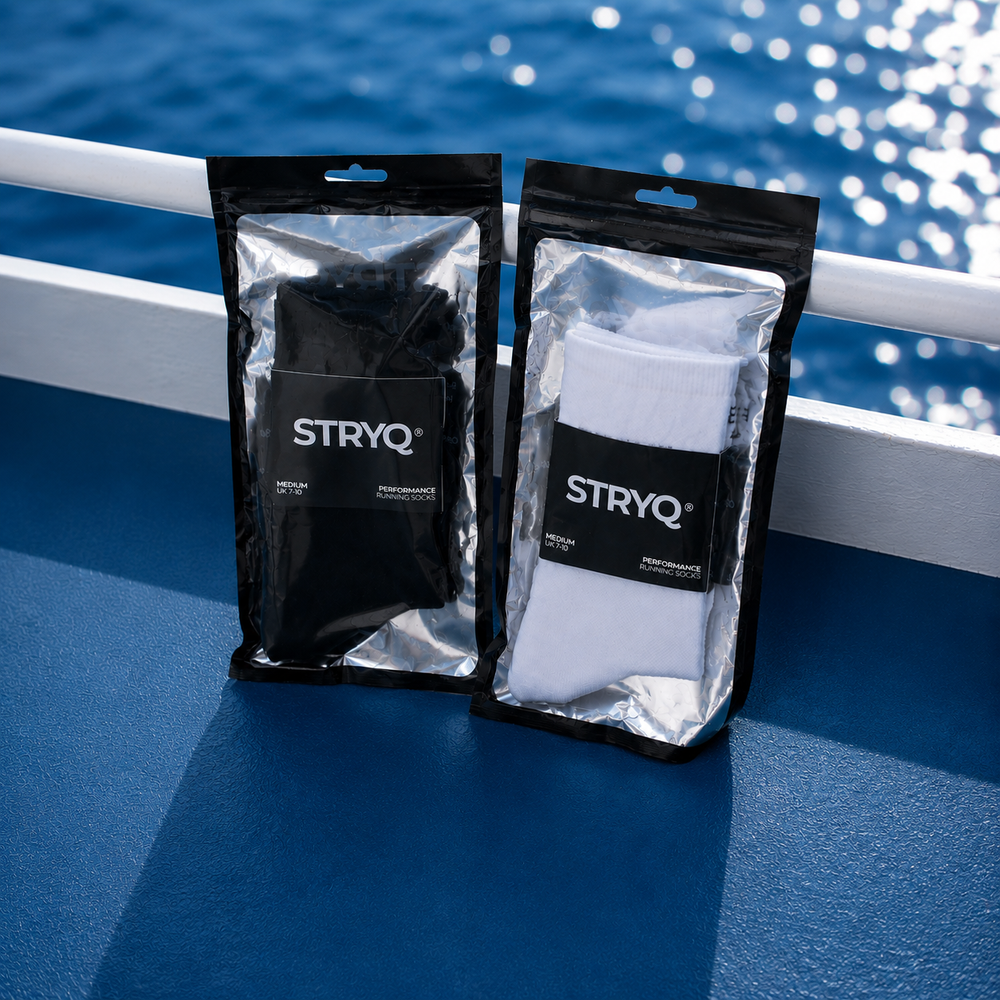
For longer runs where you also want to carry water, the STRYQ hydration running vest has adjustable straps and multiple pockets, and the 500ml soft flask is a lightweight way to drink. Feet get chafed too, so STRYQ running socks are made with arch support and cushioning. You can see the whole range in our running gear collection.
FAQ
How do I stop my running armband chafing?
Apply a barrier balm or petroleum jelly to the skin where the strap sits, wear clean, dry kit and adjust the band so it is snug but not digging in. MedlinePlus recommends petroleum jelly or baby powder before activity on easily irritated areas such as the upper arms. If it still rubs, change how you carry your phone.
Is a running belt better than an armband?
For many runners, yes, particularly on longer runs. A belt sits at the hips, where there is less movement than on a swinging arm, and it can carry a phone, keys and a card together. Armbands can still suit short runs, but a belt avoids loading one upper arm. Our running belt versus armband comparison goes into detail.
How do I prevent chafing in my armpits when running?
The causes are the same: rubbing and sweat. Apply a barrier balm to the area before you start, wear a close-fitting moisture-wicking top that does not flap, and avoid cotton. Keeping straps and seams away from the armpit helps, so check where your phone carry, vest or top seams sit. Reapply balm on long runs.
What should I put on chafed skin?
Wash gently with mild soap and water, pat dry, then use aloe vera gel and a thin layer of petroleum jelly, as the Cleveland Clinic suggests. Keep the area uncovered by tight straps until it heals. If it is not better within a few days, or is getting worse, contact a healthcare provider.
Can I run with a chafed arm?
If the skin is only slightly pink, you can run without the armband and use a different carry, such as a belt, with balm on the sore area. If it is raw, weeping or painful, rest it. Running on broken skin slows healing and can lead to infection.
Sources
- Chafing Causes, Treatment & Prevention, Cleveland Clinic
- Chafing: MedlinePlus Medical Encyclopedia
- How to Stop Chafing: A Complete Guide, Marathon Handbook
- How to Treat and Prevent Chafing, Runna
- How To Prevent Chafing When Running, Runners Blueprint