Keep your rescue inhaler on your person in a secure, quick-access spot such as a waist belt pocket or a vest’s inner zip pocket, never buried in a bag you cannot reach at pace. Label the inhaler, store it in that same spot every time you run, and practise pulling it out until retrieval is quick and automatic. If your clinician has prescribed pre-exercise dosing, use it on the schedule you’ve been given.
TL;DR:
- A zipped running belt suits shorter runs, while a hydration vest’s inner zipped pocket keeps an inhaler drier on long distances with extra gear.
- Test the carrier before race day by jogging for 30 seconds, checking for movement, then practicing removal, uncapping, and bringing the inhaler to your mouth.
- Use two inhalations 15 to 30 minutes before running only if your clinician prescribed that schedule, and stop if symptoms begin.
- If breathing symptoms begin, stop, use your inhaler as prescribed, and seek medical help if you do not improve or symptoms worsen.
- Check the dose counter before each run and carry a labeled spare on longer events, stored with your crew or in a drop bag.
Table of Contents
- Practical ways runners carry an inhaler
- Runner-friendly product solutions, including STRYQ options
- How to secure, test and practise carrying your inhaler
- Medication timing and inhaler technique around your run
- Storage, care and environmental risks for inhalers when running
- Travelling with an inhaler and race-day logistics
- Why we build our kit around this problem
- Running with asthma, prepared rather than anxious
- Carry your inhaler without thinking about it
- FAQ
- Sources
Practical ways runners carry an inhaler
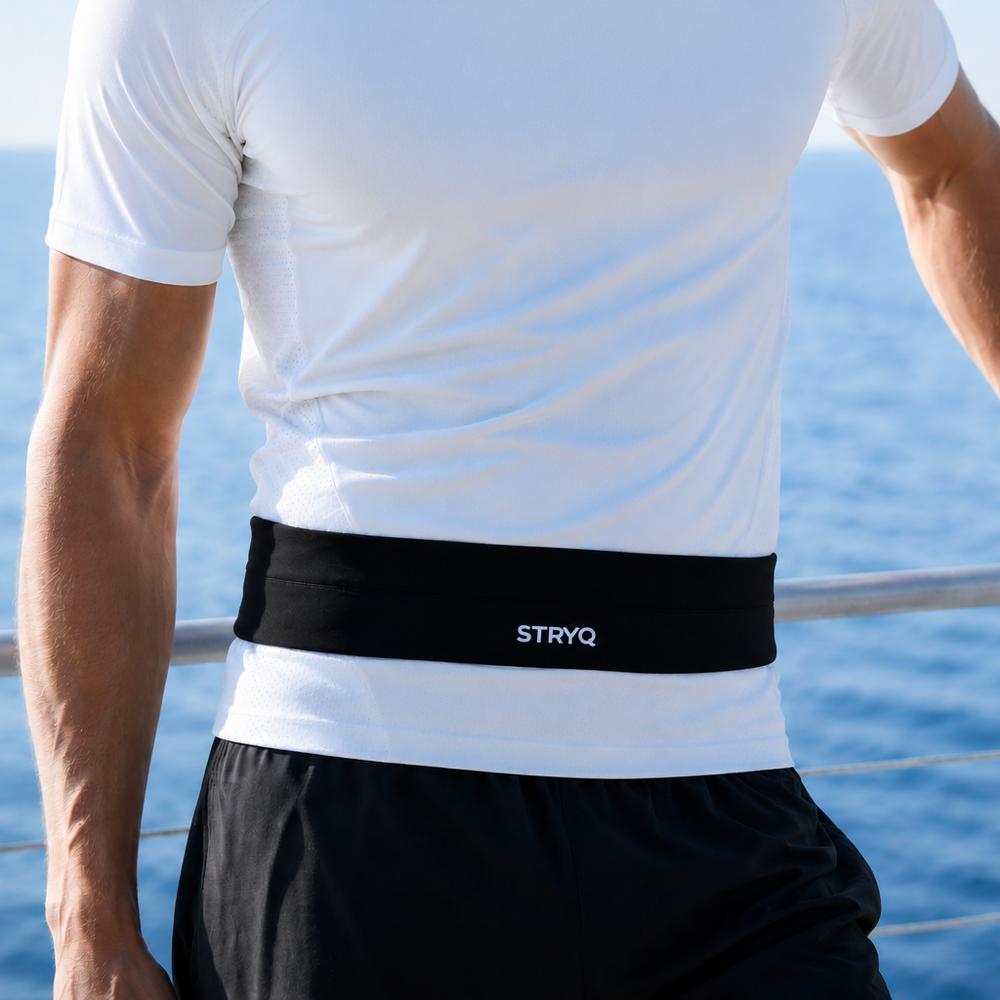
A running belt is the most common solution for solo runs and races. A snug, low-bounce belt with a zipped pocket keeps the inhaler against your lower back or hip, out of the way of your arm swing, and you can compare the belt vs armband trade-offs before deciding which suits your stride.
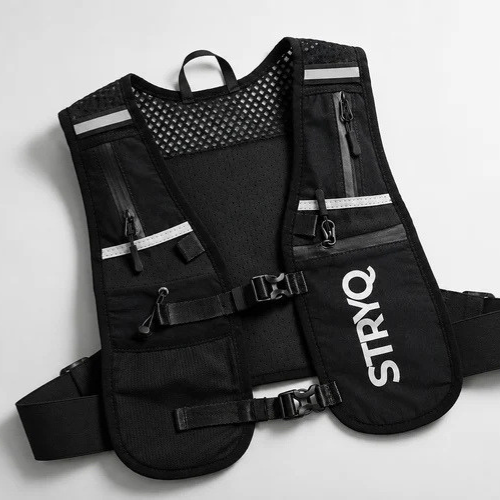
A hydration vest works better for long runs and ultra distances, where you’re already carrying water, gels and extra layers. Use an inner zipped pocket close to your chest rather than an outer mesh pouch, since the inner compartment stays drier and holds the inhaler still. Our piece on belt or vest for a marathon walks through when each format earns its place in your kit.
Other options each come with trade-offs:
- Armbands and wrist holsters give fast access but hold little else, so they suit short, familiar routes.
- Shorts or shirt zip pockets work for a quick 5K but tend to bounce and can crush a soft inhaler canister.
- Neck lanyards keep the inhaler visible but swing awkwardly on faster efforts.
- Sock storage is a last resort some runners use for short races, though it risks sweat affecting the mouthpiece.
Whatever method you choose, test it before race day. Run a short loop with the inhaler in place, check for bounce or slipping, then stop and practise removing it, uncapping it and bringing it to your mouth. Repeat this until the motion feels automatic rather than fumbled.
Pro Tip: Practise your retrieval motion at an easy jog first, then again at race pace. What feels fine standing still can shift completely once your arms are pumping.
Runner-friendly product solutions, including STRYQ options
The right carrier comes down to a short list of features rather than brand names. Look for:
- A zipped, not just a stretch-mesh, pocket so the inhaler can’t bounce free.
- A dedicated small pocket separate from your phone or keys, so you’re not digging past other items.
- Breathable or ventilated panels that limit heat build-up against the inhaler.
- A snug, adjustable fit that stops the whole unit shifting as you run.
The STRYQ RUNNING BELT is built around secure, labelled compartments designed to stop small essentials moving during a run, which is exactly the behaviour you want from an inhaler pocket. For longer distances, the STRYQ HYDRATION RUNNING VEST adds multiple pockets and adjustable straps, so an inhaler can sit in a dedicated inner compartment separate from your hydration and nutrition.
Guideline support is clear on the underlying need: clinical guidance recommends using a short-acting beta-agonist before exercise to prevent exercise-induced bronchospasm, which means having the inhaler reliably within reach matters as much as the dose itself.
Both the belt and the vest are compatible with STRYQ’s 500ml running soft flasks, so hydration and medication can sit side by side without one crowding out the other. A belt tends to suit shorter runs, warmer weather and lighter kit loads, while a vest earns its place once you’re carrying extra layers, more fluid or race-day nutrition alongside your inhaler. Our guide to choosing a running belt covers fit details worth checking before you buy.
How to secure, test and practise carrying your inhaler
A carrier that looks secure standing still can fail once your stride opens up. Two simple checks catch most problems early.
- Slip test: load the belt or vest pocket with the inhaler and a few other items, then jog on the spot for 30 seconds. If anything shifts, tighten the strap or pocket closure.
- Bounce test: run a short stretch at your normal pace and notice whether the pocket moves independently of your body. Persistent bounce usually means the belt is sitting too low or too loose.
- Label and prepare: mark the inhaler case clearly, keep the cap on between uses, and check the dose counter before you head out.
- Pack a spare: keep a second inhaler in your kit bag or with anyone supporting you on longer runs.
- Run the retrieval drill: stop mid-run, remove the inhaler, uncap it and bring it to your mouth as if using it. Time yourself and repeat across a few sessions until the motion is smooth and consistent.
Pro Tip: Treat the retrieval drill like practising a race-day fuelling strategy: rehearse it enough times in training that it needs no thought under pressure.
On race day, keep two inhaler locations where possible: one on your person and a labelled spare in a drop bag or with your support crew. Tell a training partner or crew member exactly where each one is kept. Race day is not the moment to try a new belt, a new vest or a new storage spot. If you’re coordinating a child’s race-day medication needs as a parent-coach, our partner’s cross country training guide for parents covers how to communicate those needs clearly to coaches and officials.
Medication timing and inhaler technique around your run
For runners prescribed pre-exercise dosing, the usual guidance is two inhalations 15 to 30 minutes before exercise, a pattern confirmed in the patient information for albuterol inhalers. Clinical guidance similarly supports a short-acting beta-agonist before exercise to prevent exercise-induced bronchospasm, alongside a proper warm-up and an up-to-date asthma action plan.
If symptoms start while you’re running:
- Stop and sit or stand still rather than pushing through.
- Use your rescue inhaler following your prescribed dose.
- Monitor your breathing for several minutes before deciding whether to continue.
- Seek medical help if there’s no improvement or symptoms worsen.
Technique matters as much as timing. With a pressurised metered-dose inhaler, a slow, steady breath in as you press down gives the medication time to reach your airways, and a spacer can help if you’re already breathless. With a dry powder inhaler, you need a sharp, forceful inhalation to draw the dose in properly, which can be harder to achieve mid-run if you’re struggling for air. Priming before first use and after periods of non-use, along with regular cleaning, keeps the device working as intended.
If you find yourself reaching for your rescue inhaler more often than usual, treat that as a signal worth raising with your clinician rather than something to manage through kit choices alone.
Storage, care and environmental risks for inhalers when running
Heat and moisture are the two biggest threats to an inhaler’s reliability. Avoid leaving one in a hot car or direct sun, and keep the cap on between uses to stop dust or sweat reaching the mouthpiece, in line with storage advice from Asthma + Lung UK.
- Store at room temperature when you’re not running, rather than in a bag left in a warm boot.
- Clean the actuator regularly, following the manufacturer’s instructions, without immersing the metal canister in water.
- Check the dose counter before every run and discard the inhaler once it reaches zero or passes its expiry date.
- Use a small zip-lock bag in wet or muddy conditions, and give the mouthpiece a quick wipe after exposure.
- Keep a spare inhaler in a crew bag or drop bag for longer events as backup.
Travelling with an inhaler and race-day logistics
Inhalers are permitted in both carry-on and checked luggage under TSA guidance, though medically necessary liquids, gels and aerosols should be declared at the security checkpoint. Labelling your inhaler clearly is recommended and can speed up screening.
- Pack it in cabin luggage rather than checked bags when flying to a race, so it’s accessible throughout travel.
- Carry a prescription note if you have one, which can help if questions come up at security.
- Place a spare inhaler in your drop bag or crew kit where race rules allow it.
- Tell race crew or a running buddy exactly where your inhaler is stored on the day, not just that you’re carrying one.
Why we build our kit around this problem
We develop our belts and vests directly from feedback gathered from UK runners, running multiple sample revisions and testing rounds before anything reaches the shop. That process is what shaped the secure zip pockets and adjustable fit on the STRYQ RUNNING BELT and STRYQ HYDRATION RUNNING VEST: both were refined specifically to hold small essentials, inhalers included, without shifting or bouncing at pace.
Running socks, soft flasks and safety lights go through extensive feedback-driven testing, because a kit set-up only works when every piece stays where you put it, run after run.
Running with asthma, prepared rather than anxious
Running with asthma is entirely workable once you’ve built the habit of carrying your inhaler somewhere secure and practising how you’ll reach it. Pair your kit choice with a clinician-approved asthma action plan rather than relying on gear alone. The balance to aim for is simple: enough protection to feel confident, without adding so much bulk that the kit itself becomes the thing slowing you down.
— martin
Carry your inhaler without thinking about it
A belt or vest only solves the problem if the pocket placement is genuinely low-bounce and quick to open mid-stride, which is what we built into the STRYQ RUNNING BELT and STRYQ HYDRATION RUNNING VEST.

- Both carry our 500ml soft flasks alongside a dedicated pocket for an inhaler or other small essentials.
- Browse the full running gear collection to find the fit that suits your distance and weather.
This article is general information, not a substitute for advice from a qualified doctor. Consult a qualified healthcare professional about your own circumstances before acting on anything here.
FAQ
Is it okay to use an inhaler while running?
Yes, using a prescribed rescue inhaler while running is standard practice for people with asthma or exercise-induced bronchospasm. Health organisations advise carrying it during exercise and pre-medicating if your clinician has prescribed that approach, as outlined by the American Lung Association.
What is the best inhaler carrier for runners?
A low-bounce running belt or a hydration vest with an inner zipped pocket tends to work best, since both keep the inhaler secure and within easy reach. Our STRYQ RUNNING BELT suits shorter runs, while the STRYQ HYDRATION RUNNING VEST suits longer distances with more kit.
Do inhalers help athletic performance?
Rescue inhalers treat or prevent exercise-induced bronchospasm rather than enhance performance beyond normal breathing capacity. Clinical guidance supports pre-exercise use of a short-acting beta-agonist specifically to prevent airway narrowing during exercise, as described by the NHLBI.
Can you pack an inhaler in a carry-on?
Yes, inhalers are permitted in both carry-on and checked luggage, according to TSA guidance. Declare it as a medically necessary item at the security checkpoint, and keeping it labelled can help speed up screening.
How often should I check my inhaler’s dose counter?
Check the dose counter before every run so you’re never caught short mid-session. Asthma + Lung UK advises discarding an inhaler once the counter reaches zero or it passes its expiry date, whichever comes first.
Sources
- TSA: Inhalers
- DailyMed: Albuterol Sulfate inhalation aerosol (patient information)
- NHLBI: Managing asthma — special situations