The best race mornings feel calm because the decisions were made before you reached the start pen. This race day storage guide will help you carry what matters, leave behind what does not, and avoid the familiar annoyance of a bouncing mobile phone or lost gel halfway through a run.
Your ideal setup depends on the distance, weather, race rules and how much support is available on course. A parkrun needs very little. A marathon in changeable British weather may need fuel, fluids, a mobile phone, keys and an extra layer. The aim is the same: everything secure, easy to reach and comfortable enough to forget about.
Race day storage guide: begin with the essentials
Before choosing a belt, vest or pocket, decide exactly what you need to carry. Do not pack for every possible scenario. Extra items become extra weight, movement and distraction.
For most runners, the basics are a mobile phone, house or car key, payment card, photo ID if required, and any medication you rely on. Add nutrition if your race will take longer than about 75 to 90 minutes, unless you know the on-course options suit you. A lightweight layer, gloves or a buff can also make sense for a cold start, particularly if you are waiting in a start pen.
Then check the race information. Some events require a mandatory kit list. Trail races may ask for a waterproof jacket, emergency blanket, whistle, mobile phone and enough water to cover long gaps between aid stations. Road races are usually simpler, but bag-drop rules, bottle policies and security checks can change from event to event.
Pack according to the race organiser's instructions, not assumptions from your last event.
Choose the storage that suits your run
There is no single best way to carry essentials. The right option is the one that holds your kit still and gives you access without breaking stride.
Running belt for short races and everyday essentials
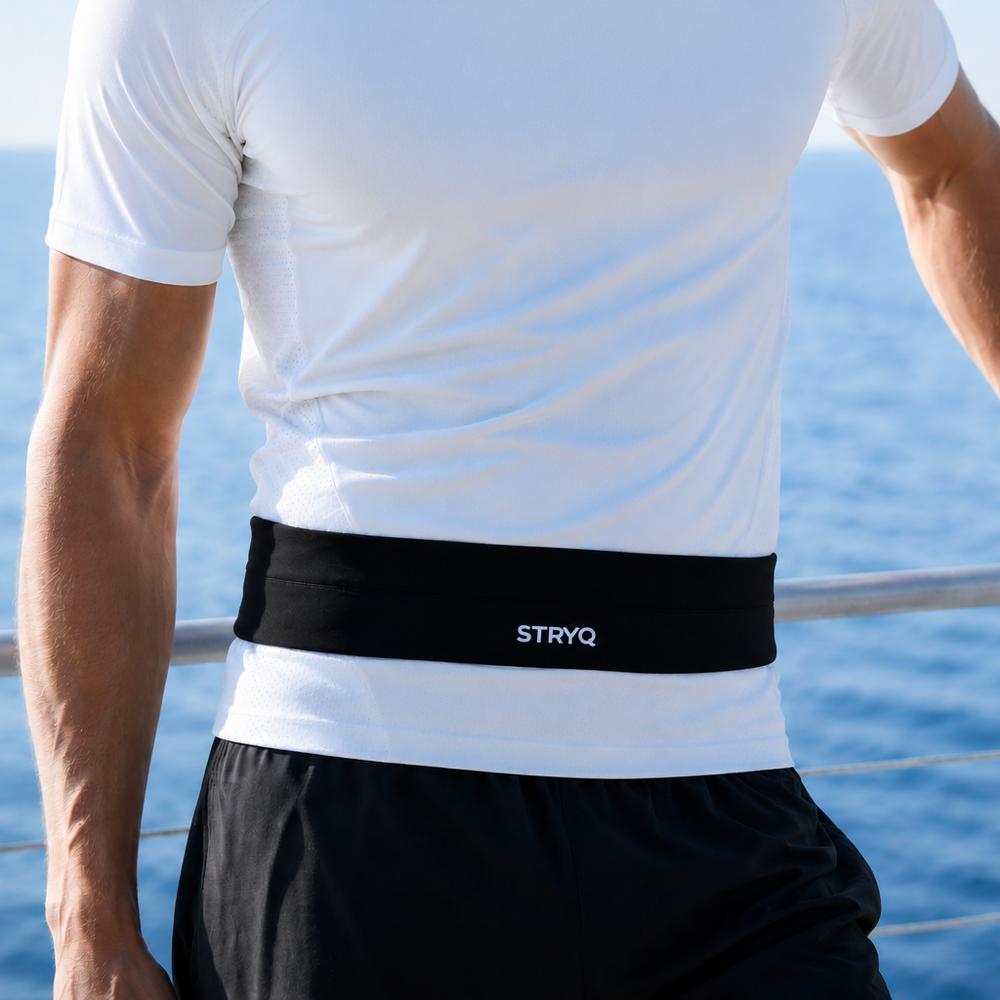
A running belt works well for 5K, 10K and half marathon runners who need a mobile phone, key, card and a few gels. It sits close to the body, keeps weight around your waist and avoids the bulk of a pack.
Fit matters more than capacity. A belt that feels fine when standing can move once you are warm and running. Wear it around the narrowest comfortable part of your waist or hips, depending on its design, and tighten it enough to stop movement without restricting your breathing. Test it with your usual mobile phone, not an empty pocket.
A well-fitted STRYQ running belt is particularly useful when you want essentials close at hand without carrying a larger vest. No bounce. No bulk. But it still needs to be tried during training, especially if you plan to carry several gels.
Hydration vest for longer, hotter or self-supported races
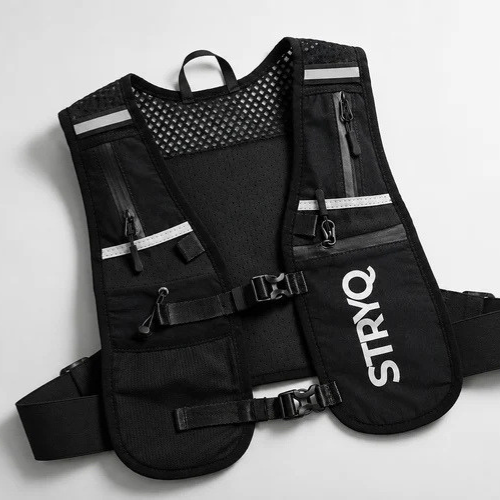
A hydration vest earns its place when you need to carry meaningful fluid, more nutrition or mandatory kit. This is common for marathons in warm conditions, trail events and ultras. It also helps if you prefer drinking little and often rather than waiting for crowded water stations.
The trade-off is obvious: a vest carries more, but it is warmer and takes longer to manage. Choose one with secure chest adjustment and use soft flasks that sit high enough to avoid sloshing. Fill only the volume you expect to need between refill points. Carrying two full flasks for a well-supported half marathon may be unnecessary.
Pockets and bag drop for items you will not use mid-race
Shorts, tights and jackets with secure pockets can cover a simple race day setup. They are useful for one gel, a key or a card, but be honest about their limits. A large mobile phone can pull lightweight fabric down, while loose pockets can let gels knock against your leg.
Use bag drop for warm clothing, post-race food, dry socks and anything you will not need on the course. Keep your drop bag simple and clearly labelled if the event asks for it. Avoid leaving valuables unless the organiser specifically confirms how bags are stored and collected.
Pack for the distance, not your nerves
It is easy to overpack when race nerves kick in. A clear plan helps you make sensible choices.
- 5K and parkrun: Usually just a key, card and perhaps a mobile phone. If you are running hard for 20 to 35 minutes, you are unlikely to need fuel or water during the event.
- 10K: Carry the same basics, plus water only if it is warm, you expect a long run time or you simply run better with it. One gel is optional rather than essential for most runners.
- Half marathon: Plan your fuel around your expected finish time and the nutrition you have practised. Two to four gels may be suitable for many runners, with water taken at aid stations or carried in a belt or vest.
- Marathon and beyond: Build storage around your full fuelling and hydration plan. You may need several gels, electrolytes, salt if you use it, anti-chafe balm, a mobile phone, emergency layers and mandatory kit where required.
Put each item where you can reach it
Storage is not just about fitting items in. It is about accessing them at the right time.
Keep fuel in the easiest pocket to reach. If you take a gel every 30 minutes, you should not have to stop, unzip a rear compartment and rummage around. Arrange gels in the order you expect to use them, or use different flavours to mark later stages of the race.
Keep your mobile phone protected from sweat and rain. A zip pocket is useful, but check that you can still remove the mobile phone without a struggle. If you use your mobile phone for pacing, music or contactless payment after the finish, do not bury it under layers and wrappers.
Keys need their own secure place. A key bouncing loose beside your mobile phone can damage the screen and become surprisingly irritating after a few miles. Use an internal key clip or small zipped pocket where possible.
If you are carrying a jacket, roll it tightly rather than stuffing it in at random. A wet layer is heavier than a dry one, so think about where it will go if you take it off later. Larger vest pockets are usually better for this than a small belt.
Prevent bounce, rubbing and mid-race surprises
The quickest way to ruin a well-planned kit setup is to use it for the first time on race day. Even excellent running accessories need a proper test with the same contents you will carry at the event.
Run at least one session with your belt or vest fully loaded. Include your mobile phone, full soft flasks, gels and any layer you plan to take. Notice whether the setup moves on hills, when you pick up pace or after you have opened a gel. Small adjustments can make a big difference.
Avoid placing hard items directly against bare skin. A key, gel tab or flask edge can cause rubbing over longer distances. Check straps under your arms and around your waist, especially if rain is expected. Moisture, salt and friction can turn a minor hotspot into a painful problem.
Also consider what happens after the finish. Put a bank card or payment method somewhere accessible for the journey home, and pack dry socks or a warm top in your bag drop. The race may be over, but standing around cold and hungry is not much of a reward.
Check the weather and race rules the evening before
Look at the forecast, then pack for the conditions you are likely to run in rather than the temperature when you leave home. A disposable outer layer can help during a chilly wait, while sunscreen and a cap may matter more than another gel on a bright day.
Read the final event email too. Some large races restrict bag sizes, ban certain bottles or have separate bag-drop areas. Trail events may inspect mandatory kit. Knowing this the night before means you can arrive ready rather than making compromises at the start line.
Lay everything out in one place. Fill flasks, charge your mobile phone, attach your race number and put your chosen belt or vest beside your shoes. Race day storage should feel familiar, not like another problem to solve.
The best setup is rarely the biggest one. Carry the items that support your run, practise with them, and leave enough mental space to enjoy the miles ahead.