To refill a soft flask, squeeze out the air, open the cap fully, fill from a tap or bottle held steady against the neck, stop about a finger-width below the top, then press out the remaining air and twist the cap shut before you tuck it back in your vest. That takes about twenty seconds once you have done it a few times. The rest of this guide covers the details that make it quick and mess-free: how to fill at home, how to do it on the move, how to check the seal, and how to dry and care for the flask so it stays fresh.
TL;DR
- Squeeze the flask flat before filling, then fill to just under the neck so it is not overfull and the cap threads stay dry.
- Press out the last of the air, close the cap fully and turn the flask upside down over a sink to test the seal before you leave.
- On a run, take the flask out of the vest, fill it at a tap, cup or bottle, and pop it back with the nozzle facing your chin.
- After each run, rinse, wash with warm soapy water, and dry the flask open and upside down so nothing grows in the neck.
- Replace a flask or nozzle that smells, tastes off, leaks or has a split or worn valve, rather than trying to nurse it along.
Table of Contents
- Why soft flasks are worth learning to refill properly
- Refilling a soft flask at home, step by step
- Refilling during a run or race
- Stop air pockets, spills and leaks
- Keeping the nozzle in place
- Drying a soft flask so it stays fresh
- Is it safe to keep reusing and refilling a soft flask?
- When to replace a soft flask or its nozzle
- Our perspective on refilling soft flasks
- Choosing a flask that is easy to refill
- Get kitted out with STRYQ
- FAQ
- Sources
Why soft flasks are worth learning to refill properly
A soft flask collapses as you drink. That is the whole appeal: the bottle shrinks, nothing sloshes against your chest, and it sits flat in a vest pocket. It is also the reason refilling feels fiddly at first. A rigid bottle holds its shape and tells you when it is full. A soft one bulges, folds and traps air if you rush it.
The good news is that nearly every refill problem comes from the same three things: air in the flask, liquid in the cap threads, and a cap that is not fully seated. Fix those and you will rarely spill or leak. If you are still deciding on size, our soft flask sizes guide explains why 500ml is the sensible default for most runners, and our look at soft flask vs bottle for running covers the trade-offs.
Refilling a soft flask at home, step by step
Home is where you build the habit, so do it the same way every time.
- Squeeze it flat. Hold the flask by the base and press out any leftover air and liquid with the cap off. A flat flask fills from the bottom up with fewer bubbles.
- Open the cap fully. Unscrew the cap and, if your flask has a pull-up nozzle, close the nozzle. An open nozzle on a half-fitted cap is the classic route to a wet shirt.
- Use a wide, steady stream. Hold the flask under a tap, or pour from a jug or bottle with the lip resting against the flask opening. Let the water run down the inside wall rather than straight into the middle, which cuts down on foam if you are mixing a drink powder.
- Stop below the neck. Leave a little room. A flask filled right to the brim forces liquid into the threads when you close it, and that is what dribbles out later.
- Squeeze out the air. With the opening pointing up, gently squeeze the flask until liquid just reaches the opening. Less air means less sloshing and a flask that feels solid in your pocket.
- Wipe, then cap. Dry the rim and threads with your thumb or a cloth, then screw the cap on straight until it stops.
- Test it. Turn the flask upside down over the sink and squeeze once, firmly. If nothing escapes from the cap or nozzle, it is ready.
There is a longer walkthrough with photos in our guide on how to refill soft flasks without making a mess.
Filling with a drink mix or electrolyte powder
Put the powder in first, add about a third of the water, cap and shake, then top up. Adding powder to a full flask means you cannot shake it without spraying the threads. If you use a flavoured drink, rinse the flask as soon as you get home. Sugary residue is the fastest way to a flask that tastes strange, and our guide to clearing soft flask taste covers the fix.
Filling with cold water or ice
If you want it cold, fill to about three-quarters with water and add a few ice cubes through the wide opening, then top up. Ice melts and the flask collapses further as you drink, so leave extra room. Do not fill a flask completely and put it in the freezer: liquid expands as it freezes and will stress the seams and the neck.
Refilling during a run or race
This is the part most guides skip, and it is where beginners lose time and a good deal of dignity. The principle is simple: slow down, do one thing at a time, and never try to refill a flask while it is still in the vest pocket.
The routine that works at aid stations
- Plan before you arrive. As you approach the table or tap, drink what is left in the flask so it is nearly empty and easy to fill.
- Walk the refill. Walking for ten or fifteen seconds costs very little and saves a lot of spilled water. You will get the time back in a steadier pace afterwards.
- Take the flask out. Pull it from the vest, open the cap, and hold it low and steady. Ask a volunteer to pour into it or hold it under the tap or urn yourself.
- Fill to about three-quarters. On the move, a flask that is not quite full is easier to close without a splash and easier to drink from.
- Close, then check. Screw the cap fully down, check the nozzle is shut, and slide it back. Only then start running again.
Our article on how to use soft flasks for marathon running goes further into pacing your hydration around aid stations.
Refilling from cups
Many races hand out water in paper cups. Pinch the rim of the cup into a spout, then pour slowly into the flask opening while the flask is held in your other hand. It takes two cups for most 500ml flasks. If the cups are small, drink one and pour one, rather than trying to catch everything.
Refilling on a long training run
On your own routes, plan refills where you can rely on them: a park tap, a cafe that is happy to top up a bottle, or a drop point you set up yourself before the run. Public taps can be switched off or broken, so on a route you have not run before, carry a little more than you expect to need. Taking two flasks in a vest means you can swap a full one in rather than waiting at a tap.
Stop air pockets, spills and leaks
The three problems below account for most complaints about soft flasks.
| Problem | Usual cause | Fix |
|---|---|---|
| Water squirts out when you close the cap | Flask is overfull, or you squeezed while closing | Fill lower, close the cap first, then squeeze out air gently with the nozzle shut |
| Flask drips from the nozzle in the pocket | Nozzle left open, or cap not fully seated | Always push or twist the nozzle shut and tighten the cap until it stops |
| Big air bubble makes it slosh | Filled without squeezing it flat first | Squeeze out air before filling and again before capping |
| Wet threads and a damp cap | Liquid ran over the rim during filling | Wipe the rim and threads before capping |
| Slow flow when drinking | Kinked flask, or residue in the nozzle | Straighten the flask in the pocket and rinse the nozzle |
We have a separate guide with more detail on how to avoid flask leaks on every long run.
A thirty-second seal test before every run
Before you leave the house, do three quick checks. First, shake it once, with the nozzle shut, over the sink. Second, turn it upside down and squeeze. Third, look at the cap threads for any visible grit, hair or dried drink mix. Grit on the thread is a very common cause of a slow leak, and wiping it off takes two seconds.

Keeping the nozzle in place
Runners often lose nozzle covers or tops when they take a flask out to fill it on the move. A simple fix is to keep the flask in a pocket where you can grab it with one hand, and to hold the nozzle in your teeth or a free hand only for a moment. Some runners loop a thin cord through the nozzle top and around the neck of the bottle so it cannot be dropped. Whatever you choose, never put a nozzle down on the ground or the table at an aid station, because you cannot rinse it until you are home.
Drying a soft flask so it stays fresh
A flask that stays damp inside is a flask that will start to smell. Drying is the step runners most often skip, and it matters more than any special cleaning product.
- Rinse straight after the run. Do it as soon as you get home, before the drink dries on.
- Wash with warm soapy water. Use a little washing-up liquid, shake the flask with the cap on, and then clean the cap and nozzle separately.
- Rinse until the water runs clear. Soap left in the flask will make your next drink taste odd.
- Drain upside down. Stand it open on a drying rack, a bottle tree, or hook it over a wooden spoon in a mug.
- Keep it open. Leave the cap off and the nozzle open until everything is dry to the touch, and then store it loosely, not tightly capped.
If the flask collapses and sticks together on the inside, prop it open with something clean, like a rolled-up tea towel or a wide spoon handle, so air can get in. Our soft flask cleaning guide covers the full routine, including how to deal with the nozzle.
A note on dishwashers and sterilising
Care instructions vary by manufacturer. Some flasks are top-rack dishwasher safe and some are hand-wash only, and the same applies to reversible designs. Check the care label or product page for your own flask before you use anything other than warm soapy water. Never use boiling water on a flask unless its maker says you can.
Is it safe to keep reusing and refilling a soft flask?
A soft flask is designed to be reused, which is different from refilling a single-use drinks bottle. The reason to be careful is not the plastic so much as the moisture left inside. Leave water or a sugary drink in a closed flask for a few days and it will smell and taste bad. If you wash it, dry it and keep it open between runs, there is no reason you cannot use it for many runs.
If you have a health condition that affects your immune system, or you are unsure about water quality at a particular tap or source, speak to your GP or pharmacist before you rely on it for long runs. For ordinary use, the routine above is all most runners need.
When to replace a soft flask or its nozzle
Replace the flask or the part when you see any of the following:
- A smell or taste that survives washing. If a proper wash and a rinse do not clear it, the flask is past its best.
- Cloudy, scratched or discoloured plastic that you cannot get clean, or visible mould that returns.
- A split, crease or pinhole along a seam or at a fold. This will only get worse on a long run.
- A nozzle that no longer shuts, a torn valve, or a cap whose threads are worn or cross-threaded.
- Leaks you cannot trace even after a clean and a careful refill.
Nozzles and caps are small and cheap compared with a ruined run, so do not wait until the flask fails mid-race. If you carry two flasks, retire the older one first. There is more on picking a replacement in our 500ml soft flask guide.
Our perspective on refilling soft flasks
We designed STRYQ around problems everyday runners actually describe to us, and refilling is one of the most common. Almost nobody tells us that a flask failed because of the material. They tell us it dripped in the pocket, it was hard to close with cold hands, or it went off-tasting after a week in the kit bag. Those are habit and fit issues as much as product issues, which is why we write guides like this one as well as making the flasks.

Our view is simple. A soft flask should be easy to fill with one hand, seal with a firm quarter turn, and fit a hydration vest pocket without fighting you. We develop each product through several sample revisions and test them with runners before launch, because a feature that looks good on paper is useless if you cannot work it at mile 18 with wet fingers. Honest quality matters more to us than hype, so we would rather tell you to dry your flask properly than promise it will never need care.
If you take one thing from this guide, make it the routine: squeeze flat, fill below the neck, wipe the threads, seal, test, then dry it open after the run. It costs about a minute and will extend the life of any flask you own.
— martin
Choosing a flask that is easy to refill
A few features make refilling quicker, whichever brand you buy:
- A wide opening so you can fill from a tap, a jug or a cup without a funnel.
- A cap that is easy to grip with cold or wet hands.
- A nozzle that shuts positively, so you can tell it is closed without looking.
- A size you will actually finish. A 500ml flask is easier to fill and carry than a larger one for most road runs, and two of them balance a vest better than one big one.
- A shape that fits your vest pockets without folding the neck.
If you are comparing options, our soft flask review for running goes through what to look for.
Get kitted out with STRYQ
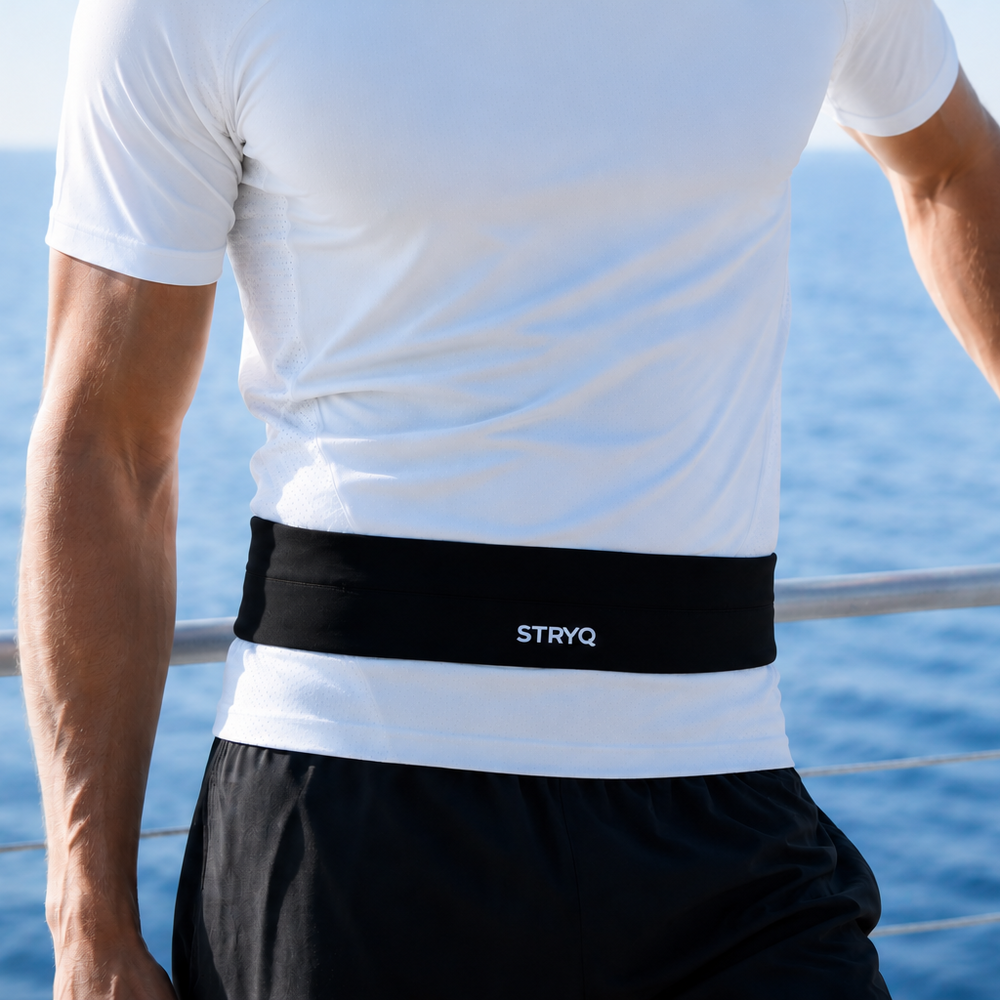
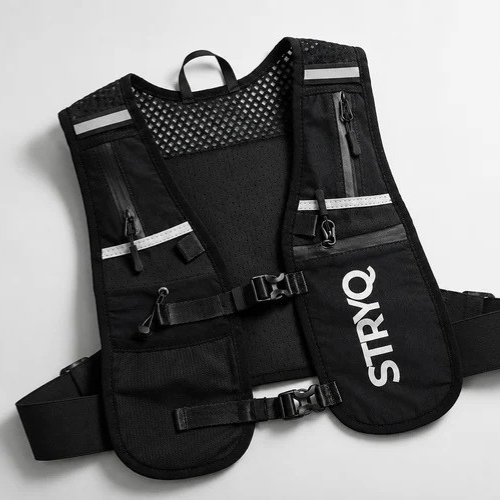
The STRYQ 500ml Running Soft Flask is made for hydration vests, with the easy filling and secure closing described above in mind. It comes in black, pink and purple, so a pair is easy to tell apart when one carries water and the other a drink mix. You can see the full range on our running soft flasks page, or pick a colour directly: black, pink or purple. If you need somewhere to carry them, our hydration vest and running belt are designed to work with them.

FAQ
How do you refill a soft flask without spilling?
Squeeze it flat, open the cap fully, and let the water run down the inside wall. Stop below the neck, wipe the rim, then close the cap before you squeeze out any air. On a run, walk for a few seconds while you do it.
How do you dry a soft flask?
Rinse and wash it after each run, then stand it upside down with the cap and nozzle off until it is completely dry. If the sides stick together, prop it open with a clean spoon handle or a rolled cloth so air can get inside. Store it loosely rather than tightly capped.
Is it safe to keep refilling a soft flask?
Yes, as long as you wash it regularly and let it dry fully between uses. Problems come from leftover drink and trapped moisture, not from refilling itself. Replace it if it smells or tastes bad after washing, or if it is damaged.
Are soft flasks worth it?
For most runners, yes. They shrink as you drink, so they do not slosh, and they sit flat in a vest pocket. The trade-off is that they need a little more care at refill and drying time than a rigid bottle.
When should I replace my soft flask?
Replace it when it has a smell or taste that washing will not remove, a crack or leak, a torn valve, or worn threads. Do not leave it to fail on race day: if you notice it starting to go, swap it out before your next long run.
Sources
- How to Refill Soft Flasks Without Making a Mess
- Soft Flask Cleaning Guide for Every Runner
- How to use soft flasks for marathon running
- How to Avoid Flask Leaks on Every Long Run