A baking-soda soak followed by a full air-dry removes most plastic or musty tastes from a soft flask, and doing it right the first time saves you from repeating the job every week. Mix 1 tablespoon of baking soda into 2 litres of warm water, fill the flask, and leave it a few hours or overnight before rinsing. A diluted white vinegar or lemon-juice rinse works as a faster backup when you’re short on time. New flasks benefit from one conditioning wash before their first run.
If the smell returns after two proper cleans, or you spot mould inside the seams, replace the flask rather than keep fighting it.
- Quick fix: 1 tbsp baking soda in 2 litres warm water, soak overnight, rinse and air-dry.
- Fast fix: diluted white vinegar or fresh lemon juice, swirl for a minute, rinse well.
- First-use fix: wash and air-dry any new flask before its first fill to clear manufacturing residue.
Key Takeaways
A baking-soda soak, thorough air-drying, and choosing a food-grade TPU flask together eliminate nearly all plastic or musty taste problems.
| Point | Details |
|---|---|
| Try the baking-soda soak first | Mix 1 tbsp baking soda into 2 litres warm water, soak overnight, then rinse and air-dry fully. |
| Diagnose before you clean | Sniff, check seams for film, and inspect for discolouration to confirm whether cleaning will help. |
| Air-drying is the real prevention | Fully drying the flask after every run stops mould and odour before they start. |
| Replace beyond two cleans | Persistent smell after two thorough baking-soda soaks, or visible mould, means it’s time to replace. |
| Choose taste-neutral materials | Stryq’s food-grade TPU soft flasks with simple seams and wide mouths resist taste build-up and clean easily. |
Table of Contents
- Why soft flasks develop a bad taste
- Step-by-step quick cleaning that actually works
- Deep cleaning and knowing when to let a flask go
- Daily care that stops the taste coming back
- Choosing a soft flask that resists taste in the first place
- Cleaning tools and brushes worth owning
- Drying technique matters more than most runners think
- Which soft flask brands and models handle taste best
- Handling flasks after freezing or heat exposure
- Get a soft flask built to stay taste-neutral from day one
- Frequently asked questions
- Sources
Why soft flasks develop a bad taste
Most off-tastes trace back to one of three sources, and knowing which one you’re dealing with tells you whether cleaning will actually fix it. New TPU flasks often carry a faint plastic taste from manufacturing residues and off-gassing, which usually fades after a proper wash and a couple of uses. Bacterial or mould growth from moisture left sitting inside is the more stubborn culprit, and it’s the one runners underestimate most. Minerals in tap water, or residue from electrolyte powders and sports drinks, can also leave a chalky or sour aftertaste even in a perfectly clean flask.
Before you clean anything, run a quick inspection:
- Sniff the flask with the cap off. A sour or musty smell almost always means bacteria or trapped moisture.
- Check the inside seams and mouthpiece threads for a slimy film or dark spots.
- Hold it up to the light and look for discolouration along the seams.
- If it smells fine and looks clean but still tastes odd, suspect mineral content in your water or leftover conditioning residue.
Step-by-step quick cleaning that actually works
For everyday care, rinse with warm water straight after your run, add a drop of mild unscented detergent, shake it out, then leave the cap off to dry. That habit alone prevents most taste problems from starting.
When a proper clean is needed, follow this order:
- Baking-soda soak (most effective). Dissolve 1 tablespoon of baking soda in 2 litres of warm water, fill the flask fully, and let it sit for a few hours or overnight. This neutralises odours from manufacturing compounds and bacterial buildup rather than just masking them.
- Vinegar or lemon rinse. Use diluted white vinegar or fresh lemon juice when you need a faster fix; ten minutes of swirling handles light residue well but won’t match an overnight soak for stubborn smells.
- Rinse thoroughly with clean water until no soap or vinegar smell remains.
- Turn inside out where possible or open fully to expose every surface to air.
Avoid boiling water unless your flask’s manufacturer explicitly permits it. High heat can warp seams or degrade valves on some TPU designs. Before race day, check the mouthpiece and valve seat for grit or residue; a compromised seal will leak under pack pressure regardless of how clean the flask tastes.
Pro Tip: Drop a clean, dry teaspoon of baking soda straight into the empty flask the night before a race, seal it, and give it a shake. Rinse in the morning and the flask starts the day completely neutral.
Deep cleaning and knowing when to let a flask go
A weekly or fortnightly deep clean handles what daily rinsing misses. Extend the baking-soda soak to a full 24 hours for flasks that have carried electrolyte drinks or anything sugary, since organic residues respond better to baking soda than to detergent alone. A vinegar-and-water soak (roughly equal parts) works as an alternative if the smell is more mineral than organic. Some runners use denture-cleaning tablets for a stronger fizz-based clean, which helps reach the corners a bottle brush can’t.
Pull the mouthpiece and valve apart fully if your flask allows it. Residue collects around the valve seat and the fold points near the base seam, both easy to miss with a quick rinse.
Avoid:
- Bleach or harsh chemical cleaners, which can degrade TPU over time.
- Dishwashers, unless the manufacturer states the flask is dishwasher-safe.
- Boiling water on any flask without explicit manufacturer approval.
Replace the flask if you see visible mould, if odour persists after two thorough baking-soda cleans, if seams look stretched or split, or if the valve no longer seals properly.
Daily care that stops the taste coming back
Prevention beats repeated deep cleaning, and the routine takes under a minute:
- Empty the flask completely after every run, even short ones.
- Rinse with plain water while it’s still slightly warm from use, before residue dries on.
- Leave the cap off or the mouthpiece open.
- Stand it upside down on a drying rack, or hang it, so no water pools in the base.
Between runs, store flasks in a wide-open position rather than capped and flat. A capped, damp flask left in a kit bag is close to ideal conditions for mould. Avoid storing sugary or dairy-based drinks in a soft flask for extended periods; these liquids cling to seams and are genuinely hard to fully clear, so a quick-turnaround single-use bottle is the better call for anything milk-based.
Pro Tip: Give a brand-new flask one baking-soda soak and a full air-dry before its first run. Manufacturer guidance for soft reservoirs backs this as the fastest way to clear factory residue before it ever reaches your mouth on a run.
Choosing a soft flask that resists taste in the first place
Cleaning only gets you so far if the flask itself is fighting you. Look for these features before you buy:
- Food-grade TPU that’s explicitly BPA, BPS, and phthalate-free, since lower-grade plastics off-gas more and for longer.
- Simple, minimal seams, which give bacteria fewer places to hide and make manual cleaning genuinely effective.
- A wide-enough mouth to fit a small brush or your fingers in for a proper scrub, not just a rinse.
- A removable or easily accessible valve, so you can clean the one part that traps the most residue.
- Vest and belt compatibility, so the flask actually fits the storage you already run with.
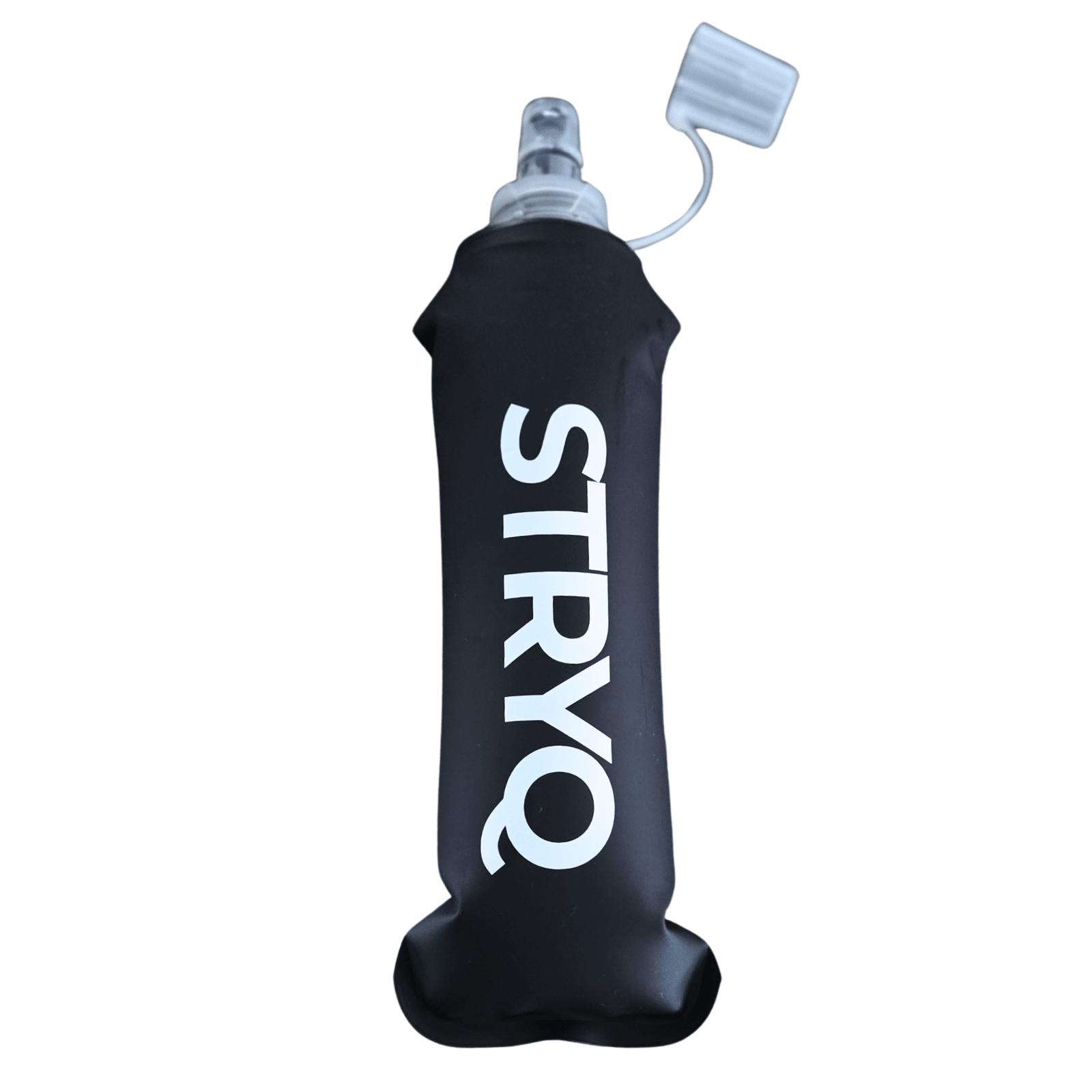
Stryq’s 500ml soft flask is built on food-grade TPU with simple seam construction specifically to reduce the plastic taste that plagues cheaper flasks, and it comes in multiple colourways if you want to colour-code by drink type, useful for keeping electrolyte mixes separate from plain water.
Cleaning tools and brushes worth owning
A standard bottle brush won’t reach the folded internal seams of a soft flask, which is exactly where most lingering taste hides. Reviewers consistently point to purpose-made narrow brushes as the difference between a flask that tastes fine and one that never quite loses its odour.
A small, flexible bottle brush with a narrow head reaches the base seam and corners a finger can’t. A separate valve or straw brush, the kind sold for hydration bladders, clears the small channel inside soft flask mouthpieces where bacteria concentrate fastest. For flasks with a screw cap, an old (clean) toothbrush handles the threads, another spot that traps grime but gets ignored during a quick rinse.
If you run through a lot of electrolyte drinks, keep a tub of unscented dish soap and a box of baking soda dedicated to flask care rather than sharing them with general kitchenware. It sounds fussy, but cross-contamination from strongly scented soaps is a surprisingly common cause of “clean but still tastes off” complaints.
None of this needs to be expensive. A brush set costs a few pounds and lasts years, and it does more for taste control than any soak on its own, since a soak can’t dislodge a physical film that a brush removes in seconds. Rinse the brush itself after each use and let it air-dry too. A permanently damp brush becomes its own source of bacteria, quietly reintroducing the exact problem you bought it to solve.
Drying technique matters more than most runners think
Trapped moisture is the single biggest reason taste problems keep coming back, more than any single food or drink residue. A flask that looks dry on the outside can still hold pockets of water in the folds and seams.
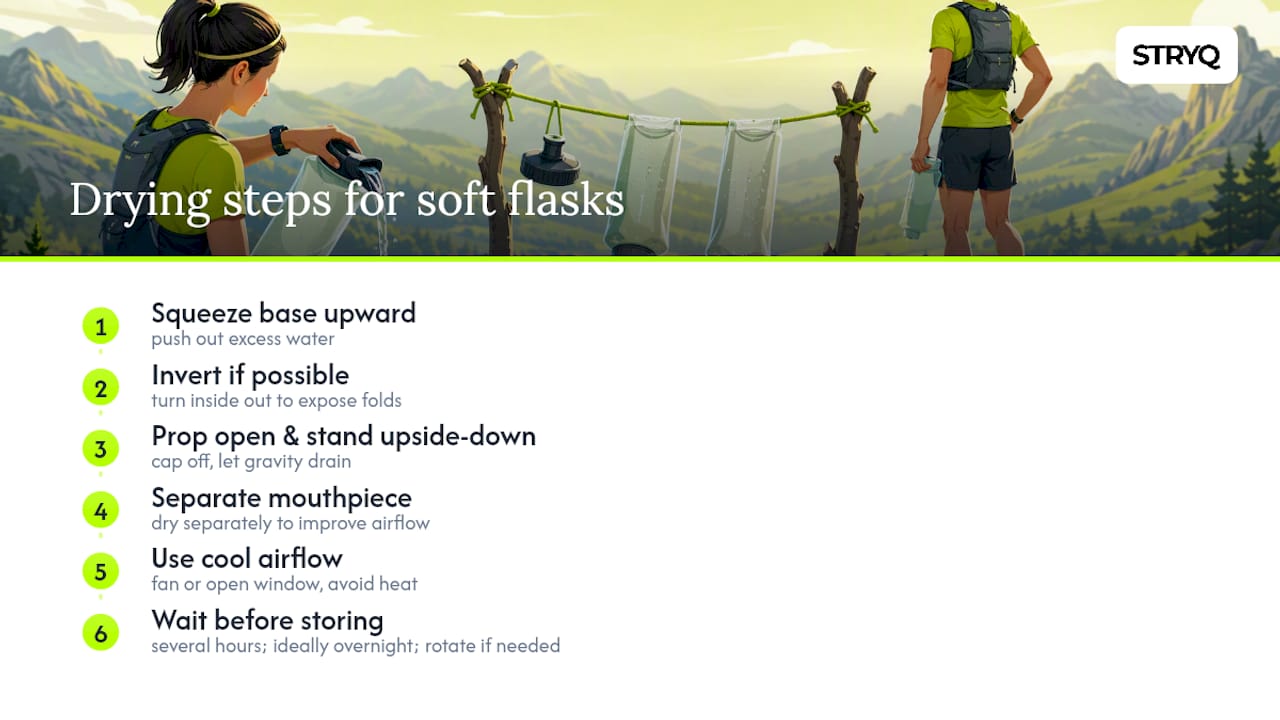
After rinsing, squeeze the flask gently from the base upward to push out excess water, then turn it inside out if the design allows it. Not every soft flask can invert, so if yours can’t, prop it fully open with the cap off and stand it upside down on a rack or over the edge of a drying rod. Gravity does most of the work if you give it a clear path.
Leave the mouthpiece separated from the body if it detaches. Airflow around two smaller pieces beats airflow into one folded flask every time. A short burst of cool air from a fan, or simply leaving the flask near an open window overnight, speeds this up without any risk of heat damage.
Give it a minimum of several hours, ideally overnight, before packing it away. If you’re drying between back-to-back training days, a rotation of two flasks solves the problem entirely, since drying fully between uses is the main factor separating a taste-free flask from a musty one. Never store a flask while it’s even slightly damp inside, no matter how rushed you are before the next session.
Which soft flask brands and models handle taste best
Independent reviews are fairly consistent on this point: taste comes down to material quality and how conditioned the flask is, not marketing claims alone. Salomon’s Soft Flask range is frequently praised for using TPU that becomes essentially taste-free once conditioned, though some users report a faint plastic note on the very first few fills before it settles.
Platypus SoftBottles get similar marks for taste neutrality, with the caveat that flavour retention increases if liquids sit in the flask for over 24 hours, which points back to the drying and storage habits covered earlier rather than any flaw in the material itself.
Runner testimonials broadly back the idea that reputable, run-tested flasks with simpler seam construction reduce persistent chemical odours compared with unbranded budget options, which tend to use lower-grade plastics that off-gas for longer and never quite settle. Stryq’s soft flask range follows the same principle: food-grade TPU, minimal seams, and a design tested with the same drying and storage habits this article recommends, built to sit alongside your running vest rather than fight it.
The pattern across every review is the same. Material quality sets your ceiling for how good a flask can taste, but conditioning and drying discipline decide whether you actually reach it.
Handling flasks after freezing or heat exposure
Freezing a soft flask before a hot race is common practice, but it changes how the flask behaves once it thaws. Ice expansion can stress seams over repeated freeze cycles, so inspect the seams and valve more carefully than usual after a flask has been frozen solid rather than just chilled.
Taste-wise, freezing itself rarely causes a problem, but the thaw period does. Water sitting at room temperature as ice melts is exactly the warm, static condition bacteria need, so don’t leave a part-frozen flask sitting in a hot car boot for hours before a run. Rinse and refill with fresh water once it’s mostly thawed rather than topping up the melted portion.
Heat exposure works the other way. Leaving a flask in direct sun or a hot car for an extended period can accelerate off-gassing from the TPU, which is why a flask that tasted fine all winter sometimes develops a plasticky edge in summer. If that happens, a fresh baking-soda soak usually resolves it within a few hours. Avoid drying a flask by leaving it in direct sunlight for long periods as a shortcut. It’s tempting on a warm day, but prolonged UV and heat exposure is more likely to degrade the material than a normal air-dry indoors ever would.
First-person brand note
Every fix here reflects what actually works when you’re testing gear against real training weeks, not lab conditions. We built Stryq’s soft flasks around the same principle: food-grade TPU, simple seams, and a design that survives the drying and storage habits real runners actually follow.
Get a soft flask built to stay taste-neutral from day one
Cleaning routines only get you so far when the flask itself is the problem. Stryq’s soft flasks use food-grade TPU with minimal seam construction specifically to avoid the plastic taste and off-gassing that plague cheaper, unbranded flasks straight out of the packet.
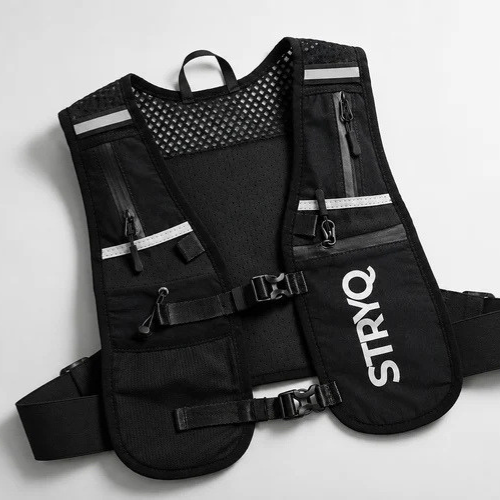
The 500ml soft flask comes in multiple colourways, including pink and purple, each with a wide-mouth design that makes brush cleaning genuinely quick rather than a chore you avoid. If you prefer a rigid option for certain runs, the Green 500ml Hydration Vest Bottle uses the same non-porous, taste-neutral approach. Every flask is built to sit properly inside Stryq’s hydration running vest, so there’s no awkward fit or bounce mid-run.
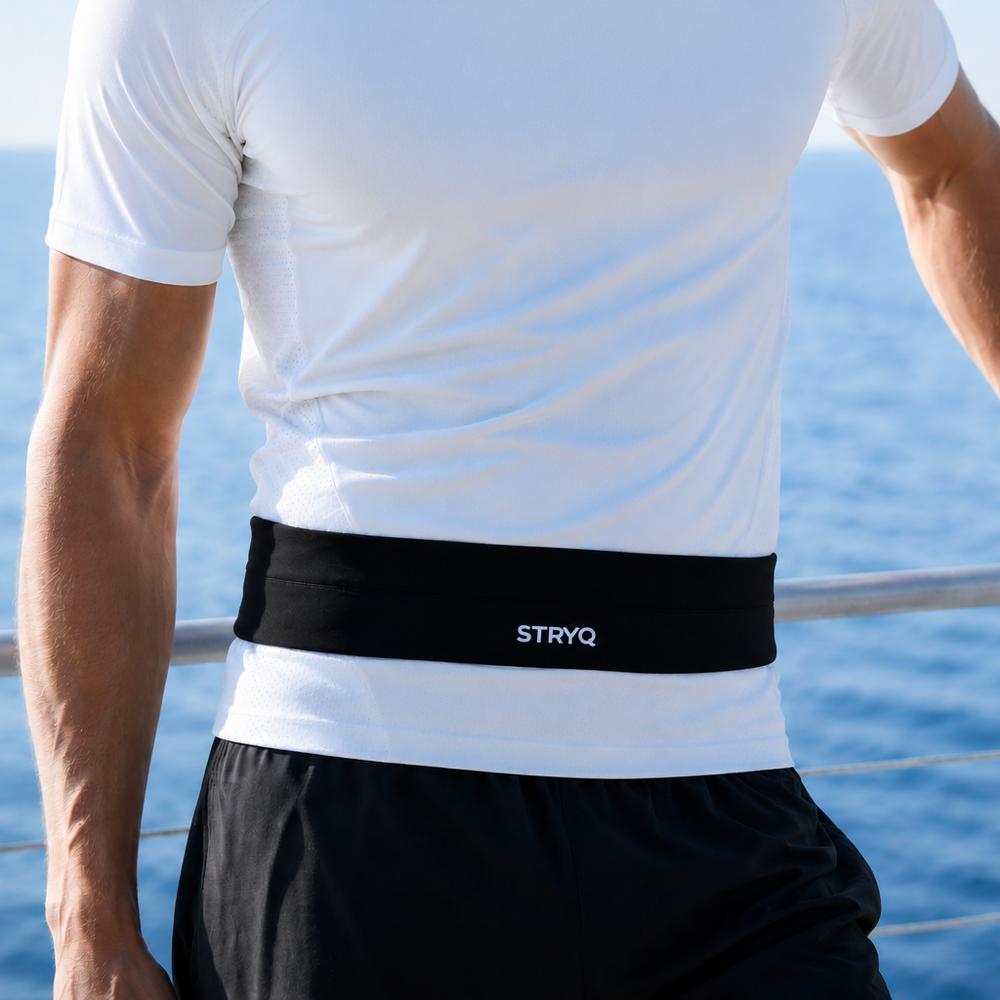
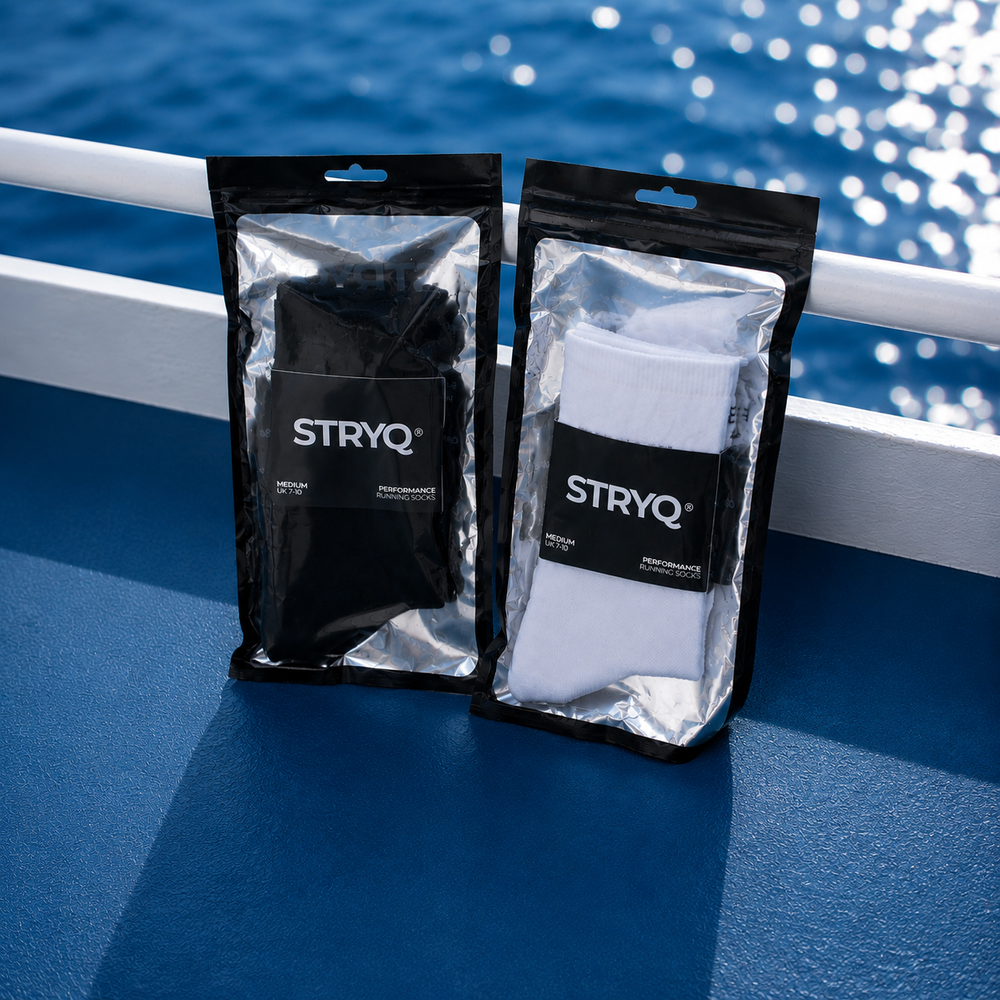
Pair your flask setup with a pair of Stryq running socks for the same comfort-first thinking applied to your feet, or add a running belt for shorter sessions where a vest is overkill. Browse the full soft flask range and pick the colour and size that fits your next race.
Frequently asked questions
Does a soft flask always taste like plastic when it’s new? Most do, mildly, thanks to manufacturing residue and off-gassing. One conditioning wash with baking soda and a full air-dry before first use clears this in nearly every case.
How often should I do a full soft flask taste clean versus a quick rinse? Rinse after every single run. Reserve the baking-soda soak for once a week, or after any run using electrolyte or sports drinks, since those residues cling harder than plain water.
Can I put a soft flask in the freezer without ruining the taste? Yes, freezing itself doesn’t cause taste problems. The risk comes from leaving it in a hot spot as it thaws, which lets bacteria grow. Rinse and refill once it’s mostly melted.
What’s the fastest way to fix soft flask taste before a race? A vinegar or lemon rinse for ten minutes, followed by a thorough rinse and a quick towel-dry inside, handles most last-minute cases faster than a full overnight soak.
Are all soft bottle brands equally prone to bad taste? No. Reviews consistently show that higher-quality TPU with simpler seams, like Stryq’s soft flask range, resists lingering taste far better than budget, unbranded alternatives.
Sources
- Drink water, not mold: five steps for a cleaner water bottle
- Platypus SoftBottle 1L Review | Packstack
- Salomon Soft Flask Review - RunBryanRun