A good soft flask should become less noticeable with every mile. It should sit close to your body, give you a quick drink when you need one and shrink as you go. That is the standard we use in this soft flask review for running. If your current bottle sloshes, rubs or makes a simple drink feel awkward, it is probably not the right setup for your running.
Soft flasks are now a practical choice for runners at every level. They work well in hydration vests, running belts and jacket pockets, whether you are building towards your first 10K or spending a Sunday on the trails. But capacity, cap design and fit all make a real difference. The best option depends on how far you run, where you run and how you prefer to carry your kit.
What a soft flask does better than a hard bottle
The main advantage is simple: a soft flask gets smaller as you drink. That means less movement and less water sloshing around towards the end of a run. A hard bottle stays the same size, even when nearly empty, and can feel more obvious in a belt or hand.
A soft flask also moulds to its pocket. In a well-fitted hydration vest, this helps keep the load close to your chest rather than bouncing against it. In a running belt, a smaller flask can sit flatter against the body than a rigid bottle. No bounce. No bulky bottle digging into your back.
There are trade-offs. Soft flasks need more care when cleaning and drying. They can also be harder to refill at a small tap or a crowded race water station, especially if the opening is narrow. For short runs close to home, you may not need one at all. For longer efforts, warm weather or routes with limited water, they are one of the most useful pieces of running kit you can carry.
Soft flask review for running: the features that matter
Do not get too caught up in colours or claims on the packaging. Focus on the details that affect every drink.
Capacity should match your route
The most common soft flask sizes are 250ml, 350ml, 500ml and 600ml. A 250ml flask is useful for a short run, a compact belt setup or carrying concentrated electrolyte mix. It is also a sensible option for runners who have refill points on their route.
For many runners, 500ml is the most versatile size. It holds enough fluid for a steady long run while remaining manageable in a vest front pocket. A pair of 500ml flasks gives you a litre of carrying capacity, with the weight spread across your chest rather than all sitting on your back.
Larger flasks suit longer trail runs, hot conditions and events where you cannot rely on regular aid stations. They are not automatically better, though. More water means more weight. Filling two large flasks for a 5K is unnecessary bulk, and it can make a vest less comfortable than it needs to be.
The cap changes how easy it is to drink
A bite valve is popular because it lets you drink without taking a cap off. Bite, squeeze lightly and take a sip. It is quick once you are moving and helps keep water from spilling over your hands or kit.
Look for a cap that seals reliably when closed and feels easy to open with tired hands. This matters late in a race, when fine motor skills and patience can both be in short supply. A simple, dependable valve is often more useful than a complicated cap with several moving parts.
Some runners prefer a wider opening for faster refills and easier cleaning. This is particularly helpful if you use electrolyte tablets or powder. A narrow neck can be perfectly fine for plain water, but it can make mixing and rinsing more fiddly.
Material affects taste, squeeze and durability
Most quality soft flasks use flexible, food-safe material designed to be squeezed. It should feel soft enough to collapse as you drink but not so thin that it feels fragile in a packed vest. A firmer flask can be easier to slide into a pocket, while a softer one may feel more comfortable against the body.
Taste matters too. New flasks sometimes have a slight material taste on the first use. Wash them thoroughly before heading out, and avoid leaving flavoured drink in them for days. If a strong taste remains after several washes, that is not something you should simply put up with.
Check the flask for leaks around the seam and cap before race day. Fill it, turn it upside down and give it a gentle squeeze. A small leak in your kitchen is irritating. A leak that soaks your gels, phone or base layer halfway through a long run is a different problem.
Where you carry it is as important as the flask
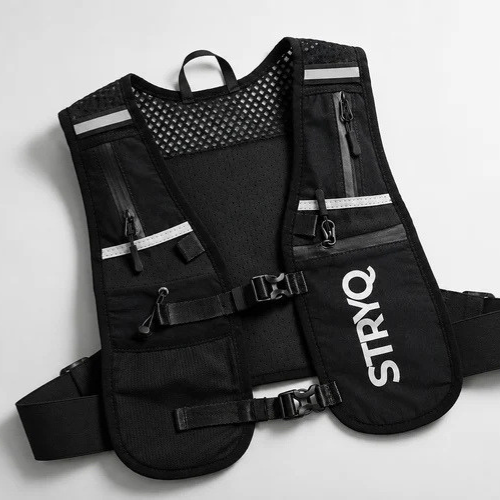
A soft flask performs best when it is held securely. In a hydration vest, front pockets are usually the easiest place to carry 500ml flasks. They keep your water accessible, help balance the load and make it easier to see how much you have left.
Make sure the pocket supports the flask all the way down. If the flask sits too high, it can bounce against your ribs. If it drops too low, reaching the valve becomes awkward. A vest should be adjusted when the flasks are full, not empty, because the fit can change once you add a kilogram or more of water.
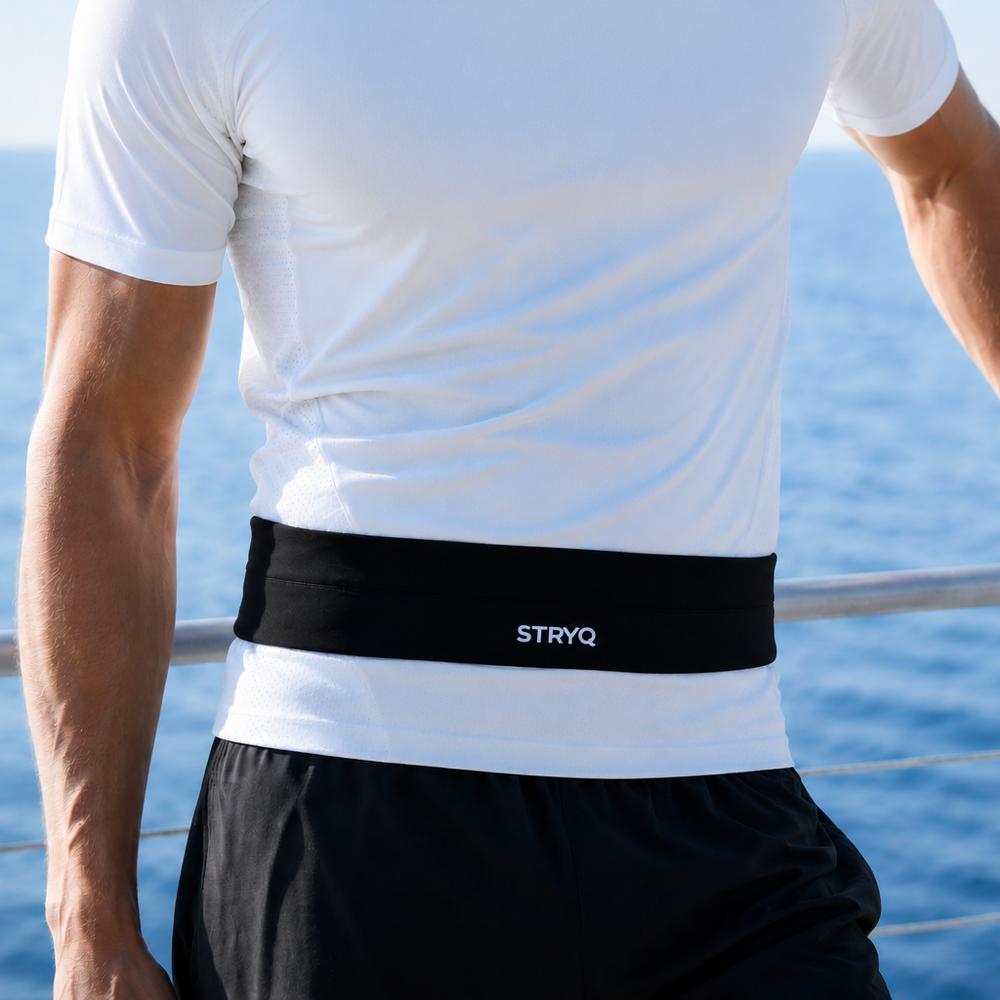
Running belts are ideal for smaller flasks and shorter distances. The key is a close fit around the waist or hips. If the belt is loose, even the best soft flask will move. Position also matters. Some runners prefer the flask at the back; others find it more comfortable at the side. Try both on an easy run before committing to it for a race.
At STRYQ, the aim is always to make carrying essentials feel straightforward. The right flask and carrying system should let you concentrate on your pace, route and effort instead of constantly adjusting your gear.
Hydration is more than filling a bottle
A soft flask is a container, not a hydration strategy. The amount you need changes with temperature, effort, duration and your own sweat rate. A cool 45-minute run may need little more than a drink before and after. A two-hour summer run may require regular fluid, electrolytes and carbohydrates.
For longer sessions, practise drinking little and often. Waiting until you are very thirsty can leave you playing catch-up, especially in warm weather. Small sips are easier on the stomach and less likely to leave you feeling full or uncomfortable.
If you use electrolyte drink, test the strength in training. A mix that tastes fine when standing still can feel too sweet during a hard run. Follow the mixing guidance, use enough water and find a flavour you can tolerate when you are tired. Race day is not the time to discover that your chosen drink is hard to swallow after 15 miles.
Cleaning a soft flask properly
Cleaning is the part runners tend to skip, usually because they want to get out of the door or get in the shower. It is worth doing. Rinse the flask with warm water after every use, particularly after sports drink. Open the cap fully and let the flask dry with air inside it rather than sealing it while damp.
For a deeper clean, use warm water with mild washing-up liquid and a bottle brush that can reach the corners. Rinse well so no soap taste remains. The valve deserves attention too, as residue can build up around it. If your flask develops an odour, use the cleaning method recommended by its manufacturer before using it again.
Do not store a flask damp in a dark kit bag. That is the quickest route to unpleasant smells and a bottle you will not want to drink from. Once dry, keep it somewhere clean with the cap open or loosely fitted.
When a soft flask is the wrong choice
Soft flasks are not compulsory for every run. If you are doing a short loop near home, carrying water may add more hassle than value. If you prefer frequent fountain stops, a smaller flask or no flask could make more sense.
They are also not always the fastest option at an aid station. A wider-necked flask is easier to refill, but filling any flexible bottle can take a little practice. In some races, carrying a cup or using the event's water setup may be simpler. Think about the course rather than automatically packing your usual kit.
The best choice is the one you will actually use comfortably. Start with the shortest run that needs water, test the fit while the flask is full and learn how the valve works before you are breathing hard. A small adjustment now can make the later miles feel much easier.