For most recreational and endurance runners, the 500ml soft flask is the sensible default: enough fluid to matter, small enough to disappear in a vest pocket. Drop to 250ml for a 5K or 10K, and step up to two 500ml flasks, or a 750ml, for marathons and ultras. Adjust for heat and sweat rate. The STRYQ 500ml Running Soft Flask covers the middle ground where most runners actually train and race.
TL;DR:
- A 500ml soft flask strikes the best balance between volume and comfort for distances from 10K to marathon, especially in warm conditions.
- For short runs under an hour, a 250ml flask is generally sufficient unless heat increases fluid needs.
- Runners should customize flask size based on personal sweat rate, running duration, weather conditions, and gear fit testing during training.
- Carrying two smaller flasks or a larger one depends on aid-station spacing and race temperature; if over 75-90 minutes without refills, use two flasks.
- Proper maintenance, fitting, and testing of flask capacity are key to preventing leaks, bounce, and discomfort during long-distance runs.
Table of Contents
- Soft flask sizes for every distance: a practical breakdown
- How to choose the right soft flask size for your runs
- Fitting soft flasks into vests, belts and handhelds
- Materials, cleaning and maintenance that extend flask life
- Why Stryq recommends the 500ml as its standard size
- Soft flask capacity and dimensions: what’s actually out there
- How flask size affects your running comfort and pace
- Stopping leaks and spills, whatever size you’re carrying
- Planning flask size around your overall hydration and fuelling strategy
- What actually matters when picking a size
- STRYQ 500ml soft flasks: which one fits your kit
- Selected research and useful reading
- Sources
- FAQ
Soft flask sizes for every distance: a practical breakdown
Distance dictates capacity more than any other factor, but sweat rate and weather can shift the numbers by 200ml or more in either direction. The American College of Sports Medicine’s position stand on fluid replacement frames hydration as a function of duration and intensity rather than a flat number, which is exactly why a single “correct” flask size doesn’t exist. What follows are sensible starting points, not fixed rules.
- 5K: Most runners don’t need to carry water at all for a 5K under normal conditions. If you do want fluid on hand, especially in warm weather, a 250ml flask is plenty; it folds flat when empty and won’t bounce.
- 10K: A 250ml or 350ml flask is usually enough for 45 to 70 minutes of running, unless you’re training through summer heat, in which case 500ml gives more of a buffer.
- Half marathon: This is where a single 500ml soft flask earns its reputation. Field-tested reviews consistently name it the most versatile capacity for distance running, balancing carried weight against how long it lasts between refills.
- Marathon: Plan for two 500ml flasks, or one 500ml paired with course aid stations, depending on how frequently you can refill. Runners who sweat heavily or race in warm conditions often carry two flasks from the start rather than gambling on aid-station queues.
- Ultra and trail distances: Self-supported stretches between checkpoints push some runners towards 750ml capacities, though vest compatibility becomes trickier at that size. Many ultrarunners instead carry two or three 500ml flasks split across front and rear pockets for better weight distribution.
As a rough guide for sweat rate: light sweaters can often get by on 400 to 500ml per hour, average sweaters need closer to 500 to 750ml per hour, and heavy sweaters in hot conditions can lose over a litre an hour. That’s a wide spread, and it’s why the ACSM guidance treats these figures as a planning exercise rather than a prescription.
The practical rule for one flask versus two: if your run or race segment will take longer than 75 to 90 minutes without a reliable refill point, carry two. One 500ml flask up front and a second in a rear vest pocket keeps weight balanced and stops the classic problem of a single flask running dry with 10km still to go. On race day, check the course’s aid-station map in advance. If stations are spaced more than 8km apart, or the forecast is warm, err on the side of the larger combination rather than hoping you’ll make it.
How to choose the right soft flask size for your runs
Start by estimating your own sweat rate rather than copying someone else’s kit list. Weigh yourself before and after a typical hour-long run, accounting for any fluid drunk during it. The weight lost, converted to millilitres, gives a rough hourly sweat rate you can then scale against your usual run duration.
From there, work through a short set of practical checks:
- Duration and pace: Longer, slower efforts need more total volume than short, fast ones, even at the same distance.
- Temperature and humidity: Heat can double fluid loss compared with cool weather, so summer training often needs a size up from your winter default.
- Aid-station or refill frequency: Frequent access points mean you can carry less and top up often.
- Pocket and mouth compatibility: A flask that’s the right volume but the wrong shape for your vest will bounce, squeeze awkwardly, or simply not fit.
- Nutrition needs: If you’re mixing electrolyte powder or gels into your flask, a wider 42mm mouth makes this far easier than a narrow sports-cap opening.
Pro Tip: Test your flask size on a training run at race pace before committing to it on race day, not the week before. A flask that felt fine on an easy long run can behave very differently once your form changes under fatigue.
Once you’ve worked through these factors, the decision usually narrows fast: short and dry means small, long and hot means bigger or double up, and everything in between tends to land on that 500ml middle ground.
Fitting soft flasks into vests, belts and handhelds
Pocket size, not just personal preference, often decides which capacity actually works for you. Most modern hydration vest front pockets are built around the 500ml soft flask, since it’s engineered to suit standard vest dimensions at roughly 260mm by 80mm when full. Smaller 150ml and 250ml flasks fit almost any pocket, including the narrower side pockets on running belts, which makes them a natural pairing for shorter runs or as a secondary nutrition carrier.
Handhelds behave differently again. An empty soft flask in a handheld strap collapses down to almost nothing, which is the whole appeal over a rigid bottle, but it also means the strap fit needs checking with the flask both full and empty.
Before buying, run a few practical checks:
- Fill the flask fully and test it in the actual pocket, not just against the vest laid flat.
- Check whether the pocket has a bungee or drawcord that can accommodate a fuller 500ml shape without straining.
- If you plan to mix front and back storage, a common combination is one 500ml flask up front for easy access and a 250ml as backup or nutrition storage further back.
- Test the cap or valve one-handed at a run, since fumbling with a stiff mouthpiece mid-stride is worse than any capacity mismatch.
Materials, cleaning and maintenance that extend flask life
Most quality soft flasks use TPU (thermoplastic polyurethane) for the body and silicone for the valve, both typically BPA and PVC free. TPU flexes without cracking the way rigid plastics eventually do, which is why soft flasks fold flat when empty rather than splitting at the seams.
- Rinse with warm water immediately after each run, before residue from electrolyte drinks or gels has a chance to dry inside.
- Use a cleaning tablet or a small bottle brush weekly to reach the valve and seams, where mould tends to start.
- Turn the flask inside out where possible and leave it fully open to air dry; sealing a damp flask is the single most common cause of a mouldy soft flask.
- Avoid the dishwasher unless the manufacturer explicitly states it’s safe, since heat can warp the valve seal over time.
- Replace a flask once the material feels tacky, the valve leaks under normal pressure, or you spot mould that won’t rinse out.
Why Stryq recommends the 500ml as its standard size
Stryq develops its soft flasks through [brand_signal: multiple sample revisions and field testing with UK runners] before any product reaches the shop. That process, combined with the wider consensus that 500ml offers the best balance of carried volume against comfort, is why the STRYQ 500ml sits as the standard recommendation across most distances. [brand_signal: author testing notes and revision history available on request] It isn’t the only size worth owning, but for one flask to cover 10K through to marathon training, it’s the one that works hardest.
Soft flask capacity and dimensions: what’s actually out there
Soft flask capacity generally clusters around four common sizes: 150ml, 250ml, 350ml and 500ml, with 750ml appearing as a specialist option for longer efforts. The smaller end of that range, 150ml and 250ml, is built for minimal bulk. These fold down almost completely once emptied and slot into belt pockets or narrow vest compartments that a 500ml flask simply won’t fit.
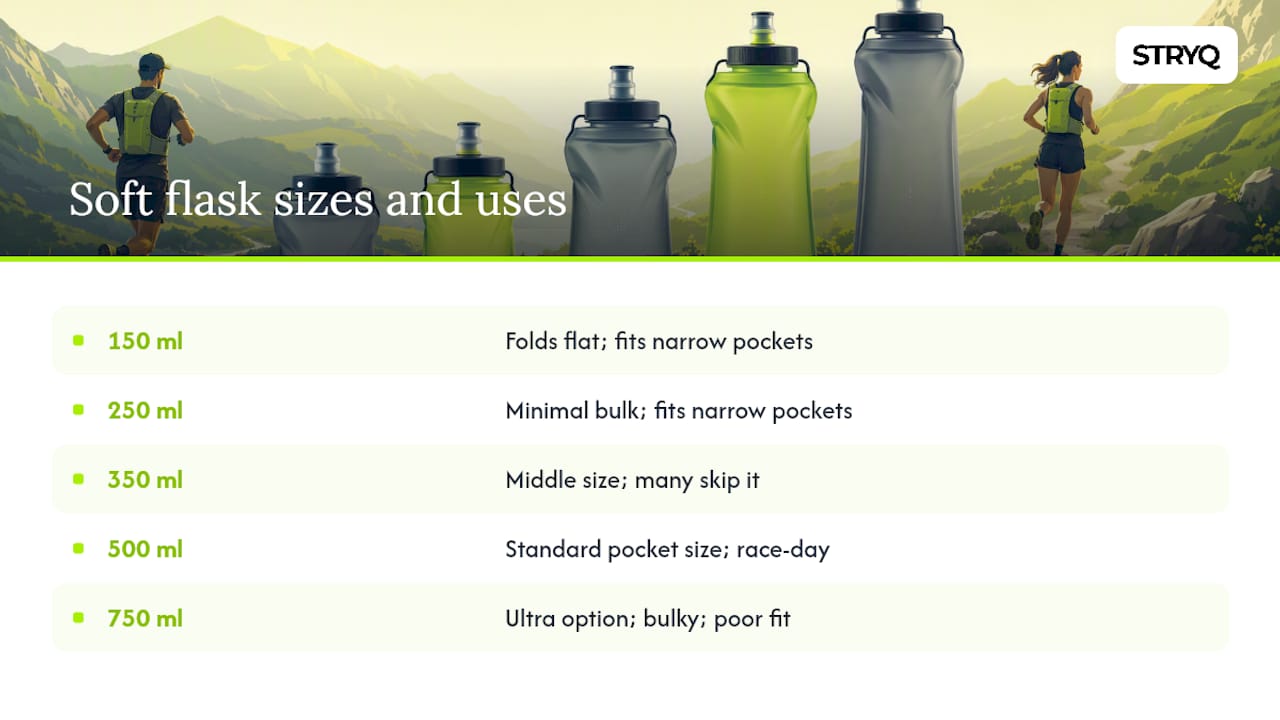
The 350ml size sits as a middle step that some brands offer but many runners skip entirely, jumping straight from 250ml training flasks to 500ml race-day ones. The 500ml size is where most vest manufacturers standardise their pocket dimensions, which is part of why it dominates gear reviews and “best of” roundups.
Beyond 500ml, options get sparser. A 750ml flask holds meaningfully more fluid for self-supported ultra stages, but that extra volume adds bulk and weight that can strain vest pockets not designed for it. Some ultrarunners on running forums argue 750ml should be the more common default for long stages, though this remains a minority view given how much vest compatibility narrows at that size. For most runners outside ultra-distance racing, 500ml remains the practical ceiling before you’re better off carrying two flasks than one larger one.
How flask size affects your running comfort and pace
A soft flask’s volume changes how it behaves against your body far more than most runners expect. A full 500ml flask carries meaningful weight and shape, and if the vest pocket doesn’t hold it snugly, that weight shifts with every stride, creating a bounce that becomes genuinely distracting past the halfway point of a long run.
Undersized flasks solve the bounce problem but create a different one: running dry too early and either detouring for water or simply under-hydrating for the back half of a run. Oversized flasks, meanwhile, can make front vest pockets ride awkwardly high or wide, which affects arm swing on faster efforts. This is part of why the 500ml size has become the reference point for vest design, since it hits a sweet spot most runners can carry without adjusting their form.
The other overlooked factor is how volume changes as you drink. A flask that’s perfectly balanced full often becomes looser and noisier as it empties, sloshing against the pocket. Smaller flasks lose this problem faster since there’s less liquid to slosh, while a half-empty 500ml can be more disruptive than either a full one or an empty one. Testing your flask on a genuine long run, not just a short shakeout, is the only reliable way to know how a given size behaves once it’s three-quarters drunk.
Stopping leaks and spills, whatever size you’re carrying
Smaller flasks leak less often simply because there’s less internal pressure when they’re squeezed in a tight pocket, but they’re not immune, especially if the valve seal wears down. Larger 500ml and 750ml flasks are more prone to pressure leaks when compressed into an undersized pocket, since the fuller shape pushes against the valve from more angles.
The most common cause of leaks across every size isn’t the flask itself but a poorly seated cap. Always give the cap a firm quarter-turn past where it first feels tight, and check it again after the first kilometre once the flask has settled into the pocket. If you’re mixing powders, screw the cap on before shaking, not after, since trapped air pressure from shaking a sealed flask is a frequent cause of mid-run leaks at the seam.
For nutrition mixing specifically, a wide 42mm mouth reduces spillage risk during the mixing process itself, since narrow openings make it easy to overfill or splash while pouring in powder. Store flasks upright where possible rather than on their side, and inspect the valve seal every few weeks for any cracking or stiffness, since a worn valve is the single most common long-term leak source regardless of what size you’re running with.
Planning flask size around your overall hydration and fuelling strategy
Soft flask size shouldn’t be chosen in isolation from your broader fuelling plan. If you’re taking gels or electrolyte tablets every 30 to 45 minutes, your flask becomes as much a mixing vessel as a water carrier, and a 500ml capacity gives more room to dilute properly than a 250ml one does.
Runners training for a marathon or longer typically plan hydration and fuelling together: one flask carrying plain water for thirst, a second carrying a diluted electrolyte or carbohydrate mix for sustained energy. This is part of why two 500ml flasks often make more sense on long runs than a single 750ml, since it lets you separate plain water from anything mixed, rather than committing your entire carried volume to one blend.
For shorter runs where you’re not fuelling mid-run at all, size becomes purely a hydration question, and a 250ml flask paired with pre-run and post-run drinking is usually sufficient. The key is rehearsing whatever combination you plan to use on race day during training long runs, since discovering a mixing or dilution problem mid-marathon is far too late to adjust it.
What actually matters when picking a size
Most of the advice on soft flask sizing treats it as a simple maths problem: distance in, millilitres out. That undersells how much personal variation matters. Two runners covering the same half marathon in similar conditions can have genuinely different hydration needs, and rehearsing your own numbers in training beats copying anyone else’s chart.
The bigger mistake I see is runners over-indexing on capacity and under-indexing on fit. A flask that’s technically the right volume but sits wrong in your vest will cost you more comfort over 20km than being slightly under-hydrated ever would. Experiment with sizes on training runs long before race day arrives.
— martin
STRYQ 500ml soft flasks: which one fits your kit
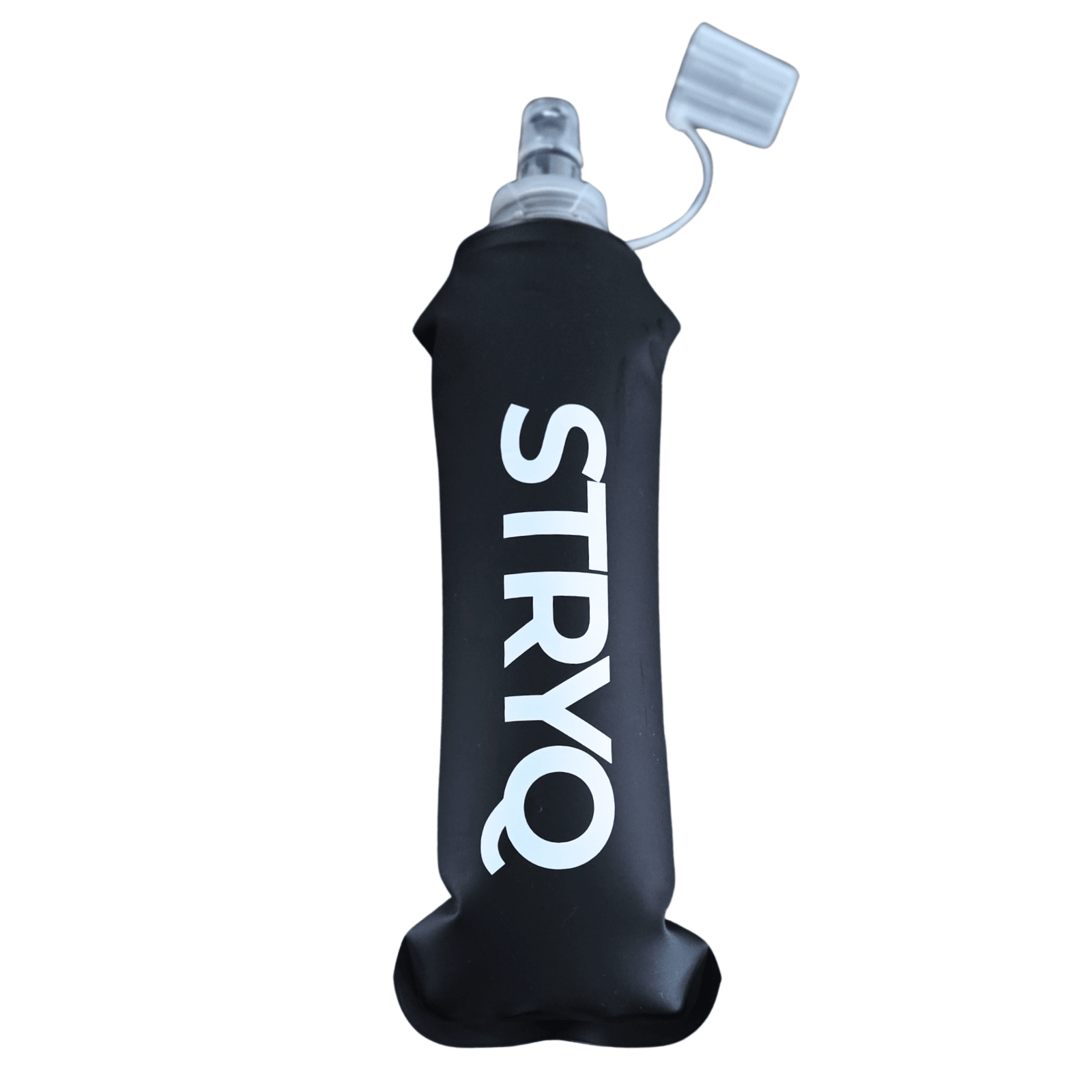
If the sizing logic above points you towards 500ml as your everyday flask, the next decision is simply which one suits your kit and your eye. The STRYQ 500ml Running Soft Flask for Hydration Vests in black is built to the same vest-friendly dimensions that make 500ml the standard across most hydration systems, with a wide mouth that makes mixing powders or gels straightforward mid-run.
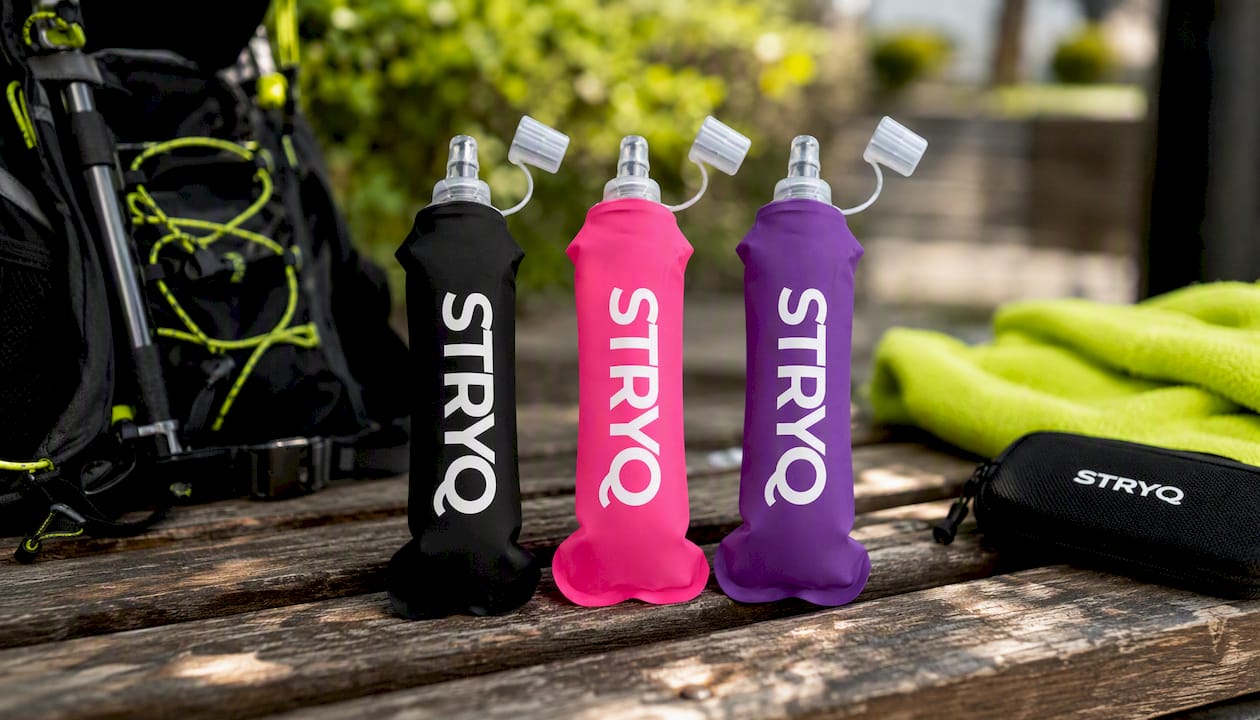
For runners who’d rather their kit stood out, the STRYQ Pink 500ml Running Soft Flask and the STRYQ Purple 500ml Soft Flask offer the same capacity and fit in different colourways, useful if you’re running a matched pair front and back and want to tell them apart at a glance without checking the contents.
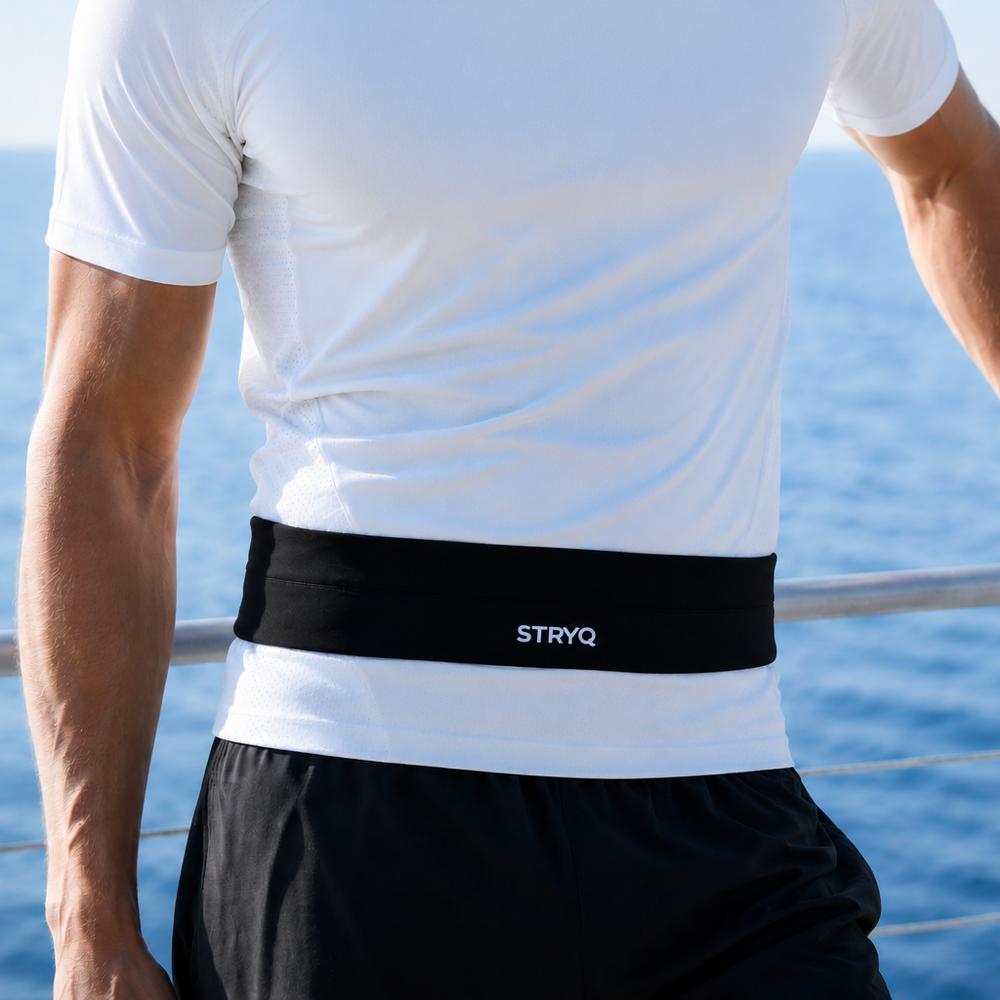
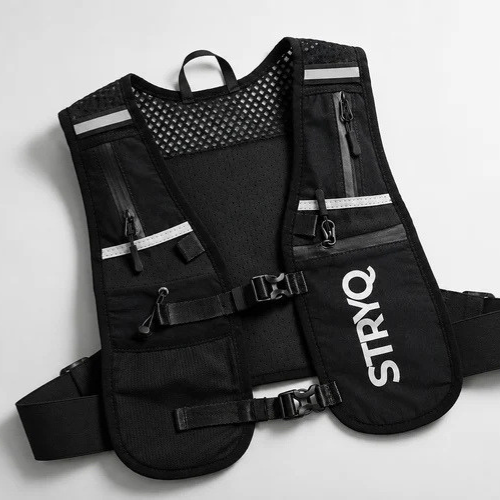
Before buying, check your own vest’s pocket dimensions against the flask when full, not just when flat in the packet, and confirm whether you’ll be mixing nutrition, since that determines whether the wide mouth and secure cap lock actually matter for your routine. Browse the full soft flask range to compare capacities, or explore Stryq’s wider running gear collection, including belts and hydration vests built around the same 500ml standard, if you’re assembling a full hydration system from scratch.
Selected research and useful reading
Field-tested gear reviews and manufacturer specifications informed the size and dimension guidance above; sports medicine hydration research shaped the sweat-rate planning advice.
Sources
- Best running water bottles of 2026 (Field-tested) — TreeLine Review
- American College of Sports Medicine position stand on exercise and fluid replacement
FAQ
What is the standard size for a running soft flask?
There isn’t a single official standard, but 500ml has become the most common reference size across vest manufacturers and gear reviews, since it’s consistently rated the most versatile capacity for distance running. Smaller 150ml and 250ml sizes remain common for short runs or as secondary nutrition flasks.
Should I choose a 250ml or 500ml soft flask?
Choose 250ml for runs under an hour, cooler conditions, or when you mainly need space for nutrition rather than large volumes of fluid. Choose 500ml for anything from a 10K in the heat through to marathon distance, since it holds enough to matter without overloading a vest pocket.
What sizes do soft flasks typically come in?
Soft flasks are commonly available in 150ml, 250ml, 350ml and 500ml, with 750ml appearing as a specialist option for ultra and self-supported running. The STRYQ range focuses on the 500ml size, which fits the widest range of vest and belt pockets.
Are soft flasks worth it compared with a rigid bottle?
Soft flasks collapse as you drink, which cuts bounce and noise compared with a rigid bottle that stays the same shape whether full or empty. For runners covering more than a 5K, most find the reduced bulk and better pocket fit worth the trade-off, particularly on longer or hillier routes where a bouncing bottle becomes genuinely uncomfortable.
How much does a STRYQ soft flask cost?
The STRYQ 500ml Running Soft Flask is priced at £14. It’s available directly through the STRYQ soft flask collection in black, pink and purple variants.