A baking soda soak followed by a full wash, rinse, and complete air-dry removes the plastic or chemical taste from most soft flasks within an hour. If that doesn’t clear it, a cleaning tablet designed for hydration reservoirs is the next step. Always follow your manufacturer’s care instructions first, never mix cleaning agents, and rinse thoroughly before drinking from it again.
TL;DR:
- Baking soda soaks are most effective when combined with a thorough wash after soaking to remove residual film and odor.
- Using cleaning tablets designed for hydration reservoirs can clear stubborn tastes faster than home remedies, especially on ingrained smells.
- White vinegar and citric acid rinses work best for sour or fermented tastes but require careful rinsing to eliminate lingering acidity or citrus scent.
- Replacing valves or nozzles is often necessary if lingering taste persists, since these parts trap more residue than the flask body itself.
- Proper daily storage and drying practices prevent biofilm growth, which is the main cause of recurring musty or sour flavors in soft flasks.
Table of Contents
- Quick checklist: what to try right now
- Deep-clean methods explained: how and why each one works
- Daily care and storage to stop taste coming back
- Troubleshooting persistent taste and when to replace parts
- Why our approach is trustworthy: runner-tested, not lab theory
- The trade off runners actually make with their flasks
- Get a soft flask that resists the problem in the first place
- Sources
- FAQ
Quick checklist: what to try right now
If your flask tastes off before a run and you need a fix that actually works rather than one that just masks the smell, work through these in order. Each one is ranked by how reliably it clears taste versus how long it takes.
- Baking soda soak. Mix 1 to 2 teaspoons of baking soda into 500ml of warm (not scalding) water, fill the flask, seal it, and let it sit for 20 minutes to a few hours depending on how bad the taste is.
- Cleaning or denture tablets. Drop one tablet into the flask filled with warm water, leave it for the time stated on the packet (usually 15 to 30 minutes), then empty and rinse.
- White vinegar rinse. Mix equal parts white vinegar and water, swirl it around the flask for a few minutes, then rinse until you can no longer smell vinegar.
- Lemon or citric acid rinse. Use this as a secondary option when the taste is mild, since it tends to mask rather than fully remove residue.
Whichever method you pick, the water temperature matters more than people assume. Hot water can warp soft TPU or loosen glued seams over time, so warm water does the job without risking the material. Never combine two cleaning agents in the same soak; mixing bleach with vinegar or lemon juice produces a hazardous reaction, and the CDC’s water safety guidance is explicit that you should use one treatment at a time and rinse fully between them.
Pro Tip: Keep a small tub of baking soda in your kit bag. A 20 minute soak the moment you get home from a long run, before the residue sets, saves you from ever needing a deep clean.
Whichever fix you use, finish with a proper wash in warm soapy water and a full rinse. Skipping that step is the single biggest reason people think their flask “still tastes plastic” after cleaning.
Deep-clean methods explained: how and why each one works
Removing soft flask taste isn’t one job. It’s usually two jobs people mistakes for one: neutralising the smell, and physically removing the film that’s causing it. Baking soda is brilliant at the first and mediocre at the second on its own, which is why the follow-up wash matters as much as the soak itself.
Baking soda soak. Use 1 to 2 teaspoons per 500ml of warm water. Soak times range from 20 minutes for a mild taste to several hours, or overnight, for a flask that’s been sitting unwashed for days. Give it a gentle shake or swirl halfway through to agitate any loosened film, then drain and follow with a full wash in dish soap and warm water, running fresh water through the valve to flush out anything the soak dislodged. Baking soda neutralises odour compounds effectively, but the CDC notes that a two-stage clean, soak then wash, is what actually clears both taste and residue, not the soak alone.
Cleaning, denture, or reservoir tablets. These are formulated specifically for hydration bladders and tend to work faster than home remedies on stubborn, ingrained smells. Check the tablet packaging against your flask’s manufacturer instructions before use, since some tablets are stronger than others and not every soft flask material tolerates every formula equally.
White vinegar. Dilute 1:1 with water for a soak of 10 to 15 minutes, longer for tougher smells. Vinegar is the better choice over baking soda specifically for sour or fermented tastes, the kind you get after leaving electrolyte drinks in a flask for a couple of days, because its acidity breaks down that particular residue more directly. Rinse repeatedly afterwards; vinegar taste lingers longer than people expect.
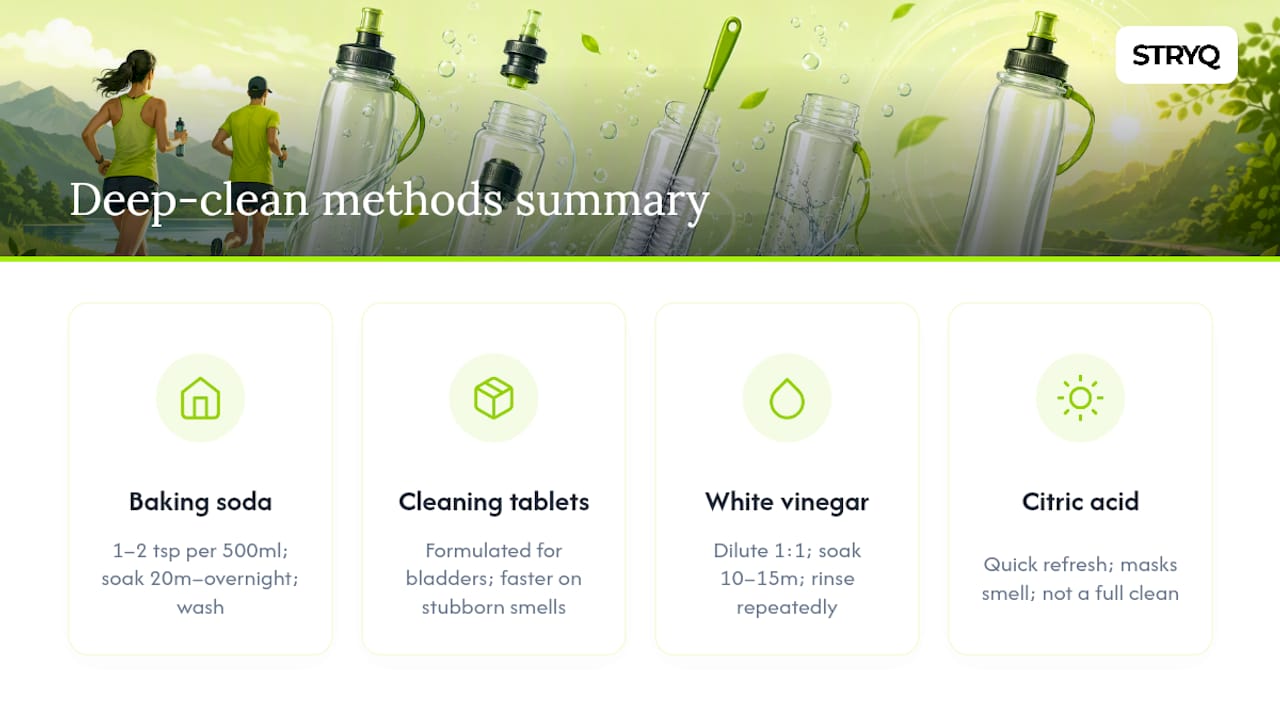
Lemon or citric acid. Useful for a quick refresh, but understand the limit here: citrus mostly masks smell rather than removing the underlying film. It’s a fine stopgap before a run, not a substitute for a proper soak-and-wash cycle.
Bleach, as a last resort only. Only use bleach if your flask’s manufacturer instructions explicitly permit it, and only at the diluted ratio they specify, typically a capful in a full flask of water. Rinse at least three times afterwards. Never, under any circumstances, mix bleach with vinegar or lemon juice; the resulting gas is genuinely dangerous, a point the CDC’s guidance on water emergencies makes plainly.
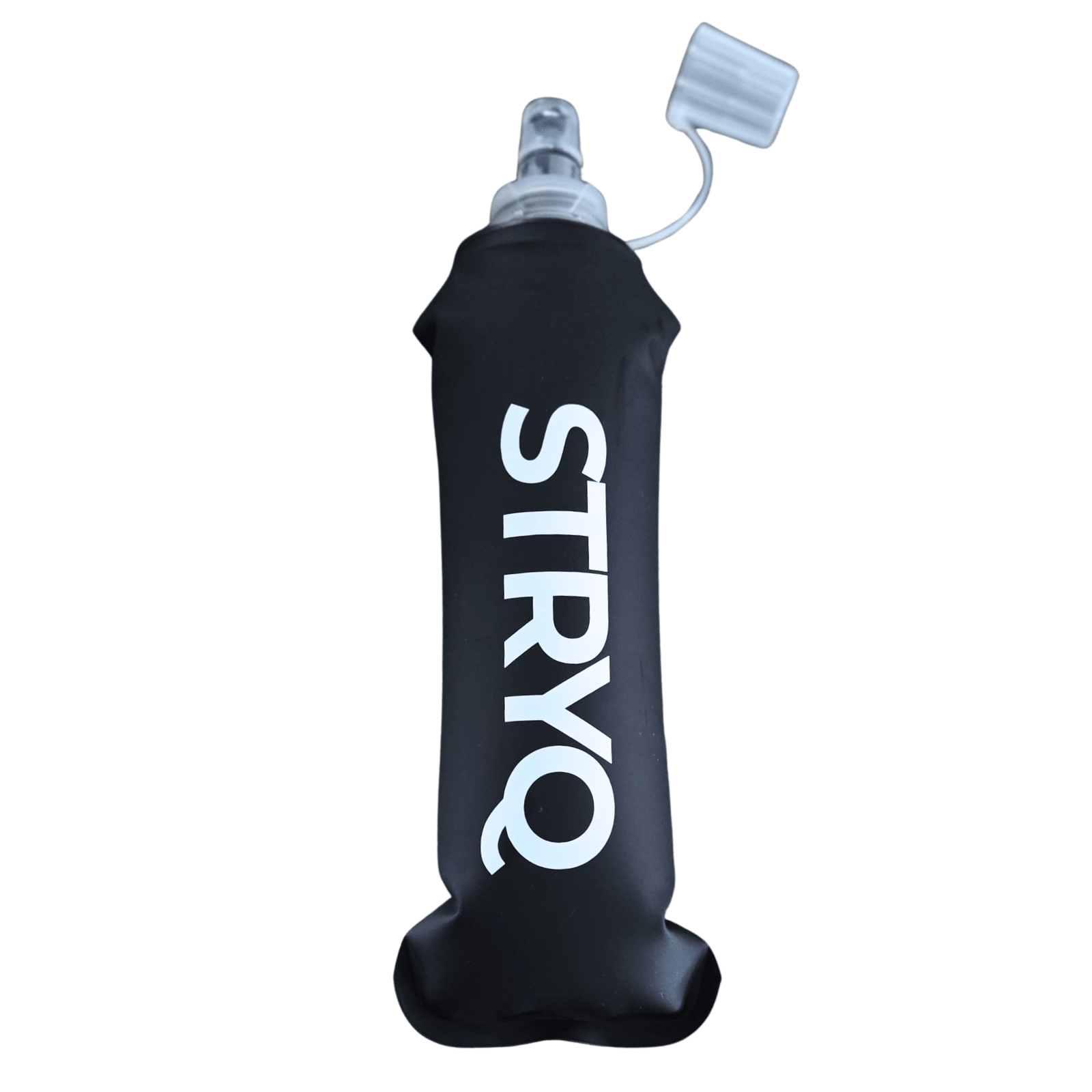
Valves and nozzles. These small parts trap more residue than the body of the flask because they have more surface area in a tighter space. Gently twist or pull the valve free if your model allows it, rather than forcing it, and use a small bottle brush or valve brush to reach inside rather than scrubbing with anything abrasive that could scratch the silicone.
Laboratory studies summarised in The Guardian’s coverage of microplastics research have linked microplastic particles to cellular effects under controlled conditions. That’s context for why some runners prefer flasks made from higher-grade materials rather than a direct warning about drinking from a clean flask, but it explains the instinct to take taste seriously rather than shrug it off.
Daily care and storage to stop taste coming back
Most recurring soft flask taste isn’t a cleaning failure. It’s a drying failure. A flask that goes back into your vest pocket even slightly damp creates exactly the conditions biofilm needs to grow, and that’s what causes the musty, sour taste that reappears a day or two after you thought you’d fixed it.
- Empty and rinse the flask immediately after your run, especially if you carried electrolyte drinks, gels, or anything sugary, since sugars and acids leave a film that becomes tomorrow’s bad taste if left overnight.
- Wash with warm water and a small amount of dish soap after every use that involved anything other than plain water.
- Disassemble the cap and nozzle where your flask allows it, and rinse each part separately so residue doesn’t hide in the threads.
- Store the flask open, not sealed, somewhere with airflow. A closed flask left in a dark kit bag is the single most common cause of returning odour.
- Give it a quick smell and squeeze check before your next run. If it smells sour or feels slimy inside, it needs another clean before you fill it.
For flavoured drinks or race weeks where you’re using the flask daily, run a full baking soda deep-clean once a week rather than waiting for the taste to come back. Plain water use can usually stretch that to every couple of weeks. If storage space is part of your problem, particularly with a hydration vest that traps moisture against your back, it’s worth checking how to wash a hydration vest properly too, since a damp vest pocket undoes a clean flask fast.
Troubleshooting persistent taste and when to replace parts
If you’ve soaked, washed, rinsed, and dried a flask properly and the taste is still there, the problem usually isn’t taste at all. It’s biofilm, mould, or a scratch that’s become a permanent residue trap.
- Smell test first. A faintly plastic or rubbery smell after a fresh flask’s first few washes is normal and usually fades within a week or two of use. A sour, musty, or mouldy smell is not normal at any stage.
- Visual check. Hold the flask up to light and look for a slimy film on the inside walls or any cloudy discolouration that wasn’t there when new.
- Repeat the two-stage clean once. If the smell persists after one more full soak and wash cycle, further cleaning is unlikely to fix it.
- Replace the valve or nozzle first. These small parts concentrate more residue and biofilm than the flask body and are cheaper and easier to swap than replacing the whole unit.
- Replace the flask if mould is visible, the material feels tacky, or seams show cracking. At that point, no amount of cleaning restores it safely.
Pro Tip: Run a simple clean, rinse, smell, taste protocol every time you’re unsure: clean it properly, rinse until the water runs clear, smell the inside, then take a small sip of plain water before your next long run. If any step fails, don’t fill it for a race.
Why our approach is trustworthy: runner-tested, not lab theory
Soft flasks often go through multiple sample revisions and real-world testing with everyday runners before they reach the shop, which is where cleaning advice typically comes from rather than a manufacturer’s marketing sheet. Runners testing early samples flagged exactly the issues covered here: new-flask taste after the first few fills, residue from electrolyte drinks, and valves that trap smell if left damp.
That feedback shaped which materials and valve designs Stryq settled on, and it’s why the cleaning steps above lean towards gentler methods rather than aggressive scrubbing or high heat. Manufacturer care instructions always take priority over generic advice you find online, because different TPU blends and valve seals tolerate different chemicals and temperatures. When in doubt, check what came with your specific flask before reaching for bleach or hot water.
The trade off runners actually make with their flasks
Most runners don’t treat a soft flask as something to nurse forever. Somewhere around the third or fourth deep-clean that doesn’t fully clear the smell, the sensible move stops being another soak and starts being a fresh valve or a new flask altogether, particularly with a race on the horizon.
I’d rather see someone replace a £14 flask than risk carrying something that smells off on race morning, when the last thing you want is to associate your hydration with a taste you can’t place. Cleaning is worth doing properly, but it isn’t worth doing indefinitely once a flask has clearly reached the end of its useful life.
— martin
Get a soft flask that resists the problem in the first place
Cleaning fixes the taste you’ve got; the right flask means you’re fighting it less often. Some soft flasks are developed and tested with UK runners specifically to reduce the new-plastic taste and residue build-up covered throughout this guide, so the cleaning routine above becomes maintenance rather than damage control.
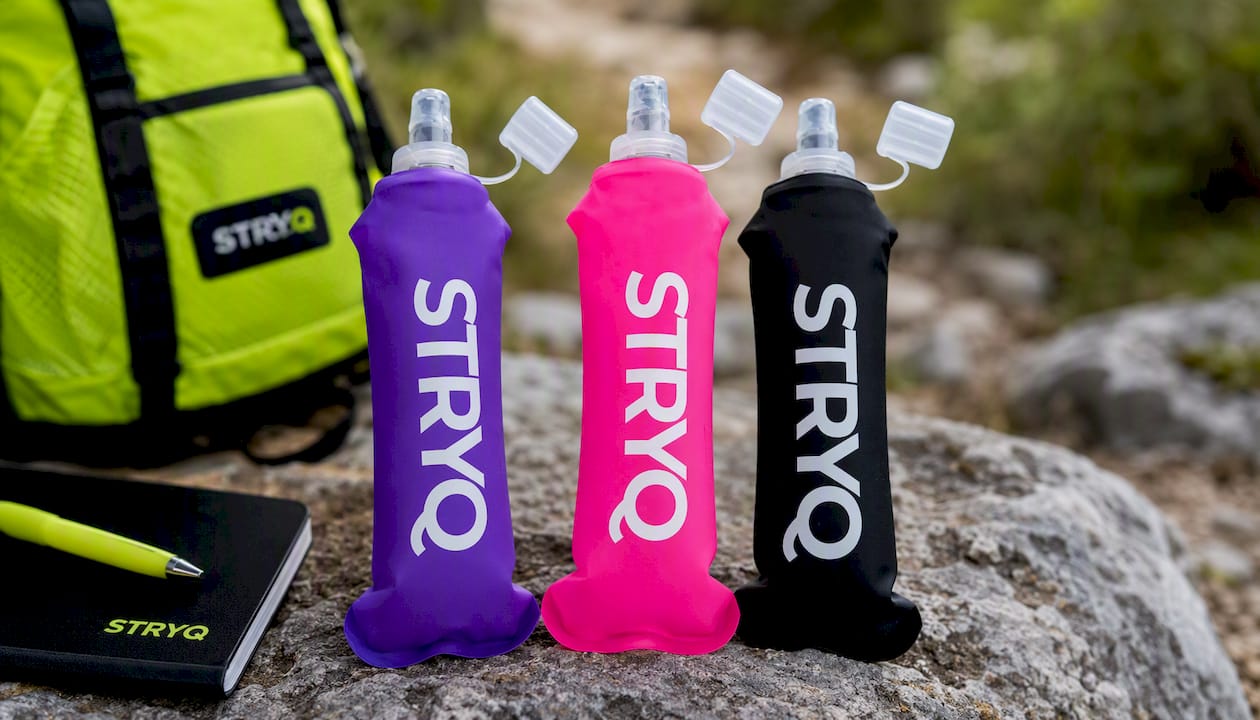
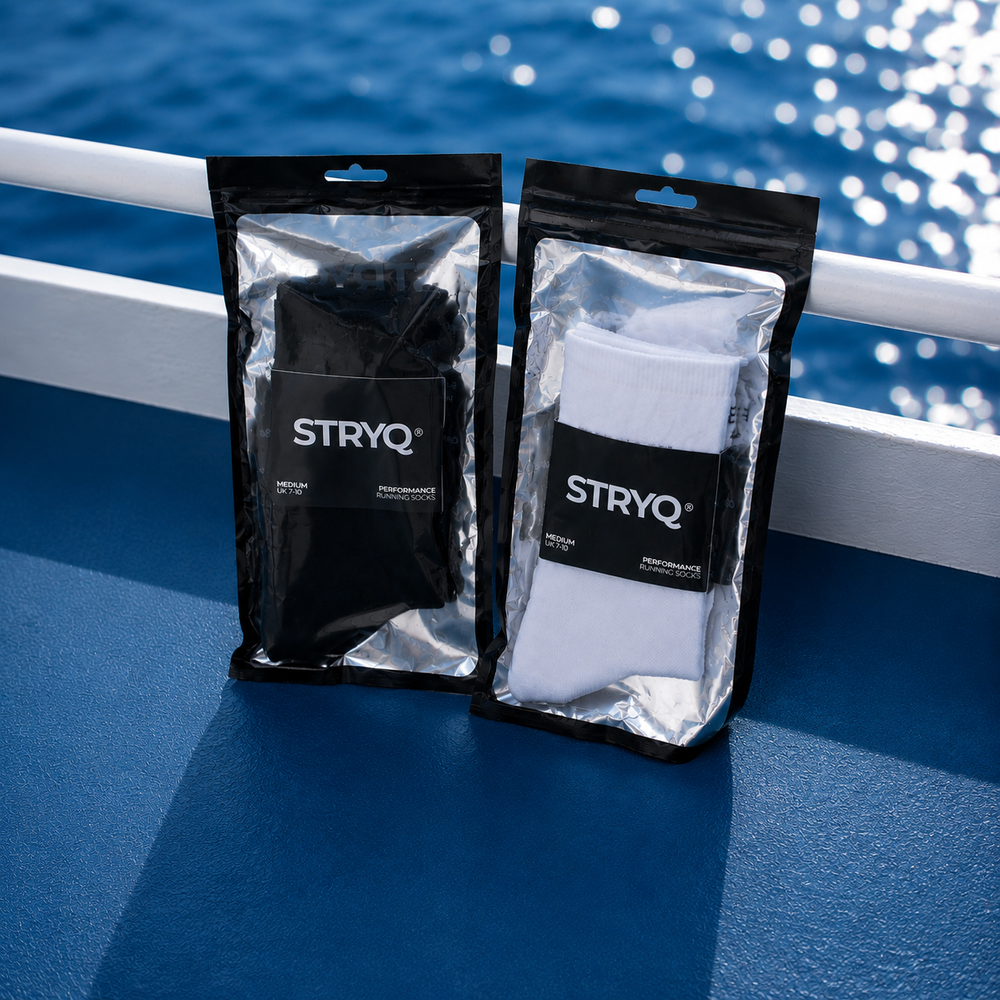
The range comes in three options depending on how you carry water: the STRYQ Purple 500ml Soft Flask for Running and the STRYQ Pink 500ml Running Soft Flask for Hydration Vests both fit standard vest pockets, while the STRYQ 500ml Running Soft Flask for Hydration Vests (Black) suits anyone who wants a lower-profile option. Each is available at a fixed price on the STRYQ soft flask collection. Pair it with the full running gear range or a set of running socks if you’re kitting out for a season rather than a single race, and follow the soft flask cleaning guide to keep it tasting the way it did on day one.
FAQ
Why does my hydration bladder taste soapy?
Soap residue left behind from an incomplete rinse is the usual cause, particularly around the valve where soapy water can pool. Run several rounds of clean water through the flask and valve after washing until no suds or smell remain.
How do I get rid of plastic taste in a hydration bladder?
A baking soda soak (1 to 2 teaspoons per 500ml, 20 minutes to a few hours) followed by a full wash and complete air-dry clears most plastic taste, as recommended in CDC hygiene guidance. If the taste persists after one repeat clean, try a cleaning tablet or check whether the valve needs replacing.
Is there a soft flask that doesn’t taste like plastic?
New soft flasks made from food-grade TPU, including Stryq’s soft flask range, are designed and tested to minimise the new-plastic taste common with cheaper materials. A brief taste in the first few fills is normal and usually fades within a week or two of regular use.
How do I stop my water bottle from tasting like plastic?
Wash it with warm soapy water immediately after each use, rinse thoroughly, and store it open so it dries completely rather than sealed while still damp. If the taste returns despite regular washing, a baking soda soak once a week usually clears it for good.