Most wearable running belts last for a period that varies widely based on usage frequency and care quality. The single rule that matters more than any mileage count: replace it the moment fit or function fails, not on a calendar. Elastic that no longer grips, a zip that snags, or a buckle that cracks are your real signals. Wash gently, air dry, and rotate belts if you run daily, and you can push well past the low end of that range.
TL;DR:
- Elastic failure, such as slipping or sagging, is the earliest sign that a running belt needs replacing, often within six months to a year of daily use.
- Proper care, including gentle handwashing, air drying, and avoiding heat, significantly extends a belt’s lifespan by preventing elastic breakdown.
- Hardware issues like cracked buckles or malfunctioning zips typically occur before fabric wear, signaling the need for replacement or repair.
- High-quality belts with reinforced seams and sturdy zips last longer, especially when used frequently and exposed to sweat, grit, or environmental stress.
- Regular monthly checks of elastic tension, zip condition, and seam integrity help catch failures early, avoiding sudden belt failure mid-run.
Table of Contents
- How long do running belts last before showing wear?
- What affects how long your belt actually lasts?
- How to make your running belt last longer
- The replacement checklist and lifespan bands
- Stryq’s approach to building belts that last
- Stryq running belt: what it solves and where to buy
- Sources
- FAQ
How long do running belts last before showing wear?
The honest answer depends on what “worn out” looks like on your body, not on a spreadsheet. Running belt elastic usually fails first, and once it loses tension, everything else about the belt starts to unravel, quite literally.
Watch for these everyday signs:
- Elastic fatigue: the belt slips down your hips mid run, sags at the back, or needs constant tightening even on a fresh setting.
- Zips, seams and pockets: a zip that catches or won’t close fully, pockets stretched loose around your phone, or stitching splitting at the seams.
- New chafing or bounce: rubbing that wasn’t there before, or the belt bouncing against your hip on every stride, usually means the fit has gone.
- Hardware failures: a cracked clip, a buckle that won’t hold, or a soft flask that leaks through its cap seal.
Any one of these on its own might just need a quick fix. Two or more at once, and you’re carrying dead weight rather than kit.
Pro Tip: Do the “phone drop test” after a long run: if your phone has shifted position or the belt has visibly ridden up, that’s your elastic telling you it’s tired, not you imagining it.
What affects how long your belt actually lasts?
Two belts bought on the same day can have wildly different lifespans, and it usually comes down to four things: what it’s made from, how often you use it, what you expose it to, and how you care for it.
- Material quality: cheaper elastic compounds lose recovery faster, budget zippers grind rather than glide, and thin fabric abrades quicker against sweat and skin.
- Use patterns: an occasional 5K runner might get years from a belt; someone training for a marathon and running six days a week will wear through the same belt far faster.
- Environmental stress: salt from sweat, UV from outdoor runs, grit from trail routes and repeated heat exposure all accelerate elastic breakdown and fabric fatigue.
- Care habits: how you wash, dry and store the belt between runs has a bigger impact on lifespan than almost anything else on this list.
No brand publishes a fixed replacement interval for running belts, because the honest truth is that construction and care matter more than a date on a calendar. A well-made belt handled carelessly can fail faster than a mid-range belt that’s been looked after properly. If you want to understand what separates a durable build from a flimsy one before you buy, our guide to running belt materials breaks down what to check.
How to make your running belt last longer
Most of the damage that ends a belt’s life happens off the run, not during it. Sweat left to dry into the elastic, a zip packed with trail grit, a belt left crushed at the bottom of a kit bag: these do more harm over a year than the actual pounding of your feet.
- Wipe it down after sweaty runs. A quick rinse or damp cloth wipe stops salt crystallising into the fabric and elastic fibres.
- Air it out properly. Never bag a damp belt straight after a run; hang it somewhere ventilated before storing it.
- Rotate if you’re running daily. Two belts used on alternate days each get more recovery time than one belt worked every single day.
- Handwash or use a gentle cycle. Mild detergent, cool water, no fabric softener. Machine washing on high heat or tumble drying is one of the fastest ways to kill elastic recovery.
- Clear grit from zips regularly. A soft brush and the occasional dab of zip lubricant keeps teeth from catching and eventually splitting.
- Know when to repair rather than replace. A loose seam can often be restitched at home or by a cobbler. Elastic that’s permanently stretched, or fabric that’s gone thin and see-through, is past saving.
Full step-by-step wash guidance, including soak times and drying methods, is covered in our piece on how to wash a running belt properly without damaging the elastic.
Pro Tip: Never dry a belt on a radiator or in direct sun to speed things up. Heat is the single fastest way to permanently kill elastic recovery, faster than months of normal wear.
The replacement checklist and lifespan bands
Forget mileage counters. The most reliable replacement signal is fit and function failure: leaking bottles, straps that won’t hold, a belt bouncing more than it used to, or zips and pockets that no longer close properly.
Replace your belt if you notice:
- Fit loss that persists even after tightening or adjusting the strap.
- Hardware that’s cracked, snapped, or can’t be repaired (buckles, clips, zip pulls).
- Chafing that keeps returning to the same spot despite repositioning.
- Leaks from a soft flask holder or pocket that used to seal properly.
Roughly, lifespan varies with use intensity, from longer for occasional runners to shorter for heavy daily runners.
Long-term hands-on testing consistently flags zipper failure and bounce as the two problems that show up earliest, often before the fabric itself shows any real wear. A simple monthly check, feeling for stretched elastic, testing the zip, glancing at seams, catches most problems while they’re still a quick fix rather than a full replacement.
Stryq’s approach to building belts that last
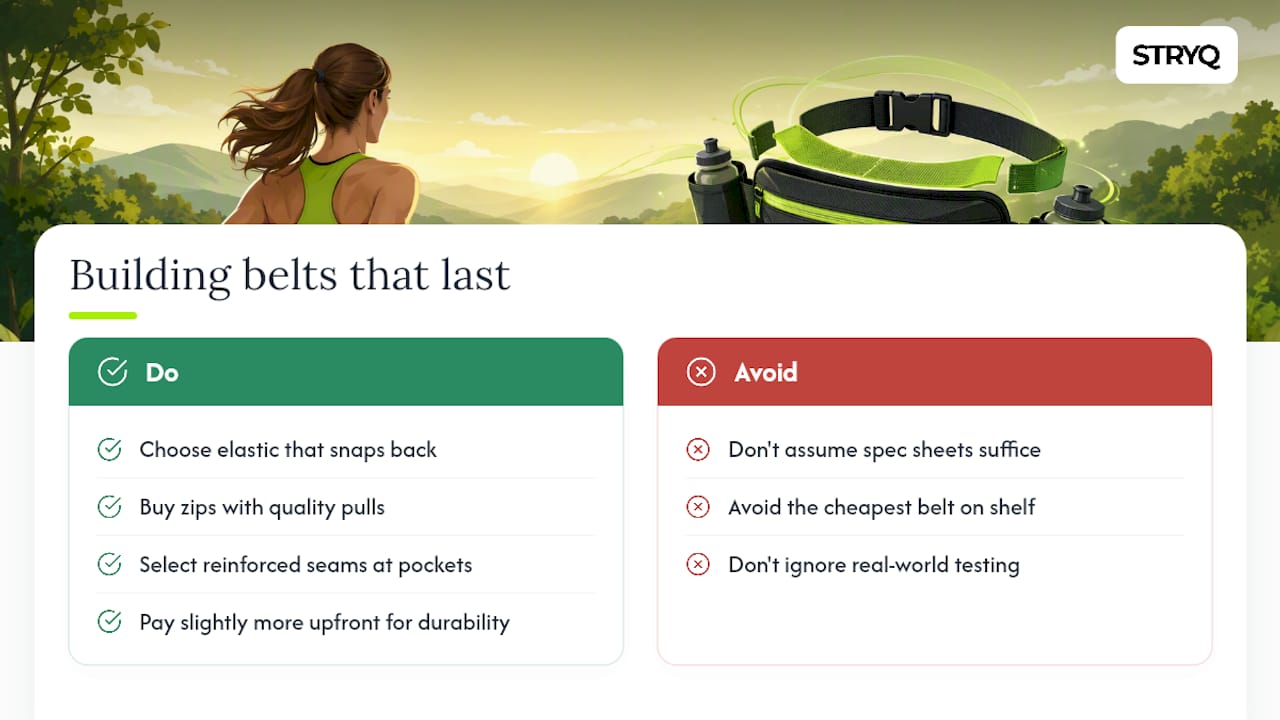
Belts fail in predictable places: elastic that stops recovering, zips that grind, seams that give out under repeated stretch. Stryq’s development process runs multiple sample revisions through real UK runners before a belt reaches the shop, specifically hunting for those failure points rather than assuming a spec sheet solves them.
Look for robust elastic that snaps back rather than staying stretched, quality zip pulls that don’t seize with grit, and reinforced seams at stress points around pockets. Paying slightly more upfront for these details than the cheapest belt on the shelf almost always works out cheaper over two or three years, because you’re not replacing a failed belt every few months.
— martin
Stryq running belt: what it solves and where to buy
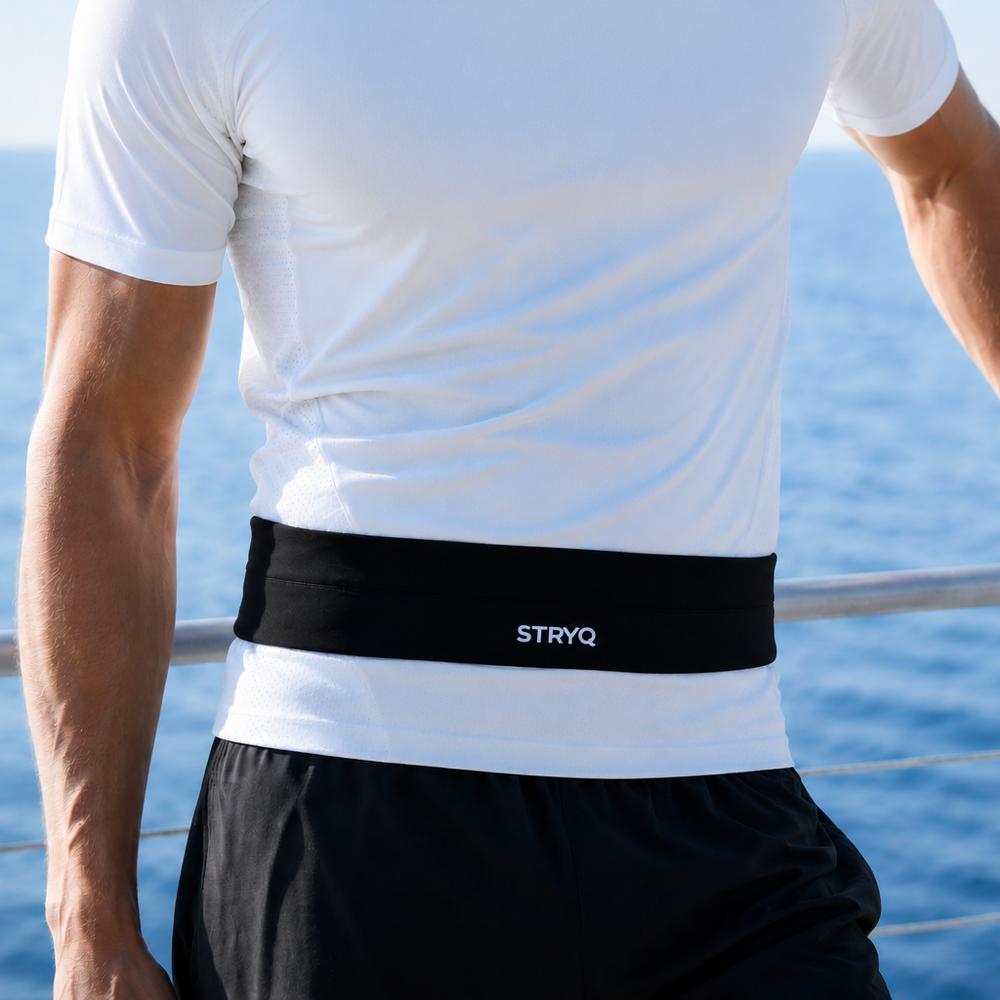
Every failure point covered above (slipping elastic, catching zips, cracked buckles, bouncing pockets) is exactly what the STRYQ RUNNING BELT is built to resist. It uses 360° secure storage designed to stay put over long runs rather than sagging or riding up, paired with robust zips and buckles chosen to avoid the grinding and cracking that ends cheaper belts early.
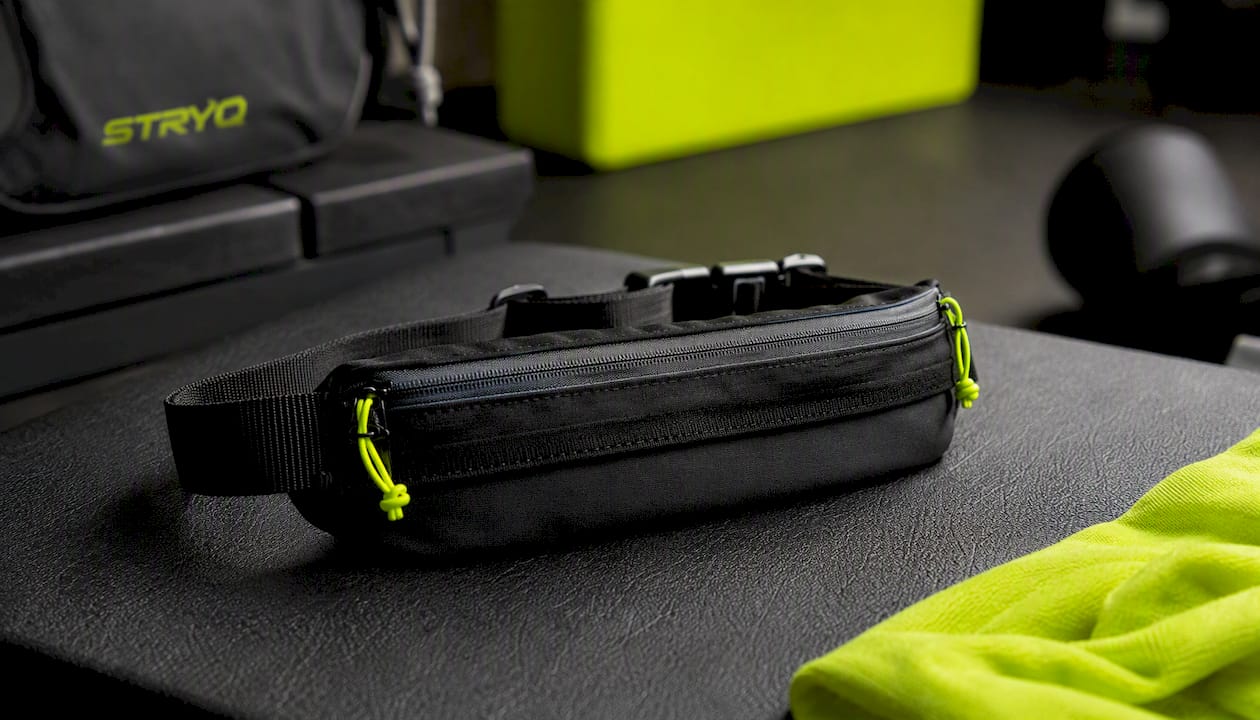
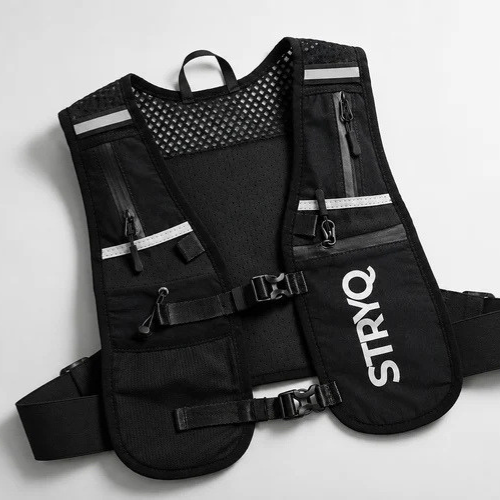
Care for it the way this guide describes (handwash, air dry, avoid heat) and it should comfortably outlast a budget alternative bought twice over. Priced at £32, it sits between disposable marketplace belts and the expensive premium end, developed and revised with feedback from UK runners rather than built to a price point first. If you’re also looking at hydration options or want to browse the wider kit, the running gear collection covers vests and reflective kit alongside the belt, and our running belt guide for new runners can help you match a style to your training. Check the product page for current stock and details, and if chafing is part of what’s driving your search for a replacement, it’s worth reading how to prevent belt chafing before you buy your next one.
Sources
- How long does running gear last? When to replace belts, socks and shorts
- When to replace your running shoes, clothes, and gear
- The 4 best running belts of 2026 | Reviews by Wirecutter
FAQ
How long should a running belt last?
Most belts last between six months and three years, depending on how often you run and how well you care for them. The deciding factor isn’t age; it’s whether the fit and function still work reliably.
What’s the first sign a running belt is wearing out?
Elastic fatigue is usually the earliest warning: the belt starts slipping, sagging, or needing constant readjustment mid run. This is the most common failure mode reported across running gear generally.
Can I wash a running belt in the washing machine?
You can, but a gentle cold cycle with mild detergent is far safer than hot water or tumble drying, which breaks down elastic recovery quickly. Handwashing and air drying is the more reliable option for extending life.
Does a more expensive running belt last longer?
Generally yes, because better elastic, sturdier zips and reinforced seams resist the failure points that end cheaper belts early. The STRYQ RUNNING BELT at £32 is built around exactly these stress points, aiming for a longer usable life than budget alternatives.
How often should I check my running belt for wear?
A monthly check covering elastic tension, zip movement and seam condition catches most problems while they’re still repairable. Regular observational checks are more reliable than relying on a fixed replacement date.