For most running belts, hand washing in lukewarm water with a mild detergent after removing electronics and hydration parts is the safest way to clean them. Skip fabric softener, skip the tumble dryer, and air dry flat or on a hanger. A gentle machine wash is fine only when the manufacturer’s label says so, and only with a laundry bag and no spin.
TL;DR:
- Regular quick wipes and air drying are more effective for preventing odors than frequent deep-cleaning of running belts.
- Hand washing with lukewarm water and mild detergent is the safest method, while machine washing requires strict adherence to manufacturer instructions.
- Hydration components need separate, routine cleaning and should never be cleaned with fabric wash or left damp for long periods to avoid mold.
- Proper drying in shade and avoiding heat sources prevent elastic stretch and damage to water-resistant coatings, helping gear last longer.
- Most running belts only need replacement when elastic slackens, seams fray, or persistent odors remain after a deep clean.
Table of Contents
- When should you wash a running belt?
- How do you hand wash a fabric running belt?
- Can you put a running belt in the washing machine?
- How do you clean a hydration bladder, tube and bite valve?
- What’s the best way to dry and store a running belt?
- How do you get smells and stains out of a running belt?
- What should you check after washing?
- Why does Stryq recommend washing belts this way?
- What runners get wrong about belt care
- Where to find a running belt built for easy care
- Where to check for model-specific care instructions
- Sources
- FAQ
When should you wash a running belt?
A quick wipe after every sweaty run keeps salt and bacteria from settling into the fabric. Use a damp cloth on the straps and pockets, then leave everything unzipped to air out before you store it.
A full hand wash is a different job, and how often you need one depends on how much you sweat and how often you run. Plan on washing a fabric running belt regularly, with frequency depending on how much you sweat, how often you run, and whether you notice any lingering odour. Runners who treat quick wipes as routine maintenance rarely need emergency deep cleans, because most bad smells come from stored dampness rather than one missed wash.
Hydration components live on their own schedule entirely:
- Rinse the bladder, tube and bite valve after every single use, no exceptions.
- Deep-clean these parts regularly if you use them frequently.
- Never assume a fabric wash covers the hydration system too. It doesn’t.
How do you hand wash a fabric running belt?
Hand washing is the default method for a reason: it’s gentle, it’s controllable, and it works on almost every fabric belt on the market.
- Empty every pocket, remove any electronic module or detachable pouch, close all zips, and shake out grit or debris.
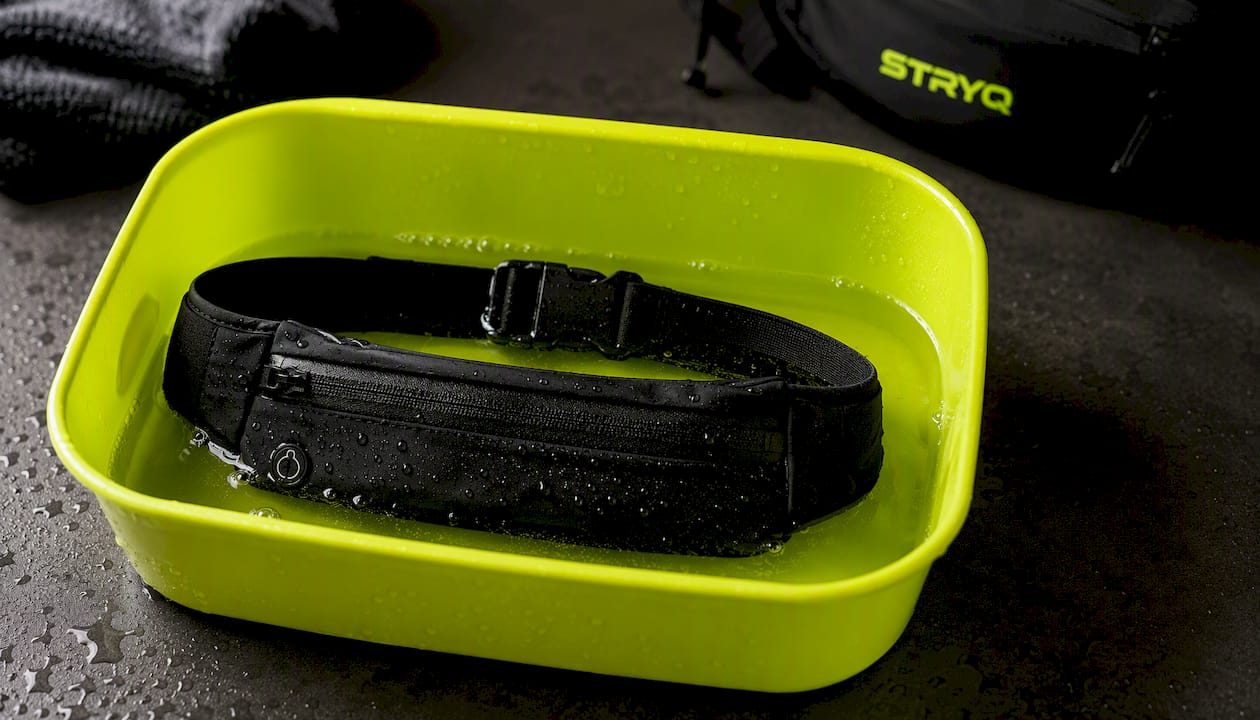
- Fill a basin with lukewarm water and a small amount of mild, unscented detergent.
- Submerge the belt and let it soak for 5 to 15 minutes.
- Use a soft brush or cloth to gently work on any visible stains or salt marks.
- Rinse thoroughly under running water until it runs completely clear, with no soap residue left behind.
- Reshape the belt while it’s still damp and lay it out to dry.
Avoid wringing the fabric. Twisting a wet belt to squeeze out water puts uneven stress on elastic sections and can leave it permanently stretched or misshapen.
Pro Tip: Check seams and zip pulls while the belt is still wet and turned inside out. Grit and salt hide in the stitching, and you’ll spot early fraying far more easily on damp fabric than dry.
Can you put a running belt in the washing machine?
Only if the care label explicitly allows it, and only after you’ve stripped the belt down to just the fabric shell. Some belts, particularly those with fixed sensor modules, are hand-wash only. Some lightweight belt manufacturers state plainly that machine washing and tumble drying are off limits entirely, cold hand wash only.
Where the label does permit it, the machine-wash route needs a few precautions:
- Place the belt inside a laundry bag or pillowcase to protect zips and stop it snagging on other items.
- Wash on a gentle cycle at 40°C (104°F) or lower, using a mild detergent.
- Skip fabric softener completely. It coats fibres and can degrade water-resistant treatments over time.
- Reduce the spin speed to a minimum, or turn it off, and never use the dryer.
One manufacturer’s official care guidance confirms this exact approach works for compatible straps: gentle cycle, module removed, laundry pouch used, then laid flat to dry. Fasten every zip before the wash starts, and turn pockets inside out where you can. That alone stops most of the wear a washing machine causes.
How do you clean a hydration bladder, tube and bite valve?
Hydration systems need mechanical cleaning that fabric care simply doesn’t provide. A quick fabric wash won’t touch the biofilm that builds up inside a tube, and that’s where most bad tastes and smells actually start.
- Rinse the bladder and tube after every use, flushing water through until it runs completely clear.
- For a deeper clean, use a baking soda solution, a specialised cleaning tablet, or a diluted mild bleach solution if the manufacturer’s guidance allows it.
- Scrub the inside of the bladder with a dedicated bladder brush, and run a smaller brush through the tube.
- Hang the bladder inverted on a drying stand so air can circulate through every part of it.
Hydration-specific care guidance recommends inspecting and replacing bladders, tubes and valves periodically, with replacement intervals depending on use and any persistent odour issues.
Pro Tip: Never let a bladder sit wet in a bag between runs. Ten minutes of drying time on a stand does more to prevent mould than any cleaning tablet does after the fact.
What’s the best way to dry and store a running belt?
Drying badly undoes all the effort of washing carefully, and it’s the step most runners rush.
- Air dry fully in the shade with good airflow around the fabric. Hang the belt or lay it flat rather than folding it while damp.
- Never pack a belt away while it’s even slightly damp. If you’re storing it long term, a small desiccant sachet in the bag helps, and avoid sealed plastic containers that trap moisture.
- Keep the belt away from radiators, direct sunlight and car dashboards. Heat warps elastic and can crack water-resistant coatings.
Storing gear damp, even for a single night in a gym bag, is how most mould and lingering odour problems actually start.
How do you get smells and stains out of a running belt?
Work from gentle to strong, and stop as soon as the smell is gone rather than reaching for the harshest option first.
- Start with baking soda sprinkled directly onto the fabric, left for an hour, then brushed off and aired outdoors.
- If that doesn’t clear it, soak the belt in a mild soap solution for 15 to 20 minutes and rinse thoroughly.
- For hydration components specifically, use specialised cleaning tablets or a manufacturer-approved diluted sanitiser rather than reaching for household bleach.
- Never combine cleaning chemicals, and always rinse thoroughly after using any sanitiser, on fabric or hydration parts.
Consistency matters more than intensity here. Regular quick cleaning, paired with periodic deeper cleans prevents most odour building up in the first place, which is a far easier habit than fighting a set-in smell weeks later.
What should you check after washing?
A wash is also your best opportunity to catch small problems before they become expensive ones.
- Run your fingers along every seam looking for loose threads or gaps.
- Test each zip fully open and closed, checking the teeth aren’t bent or clogged with salt residue.
- Stretch the elastic gently and compare it to how it felt new. Elastic that’s gone slack won’t bounce back on its own.
- Check straps and buckles for fraying, particularly where they meet the main pouch.
Zips deserve their own small ritual. Clean the teeth with a soft brush and mild soap, then apply an external zipper lubricant if it’s started sticking. Zip maintenance done a couple of times a year prevents the salt corrosion that eventually seizes zips completely.
Pro Tip: A belt that’s lost its elastic snap, keeps leaking at the seams, or still smells after a proper deep clean has reached the end of its useful life. Replacing it beats living with a belt that bounces or chafes on every run.
Why does Stryq recommend washing belts this way?
These steps reflect how running belts actually fail in the real world: seams that fray, elastic that goes slack, zips that seize with salt. Stryq develops running belts with removable components and durable fabric precisely so care stays simple. For fit issues that cause premature wear, see the guide on preventing belt chafing.
What runners get wrong about belt care
Most runners either over-wash or under-wash, and both mistakes come from the same misunderstanding: treating a running belt like a t-shirt rather than a piece of kit with electronics, elastic, and water-resistant coatings all fighting for different treatment.
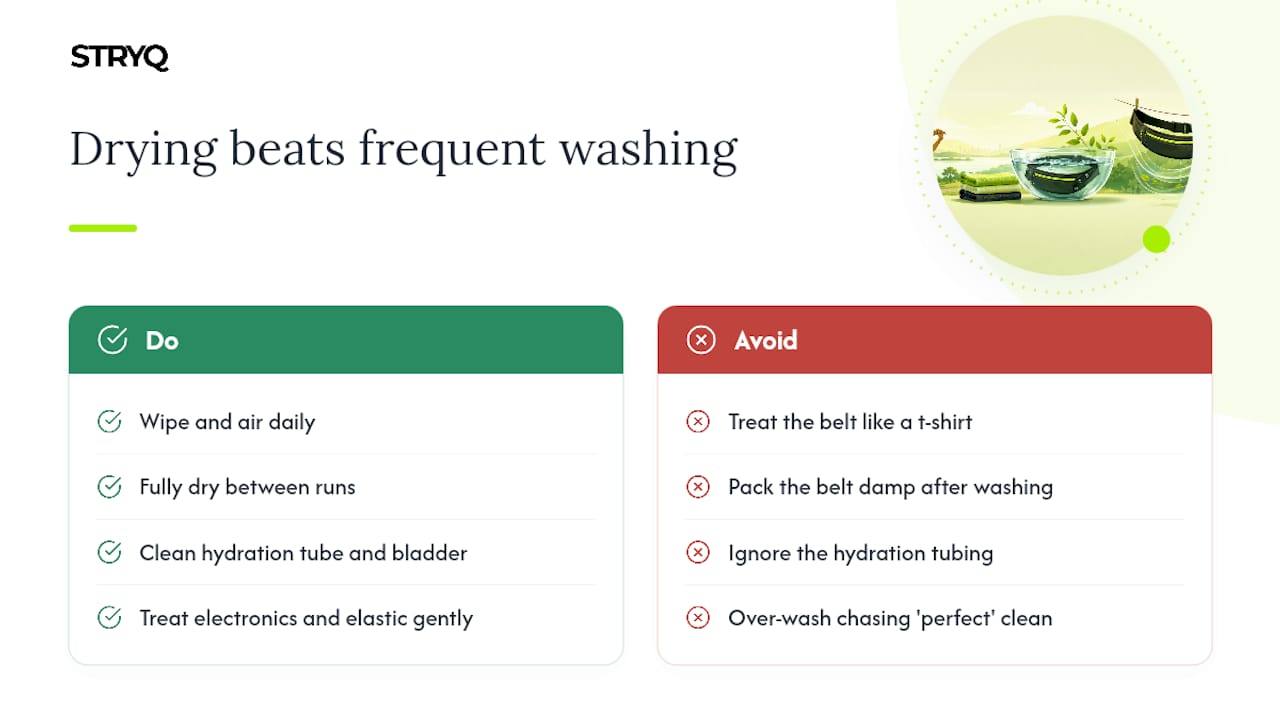
The conventional advice tends to fixate on the wash itself, hand versus machine, hot versus cold, and skips the part that actually causes most odour problems: storage. A belt washed perfectly but packed away slightly damp will smell worse in a week than a belt that’s gone three weeks without a proper wash but always dries fully between runs. Drying discipline beats washing frequency, every time.
If you take one thing from this, prioritise the daily wipe-and-air habit over chasing a perfect deep-clean schedule. Hydration components are the other blind spot. Runners will scrub a fabric belt meticulously and never once run a brush through the bladder tube where the actual bacteria live. Treat the hydration system as separate kit with its own rules, not an afterthought to the fabric wash.
— martin
Where to find a running belt built for easy care
There are practical running belts designed to avoid bouncing, fraying, and trapping smells, even with frequent washing. The STRYQ Running Belt uses durable fabric and removable modules specifically so cleaning doesn’t become a chore, no fiddly fixed sensors to work around, no pockets so tight that rinsing them properly feels impossible.
Certain belts feature storage designed to stay accessible after washing, with materials chosen to hold shape and colour through hand washing routines. If your current belt has started smelling no matter what you try, or the elastic has gone slack, it might simply be time for one designed to make care straightforward from day one. Have a look at the running belt product page and see whether it fits your kit.
Where to check for model-specific care instructions
For anything model-specific, Myzone’s care guidance and hydration belt cleaning advice cover the details above in more depth. Your own belt’s care label always overrides general advice, so check it first.
Sources
- How do I clean my Myzone belt?
- How to clean and maintain hydration belt
- Treadmill belt maintenance: how to clean, lubricate, and adjust the belt
FAQ
Can I wash my running belt in the washing machine?
Only if the manufacturer’s label permits it. When it does, use a laundry bag, a gentle cycle at 40°C or below, mild detergent, no fabric softener, and skip or minimise the spin.
Can you put water in a running belt?
Only hydration belts and vests designed with a soft flask or bladder system are built to hold water. Standard fabric running belts are for storage only and aren’t designed to carry liquid.
Can 100% nylon be washed?
Yes, nylon handles both hand washing and gentle machine washing well, but avoid high heat and fabric softener, which can degrade its water-resistant coating over time.
What body part needs the most washing on running kit?
Anything that sits against sweaty skin for a full run needs the most attention, which is exactly why belt padding, hydration bladder interiors and bite valves need more frequent cleaning than the outer fabric shell.
How often should you replace a running belt?
Replace it once elastic loses its snap, seams fray, or odour persists after a proper deep clean, and replace hydration bladders and tubes every 6 to 12 months regardless of how clean they look.